


Vendor-Independent Camera Control Software Development for Professional Cameras
Build a unified control experience across camera models, operating systems, and production environments — without vendor lock-in.
With Promwad’s multi-vendor platform, studios can easily expand camera fleets without being tied to a single manufacturer through true interoperability — while camera manufacturers make their devices more attractive for mixed production environments.
What wedeliver
Camera Manufacturers and SDKs Behind Our Control Systems



Why Promwad
Content producers increasingly want interoperability instead of proprietary lock-in — especially in multi-vendor setups where each camera brings unique features. Many manufacturers still ship control apps that work only with selected models, offer partial functionality, or depend on a specific OS — which creates friction for crews and limits ecosystem adoption.
Promwad helps camera manufacturers and OEMs turn camera control into a single, scalable product layer: a branded application, a reusable middleware/API, or both.
What makes our approach practical:

"With Promwad, you can create universal cross-platform solutions to manage virtually any professional camera in real time — via web browsers, smartphones, or tablets. "
Vadim Shilov, Head of Broadcasting & Telecom at Promwad
Technologies We Integrate
We design camera control systems around a simple idea: a common abstraction for commands and statuses, backed by adapters to vendor SDKs and relevant protocols.
Camera control integration via SDKs / APIs / protocols
Preview / streaming options
If your control system is part of a bigger live workflow:
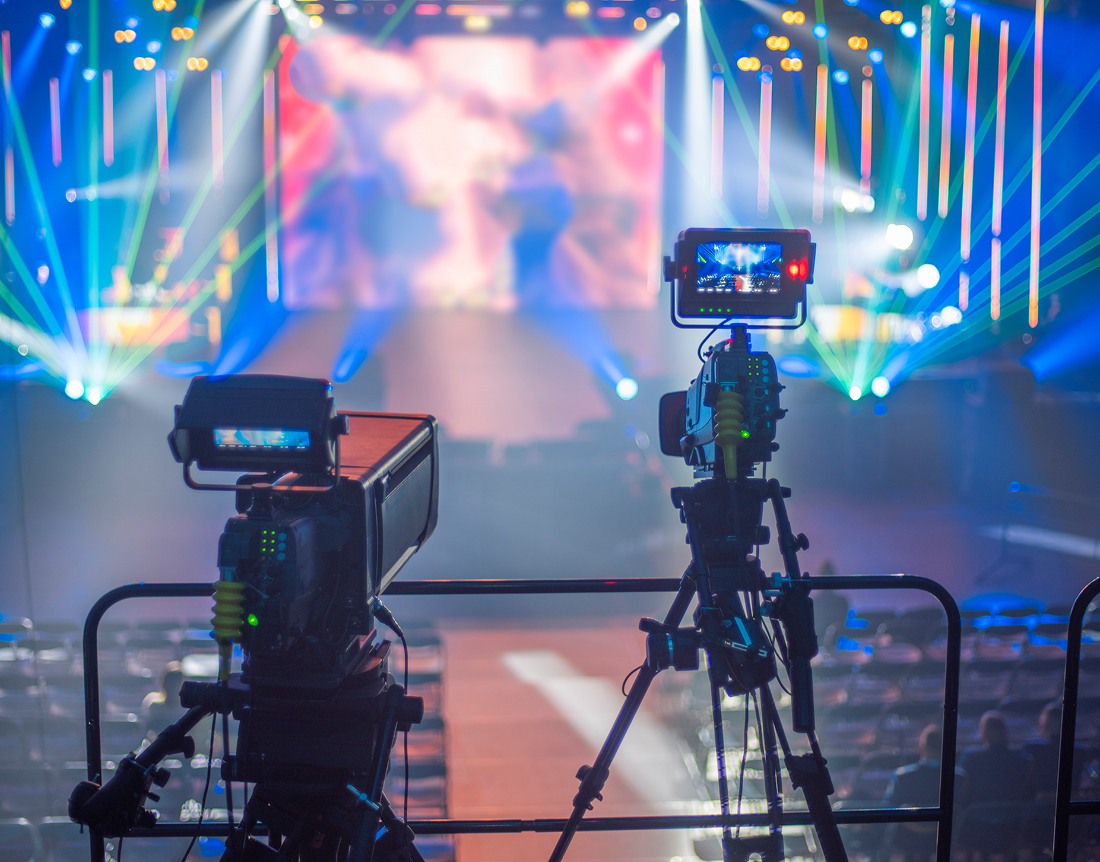
Outside broadcasting often demands more than an app. We also design rock-solid capture, transport, and storage pipelines for multiple high-bandwidth feeds — including solutions leveraging SMPTE ST 2110 in multi-camera environments, with monitoring and buffering via a web dashboard.
Application Areas
OB vans
Sports & events
remote focus/exposure control, synchronized actions across multiple cameras
Cinema & TV production
multi-vendor rigs with consistent control and synchronization for post-production
Broadcast & live production
OEM camera ecosystem
From Proprietary Control Apps to a Unified Control Platform
Challenge: fragmented vendor apps, OS restrictions, uneven feature coverage, and high friction in multi-vendor production.
Solution:
- A control layer that standardizes commands & statuses
- Adapters to vendor SDKs and relevant protocols
- A single operator UI for web + iOS/Android with our UX development
- Modules for sync/time alignment + tally + monitoring
Outcome: lower integration cost, faster updates, easier onboarding of new camera models/features — and a stronger OEM ecosystem.
Request an architecture review — get a high-level target architecture and a compatibility/testing plan.
Our Case Studies
NMOS-Enabled Camera Node for IP Production
Bridge the gap between legacy control and the future of ST 2110 .
Pain
Traditional IP transitions are often stalled by manual configuration. In multi-vendor systems, cameras lose sync, require IP reconfiguration after reboots, and lack security for remote production.
Solution
Our NMOS-enabled camera node turns your camera into a plug-and-play IP device by separating hardware from configuration via native AMWA NMOS suite support:
- Self-Healing Registration. IS-04 automatically registers the node to your Registry (RDS) and restores state after network disruptions.
- Agile Connection Management. IS-05 enables API-based routing of video, audio, and metadata with sub-second switching.
- Broadcast-Grade Security. The control plane uses TLS (BCP-003) and authenticated access to prevent unauthorized overrides.
- Orchestration Ready. IS-07 carries tally and GPIO events as network metadata, eliminating the need for separate control cabling.
Result
The camera node becomes a flexible resource in a virtualized pool. Operators can move from "setup" to "on-air" in minutes rather than hours. The result is a stable, vendor-agnostic production environment where the technology gets out of the way of the creative process.
How We Ensure Quality
Trusted by Leading Camera Manufacturers
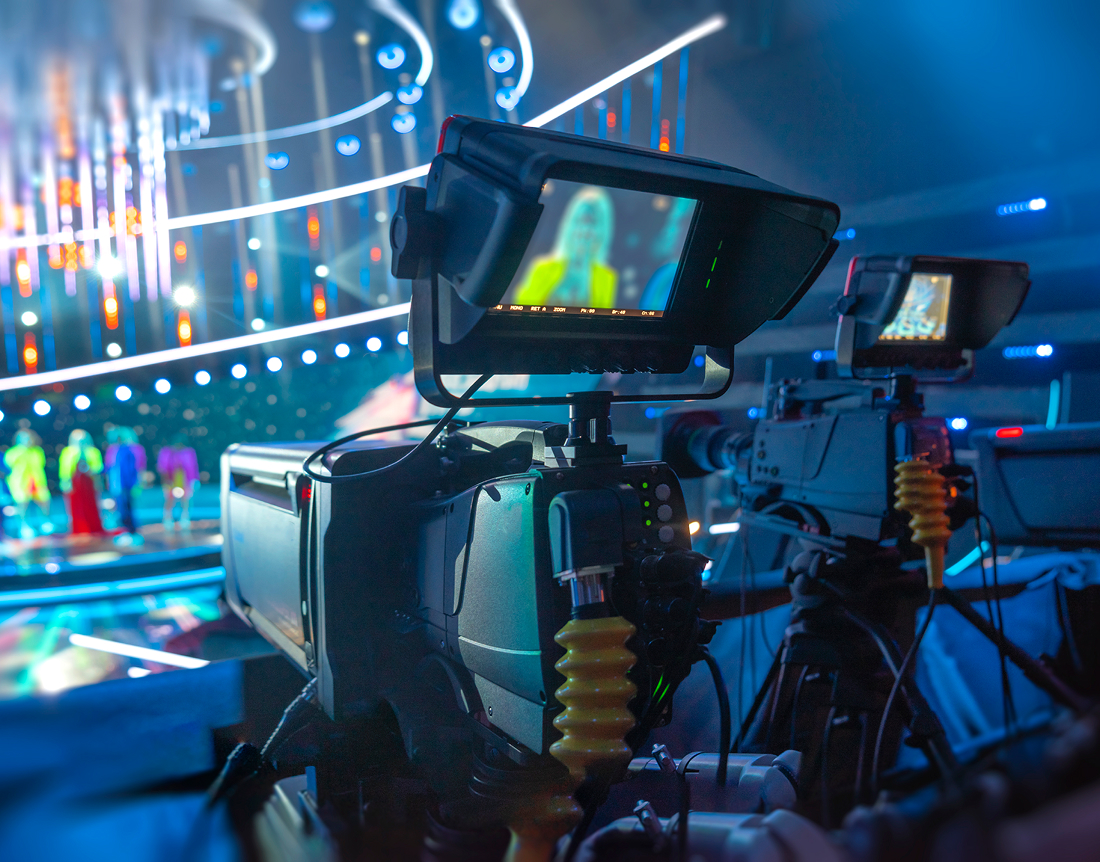
Professional Camera Ecosystems We Work With




Talk to Promwad About Your Camera Control Stack
Whether you need a branded OEM control app, a control layer/API, or SDK/protocol adapters, we’ll help you build a solution that scales across models and production realities.
Share your requirements with us — we’ll review them carefully and get back to you with the best technical approach.
FAQ
What is camera control software vs. vendor proprietary applications?
Vendor apps are typically limited to a single manufacturer — and often even require different software for different camera models or firmware generations within the same brand. Camera control software adds a unified control layer and UI that can manage mixed camera fleets across environments, reducing tool fragmentation and integration effort.
How do you achieve vendor-independent control if SDKs differ?
What PTZ/remote scenarios do you cover?
Presets, exposure/WB, focus, recording controls, and other functions — depending on camera capabilities and SDK access.
What is tally and how is it integrated?
Tally indicates program/preview/on-air state. We route tally events into your app/panel using environment-appropriate interfaces.
How does multi-camera synchronization work?
We support project-appropriate approaches (timestamp/timecode alignment and coordinated actions) with defined constraints and QA.
Can you build a branded OEM app and still keep multi-vendor compatibility?
Yes — branding lives in UI and product packaging, while the control layer can remain extensible across camera families.
How do you test stability across OB networks?
We validate reconnection, latency, and degraded-network behavior and document constraints and mitigation patterns.
How long does it take to add a new camera model/SDK?
Typically delivered as an adapter + compatibility testing scope; timing depends on SDK maturity and target feature depth.