


ST 2110 > NMOS
Integration
ST 2110 Migration with NMOS Integration: Built for Predictable Interoperability
Promwad helps broadcast studios and system integrators modernize production infrastructure from SDI to SMPTE ST 2110 with NMOS. We keep the transition stable on-air and predictable for commissioning and delivery timelines.
We validate your entire broadcast stack: PTP timing, NMOS discovery and connection management, and predictable multicast/QoS behavior. The result is proven mixed-vendor interoperability you can roll out with confidence.

Extra Valuewith Promwad
Our Partners and Companies Employing Promwad Solutions


Why Promwad
When you migrate to ST 2110, you’re not just changing cabling — you’re changing the way your facility behaves under stress: timing, congestion, failover, and multi-vendor control.
Promwad is a plug-in engineering partner that helps studios and integrators move to IP with confidence, whether you’re starting from architecture, rescuing a running project, or scaling an existing deployment.
What you gain with Promwad:
- Engineering validation, not generic consulting. We implement and verify the full chain: firmware/drivers → middleware → control UI → interop testing.
- Predictable delivery. We structure work around measurable acceptance criteria and a realistic rollout plan.
- Broadcast-grade discipline. From latency budgets to traceability and test matrices, we focus on stability and repeatability.
Proof in numbers and outcomes:
Planning ST 2110 migration? Start with a fast interop and readiness check!

Vadim Shilov, Head of Broadcasting & Telecom at Promwad
Standards & Technologies We Work With
ST 2110 and NMOS represent different layers of an IP broadcast system and must be integrated and validated as a whole:
ST 2110 as the media plane
professional real-time transport for video, audio, and ANC as separate essence flows
NMOS as the control plane
discovery, registration, and connection management designed for vendor-neutral interoperability
What we integrate and validate in real projects:
AMWA NMOS
IS-04 Discovery & Registration | IS-05 Connection Management | IS-07 Event & Tally | IS-08 Audio Channel Mapping | IS-09 System API | IS-10 Authorization — design & integration of security models (as needed)
Network fundamentals for broadcast IP
RTP/SDP, multicast, IGMP, QoS policies, redundancy and failover approaches
SMPTE ST 2110
video / audio / ancillary data
PTP timing
IEEE 1588 / SMPTE ST 2059
Audio bridging
AES67 for mixed audio environments
Advanced performance layer
When you need UHD / high-throughput gateways / multiviewers - DPDK or NVIDIA Rivermax for high-performance packet I/O - Zero-copy and efficient pipeline design to reduce latency and CPU load
Interoperability toolchain
We verify NMOS API behavior and integration contracts using established testing workflows and automated checks.
What We Build for Broadcasters & Vendors
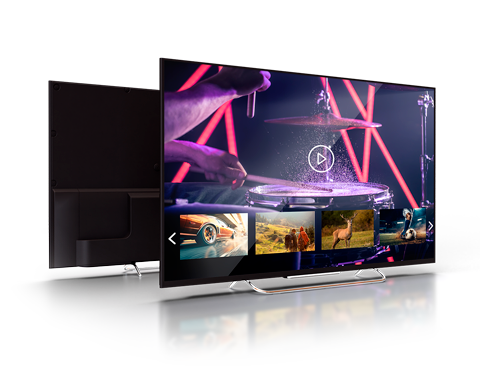
We transform industry needs into scalable software and hardware solutions tailored to broadcast and Pro AV vendors.
Application Areas
For broadcast studios
- Live production pipelines that require frame-accurate sync and predictable timing
- Multi-camera workflows with control panels, tally/status, and orchestration
- Hybrid facilities where SDI remains in specific zones during phased migration
For OEMs and product teams
Preparing endpoints, gateways, or controllers to be ST 2110/NMOS-compatible, including embedded and FPGA work when required
For system integrators
- Acceptance testing and commissioning: test matrices, validation reports, and go-live readiness
- On-site pilots with monitoring, tuning, and rollback planning
- “Rescue mode” support when timelines slip or interoperability becomes a blocker
SDI-to-IP Migration Without Chaos
ST 2110 migration should not put your on-air stability at risk. The most reliable way to move from SDI to IP is phased: keep critical SDI “islands” where needed, build a stable IP spine, and validate interoperability before expanding.
What usually breaks in real deployments:


How We Make Migration Predictable
We treat migration as a controlled engineering program — with measurable outputs, validation steps, and a clear pilot path.
Outcome:
You get a migration path where each step is validated before the next one begins — enabling IP modernization without “big bang” risk.
Need help with IP migration? Promwad fills the expertise gap and keeps you on schedule.
Our Case Studies
SMPTE ST 2110 Video Pipeline for Low-Latency 8K IP Production
Scalable, GPU-accelerated video transport and processing for high-resolution IP production with predictable latency and jitter.
Pain
High-resolution IP workflows struggled to scale beyond several 8K streams due to CPU bottlenecks, unstable latency/jitter, and limited control over packet handling and timing.
Solution
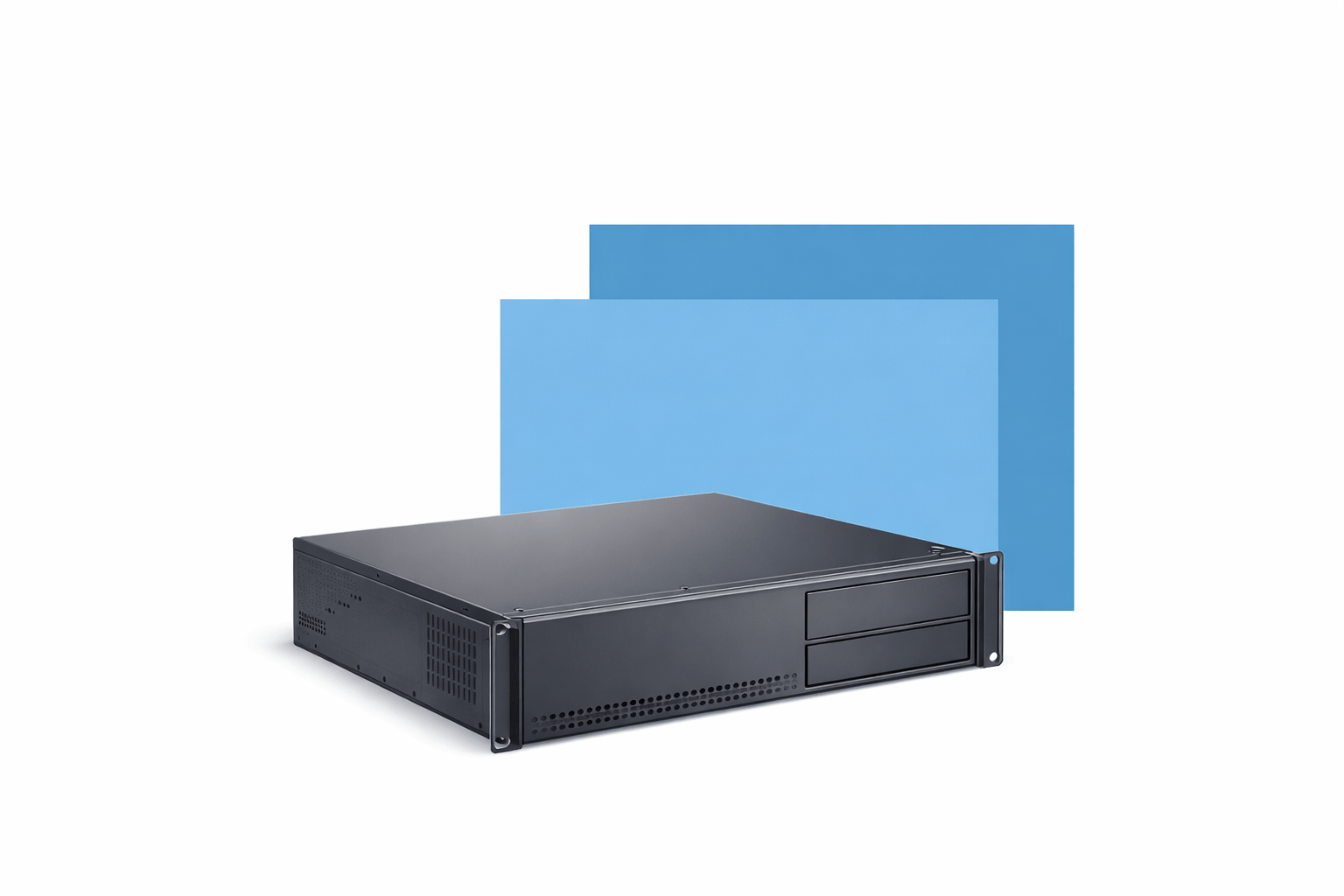
Promwad built an ST 2110-compliant architecture on NVIDIA Mellanox networking and GPU-accelerated processing with two implementation options:
- Option A (Mellanox + DPDK): deterministic, user-space packet processing with DPDK + Mellanox drivers and a direct-to-GPU memory path to offload CPU.
- Option B (NVIDIA Rivermax): SDK-based high-throughput transport that offloads media scheduling/data movement, with modular components (NMOS control, transcoding, streaming) for tighter timing/jitter control at scale.
Result
- Mellanox + DPDK: ~20 ms end-to-end latency, ~5 ms jitter, and CPU load below 60%
- NVIDIA Rivermax: ~10 ms latency, ~5 ms jitter, and CPU load below 40%
NMOS-Enabled Camera Node for IP Production
Bridge the gap between legacy control and the future of ST 2110 .
Pain
Traditional IP transitions are often stalled by manual configuration. In multi-vendor systems, cameras lose sync, require IP reconfiguration after reboots, and lack security for remote production.
Solution
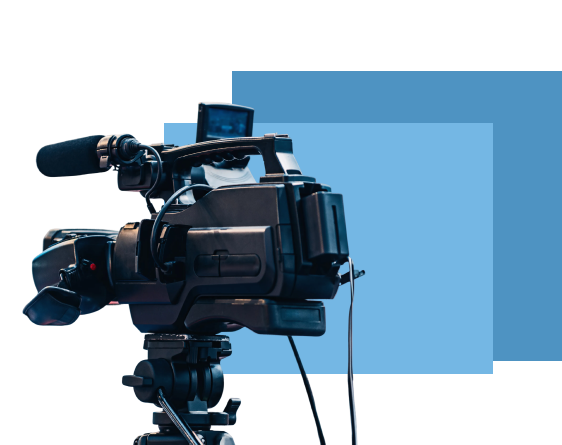
Our NMOS-enabled camera node turns your camera into a plug-and-play IP device by separating hardware from configuration via native AMWA NMOS suite support:
- Self-Healing Registration. IS-04 automatically registers the node to your Registry (RDS) and restores state after network disruptions.
- Agile Connection Management. IS-05 enables API-based routing of video, audio, and metadata with sub-second switching.
- Broadcast-Grade Security. The control plane uses TLS (BCP-003) and authenticated access to prevent unauthorized overrides.
- Orchestration Ready. IS-07 carries tally and GPIO events as network metadata, eliminating the need for separate control cabling.
Result
The camera node becomes a flexible resource in a virtualized pool. Operators can move from "setup" to "on-air" in minutes rather than hours. The result is a stable, vendor-agnostic production environment where the technology gets out of the way of the creative process.
Quality and Verification
We build verification into each phase, focusing on engineering readiness for ST 2110/NMOS migration.
How we work:
How we ensure quality of broadcast hardware and software development:
Our Cooperation Models
Flexible approach to suit your current needs

Time & Material
Perfect for evolving projects. You control the budget and milestones, while we ensure transparency and fast team scaling.
Dedicated Team
Your long-term engineering capacity — a self-managed, domain-focused team integrated into your workflow for steady, predictable delivery.
Fixed Price
Ideal for well-defined tasks with clear outcomes. Scope, budget, and timelines are set upfront to guarantee predictable results.
Ready to migrate to ST 2110 — without interoperability surprises?
You’ll get actionable engineering feedback and a clear next step.
FAQ
What’s included in an ST 2110 migration project — and where should we start?
Typically: architecture review (timing + network + control), readiness validation, phased rollout plan, and a PoC/MVP that proves interoperability under realistic load. A pragmatic start is an interop audit that identifies risks before large investments.
How do you ensure compatibility between different vendors with NMOS?
Do we need to implement NMOS from day one?
Not always. Many facilities migrate in phases: ST 2110 media transport first, NMOS capabilities expanded gradually. We align the approach to your operational reality and risk tolerance.
Which network requirements are critical: PTP, QoS, multicast/IGMP — and how do you validate them?
PTP stability and network behavior under load are the most common sources of “mysterious” issues. We define acceptance criteria, test under realistic scenarios, and validate timing, multicast flows, and QoS behavior with measurable outcomes.
How do you measure and maintain low latency and stability at scale?
We work from a defined latency budget and validate jitter, packet loss, and failover scenarios under realistic load. End-to-end behavior is verified across the full production chain, with performance optimizations applied selectively — including performance layers such as DPDK or NVIDIA Rivermax, as well as software-based acceleration or FPGA-level tuning where appropriate.
Can you join in rescue mode if a migration is already in trouble?
Yes. We can plug in to stabilize architecture, find root causes, build missing validation, and help you get back to a predictable delivery plan — without restarting everything.
Do you deliver only software, or also hardware/FPGA/drivers for IP gateways and endpoints?
We can cover the full stack: embedded software, drivers, FPGA logic, middleware, and UI — depending on what your migration or product roadmap requires.