



NVIDIA Rivermax
& DPDK
Ultra-Low-Latency IP Transport for Live Broadcast (Rivermax / DPDK)
Reduce live delays by bypassing the kernel network stack and optimizing ST 2110 media end-to-end pipeline (NIC → CPU/GPU/FPGA → application).
Promwad helps you reduce delay without breaking interoperability — ST 2110 + NMOS + PTP, backed by zero-copy, packet pacing, and RDMA/GPUDirect where it makes sense.

Need LatencyReview?
Our Partners and Companies Employing Promwad Solutions










Why Promwad
When live performance becomes unpredictable, you need more than “faster networking.” You need a partner who can stabilize the whole chain—software, hardware, timing, and interoperability—so releases stay predictable and on-air confidence goes up.
What you get with Promwad:

Standards-First Acceleration for ST 2110 Ecosystems
We accelerate IP media transport and keep it interoperable in mixed-vendor ecosystems—because low latency is useless if discovery, timing, or control breaks on site.
Transport acceleration
- NVIDIA Rivermax integration for ultra-low-latency, high-throughput packet processing
- DPDK integration for user-space networking and kernel bypass
- Zero-copy paths, careful memory strategy, and CPU affinity tuning
Media and interoperability
- SMPTE ST 2110 (video / audio / ANC)
- NMOS IS-04 / IS-05 for discovery and connection management
- AES67 when audio interop is required
- NDI for hybrid broadcast + ProAV scenarios
Latency techniques
- Packet pacing to reduce microbursts and jitter amplification
- RDMA / GPUDirect (where relevant) to shorten NIC → GPU paths
- Buffering strategy tuned to your actual latency budget (not best-case demos)
Timing and network control
- PTP (IEEE 1588) alignment and validation
- QoS, multicast design, IGMP behavior, flow control, and real-world switch interactions
If your ST 2110 pipeline fails under peak load, book a call and get a stabilization plan at Promwad

Vadim Shilov, Head of Broadcasting & Telecom at Promwad
When to Use What: Practical Guide
| Use case | Protocol/Tech | Target latency type | Best fit when… |
| In-studio uncompressed IP | ST 2110 + PTP + NMOS | Sub-frame / deterministic | You must keep full ST 2110 behavior with strict timing |
| High-throughput IO bottleneck | Rivermax or DPDK | Low-ms / stable under load | CPU spikes or packet handling is the limiting factor |
| GPU-heavy live processing | Rivermax + GPUDirect | Sub-frame / low-ms | Your pipeline depends on GPU compute and zero-copy matters |
| Hybrid broadcast + ProAV | ST 2110 + NMOS + NDI/AES67 | Low-ms / operationally practical | Multiple islands must work together without drama |
Application Areas
Live production pipelines
switching, multiviewers, graphics insertion, replay, ingest
ST 2110 gateways & edge devices
SDI ↔ IP gateways, IP monitoring and display appliances
Contribution inside managed networks
ultra-low-latency links between venue, studio, and control room
Remote production (REMI) components
camera feed transport, return video, IFB/comm integration points
High-density media servers
channel playout, transcode/packaging nodes where network IO becomes the bottleneck
Hybrid ecosystems
ST 2110 core + NDI islands + AES67 audio—Promwad connects standards without breaking operations
From Unpredictable Live Delay to Deterministic Transport
If you’re seeing “random” delay, it usually isn’t random. It’s an unmanaged latency budget.
Common pain signals

Promwad transformation path


Outcome: measurable, repeatable latency with stable CPU headroom—so your system stays deterministic in production, not just in best-case tests.
SDI-to-IP Migration Without Chaos
ST 2110 migration should not put your on-air stability at risk. The most reliable way to move from SDI to IP is phased: keep critical SDI “islands” where needed, build a stable IP spine, and validate interoperability before expanding.
What usually breaks in real deployments:
Broadcast Synchronization: Bridging Eras of Timing
Unstable PTP is often the first thing to break in SDI-to-IP migration. In ST 2110, timing depends on the whole chain, from grandmaster to every endpoint, and it still has to coexist with legacy SDI references.
Broadcast and ProAV vendors bring us in when:
- A gateway must lock to SMPTE ST 2059-2 PTP while serving black burst and tri-level sync to SDI islands.
- ST 2110-30 and AES67 audio must share one time domain despite PTP profile differences.
- Remote production extends timing over telecom networks that require ITU-T profiles, SyncE and boundary clocks.
- SONET/SDH or PDH contribution links move to IP without losing clock continuity.
Promwad embeds synchronization directly into your hardware:
- Hardware timestamping and clock design for micro- and nanosecond accuracy in FPGA, SoC and switch-based devices
- PTP profiles: SMPTE ST 2059-2, ITU-T G.8265.1, G.8275.1, G.8275.2, IEEE 802.1AS; boundary clocks per G.8273.2
- SyncE per ITU-T G.8262/G.8262.1 for contribution and WAN links
- Bridging genlock, SONET/SDH (G.813) and PDH (G.812) with packet-based timing
Our Case Studies
SMPTE ST 2110 Video Pipeline for Low-Latency 8K IP Production
Scalable, GPU-accelerated video transport and processing for high-resolution IP production with predictable latency and jitter.
Pain
High-resolution IP workflows struggled to scale beyond several 8K streams due to CPU bottlenecks, unstable latency/jitter, and limited control over packet handling and timing.
Solution
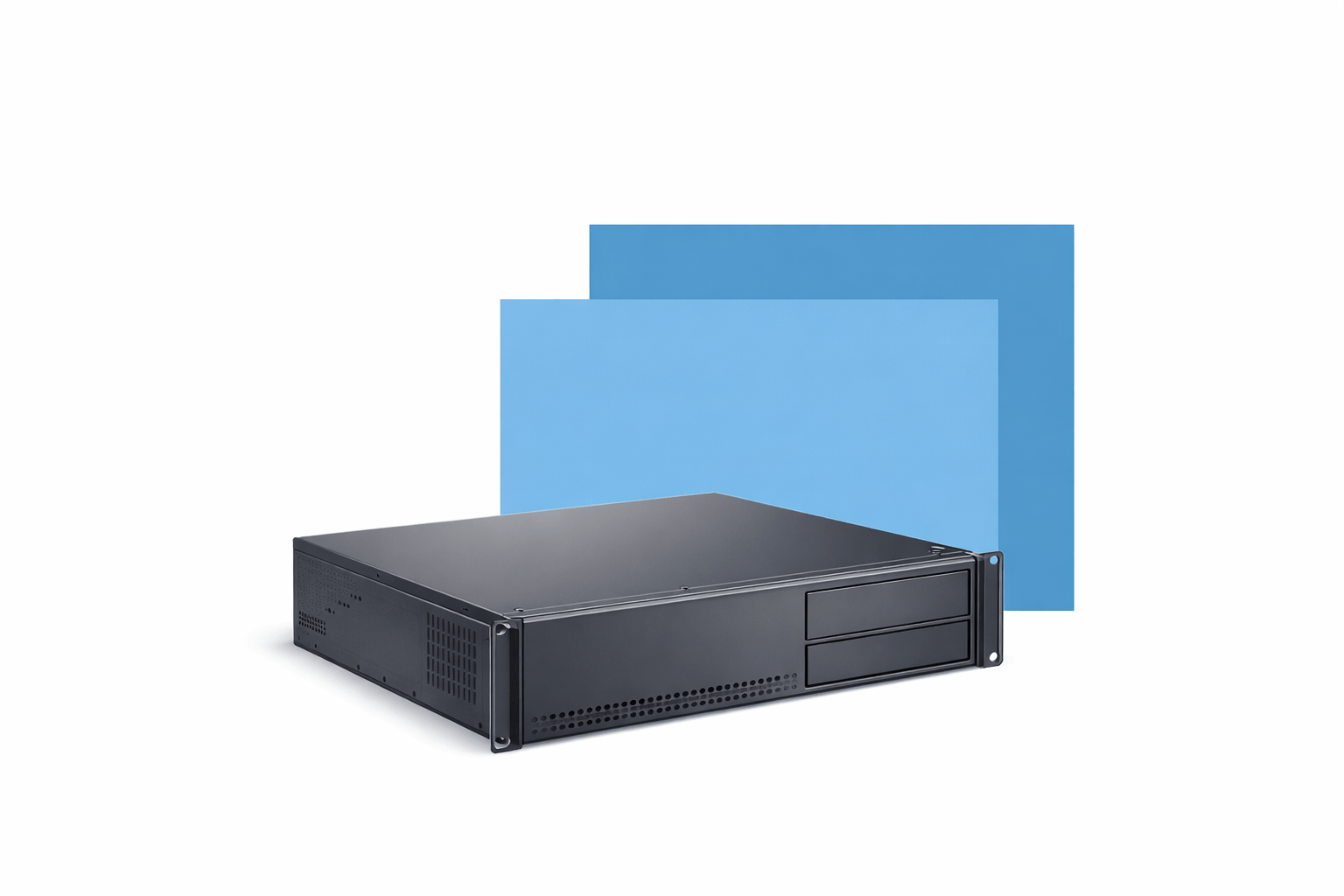
Promwad built an ST 2110-compliant architecture on NVIDIA Mellanox networking and GPU-accelerated processing with two implementation options:
- Option A (Mellanox + DPDK): deterministic, user-space packet processing with DPDK + Mellanox drivers and a direct-to-GPU memory path to offload CPU.
- Option B (NVIDIA Rivermax): SDK-based high-throughput transport that offloads media scheduling/data movement, with modular components (NMOS control, transcoding, streaming) for tighter timing/jitter control at scale.
Result
- Mellanox + DPDK: ~20 ms end-to-end latency, ~5 ms jitter, and CPU load below 60%
- NVIDIA Rivermax: ~10 ms latency, ~5 ms jitter, and CPU load below 40%
Enterprise NAS with DPDK/SPDK for Live Media
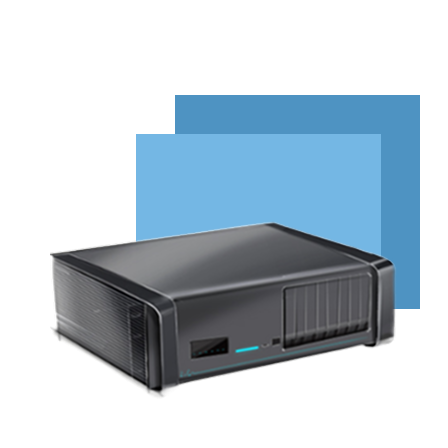
Design of a high-performance enterprise NAS with DPDK/SPDK acceleration and NDI support for real-time video ingest, processing, and streaming.
Pain
Kernel-based networking and storage limited throughput and increased latency under multi-camera, high-bitrate video load.
Solution
Rebuilt the data path using DPDK and SPDK with zero-copy packet handling, GPU acceleration, and high-speed NICs. Designed a modular hardware platform with scalable NVMe/CFexpress storage and dual-power redundancy.
Result
Deterministic high-throughput performance with 2–3× efficiency gain, stable operation under load, and a portable, scalable storage platform for live media workflows.
Read full сase: DPDK/SPDK NAS
DPDK-Accelerated NVMe Storage Performance Optimization
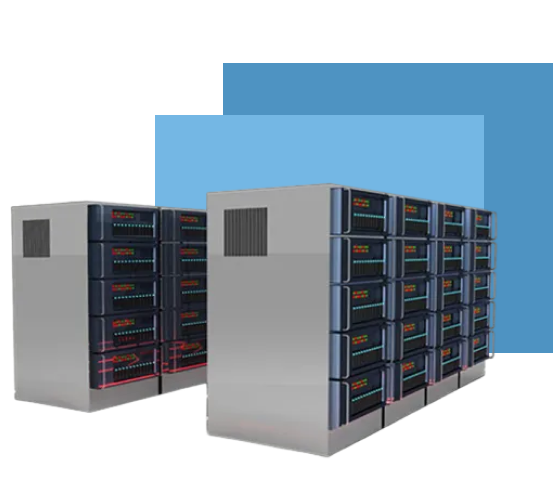
Performance tuning of an NVMe-based storage system using DPDK and ZFS to increase data processing and transmission speed.
Pain
Standard storage and networking stacks limited throughput and scalability, preventing the system from fully utilising NVMe performance under parallel load.
Solution
Evaluated and tuned NVMe storage configurations using ZFS combined with DPDK-based kernel bypass. Optimised data paths, parallelism, and I/O settings to reduce overhead and improve data transfer efficiency under multi-threaded load.
Result
Achieved up to 30% performance improvement compared to baseline configurations, with higher and more stable write throughput enabled by deterministic, low-overhead data handling.
Read Full Case: DPDK + ZFS NVMe Optimization
Want similar results in your ST 2110 pipeline? Book a call to get a quick latency review.
How We Ensure Quality
Delivery process built for broadcast realities: latency budgets, sync, and interoperability must be verified early.
QA specifics for live and mixed-vendor environments:
Fix Live Latency Without Sacrificing Interoperability
You’ll get actionable engineering feedback and a clear next step.
FAQ
NVIDIA Rivermax vs DPDK: which should we choose?
Choose based on your ecosystem and constraints: GPU-centric workflows, NIC capabilities, OS and deployment model, long-term maintainability, and acceptable vendor lock-in trade-offs. Promwad helps you select the route that fits both performance and operations.
What latency can we realistically achieve for live?
Do you support PTP, multicast/IGMP, QoS, and real-world network behavior?
Yes—end-to-end. We design and validate timing, multicast scale, QoS policies, and failover scenarios so the solution survives real switches and real traffic.
Can you integrate this into our existing media stack (GStreamer/FFmpeg/custom)?
Yes. We plug into existing pipelines pragmatically—focusing on the highest-impact path first—without forcing a full rewrite.
Can you rescue a project where latency targets are missed?
Yes. We typically start with an audit, stabilize the system, then optimize or migrate the transport path with measurable milestones.