



FPGA-Powered
AV Processing
FPGA-Based Video/Audio Processing with Predictable Latency
Build real-time video and audio systems with predictable timing, even at peak load. FPGA-based processing avoids the instability of software pipelines and keeps video and audio in sync for broadcast, ProAV, and telecom products where timing issues matter.
Promwad delivers end-to-end FPGA video and audio solutions ready for production. We handle interoperability with ST 2110, NMOS, AES67, and IPMX, and guide projects from system design to production delivery with clear expectations on timing and scope.

Need LatencyReview?
Our Partners and Companies Employing Promwad Solutions











The Real Challenge: Consistency Under Load
Problem: In live video and audio systems, issues usually come not from “high latency,” but from latency changing unpredictably. CPU/GPU and software-based pipelines can behave differently under load, updates, or parallel tasks, leading to sync issues, unstable timing, and risks that are hard to plan for.
Promise: Our approach focuses on predictable, fixed timing using FPGA-based processing for Full HD/UHD/HDR or up to 8K workflows. By designing data paths with defined limits and stable behavior, independent of operating systems, we help teams deliver systems that behave consistently in real deployments.

Why Promwad
Promwad “plugs in” as your engineering partner at any stage — rescue, migration, or scaling — and can own delivery end-to-end, including RTL/logic, firmware, drivers, and verification.
What engineers and product leaders value:

Scale & impact:
We also integrate into your existing vendor ecosystem:

Planning or upgrading your FPGA video/audio pipeline? Start with a latency & interoperability check
What We Build: Service Scope & Deliverables
We build FPGA video processing and FPGA audio processing solutions that hit tight timing budgets — including deterministic latency codecs and DSP blocks.
Core deliverables
- FPGA logic design (RTL/IP integration) for processing + transport
- Embedded firmware and platform features: secure boot, configuration management, and control-plane integration
- Host-side enablement where needed (drivers, interfaces, tooling)
- Verification assets: latency/sync tests, regression hooks, documentation for production readiness
Custom FPGA IP cores for audio
- SRC/resampling, channel mapping, de-embed/embed
- Mixers, conditioning, routing logic (high channel density paths)
Custom FPGA IP cores for video
- Scaling, color space conversion, HDR paths
- Frame/line buffering (latency-controlled), mixers, multiview
- Sync blocks and timing alignment
Commercial IP integration (when it accelerates time-to-market)
- Codec/processing blocks + AV-over-IP compliance components
- Standards ecosystems: ST 2110 / NMOS / AES67 / IPMX
High-Throughput FPGA Data Movement
For media systems where FPGA processing connects to servers, GPUs, or distributed compute nodes, we design high-bandwidth data paths using RDMA and RoCEv2. On AMD FPGA and Adaptive SoC platforms, we can integrate ERNIC (Embedded RDMA Enabled NIC) for hardware-offloaded data transfer with reduced CPU involvement.
FPGA-to-server and server-to-FPGA data movement, shared processing pipelines, accelerator cards, and high-bandwidth media infrastructure where large video buffers must move with low and predictable overhead
Tell us your formats and latency goals — we’ll define the next step

Vadim Shilov, Head of Broadcasting & Telecom at Promwad
Standards-First FPGA Integration
You don’t just need processing blocks — you need interoperability in mixed-vendor environments.
Common standards we support around low-latency pipelines:
- SMPTE ST 2110 + NMOS, and timing/networking foundations like PTP (IEEE 1588), QoS, IGMP (when transport & sync are in scope)
- AES67 for AoIP interoperability (and coexistence with other AoIP ecosystems when required)
- IPMX for ProAV-oriented AV-over-IP designs (built on ST 2110 building blocks, with NMOS/AES67/PTP in the stack)
Latency engineering techniques we apply:
- Deterministic buffering strategies and pipeline-depth control - Clock-domain handling and sync alignment - Lip-sync validation and failover testing across realistic conditions
Application Areas
Where deterministic latency matters most:
Live production
mixers, multiview, sync, cross-bridges, ultra-low-latency interfaces
UHD/HDR FPGA pipelines
performance paths for Full HD, UHD, HDR processing/transcoding
Embedded edge devices
FPGA-based decode/encode + display/output paths for panels and viewfinders
AoIP endpoints/routers
SRC, high channel density, routing, timing alignment
Studio gateways & hybrid SDI/IP devices
migration without chaos
From Variable Software Latency to Deterministic FPGA Datapaths
A typical engagement looks like this:



Our Case Studies
FPGA & Hardware Projects
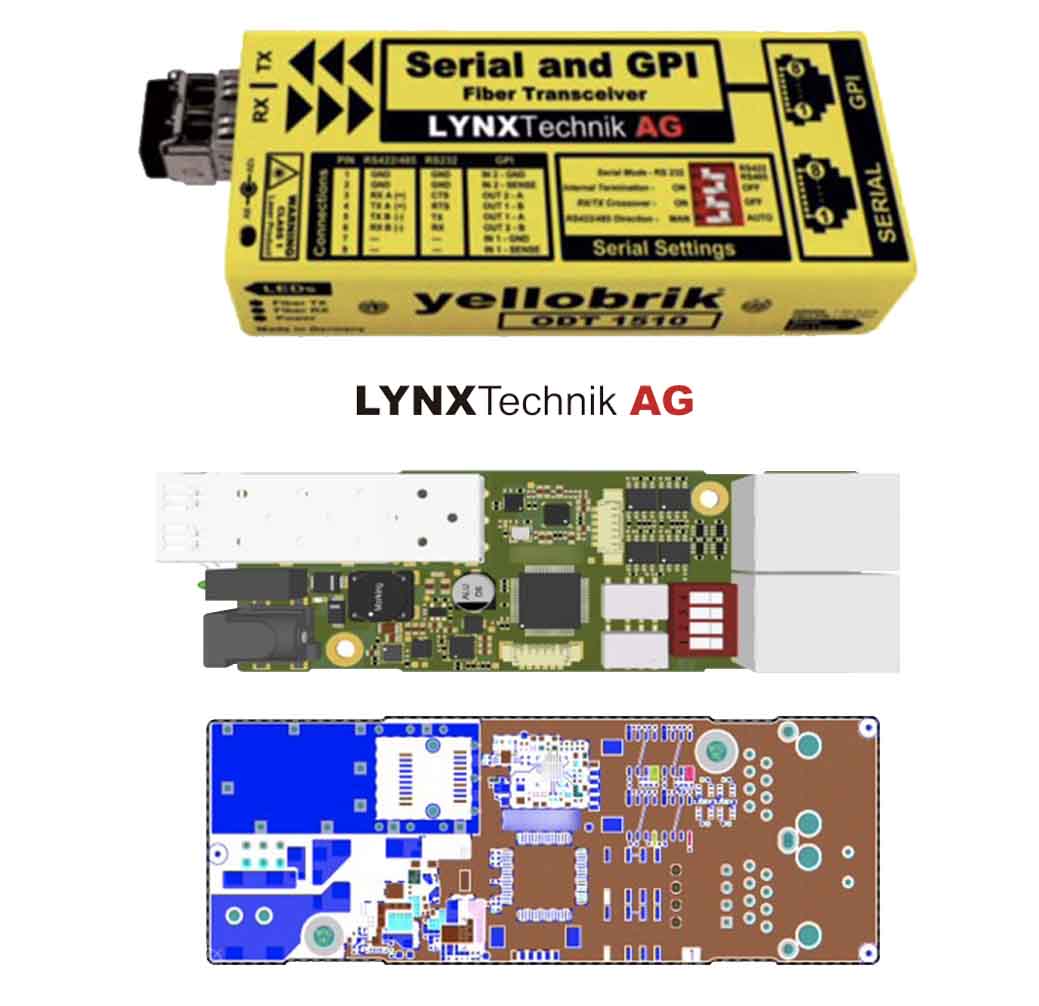
Firmware for Serial & GPI Fibre Transceiver
Pain
Solution
Result
Read the Fibre Transceiver Case
Bi-directional Quad Link 2SI/SQD Development
Pain
Solution
Result
Read the 3G/12G SDI Gearbox Case
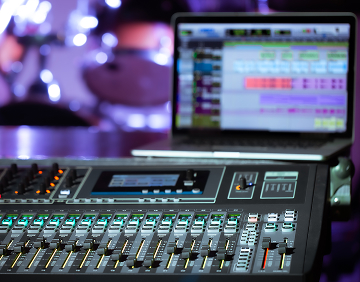
Photo for illustration purposes only
Dedicated Team for Live-Production Device
Pain
Solution
Result
How We Ensure Quality
Delivery process built for broadcast realities: latency budgets, sync, and interoperability must be verified early.


QA specifics for live and mixed-vendor environments:

Client Review


"Promwad has a solid grasp of AMD technologies — especially on the FPGA side. Their engineers go beyond the spec sheet: they understand the architecture, anticipate edge cases, and know where the real complexity lies.
In broadcasting and pro AV, that level of technical depth is hard to come by. Promwad delivers it consistently, and it shows in the quality of what they build."
— Robert Green, Senior Manager (Pro AV, Broadcast & Consumer), AMD.
Our Cooperation Models
Flexible approach to suit your current needs

Time & Material
Perfect for evolving projects. You control the budget and milestones, while we ensure transparency and fast team scaling.

Dedicated Team
Your long-term engineering capacity — a self-managed, domain-focused team integrated into your workflow for steady, predictable delivery.

Fixed Price
Ideal for well-defined tasks with clear outcomes. Scope, budget, and timelines are set upfront to guarantee predictable results.
Ready to build a deterministic FPGA video/audio pipeline — without latency or interoperability surprises?
You’ll get actionable engineering feedback and a clear next step.
FAQ
How do you guarantee predictable FPGA codec latency (vs CPU/GPU)?
What’s typical end-to-end latency, and what drives it?
Do you build custom IP cores or integrate commercial blocks? How do you validate them?
Can you integrate an ST 2110 FPGA encoder / NMOS / AES67 FPGA / IPMX FPGA stack?
Do you deliver production-ready artifacts beyond the RTL?
Can you start from existing RTL or a vendor reference design and take it to production?