


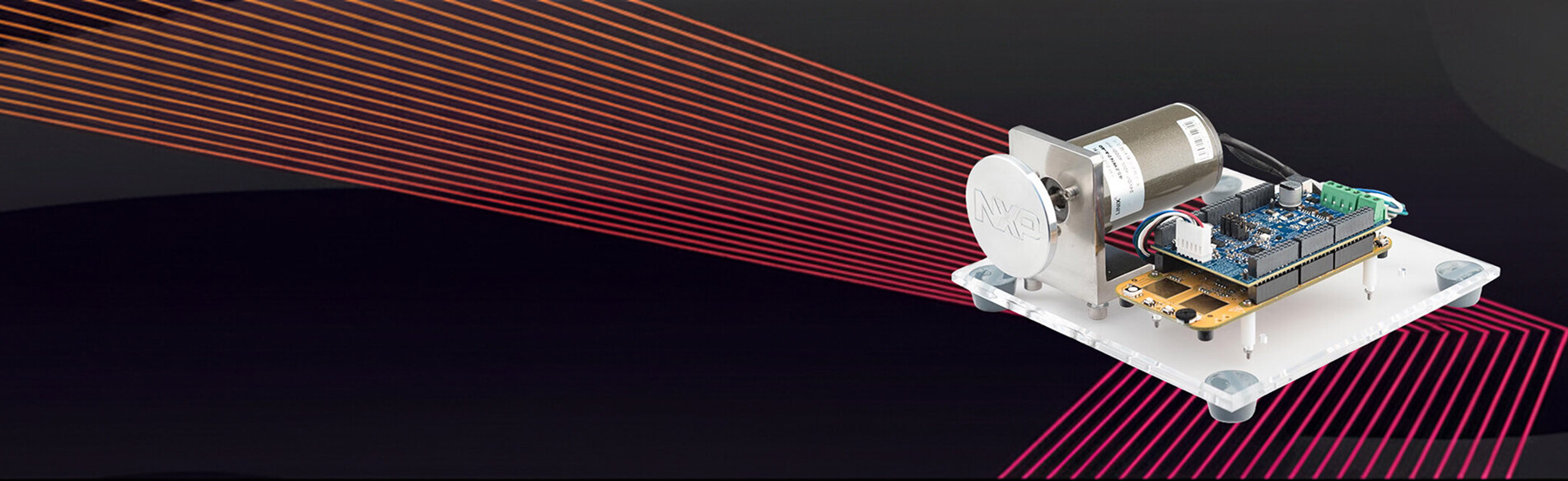
Motor
Control
Motor Control Engineering & Motor Controller Design
Adapting a drive to a new motor type, squeezing out efficiency, and hitting cost targets — all while keeping the platform production-ready — rarely happens on schedule. Control theory, power electronics, firmware, and real-time networking each pull in a different direction, and the integration risk lands on your roadmap.
Promwad closes that gap by plugging into your design project at any stage. Our motor control solutions adapt to new motor types while staying cost- and energy-efficient. We design the hardware and software platforms behind motor control and power electronics systems for automotive, industrial, and robotics.

We are proud members of the EtherCAT Technology Group, PI Community, OPC Foundation, and CLPA!




Why Promwad
A motor control project succeeds or fails at the seams — where control algorithms meet silicon, and firmware meets the power stage. That is exactly where our team lives.

Our Motor Control Expertise
From proof of concept to mass production, we guide you through every step of your journey.
Motor control devices we design
– Variable-frequency drive (VFD)
– Servo drive
– Soft starter
– Multi-axis motion controller
– Stepper motor controller

Main motor types we support
– Brushed DC motor
– Brushless DC motor (BLDC)
– Induction motor (ACIM)
– Permanent magnet synchronous motor
(PMSM)
– Stepper motor
Our Motor Control Design Services
Motor control design services at Promwad encompass a wide range of engineering solutions for motors and robotics across various domains. We are ready to guide you through every step of your journey – from proof of concept to mass production.


Motor Control Algorithms
We use simulation to compare control strategies at the architecture stage, then identify motor parameters and auto-tune the control loops on real hardware.

Control Algorithms We Use in Our Designs
- Scalar control V/f (Volts per frequency) control
- Stepper motor control
- SVPWM/SPWM/PWM control
- 6-step (trapezoidal) commutation for BLDC
Vector control
- DTC (Direct torque control)
- FOC (Field-oriented control)
Sensorless/sensored
- FOC for ACIM
- FOC for PMSM
- FOC for BLDC
Servo drives
- for PMSM
- for BLDC
- for ACIM
Our Tech Stack
EtherCAT, PROFINET, POWERLINK, EtherNet/IP, Modbus TCP, IO-Link, PROFIBUS, Modbus RTU, CANopen, RS232, RS485
Incremental (TTL/RS-422, HTL), sin/cos, resolvers, absolute encoders with SSI, BiSS-C, EnDat 2.2 and Hiperface DSL interfaces, Hall sensors
C, C++, Rust, Verilog, VHDL
ARM, RISC-V, MIPS, FPGA
-
NXP RTCESL (real-time control embedded software libraries)
-
STMicroelectronics STM32 Motor Control SDK (MCSDK)
-
Texas Instruments C2000 motor control libraries
-
Microchip motor control libraries (dsPIC33 / PIC32)
-
Renesas Motor Workbench
-
Custom FPGA implementation of motor control algorithms
Texas Instruments, Microchip, NXP, STMicroelectronics, Renesas, Infineon, Intel, Xilinx, Lattice, Analog Devices
Application Areas
Our motor control and power electronics platforms ship into demanding, real-world environments:

Automotive & e-mobility
actuators, pumps, and auxiliary drives for electrified vehicle subsystems.

Industrial automation
servo and motion drives integrated over real-time industrial networks.
Robotics & power electronics
torque/speed control for robotic and mobile platforms; converters, charging units, and power supplies.
Right Control Method for Every Motor and What's Changing in Drive Design
There is no single "modern" way to control a motor. ACIM, PMSM, BLDC, DC, SRM and stepper motors each have their own control methods and feedback options, and the right choice depends on dynamics, speed range, cost and safety requirements. We start from your motor and your application, not from a fixed reference design.
Control methods and feedback we implement by motor type
| Motor type | Typical control methods | Feedback options |
| ACIM | V/f (scalar), FOC, DTC | Sensorless, incremental encoder (TTL/HTL) |
| PMSM | FOC, DTC, sensorless FOC | Resolver, sin/cos, absolute encoders (BiSS-C, SSI, EnDat 2.2, Hiperface DSL), sensorless |
| BLDC | 6-step (trapezoidal), FOC | Hall sensors, back-EMF sensorless, encoder |
| Brushed DC | PWM with current and speed loops | Tachogenerator, incremental encoder, sensorless |
| SRM | Current chopping, angle position control | Position sensor, sensorless estimation |
| Stepper | Full-step, microstepping, closed-loop / FOC | Open-loop, incremental or absolute encoder |
Where drive design is moving
| Area | Industry direction | What we deliver |
| Power stage | Wide-bandgap SiC and GaN where efficiency and power density justify the cost | Inverter design with gate drive, layout and thermal management for fast switching |
| Feedback | Sensorless control where it reduces cost and failure points; high-resolution digital encoders where precision matters | The right sensor or estimator for your speed range, accuracy and budget |
| Commissioning | Automatic motor parameter identification and loop auto-tuning | Auto-tuning of current and speed controllers on the real motor, faster commissioning in the field |
| Functional safety | Integrated safety functions instead of external safety circuits | Architecture designed to IEC 61800-5-2 (STO, SS1, SLS and more), ISO 13849-1 and IEC 61508; ISO 26262 for automotive |
Our Case Studies in Motor Control



How We Ensure Quality
Our process is built to de-risk your drive from concept to the production line.
Trusted by Tech Leaders










Let's Advance Your Motor Control System
From proof of concept to mass production — talk to the engineers who'll build it.
FAQ
What is motor control?
What is a motor controller and how does it work?
What types of motor controllers exist?
What is sensorless FOC, and when should I use it?
When should sensorless FOC be combined with sensored feedback?