


Software-Defined
DSP
Digital Audio Mixers Design That Scales Beyond Hardware DSP Limits
Move from proprietary DSP boxes to software-defined mixing on COTS hardware, edge servers, or virtualized deployments—built for ProAV installations and broadcast production workflows, without hardware lock-in.
Promwad engineers production-ready virtual audio mixer platforms by designing system architectures, implementing low-latency DSP, ensuring AoIP and control interoperability, and validating performance under real-world load.

Extra Valuewith Promwad
Our Partners and Companies Employing Promwad Solutions







Why Promwad
Modern AV is converging: installed systems are becoming IP-first, and production workflows are becoming more distributed. Promwad helps you build software DSP that behaves predictably in real deployments—whether it lives in a meeting room rack, a venue edge server, or a broadcast workflow.

Business outcomes you can measure:
✓ Faster feature rollout: routing, metering, remote control, automation hooks
✓ Lower TCO: hardware standardization, fewer SKUs, simpler maintenance
✓ Easier scaling across rooms, venues, fleets, or production units
Share your constraints, and we’ll map a DSP + deployment concept that fits your ecosystem!
Vadim Shilov, Head of Broadcasting & Telecom at Promwad
Our Tech Stack
Your virtual mixer shouldn’t be “a box with an app.” It should be an integration-ready audio platform.
Audio-over-IP & interoperability
- NDI, Dante, AES67, Ravenna
- Optional alignment with broader IP workflows where audio travels alongside video: IPMX and SMPTE ST 2110
Control & automation integration
- Crestron, Q-SYS, Extron integration patterns (control, presets, monitoring)
- Integration-friendly interfaces: APIs, web UI concepts, telemetry/health signals for fleet operations
DSP & compute foundations
- Modular DSP pipeline design: routing, mixing, EQ, dynamics; enhanced AEC/NR where relevant
- Real-time performance techniques: buffer strategy, CPU affinity, deterministic OS tuning (real-time Linux, CPU pinning) for jitter-free audio
- Deployment options: appliance-style edge server, virtualized, containerized—built to scale cleanly
Network & Security Layer
- Traffic isolation: Implementation of VLAN tagging and multicast management to separate sensitive AoIP streams (Dante/AES67) from control and management data
- Secure control plane: Encrypted APIs (HTTPS/TLS) and authenticated access for Crestron, Q-SYS, and Extron integration patterns
- Firewall & port optimization: Minimalist OS footprint with strictly defined port requirements to satisfy corporate IT security audits
Application Areas
For ProAV installations (integrators & vendors)
- Corporate & enterprise: scalable mixing for hybrid meeting rooms, divisible spaces, campus-wide routing
- Hospitality & venues: multi-zone audio, rapid reconfiguration per event, centralized monitoring
- Public venues / transportation / control rooms: reliability, low latency, remote diagnostics
For broadcast production (vendors & platform teams)
- Multi-source production audio mixing in IP-based environments
- Remote / distributed production: mixer instances closer to sources, consistent configs across sites
- OB/temporary setups: fast spin-up, repeatable templates, predictable behavior under pressure
Migration: hardware DSP lock-in → software-defined audio
The problem: legacy DSP ecosystems weren’t built for today’s IP and software-driven workflows: closed chains, costly upgrade cycles, and interoperability friction.
Promwad’s low-risk approach
- Start drop-in: mirror current DSP behavior (routing/mix/EQ/dynamics) to minimize operational change
- Hybrid clocking: bridge the clock domains between legacy hardware (Word Clock/MADI) and new AoIP (PTPv2)
- Add interoperability layers: AoIP + control ecosystem integration without forklift replacement
- Optimize TCO structurally: scale channels/features by license/compute—not by adding boxes
Buyer reassurance
- Staged validation with clear acceptance criteria - Migration without disrupting installed systems - Rollback plan and deployment documentation for your teams
Our Case Study
Virtual audio mixer
We developed a cross-platform Qt-based application for MacOS, Windows, and Linux.
What our solution does:
- Mixes 6 inputs to 4 outputs across 4 buses for versatile audio source mixing: music, videos, IP calls, and IP radio can be mixed and sent to different audio outputs.
- Supports 8 mono microphones, 2 stereo hardware channels, and 12 stereo virtual channels simultaneously.
- Compatible with pro audio DAWs and various audio interfaces: MME, Direct-X, KS, WaveRT, WASAPI, and ASIO.
- Enables connections to musical instruments and supports VST/VST3 plugins.
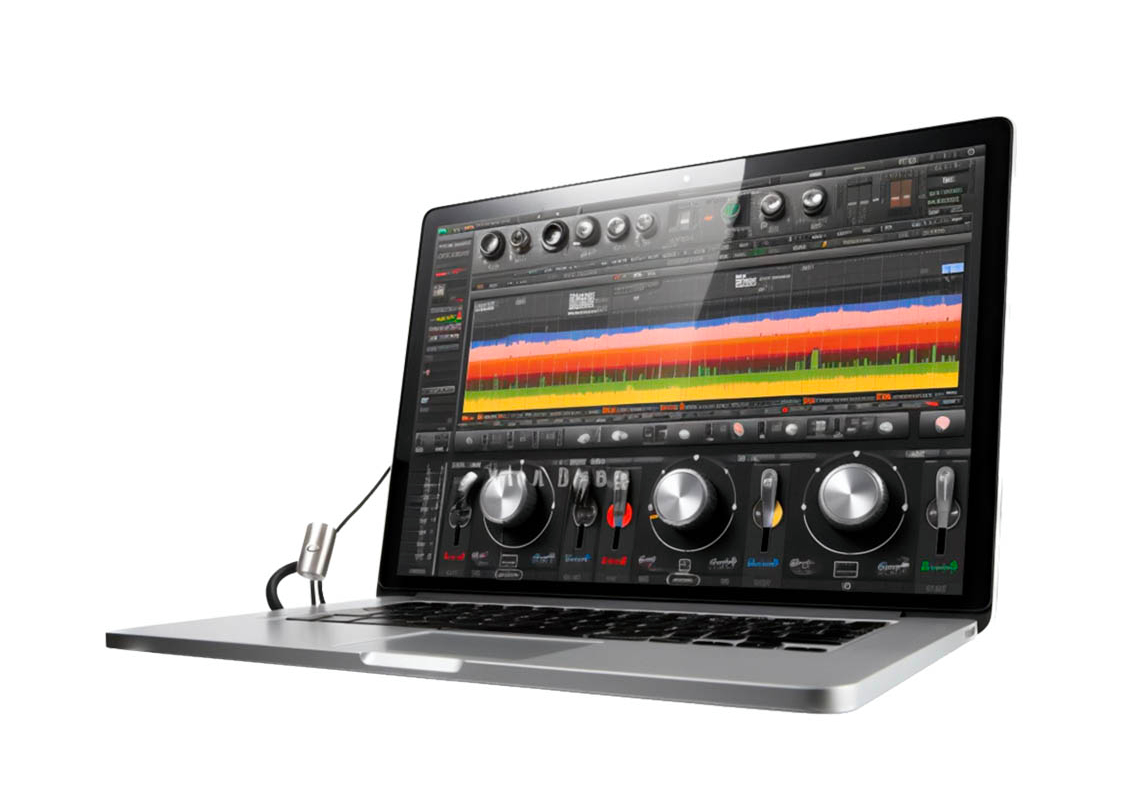
Photo for illustration purposes only
Want a reality check on feasibility and latency targets?
How We Ensure Quality


Security & Resilience Validation
Trusted by Leading OEMs and Innovators
Promwad is a trusted R&D partner for global OEMs and product companies developing advanced video, audio, and embedded solutions — including Sony and Vestel.
Our long-term clients value our technical expertise, transparency, and on-time delivery — from initial concept to full production.
We are proud to be:
✓ A design partner of NDI, Lattice, and NXP — bringing top-tier SoC and FPGA expertise to every AV project.
✓ A European R&D hub serving clients across 25+ countries, with a proven record in broadcast, digital signage, and AV-over-IP domains.

Ready to replace hardware DSP with scalable software mixing?
Promwad designs and validates virtual audio mixer platforms that cut cost, scale faster, and stay reliable under real-world load.