



Network Device
Management
Cloud Dashboard Development for Managing Network Device Fleets — From Inventory to Telemetry to Lifecycle Operations
Let’s build a unified cloud control plane for your distributed fleet of switches, routers, gateways, and telematics TCUs. It brings together inventory, real-time telemetry, configuration control, and OTA updates — built to perform across unstable WAN links
Promwad delivers the full stack — from edge firmware (OpenWrt/Yocto, multi-WAN, MPTCP) to a Go-based backend and operational web dashboard — ensuring secure connectivity, controlled change management, and fleet-wide visibility.

Trusted by Business Partners Worldwide









Why Promwad
As your one-stop engineering partner, Promwad covers all the components you need: device firmware, networking stack, cloud control plane, and web dashboard — engineered to work together seamlessly.
Designed for real-world WAN volatility and operational scale, our solutions provide reliable connectivity, controlled configuration, and full lifecycle management across your fleet.


Denis Petronenko, Head of Telecommunications Unit at Promwad
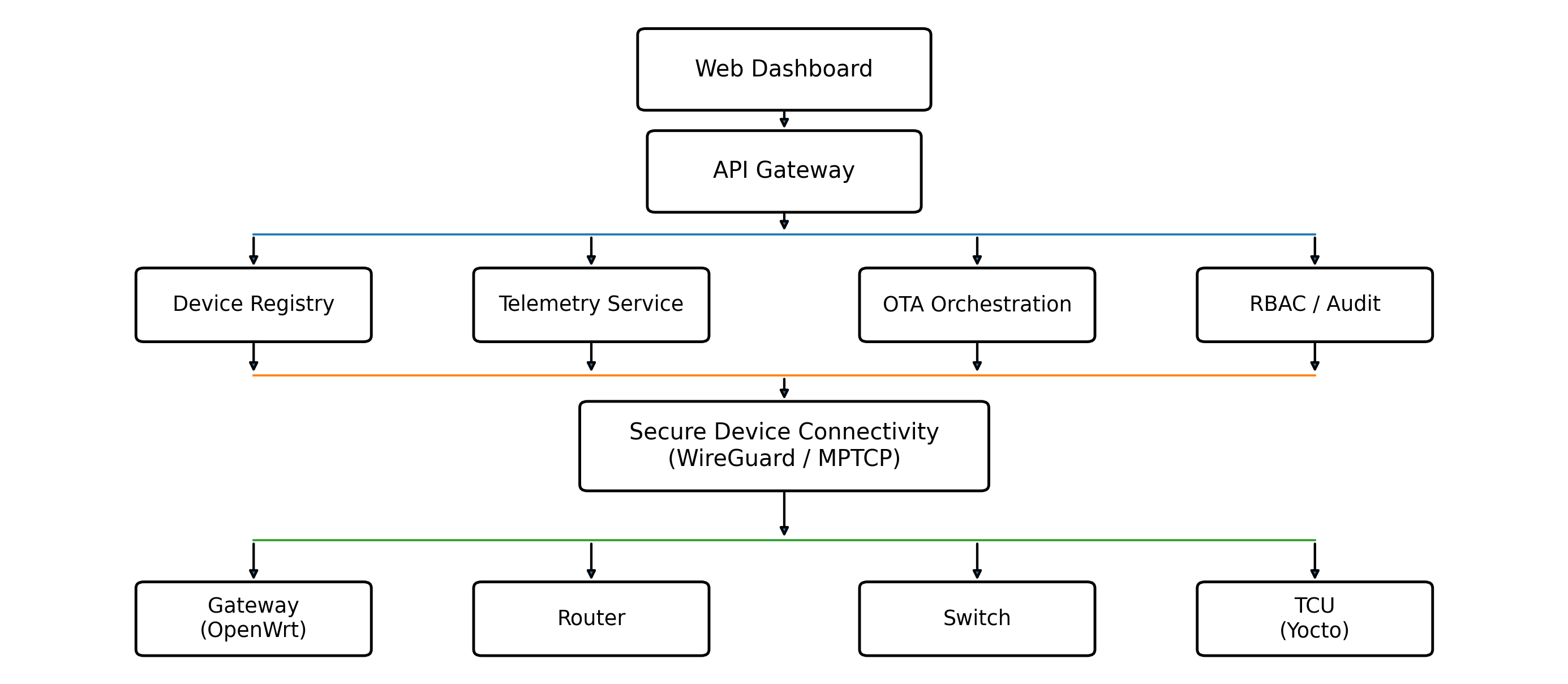
Standard Cloud Fleet Management Architecture by Promwad
Technology Stack & Network Standards
We design systems that are API-first and fleet-centric — not “TR-069-first” or “SNMP-only.” That’s how you get real-time operations, lifecycle orchestration, and mobility-grade reliability.
Edge platforms
- OpenWrt x86_64 for uCPE/branch gateways (e.g., Dell VEP-class devices)
- Yocto Linux for embedded/Automotive TCU-class devices (Linux kernel 6+ features)
Tunnels/transports
- WireGuard
- Optional transports commonly used in multi-WAN stacks (e.g., Shadowsocks / Glorytun)
Connectivity & reliability
- MPTCP (kernel MPTCP; optional path-manager concept)
- Multi-WAN policies: priority, sticky sessions/anti-flap, failover/failback
- Local breakout modes for survivability during cloud-side outages
Network functions (MVP vs expansion)
- VLAN 802.1Q, DHCP client/server, firewall zoning templates
- Static routing + BGP (FRR scope clarified to your requirements)
- Authentication: RADIUS / 802.1X, local auth (environment-dependent)
Cloud control plane & data
- Backend in Go (concurrency + network workloads)
- REST API + real-time (WebSocket / SSE)
- Telemetry landing store (e.g., MongoDB/TSDB concept) with retention/TTL + query API
- AWS baseline deployment (ECS/EKS/EC2) + IaC/CI/CD approach
- Observability: metrics/logs/tracing (OpenTelemetry-style approach)
Application Areas
Internet Service Providers (ISPs)
- Multi-WAN management for CPE/uCPE fleets- Faster incident response with real-time events, remote access, OTA
Network equipment OEMs / ODMs
- White-label dashboard for switches, routers, and gateways- Faster time-to-market with built-in onboarding, inventory, telemetry, and OTA
Automotive & mobility fleet platforms
- Telematics gateways (TCUs) with roaming and unstable connectivity- Unified view of device health, connectivity, GNSS data, and update compliance
Enterprises with distributed sites
Retail/branch networks: standardized configs, change control, audit, rollback, uptime
Industrial IoT / field networks
Remote sites with mixed uplinks (LTE/5G/Wi-Fi/Ethernet/LEO satellite) and strict resilience needs
MSPs / managed connectivity providers
Multi-tenant isolation, delegated access, and operational workflows at scale
Share your fleet parameters to receive a realistic MVP offer (scope, architecture, and milestones).
Migration: From fragmented toolchains to one operational control plane
You don’t need a “big bang” replacement. We typically migrate in stages while integrating with existing NOC/SIEM/monitoring via APIs/events.
A staged path that works:
- Inventory + onboarding/claim + basic status/telemetry + roles
- Desired configuration (versioned) + apply/rollback + templates/policies
- OTA orchestration + compliance + audit + remote access workflows
- Advanced reliability: MPTCP policy tuning, HA, local breakout, multi-region readiness
Business value: lower OPEX, fewer field visits, faster change rollout, and stronger SLA adherence.

Our Case Studies
Cloud Dashboard for Mixed Fleet (Automotive TCU & Branch uCPE)
Pain
Unstable mobile networks and distributed gateways require session continuity and centralized ops. TR-069/SNMP tools don’t fit real-time mobility and OTA workflows.
Solution
- Edge: Yocto TCU client + OpenWrt x86 client with MPTCP/OMR, multi-WAN policies, WireGuard tunnels, local breakout, HA behavior
- Aggregation: AWS EC2 aggregation servers in 1+1 HA with failover/failback
- Cloud control plane: Go-based backend (device registry, config versioning, telemetry/events, OTA, remote access brokering, multi-tenant RBAC/audit)
- Web dashboard: React app (tenant context, inventory, device details, onboarding, OTA views, logs/events, aggregation health)
Result
- More stable sessions during roaming and WAN switching
- Faster fleet operations through real-time visibility and remote workflows
- Safer rollouts with upgrade-safe configs and OTA orchestration.
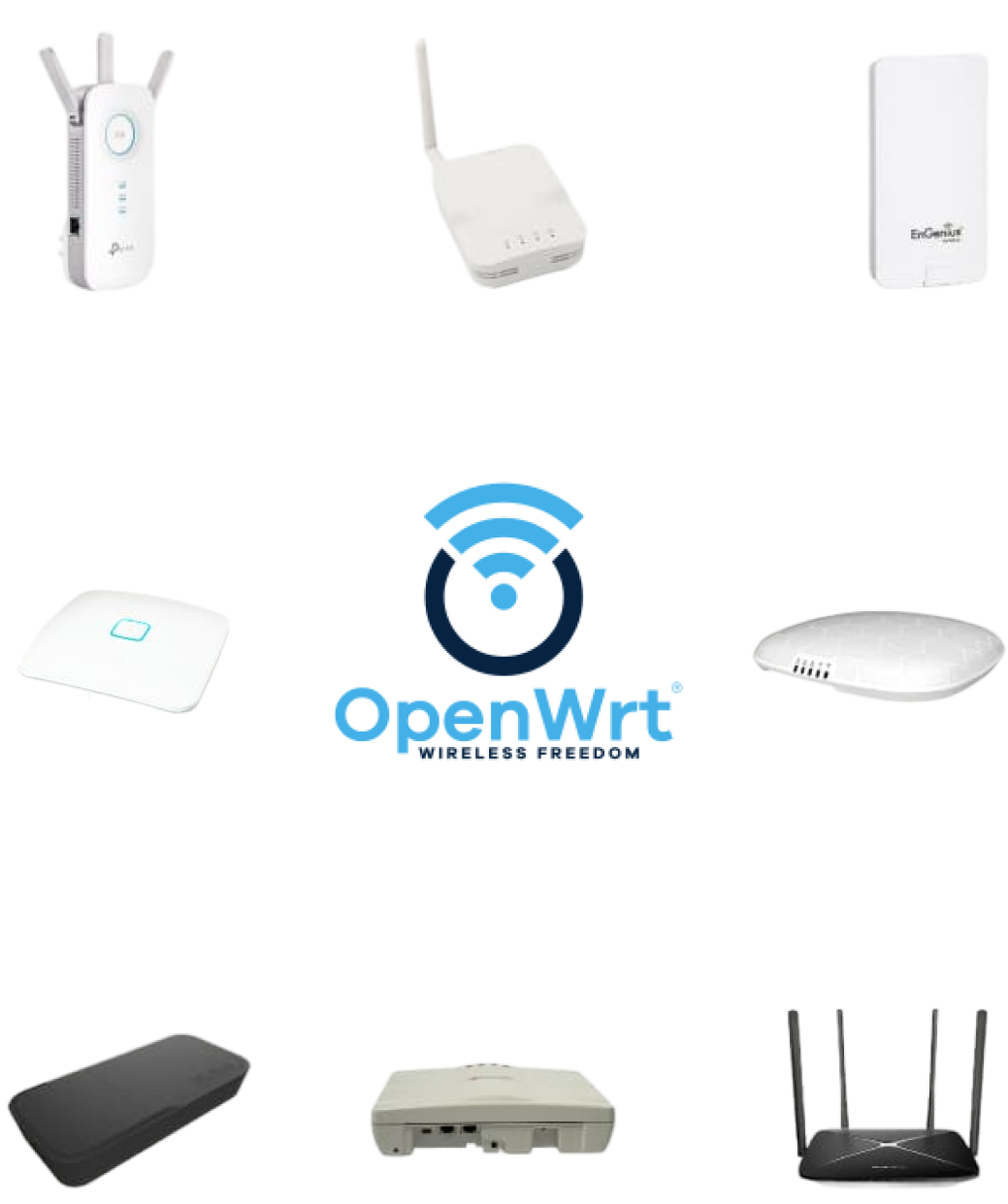
OpenWrt Porting for Multi-Vendor Wi-Fi Cloud Platform
Pain
A Wi-Fi cloud platform needed its OpenWrt-based OS to support 22 multi-vendor router models, despite hardware diversity, limited documentation, outdated codebase, and firmware restrictions.
Solution
Ported and adapted the OpenWrt-based OS across TP-Link, LigoWave, Open-Mesh, Mercusys, EnGenius, Mikrotik, and Siemens devices (Qualcomm/MediaTek).
- Reverse-engineered undocumented hardware
- Updated legacy drivers and resolved Ethernet/bootloader issues
- Identified hardware and security constraints, aligning scope with feasibility
Result
- Expanded multi-vendor hardware support
- Enabled centralized configuration, monitoring, and real-time Wi-Fi analytics
- Accelerated rollout of the custom Wi-Fi cloud solution across environments
► Full case study: Porting OpenWRT for Wi-Fi Cloud Management
What Our Clients Say
“As a result of collaboration, Promwad successfully delivered the first product. The team regularly held weekly meetings to discuss feedback and utilised email for follow-ups. Furthermore, they were knowledgeable in providing solutions.”

“The collaboration with Promwad has been successful, helping the client streamline their efforts and deliver work on time. The team is dedicated to meeting deadlines and working within the budget. Their communicative, available approach makes them easy to work with.”
“Promwad has strong capabilities to deliver project assets according to agreed-upon milestones, especially for projects where the shipment date cannot be changed. Their technical competence in Android AOSP was impressive. Promwad's technical manager/PM provided overall project status and deliverables in time via Scrum process setup.”

How We Ensure Quality
Engineering quality gates

Test strategy
Operational readiness
Observability by default (metrics/logs/traces), runbooks, incident workflows, release artifacts & documentation