Beyond Automation: How Embedded Intelligence Is Reimagining Manufacturing
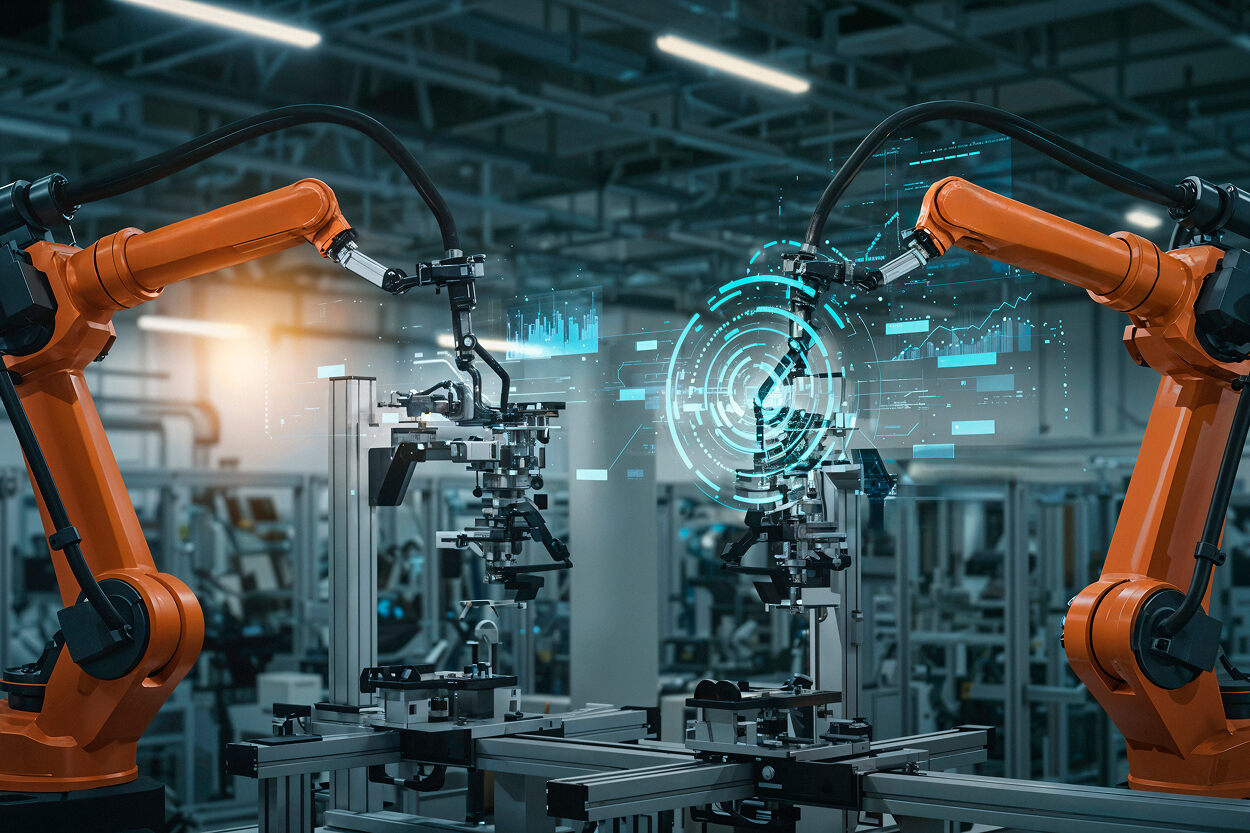
The Evolution of the Factory Floor
A few decades ago, factory automation meant programmable logic controllers, conveyor belts, and robotic arms doing repetitive tasks. Efficiency came from standardization and central control.
Fast-forward to 2030: the manufacturing floor has evolved into an intelligent ecosystem — where machines not only follow instructions but make decisions.
Welcome to the Smart Factory, a world where embedded intelligence, edge computing, and AI-driven control redefine how products are designed, produced, and maintained.
What Makes a Factory “Smart”?
A smart factory doesn’t just collect data — it understands it. Every machine, motor, and sensor becomes a source of insight, constantly feeding information into an interconnected system that learns, predicts, and optimizes.
Core elements include:
– Embedded controllers that process data directly at the machine level.
– Edge AI algorithms that detect anomalies and adapt to production conditions.
– Cyber-physical integration linking digital models with real-world behavior.
– Collaborative robotics working safely alongside people.
Instead of top-down commands, intelligence is distributed across the network — giving manufacturing systems autonomy, flexibility, and resilience.
From Central Control to Distributed Cognition
In traditional automation, all logic sits in a central PLC or SCADA system. Machines act like subordinates, waiting for orders.
Embedded intelligence changes that dynamic. Each component — from the spindle motor to the welding robot — now includes its own processor and AI model.
They communicate horizontally, sharing data and making decisions locally.
This distributed cognition reduces latency, prevents bottlenecks, and enables real-time optimization. If one machine detects a fault or material variation, others can adjust immediately — without human intervention or a central command delay.
Edge AI: The Brain of the Smart Factory
Artificial intelligence in manufacturing isn’t just about cloud analytics anymore.
Factories are deploying edge AI to analyze sensor data directly where it’s generated.
These algorithms can:
– Predict when a motor bearing is about to fail.
– Detect quality defects on the production line in real time.
– Optimize energy consumption across connected systems.
By running locally, AI ensures sub-millisecond responses — essential for safety, precision, and uptime.
For Promwad and other engineering teams, embedding AI at the edge means tailoring models to constrained environments: limited memory, harsh conditions, and strict real-time requirements.
Embedded Intelligence in Manufacturing Equipment
Next-generation manufacturing machines are no longer isolated units. They’re smart assets with built-in diagnostics, connectivity, and adaptive control.
For example:
– A CNC machine that adjusts cutting parameters dynamically based on vibration analysis.
– A packaging robot that detects misaligned items using embedded vision.
– An injection molding system that optimizes cycle times based on material temperature feedback.
These capabilities rely on local processors — often microcontrollers or SoCs with integrated AI accelerators — that run trained models without needing cloud connectivity.
This embedded intelligence makes manufacturing equipment self-correcting, reducing downtime and improving overall equipment effectiveness (OEE).
The Role of Digital Twins
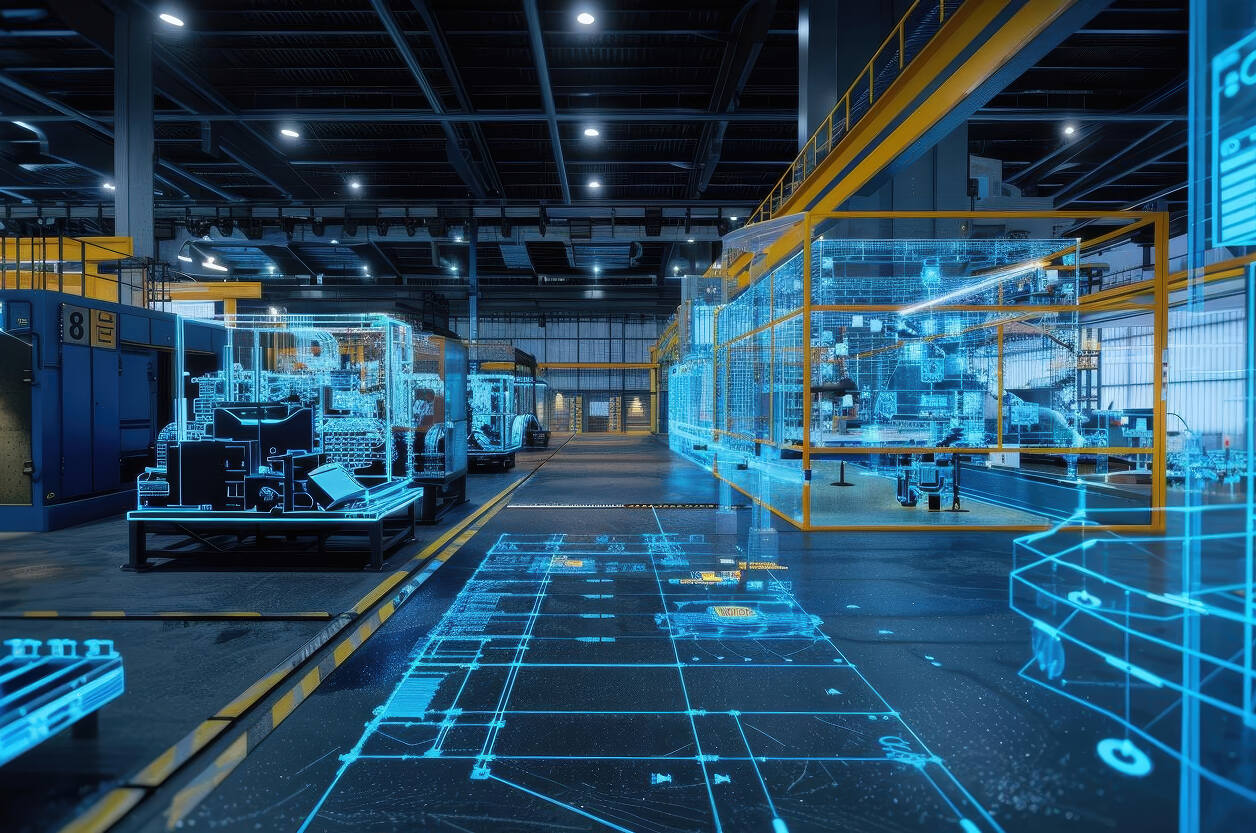
The Smart Factory 2030 relies on digital twins — virtual replicas of machines and processes that evolve alongside their physical counterparts.
Embedded devices continuously feed sensor data into these models, allowing engineers to simulate, predict, and optimize operations.
If a motor overheats, the twin can simulate load redistribution before damage occurs.
If a product line slows down, the system can suggest rebalancing in real time.
By combining embedded sensing with high-fidelity simulation, manufacturers gain a new level of visibility and control — all without stopping production.
Predictive Maintenance Becomes Autonomous
Today’s predictive maintenance systems forecast failures based on data trends.
By 2030, they’ll go a step further: autonomous maintenance powered by embedded AI.
Machines will:
– Detect anomalies in vibration or current signatures.
– Diagnose root causes locally.
– Schedule service or reconfigure themselves automatically.
Imagine a robotic arm pausing mid-shift, running an internal calibration, and resuming operation — all without human input.
This self-healing capability will redefine factory uptime and cut maintenance costs dramatically.
Human + Machine Collaboration
Despite rising automation, people remain essential in the Smart Factory.
The difference is how they interact with machines.
Instead of programming via code or control panels, operators use intuitive HMIs, augmented reality (AR), and voice commands.
Embedded systems handle complex logic behind the scenes, translating human intent into precise machine actions.
AI helps bridge skill gaps, guiding operators through procedures and adapting to their preferences.
The result is a workspace where humans focus on strategy and innovation, while machines manage execution and optimization.
Interconnected Systems and Data Flow
A single factory may contain thousands of devices — from temperature sensors to high-speed robots.
To keep everything synchronized, data must move efficiently between machines, controllers, and analytics systems.
Modern industrial networks rely on standards like TSN (Time-Sensitive Networking) and OPC UA over Ethernet, enabling deterministic communication with microsecond precision.
Edge gateways aggregate this data securely, allowing local analysis and selective cloud synchronization.
The outcome: global visibility without compromising latency or security.
Security in a Hyperconnected Environment
As factories become more digital, cybersecurity becomes as critical as safety.
Embedded systems now incorporate secure boot, hardware root of trust, and encrypted firmware updates.
AI models monitor traffic patterns for anomalies, protecting against unauthorized access or data tampering.
By integrating security directly into the embedded layer, manufacturers prevent breaches before they escalate — an essential foundation for Industry 5.0.
The Sustainable Factory
Smart doesn’t just mean fast — it also means sustainable.
Embedded intelligence helps track and reduce resource consumption in real time.
– Energy monitoring chips adjust power usage dynamically.
– AI algorithms fine-tune HVAC and lighting systems.
– Predictive analytics minimize waste in raw materials.
With governments pushing for carbon neutrality and circular economy models, intelligent hardware design becomes a strategic advantage.
The Smart Factory 2030 won’t just produce more — it will produce smarter and greener.
Integration with Robotics and Cobots
Collaborative robots (cobots) are central to the next decade of manufacturing.
They work safely alongside humans, taking over repetitive or ergonomically challenging tasks.
FPGA-based motion control and embedded vision systems allow cobots to react instantly to environmental changes — slowing down or stopping when a human enters their workspace.
By combining AI perception with precise hardware control, manufacturers achieve flexibility without compromising safety.
This integration of intelligence, speed, and empathy defines the new generation of robotic workspaces.
Real-World Example: Adaptive Assembly Line
Consider an electronics manufacturer producing multiple PCB variants on one line.
In the old model, switching products required manual reprogramming and recalibration.
In a smart factory, embedded sensors detect which components are being fed, edge AI adjusts soldering temperatures, and vision systems verify placements in real time.
When a defect is detected, the system isolates the issue, reroutes production, and alerts technicians — all within seconds.
Through embedded intelligence, adaptability becomes part of the process design itself.
The Road to 2030
By 2030, manufacturing will be defined by systems that learn, adapt, and collaborate.
Factories will operate like living ecosystems — self-regulating, self-healing, and continuously optimizing performance.
The convergence of embedded hardware, AI, and robotics will turn production from a static sequence into a dynamic, intelligent flow.
For engineering companies, this means designing platforms that can evolve — hardware that’s upgradeable, software that learns, and networks that cooperate.
The Smart Factory 2030 is not a dream — it’s the logical next step in manufacturing evolution.
AI Overview
Key Applications: industrial automation, predictive maintenance, robotics control, digital twins, energy management, and production optimization.
Benefits: real-time decision-making, reduced downtime, resource efficiency, and sustainable manufacturing.
Challenges: interoperability across devices, cybersecurity, legacy system integration, and AI model deployment on constrained hardware.
Outlook: by 2030, embedded intelligence will redefine manufacturing — making factories adaptive, data-driven, and environmentally conscious.
Related Terms: edge AI, cyber-physical systems, TSN, digital twin, cobots, industrial IoT.
Our Case Studies