Why Factories are Moving to Edge-to-Cloud: the Limits of Centralization
The shifting foundations of industrial computing
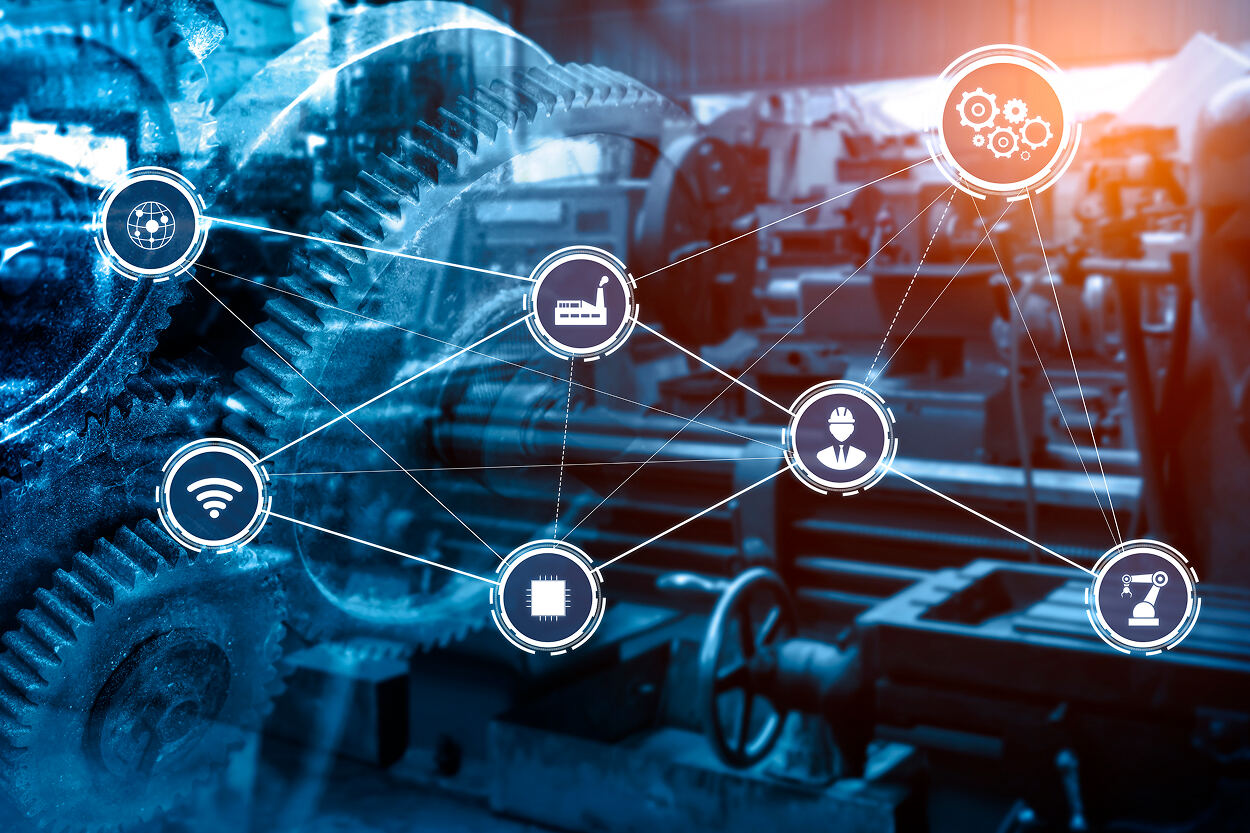
For decades, industrial automation networks were built on a simple idea: keep critical systems close to the machines and avoid unnecessary complexity. As cloud computing expanded, manufacturers gradually experimented with centralization, moving analytics, data storage and even supervisory functions to remote environments. But over time, cracks began to show. The more factories relied on distant infrastructure, the more they encountered delays, network dependency, rising bandwidth consumption and a growing mismatch between real-time operational needs and the cloud’s inherent latency. This has led to a historic shift: instead of choosing between on-premise and cloud, industries are moving toward an integrated edge-to-cloud model that distributes intelligence across all layers of the factory.
This transition is not driven simply by technological opportunity. It is driven by necessity. Industrial environments today operate under pressures they did not face 10 or even 5 years ago: unpredictable supply chains, fluctuating demand, distributed production, sustainability requirements, energy monitoring and the need to extract value from highly fragmented operational data. Centralized models strain under these conditions because they cannot respond fast enough or reliably enough. The edge-to-cloud paradigm emerges as the only architecture flexible enough to support real-time control, advanced analytics and cross-factory coordination at once.
Why cloud-centric architectures reached their limits inside the factory
Cloud systems brought enormous advantages to manufacturing: scalable processing, remote visibility, fast deployment of updates and integration with enterprise systems. But industrial processes are grounded in physical timeframes measured not in seconds but in milliseconds. The cloud cannot guarantee deterministic behaviour in these conditions. A machine tool does not wait for a round trip to a distant data center. A robotic arm cannot tolerate unpredictable jitter. A conveyor system cannot adjust to a sudden anomaly if the decision loop depends entirely on unstable network connectivity.
This gap between digital agility and physical immediacy became more visible as production lines adopted more sensors, more robots and more tightly coupled processes. The question for industrial engineers became clear: how can a centralized cloud model handle the massive volumes of data generated by modern equipment while still meeting real-time requirements at the machine level? The answer, increasingly, is that it cannot do so alone. Factories need multiple layers of intelligence distributed across the environment, each handling what it does best.
Why data gravity forces intelligence back to the edge
Manufacturing lines now produce streams of information that are too large, too fast and too context-dependent to route entirely to the cloud. Vision systems, vibration monitoring, high-speed motion control, digital twins and predictive maintenance algorithms depend on deep, continuous local awareness. Moving these workloads to the cloud introduces delays and dramatically increases bandwidth consumption. Data gravity—the principle that data tends to attract applications and computation—pushes processing closer to where the data is created.
This leads to a natural question: what types of workloads should remain at the edge, and which should move upstream? Real-time decisions belong at the machine level. Near-real-time analytics may run on local gateways. Longer-range optimizations, cross-site models, inventory simulation or energy forecasting can run centrally. The edge-to-cloud model allows each layer to operate at its optimal timescale, creating harmony between speed and scale.
Resilience as a foundational requirement for modern production
Factories cannot rely on networks that may fail at any moment. A brief outage in a consumer application is an inconvenience; a brief outage in a factory is a safety risk and a financial loss. Centralized architectures struggle with resilience because they depend on continuous connectivity. Edge computing restores independence. Even if the network goes down, the line keeps running. Machines continue to coordinate, alarms are still triggered, and safety interlocks remain operational.
This independence is not just a convenience—it is a requirement for industrial certification, uptime targets and functional safety. As operations become more digitized, resilience becomes inseparable from architecture. Factories do not adopt edge computing because it is fashionable. They adopt it because relying solely on the cloud contradicts their operational realities.
Why decentralization improves quality control and situational awareness
Quality problems rarely arise from a single catastrophic failure. Most come from subtle deviations: a slight vibration increase, a temperature rise, a misalignment, a tool wearing faster than expected. Noticing these deviations requires local context. If every data point must travel to a centralized system before being interpreted, small issues remain invisible until they escalate.
Edge analytics enables continuous detection of anomalies at the level where they happen. This allows faster reaction and more granular control. Localized intelligence can adjust machine parameters in real time, while the cloud aggregates longer-term patterns. This layered structure creates a deeper awareness of the process, making quality assurance proactive instead of reactive.
How regulatory and security pressures shape architectural choices
Industrial cybersecurity standards increasingly demand strict segmentation, controlled data flows and local governance. Centralized cloud models complicate compliance because they require broader connectivity, wider exposure and more interfaces to manage. Edge systems help factories isolate critical workloads, store sensitive data on-premise and enforce security boundaries aligned with operational risk profiles.
Moreover, local processing reduces the attack surface for time-sensitive tasks. If safety logic, machine coordination or motion control depends on cloud infrastructure, a security incident can directly impact operations. By decentralizing key functions, factories reduce these risks substantially.
Edge-to-cloud as an enabler of new industrial business models
The edge-to-cloud transition is not only a technical evolution. It is also shaping the next generation of industrial business models. Advanced predictive maintenance, outcome-based service contracts, fleet-level optimization, multi-site supply chain intelligence and AI-driven decision support all require different layers of processing. Only a distributed architecture can support such diversity.
Factories increasingly ask: how can we deploy AI without overwhelming our network? How do we build digital twins that require continuous data at microsecond resolution? How do we manage equipment fleets that span countries? Edge-to-cloud provides the foundation for these capabilities, allowing factories to scale digitally without losing real-time responsiveness.
Why latency and determinism are non-negotiable in industrial systems
Some industrial operations require strict timing guarantees, not just low latency. Determinism means knowing exactly how systems will behave under all conditions. Cloud networks cannot provide deterministic timing because they depend on external routing, congestion, and shared infrastructure. For robotics, coordinated motion systems, CNC tools, AGVs and safety mechanisms, deterministic behaviour is critical.
Edge computing brings determinism back into the system, while the cloud supports non-deterministic workloads such as cross-factory analytics or slow-changing optimisation models. The combination of both worlds enables factories to meet performance requirements without compromising digital ambitions.
Why the rise of AI accelerates the move toward edge-to-cloud
AI has become an essential tool for monitoring, prediction and optimisation in manufacturing. But not all AI runs the same way. High-frequency inference is often required at the edge, where data is generated. Large-scale training or fleet-wide model comparisons require the cloud. The more AI factories deploy, the more they realize that a single centralized environment cannot handle all stages efficiently.
Edge-to-cloud architectures give factories the ability to deploy AI where it performs best. This flexibility is crucial as AI adoption accelerates across quality control, maintenance, planning, logistics and operator assistance.
Promwad’s perspective on industrial edge-to-cloud adoption
Promwad’s work in embedded systems, industrial platforms and edge intelligence shows that factories succeed when they treat architecture not as a technical diagram but as a living system that evolves with operational needs. Many factories start with isolated proof-of-concepts and gradually expand to full edge-to-cloud ecosystems. Promwad focuses on helping companies design distributed systems that preserve real-time behaviour at the edge while enabling analytics, orchestration and integrations in the cloud. The goal is not to replace centralization entirely but to define clear boundaries for when and where centralization makes sense.
The broader industrial future shaped by edge-to-cloud architectures
The shift to edge-to-cloud will redefine plant structures, automation logic and data strategies over the next decade. Factories will increasingly operate with local autonomy, while cross-site coordination strengthens through cloud intelligence. Machine data will flow through multi-layer pipelines, not single monolithic systems. AI models will circulate dynamically between edge devices and cloud environments. New forms of resilience, flexibility, sustainability control and workforce augmentation will emerge.
The question for manufacturers is no longer whether they should adopt edge-to-cloud, but how quickly they can redesign existing architectures to support it. Centralization reached its limit not because cloud technology failed, but because industrial reality evolved faster than centralized systems could adapt.
AI Overview
Edge-to-cloud enables factories to balance real-time responsiveness with centralized intelligence. Key Applications: predictive maintenance, quality analytics, cross-site optimization, fleet management and industrial AI. Benefits: lower latency, improved resilience, reduced bandwidth load, deterministic control and scalable data processing. Challenges: architectural complexity, security boundaries, legacy integration and operational governance. Outlook: distributed industrial architectures will become the foundation of modern manufacturing. Related Terms: industrial edge, distributed control, OT data pipelines, real-time analytics, hybrid automation.
Our Case Studies