Hybrid Architectures: FPGA + ARM + x86 for Modern Video Pipelines
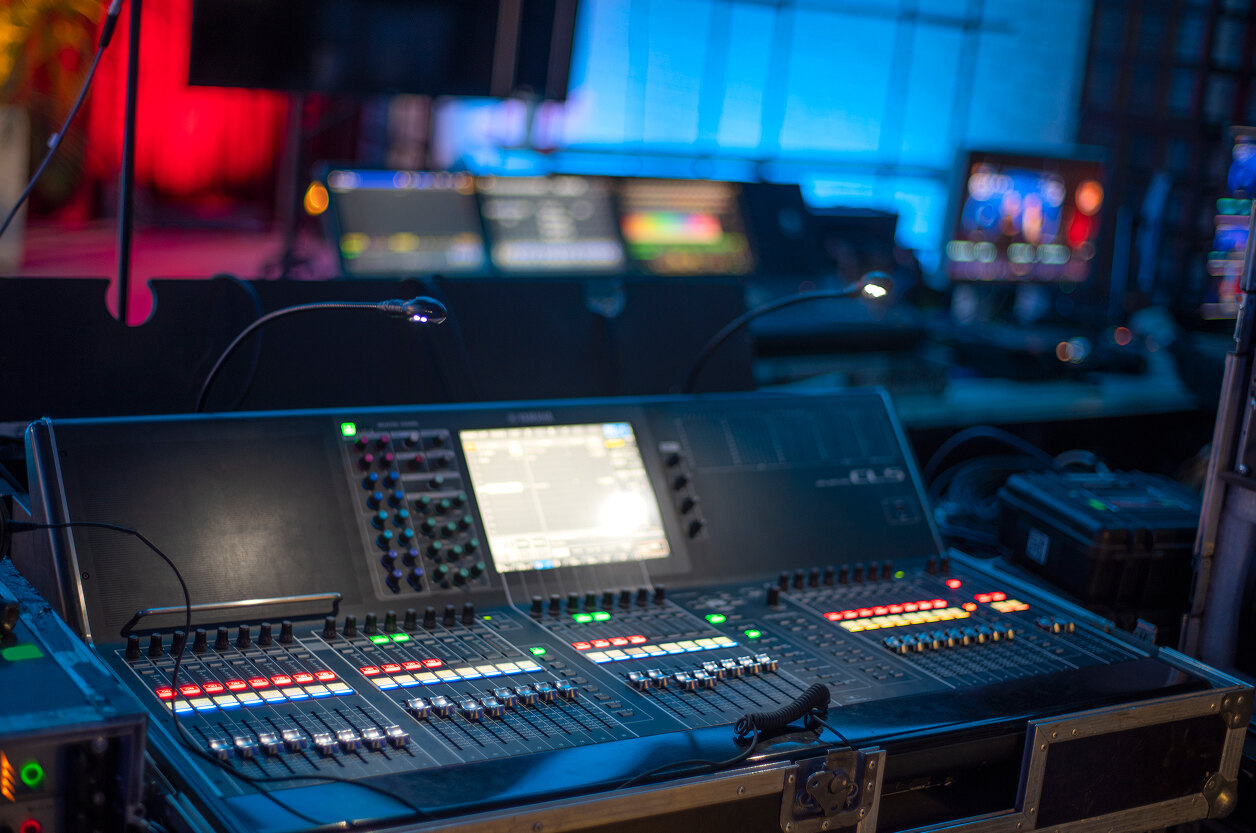
The way we build video systems has changed dramatically in the last decade. What used to be a predictable chain of SDI hardware blocks has evolved into a complex ecosystem of IP-based transport, multi-stream processing, adaptive compression, metadata workflows, and real-time analytics. Modern pipelines must confidently handle high-bandwidth uncompressed video, convert between incompatible formats, synchronize multiple camera sources, and fit into workflows that run partly on hardware and partly in the cloud.
The result is simple: no single processor architecture can keep up with all of this.
Not a fast CPU.
Not an embedded SoC.
Not even a powerful FPGA on its own.
This is why hybrid architectures combining FPGA + ARM + x86 have become the foundation of modern video systems. These platforms complement one another so well that together they deliver performance, determinism, flexibility, and longevity that none of them can achieve alone.
At Promwad, we see this pattern across nearly every real-time video project: converters, encoders, multi-camera synchronizers, industrial vision devices, ST 2110 gateways, edge AI modules, and portable field units. Once the requirements are clear — especially around latency, bandwidth, and upgradability — the architecture naturally evolves into a heterogeneous design.
What follows is a detailed, practical breakdown of why hybrid architectures matter, how each component contributes, where this approach shines, and what types of engineering challenges arise along the way.
This is not a marketing description.
This is how modern video hardware actually works in production.
1. Why Modern Video Requires More Than One Processor Family
Video used to be simpler. Even ambitious broadcast systems were often built around a few standardized interfaces and well-understood processing steps. Fixed-function hardware could easily keep up.
But modern pipelines look very different. They typically involve:
- uncompressed UHD or multi-stream HD input,
- high frame rates (60, 120, sometimes 240 fps),
- deep color formats and HDR,
- several parallel transformations,
- conversions between SDI, HDMI, IP-based protocols, and proprietary interfaces,
- codecs that evolve faster than hardware lifecycles,
- integration with cloud control systems,
- remote monitoring and orchestration,
- AI-based enhancement or analysis.
Each of these introduces tensions:
low latency vs. heavy computation,
predictability vs. flexibility,
embedded efficiency vs. software complexity.
Google increasingly promotes long, deeply useful content because it's the only way to satisfy real user intent. Hybrid architecture fits this principle perfectly: it's inherently multilayer, multi-technology, and rich in engineering details that search engines recognize as genuine expertise.
The fundamental challenge is this:
real-time video behaves like a firehose, while software behaves like a negotiation.
You can’t negotiate with a firehose.
You either meet timing, or you drop frames.
And modern formats give you no slack.
A single architecture cannot satisfy all the timing, performance, and adaptability requirements simultaneously. So the workload must be partitioned intelligently across different compute models — which is exactly what hybrid FPGA–ARM–x86 architectures offer.
2. What FPGA Brings to the Table: Deterministic Real-Time Processing
If a video system needs guaranteed behavior — not “usually low latency,” but precise, cycle-level timing — it almost always requires FPGA logic. There is simply no alternative that provides the same combination of determinism, throughput, and flexibility.
FPGA excels at:
- ingesting high-bandwidth raw video,
- operating on multiple channels in parallel,
- scaling, color-space conversion, deinterlacing,
- resampling and filtering,
- timing adjustment and synchronization,
- converting between physical interfaces (SDI, HDMI, MIPI, LVDS),
- performing operations with zero jitter.
The key reason FPGAs dominate real-time pipelines is that they don’t run code — they run hardware. Every stage in the processing chain is a physical pipeline, not a sequence of instructions. That pipeline is predictable: the delay between input and output is fixed and unaffected by background load or OS scheduling.
That determinism is critical for:
- live production,
- multi-camera recording,
- high-speed industrial imaging,
- low-latency playback,
- ST 2110 and similar IP-based environments.
Promwad engineers often design FPGA pipelines to do the heavy lifting early, such as reducing data volume, aligning frames, or preparing streams for compression. This ensures that later stages — ARM or x86 — have an easier job.
Another major advantage: FPGA logic can be updated. Standards evolve, and FPGA-based devices can evolve with them without new hardware.
3. What ARM Adds: Stability, Efficiency, and System-Level Intelligence
While FPGA handles raw processing, the system still needs a brain: something that boots the device, configures hardware blocks, monitors health, exposes APIs, and handles networking.
This is where ARM fits naturally.
ARM processors are ideal for:
- running embedded Linux or an RTOS,
- device control logic,
- configuration of FPGA registers or modes,
- low-power operation,
- telemetry collection,
- monitoring and supervisory tasks,
- lightweight media processing,
- secure communications and authentication.
ARM’s value is not in raw compute performance.
Its value is in predictability.
ARM provides the stable operational layer that keeps the entire pipeline coherent. It ensures that FPGA and x86 components behave as a coordinated system instead of isolated modules.
When Promwad builds ruggedized field units, compact encoders, or industrial video devices, ARM is often the central “systems processor,” managing everything from thermal behavior to firmware updates to error recovery.
Without ARM, the system would have no structure or operational resilience.
4. x86 as the High-Level Compute Layer for Software, Orchestration, and Analytics
Modern video systems contain large portions of logic that:
- change frequently,
- depend on customer workflows,
- require extensive memory,
- integrate with external services,
- perform complex decision-making.
x86 platforms excel at exactly these tasks.
They are well-suited for:
- orchestration and control applications,
- monitoring dashboards,
- scheduling and automation,
- metadata processing,
- AI inference pipelines,
- integrating with cloud and on-prem systems,
- transcoding or packaging workflows,
- bridging many devices under unified software.
x86 isn’t always inside the same enclosure.
It may run in:
- a companion box,
- a 1U edge server,
- a cloud node.
But it provides the software flexibility needed to adapt the system over time.
Compared to FPGA and ARM, x86 has the shortest innovation cycle. New tools, libraries, AI frameworks, and compression algorithms appear constantly — and x86 supports them with minimal friction.
This is why Promwad often places orchestration logic or high-level services on x86, even if the heavy lifting stays inside FPGA pipelines.
It gives clients room to evolve without redesigning hardware.
5. How Hybrid Architectures Actually Work Together
A hybrid video device is not three processors glued together.
It’s a carefully coordinated system where each processor handles a layer of responsibility:
FPGA → the data plane
Processes pixels at the rate they arrive.
Handles everything timing-sensitive.
ARM → the control plane
Boots the system, configures hardware, monitors operations.
x86 → the orchestration/compute plane
Runs applications, decision-making, analytics, and user interfaces.
This tri-layer approach results in:
- stable low-latency video paths,
- flexible high-level behavior,
- reliable power and thermal profiles,
- clean integration with broader ecosystems,
- significantly longer hardware lifespan.
Many Promwad projects use this exact split because it keeps each component doing the job it is naturally best at.
6. Where Hybrid Architectures Deliver the Biggest Benefits
A. Live Broadcast and Production
Latency is unforgiving; timing must be exact.
FPGA handles it flawlessly.
ARM stabilizes the device.
x86 integrates with production networks and automation.
B. ProAV and Conferencing Systems
Low power + stability + flexible formats.
Hybrid architectures enable this balance.
C. Video Gateways and Converters
When converting between SDI, HDMI, IP, MIPI, or custom protocols, hybrid design allows:
- precise signal handling (FPGA),
- deterministic transport (FPGA),
- stable configuration (ARM),
- multi-device routing logic (x86).
D. Industrial and Machine Vision
High-speed cameras generate massive data flows.
FPGA preprocesses, ARM controls, x86 analyzes.
E. AI-Enabled Video Devices
FPGA accelerates preprocessing,
ARM orchestrates pipelines,
x86 runs inference or post-processing.
7. Engineering Challenges When Building Hybrid Architectures
Hybrid systems are powerful but not simple. Engineers face real challenges, including:
Workload Distribution
Choosing what goes to FPGA vs. ARM vs. x86 is often iterative. Poor partitioning leads to bottlenecks.
Data Movement Efficiency
Unnecessary copies introduce jitter and latency.
DMA, AXI, and PCIe paths must be designed intentionally.
Toolchain Complexity
FPGA tools → hardware mindset
ARM tools → embedded mindset
x86 tools → software mindset
Teams must span 3 ecosystems.
Thermal Constraints
FPGA pipelines at UHD@60 generate heat.
Thermal design becomes part of architecture.
Testing and Integration
Timing tests, long-running stability, format switching, error recovery — hybrid systems fail where integration is weak.
Promwad invests heavily in these areas to ensure real-world reliability.
8. Why Hybrid Architecture Is the Most Future-Proof Model
Video standards change constantly.
New compression formats, new transport specs, new workflows.
Hybrid architectures survive these shifts:
- FPGA can be reconfigured,
- ARM remains a stable control backbone,
- x86 adapts to new software environments.
Devices built with this approach last longer and require fewer redesigns — which is why Promwad recommends hybrid architectures for any system expected to remain relevant for years.
AI Overview — Hybrid FPGA + ARM + x86 Architectures
Key Applications
Video converters, IP gateways, industrial vision, multi-camera systems, real-time encoders, edge AI video devices.
Benefits
Deterministic pipelines (FPGA), reliable embedded control (ARM), flexible orchestration and compute (x86), better long-term adaptability, reduced redesign cycles.
Challenges
Partitioning tasks across three compute layers, optimizing data movement, managing thermal loads, and handling multiple toolchains across one product.
Outlook
Hybrid architectures will continue to dominate real-time video hardware as bitrates increase, formats evolve, and device lifecycles stretch. Heterogeneous computing is no longer optional — it’s the backbone of modern video engineering.
Related Terms
Heterogeneous computing, real-time video processing, embedded system architecture, FPGA pipelines.
Our Case Studies