When Machines Understand You: The Rise of Adaptive HMIs in Industry and Mobility
From Buttons to Behavior
For decades, human-machine interfaces (HMIs) were simple: fixed menus, hard-coded logic, and uniform displays. Whether you were operating a factory robot or driving a car, the interface expected you to adapt to it.
Now, that relationship is changing.
The next generation of HMIs is adaptive — powered by AI models that observe behavior, interpret intent, and modify interfaces dynamically.
Instead of users learning how to control machines, machines are learning how to communicate with users.
This evolution, driven by embedded AI, sensor fusion, and context-aware design, is transforming both industrial control panels and in-vehicle experiences.
What Makes an HMI “Adaptive”?
An adaptive HMI doesn’t just respond to inputs — it anticipates them.
Using data from sensors, cameras, and environmental systems, it interprets user behavior and operating context to adjust how information is presented or how controls behave.
For example:
– In an industrial setting, it simplifies controls when operators are under stress or wearing gloves.
– In a car, it dims non-critical data when the driver’s attention is divided.
– In both cases, it tailors the interaction to the situation, improving safety and comfort.
This level of responsiveness requires intelligence embedded directly into the HMI system — close to the edge, where latency and context matter most.
The Role of AI and Machine Learning
At the heart of adaptive HMIs are AI models that analyze real-time data streams: gestures, voice commands, gaze direction, and even biometrics.
Machine learning enables interfaces to:
– Recognize patterns in user behavior.
– Predict the next action or request.
– Adjust UI layouts or priorities automatically.
For instance, if an operator repeatedly accesses specific parameters during a shift, the interface can rearrange its dashboard to bring those functions forward.
In cars, AI can combine driver monitoring with environmental data to predict when fatigue might occur and proactively modify the interface to reduce distraction.
These systems make machines situationally aware — a major leap beyond static touchscreen menus.
Industrial HMIs: Smarter Control, Safer Operations
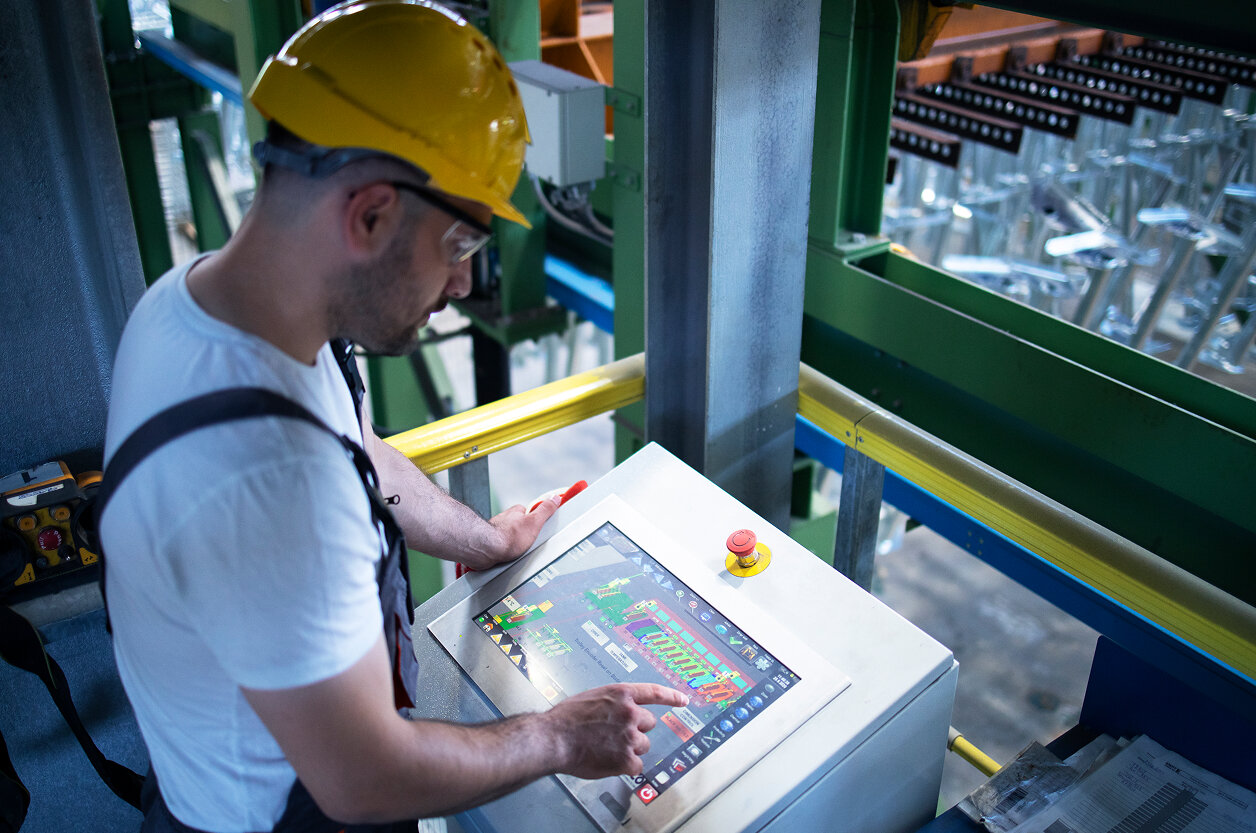
In industrial environments, adaptive HMIs are becoming vital for safety and efficiency.
Factories, energy plants, and logistics systems all rely on human supervision, but human attention is finite. Traditional control panels overwhelm operators with too much information.
AI-driven HMIs solve this by dynamically filtering what’s displayed. When everything runs normally, they show only essential data. When anomalies appear, they highlight the affected subsystems and guide corrective actions.
They can even evaluate operator workload and redistribute alarms automatically — reducing cognitive overload during emergencies.
For example, if a temperature spike occurs in one section of a plant, the HMI prioritizes relevant sensor readings, locks unnecessary menus, and displays an automated troubleshooting sequence.
This is how adaptive design directly enhances operational resilience.
Automotive HMIs: Context-Aware Mobility
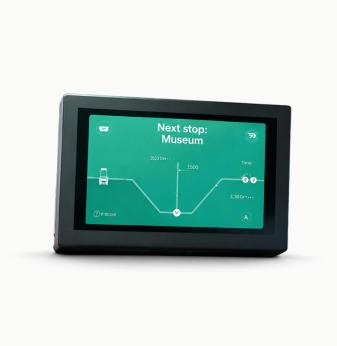
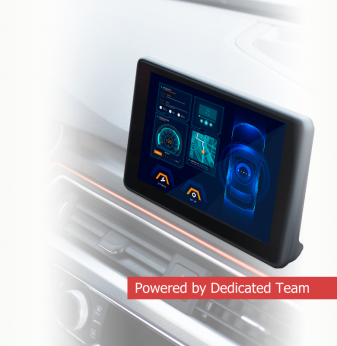
In the automotive world, the HMI has evolved from buttons and knobs to digital dashboards, touchscreens, and voice assistants.
Now, AI adds the missing layer — context awareness.
The car’s interface can now understand the driver’s state, preferences, and surroundings.
For example:
– When the cabin gets dark, the dashboard transitions to night mode automatically.
– When the navigation detects heavy traffic, it surfaces alternate routes on the main display.
– If voice analysis detects stress, the voice assistant responds more calmly and simplifies menus.
Advanced systems integrate with driver monitoring cameras to gauge attention and adapt feedback intensity. A distracted driver might receive more visual alerts, while a focused one gets fewer.
This isn’t about fancy screens — it’s about building trust between humans and intelligent systems.
The Technology Stack Behind Adaptive HMIs
Creating an adaptive interface requires several layers of technology working in sync:
- Sensors and data acquisition: capturing physical signals such as motion, touch, or speech.
- Edge AI inference: processing sensor data locally for real-time adaptation.
- Context modeling: identifying user state, environment, and task priority.
- Dynamic UI rendering: updating visuals or haptic feedback based on AI output.
- Cloud or local learning: refining models from aggregated usage data.
This architecture balances responsiveness with security. The most time-critical logic — like driver monitoring — runs directly on embedded processors or FPGAs, while less urgent updates sync with cloud analytics.
Designing for Human-Centric Intelligence
The best adaptive HMIs don’t feel “smart.” They feel natural.
Achieving that means applying design thinking and cognitive psychology as much as machine learning.
Engineers must translate user goals into system behavior that feels intuitive rather than intrusive.
For example:
– Gradual transitions rather than abrupt UI changes.
– Nonverbal feedback through color, light, or vibration.
– Predictive suggestions that don’t interrupt workflows.
In short, adaptive HMIs succeed when users don’t notice the adaptation — they simply perform tasks more efficiently.
Challenges in Building Adaptive Interfaces
While the potential is enormous, implementing AI-driven HMIs isn’t simple.
Key challenges include:
– Data privacy: handling personal and biometric information responsibly.
– Consistency: ensuring the interface remains predictable while adapting.
– Verification: validating ML-driven behavior under safety-critical conditions.
– Hardware constraints: deploying neural inference on resource-limited embedded systems.
Addressing these requires interdisciplinary collaboration between software developers, UX designers, data scientists, and hardware engineers.
Companies like Promwad that combine embedded expertise with AI design are uniquely positioned to tackle such cross-domain challenges.
Adaptive HMIs in Practice: Examples Across Industries
- Industrial robotics: control panels that learn operator preferences and optimize layout for repetitive tasks.
- Energy systems: dashboards that change visual priority based on load conditions or grid stability.
- Automotive infotainment: multi-modal UX blending AR navigation, voice, and gesture recognition.
- Medical devices: interfaces that simplify controls during critical procedures to reduce error risk.
- Aviation and rail systems: cockpit displays that highlight abnormal readings dynamically.
These examples share a common goal — transforming data into actionable understanding at the moment it’s needed most.

Embedded AI Hardware: From MCU to SoC
Adaptive interfaces depend on local intelligence. That’s why many next-gen HMI systems run on hybrid architectures combining CPUs, GPUs, and AI accelerators.
For instance:
– ARM-based SoCs with dedicated neural engines (like NXP i.MX or Qualcomm SA series).
– FPGA-based vision processors handling gesture or gaze recognition.
– DSPs running lightweight speech recognition at low power.
This enables real-time inference without relying on constant cloud connectivity — essential for automotive and industrial environments where uptime and security are non-negotiable.
Multi-Modal Interfaces: Beyond Touch and Voice
Touchscreens alone are no longer enough. Adaptive HMIs integrate multi-modal input — combining gesture, speech, gaze, and even emotion recognition.
For example:
– A factory operator can issue a verbal override while wearing gloves.
– A driver can raise the volume with a hand motion without looking away from the road.
Each modality is processed through its own embedded AI pipeline and merged through sensor fusion for context consistency.
The system interprets intent rather than raw input — another step toward truly human interaction.
Safety and Regulation
As adaptive interfaces spread, safety standards must evolve.
In industrial control and automotive environments, UI adaptation must never compromise operator awareness or violate certification boundaries.
Standards like ISO 26262 (automotive functional safety) and IEC 61508 (industrial safety) now intersect with AI explainability and human factors engineering.
Designers must ensure that machine learning components are auditable and predictable — even as they learn.
Cybersecurity is also integral: adaptive systems must protect against spoofed gestures, manipulated inputs, or firmware tampering.
Future Outlook: Context as a Design Paradigm
By 2030, adaptive HMIs will move beyond isolated products.
They’ll become ecosystem interfaces, connecting vehicles, machines, and people through shared context.
Imagine an operator leaving a control room, entering a vehicle, and the HMI instantly adapting to their preferences and alert priorities — a seamless transition between workspaces.
That’s the future of interaction: personalization without friction.
It’s also the next competitive edge. Companies that design adaptive, AI-enhanced interfaces will define not just how users interact with technology — but how they trust it.
Why It Matters
Adaptive HMIs merge human intuition with machine precision. They bridge the gap between automation and empathy.
For industries where reliability, safety, and user experience converge — such as automotive, manufacturing, and energy — this fusion defines the future.
As interfaces become intelligent companions rather than static tools, human-machine collaboration will evolve from command and response to true cooperation.
AI Overview
Key Applications: industrial automation, automotive cockpits, energy control systems, medical interfaces, and robotics dashboards.
Benefits: personalized UX, improved safety, reduced cognitive load, faster response, and enhanced accessibility.
Challenges: data privacy, explainability, regulatory compliance, and resource-efficient AI deployment.
Outlook: adaptive HMIs will become the new standard in embedded design — blending AI-driven insight with human-centered interaction.
Related Terms: edge AI, context-aware UX, multimodal interface, driver monitoring, gesture recognition, voice-enabled control.
Our Case Studies