Promwad at ISE 2026: Highlights & Engineering Discussions for Broadcast & Pro AV
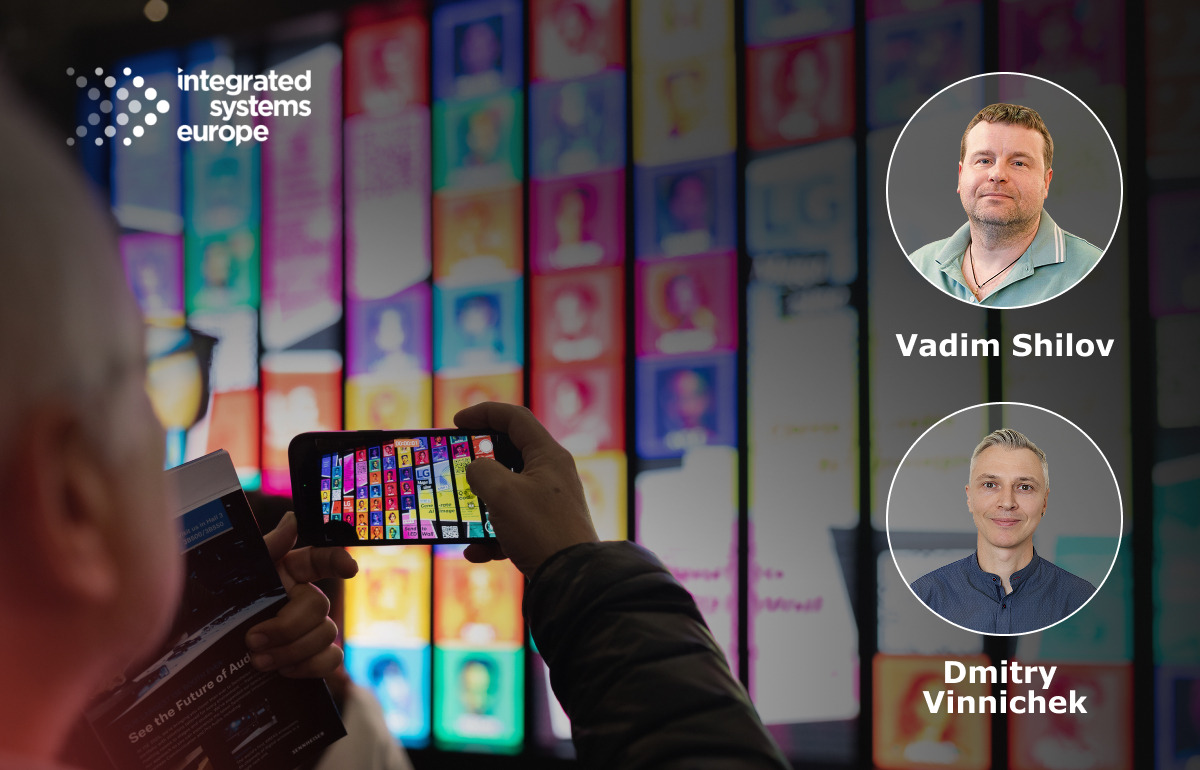
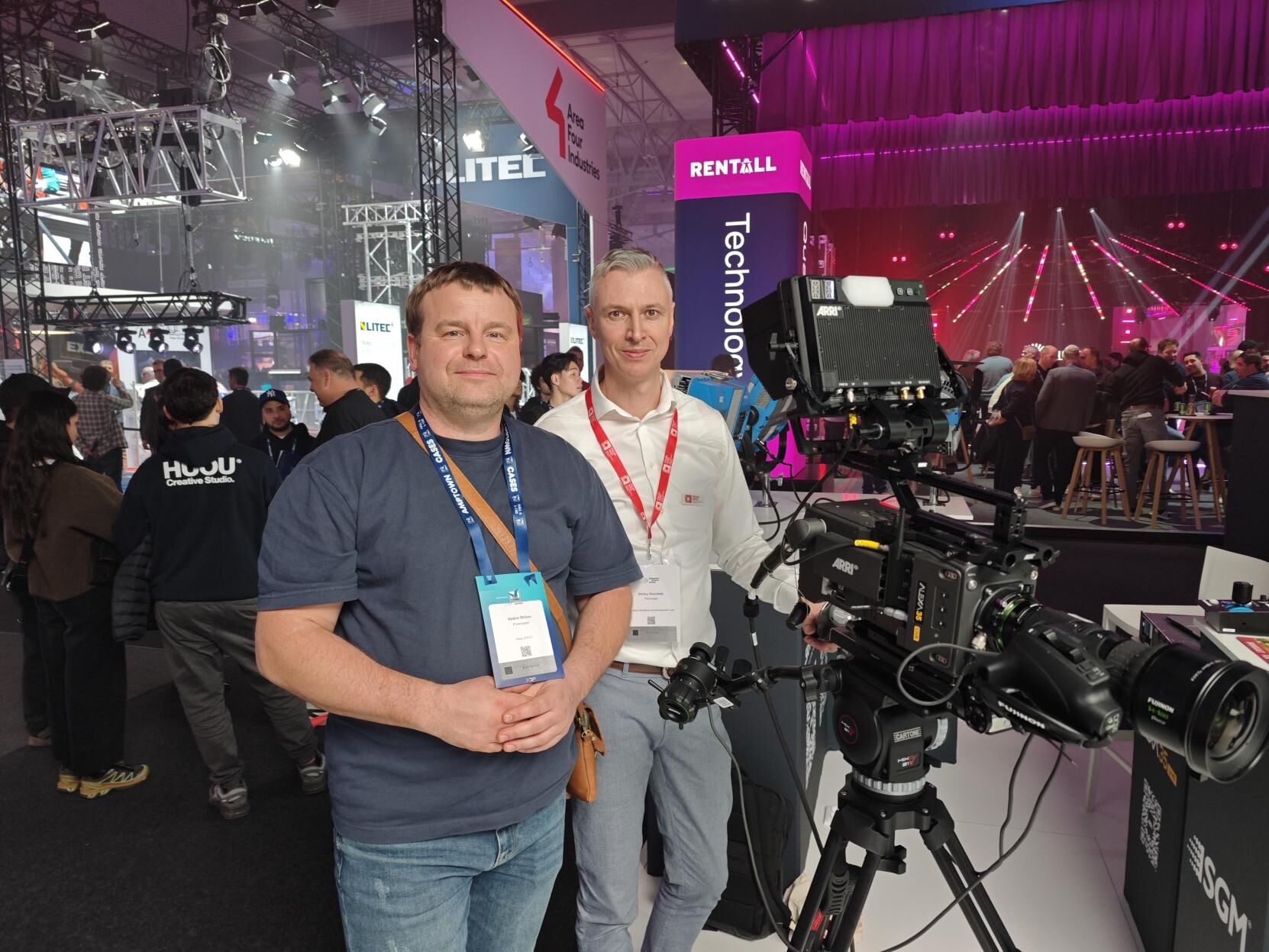
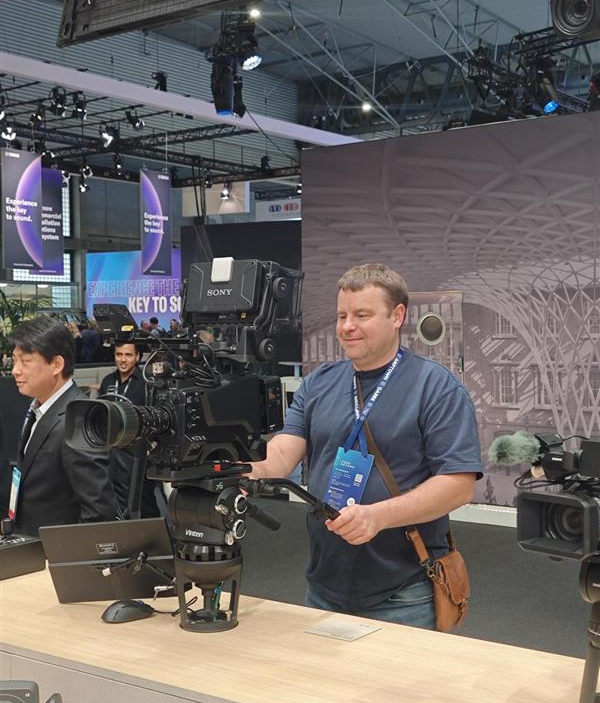
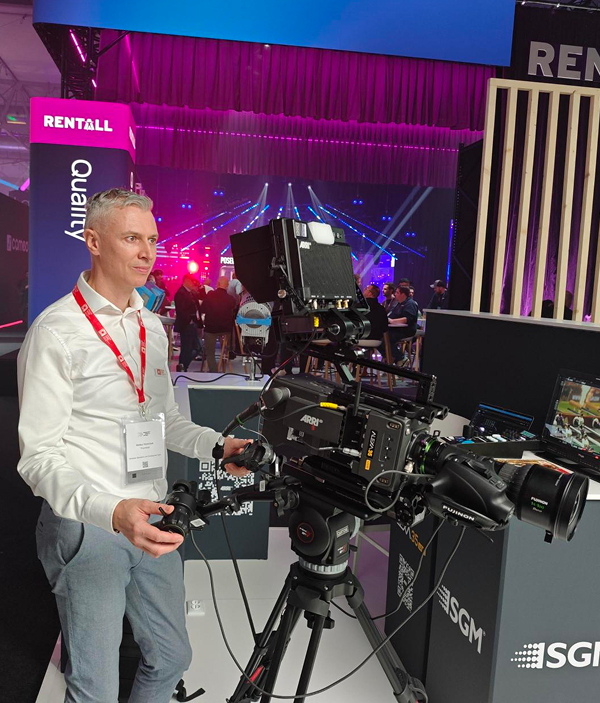
From 3–6 February, we attended Integrated Systems Europe 2026 in Barcelona, meeting with broadcast OEMs, studios, and Pro AV teams to discuss real-world engineering challenges in modern media systems — across both hardware and software development.
Ahead of the exhibition, we prepared the 2026 Engineering Playbook for Broadcast & Media, outlining seven engineering trends we expect to shape customer requirements in the coming years, based on our project experience and market expert insights.
Discussions at ISE confirmed that these topics are highly relevant today, with teams consistently focusing on low-latency performance, interoperability in mixed-vendor environments, and the growing adoption of AV-over-IP workflows.
Engineering insights from ISE 2026
ISE 2026 highlighted three dominant forces shaping broadcast and Pro AV development: IP-first system design, AI embedded into workflows, and engineering decisions driven by sustainability and resilience. Across booths, sessions, and meetings, it became clear that vendors are moving away from isolated “one box” products toward complex systems that must operate reliably across hardware, embedded software, networking, and user interfaces.
1. Broadcast and Pro AV convergence increases system complexity
ISE further positioned itself as a convergence show, with broadcast vendors increasingly targeting Pro AV markets. In practice, broadcast teams still frame solutions in infrastructure terms—IP networks, timing, redundancy—while Pro AV buyers expect finished, easy-to-use outcomes such as room-ready workflows and simplified control. This gap creates additional integration and productization challenges as solutions scale.
- Broadcast OEMs: adapting broadcast-grade technology into Pro AV-oriented SKUs with simplified UX, role-based interfaces, and repeatable workflows for corporate studios, education, and hybrid events.
- Pro AV product teams: building platforms that span both domains while maintaining predictable behavior in real-world, mixed environments.
- Integrators: developing proprietary solutions that require custom control, monitoring, and orchestration layers bridging broadcast reliability with Pro AV usability.
2. AV-over-IP and standards are now baseline requirements
Interoperability and software-defined AV were recurring topics throughout ISE 2026. AV-over-IP is no longer viewed as a differentiator but as a baseline expectation. The engineering challenge has shifted from claiming standards support to making multi-vendor interoperability repeatable and verifiable in production.
- IP modernization: SDI-to-IP transitions with ST 2110 and NMOS, including registry integration, flow control, and multi-vendor validation.
- AV-over-IP implementations: NDI-based and hybrid approaches that balance latency, cost, and operational simplicity.
- Verification tooling: test frameworks and automation to validate interoperability across mixed vendor ecosystems.
3. AI delivers value only when integrated into workflows
AI appeared throughout ISE 2026, not as standalone products but as capabilities embedded into control, automation, and media workflows. In corporate and education environments, the emphasis is on making advanced AV systems usable by non-experts, which places additional demands on system design and lifecycle management.
- Workflow integration: AI-assisted camera control, scene switching, captioning, quality monitoring, and anomaly detection exposed through stable APIs.
- System design: data pipelines, telemetry, and edge-to-cloud splits suitable for production environments.
- Operational readiness: compliance and governance considerations implemented without adding unnecessary complexity.
4. Sustainability and resilience influence engineering decisions
Discussions at ISE 2026 shifted away from headline specifications toward long-term efficiency. Power consumption, thermal behavior, serviceability, and lifecycle cost are increasingly treated as core engineering constraints, alongside growing concern about supply-chain volatility.
- Hardware efficiency: low-power architectures and thermal-aware designs.
- Lifecycle resilience: modular designs and component second-sourcing strategies.
- Fleet management: remote monitoring and health telemetry to support long-term operation.
5. Vertical focus strengthens product positioning
Messaging at ISE showed a clear contrast: non-broadcast vendors increasingly speak in vertical-specific terms, while broadcast messaging often remains generic. Products positioned around clear use cases and deployment scenarios tend to resonate more strongly than abstract claims.
- Vertical bundles: firmware variants, presets, and UI profiles tailored to specific markets.
- Workflow packaging: deployable templates and integrations with control and monitoring systems.
- Roadmap execution: engineering support for MVP delivery, migration projects, and scale-up.
The conversations at ISE 2026 reinforced that these are not future considerations. They represent current engineering requirements for teams building and evolving broadcast and Pro AV systems in production environments.
Key takeaway
ISE 2026 clearly showed that broadcast and Pro AV systems are becoming more IP-centric, software-defined, and workflow-driven. As a result, product differentiation increasingly depends not on individual components, but on the ability to engineer complete, reliable systems that scale across hardware, software, and mixed-vendor environments.
► Learn more about Promwad Services for Broadcasting & Media
Let's continue the conversation
If these challenges resonate with your current roadmap or active projects, Promwad is ready to support you as an engineering partner — from early architecture and prototyping to system validation and production support.
Some images are courtesy of ISE, Integrated Systems Europe
Our Case Studies