Smart Home Trends 2026: Matter 1.3, Local AI Hubs, Secure Automations
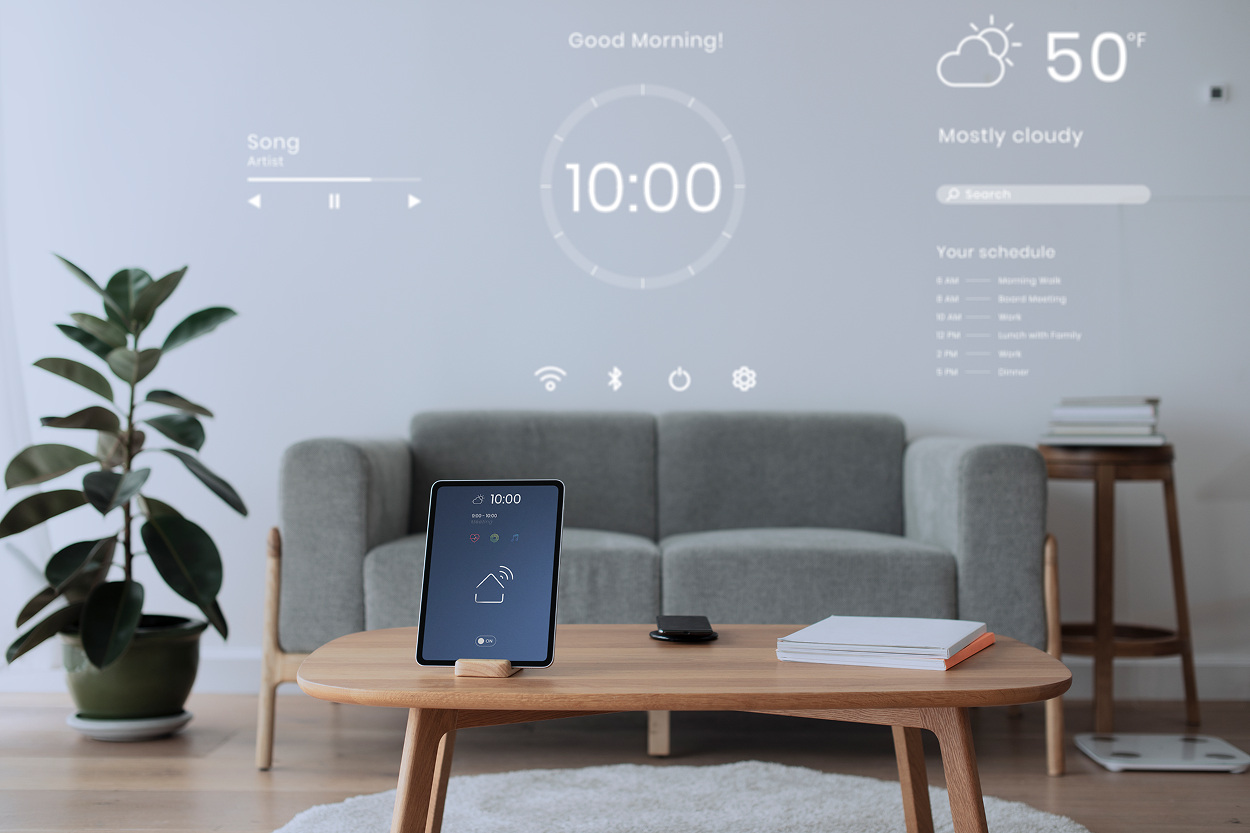
Smart home technology has been moving quickly for years, but 2026 marks the moment when the ecosystem finally starts to feel consistent, reliable, and genuinely intelligent. The core technologies introduced in 2025 — AI-driven assistance, interoperability, energy monitoring, advanced security — have now matured into real architectural patterns that developers can rely on. What we see in 2026 is less about flashy features and more about meaningful progress: smarter standards, more capable local processing, and automation systems that are actually secure and trustworthy.
Companies building smart home devices now focus on practical questions: how to make devices from different brands behave well together, how to reduce latency without relying on cloud services, how to protect users from unsafe automations, and how to keep everything working even when the network is unstable. These questions define the foundation of smart home systems in 2026.
Many of the ideas that define smart homes in 2026 were already visible a year earlier, when the industry focused on rapid expansion across AI-driven assistants, universal connectivity, security enhancements, and energy efficiency. In 2025, smart home discussions emphasized emerging standards like Matter, cloud-powered automation, and faster connectivity as parallel trends shaping the market. A broad overview of that phase can be seen in a 2025 analysis of smart home technology trends, which captures a period of experimentation and growth. What distinguishes 2026 is not the introduction of entirely new concepts, but the way these trends converge into consistent architectural patterns built around reliable interoperability, local intelligence, and secure, predictable automation.
This article breaks down the three most significant trends shaping connected living this year: Matter 1.3 as the improved interoperability layer, the rise of local AI hubs for on-device intelligence, and the transition to secure, accountable automation models.
Matter 1.3: A More Mature Standard for Interoperability
Matter made smart home connectivity simpler by offering a unified way for devices to discover and communicate with each other. In 2026, version 1.3 delivers the refinements that developers, installers, and users have been waiting for. The updated specification focuses on removing inconsistencies, strengthening reliability, and ensuring that devices remain usable even if cloud services go offline.
Matter 1.3 improves device behaviour in everyday scenarios that previously caused frustration. For example, when multiple controllers send commands at the same time, the new version includes clearer state transition rules, better conflict resolution, and a more predictable way to handle priority. Lighting, access control, HVAC, and energy management devices now operate with far fewer mismatches between their actual and reported states.
For developers, one of the biggest practical improvements is the enhanced reliability of local operations. Matter 1.3 pushes more logic into the local network rather than relying on the cloud. This allows devices to respond instantly and remain functional even during internet outages — a critical requirement for security systems, climate control, and home energy setups.
Security Enhancements in Matter 1.3
Security was always part of Matter’s promise, but with 1.3 it becomes significantly stronger. The new specification introduces stricter device attestation rules, more predictable key rotation, and better integrity checks for local traffic. These improvements help ensure that only verified devices can join a home network and that automation events cannot be spoofed.
Developers often ask how Matter 1.3 handles multi-device interactions and prevents unsafe triggers. The answer lies in its updated cryptographic procedures, mutual authentication, and more careful handling of state propagation in complex automations. The overall effect is a system that behaves more like an integrated platform rather than a set of loosely connected devices.
Local AI Hubs: Bringing Intelligence Back Into the Home
One of the biggest shifts in 2026 is the move away from cloud-only processing. Local AI hubs — compact devices with enough processing power to run real-time models — become central to smart home design. They act as the intelligence layer for automation, context awareness, and on-device decision-making.
A local AI hub can interpret sensor data, recognize patterns, predict user behaviour, and trigger actions across the home — all without sending raw data to remote servers. This brings two major benefits: significantly lower latency and stronger privacy. It also makes automation possible even when internet connectivity is poor or unavailable.
Practically speaking, local AI hubs support a wide range of tasks:
- differentiating everyday movement from unusual activity
• predicting when to heat or cool the home based on learned patterns
• improving voice command accuracy
• managing device schedules and energy usage with local insight
• reducing cloud costs for OEMs and end users
Developers increasingly evaluate local hubs as a way to offload AI workloads from individual devices. Instead of embedding heavy ML models into every sensor, the home can rely on a small number of AI-equipped hubs that coordinate information with minimal delay.
Real-World Value of Local AI
Users quickly notice improved responsiveness. Commands that used to take a second to reach the cloud and return now feel instant. Smart homes become more personal, because local models can adapt to the rhythms of a specific household without sending sensitive behaviour data to external systems. This shift also helps smart home products meet new privacy expectations and local data protection laws.
As developers ask how local AI compares to cloud inference in real deployments, the answer is increasingly clear: local models are fast enough, accurate enough, and private enough to handle most automations that need immediate action or contextual awareness.
Secure Automations: The New Foundation of Smart Living
In 2026, automation is no longer just a convenience feature. It is a core part of home safety, energy efficiency, and daily comfort. But as automation becomes more capable and more interconnected, it also becomes more sensitive. A poorly designed routine can unlock a door at the wrong moment or disable a critical safety system without user consent.
Secure automations address this problem with structured, transparent, and verifiable rules. These systems incorporate authentication, context validation, conflict handling, and predictable fallback behaviours. They ensure that automations operate only when conditions are appropriate and that users always remain in control.
For example, an automation that turns off lights when no motion is detected must also recognize cases where a person is present but motion sensors are temporarily blocked. Similarly, an automation that manages access control must confirm identity, context, and recent system events before triggering.
In 2026, secure automation frameworks become mainstream. Developers incorporate pattern validation, multi-sensor confirmation, rule versioning, and more robust user permissions. This leads to a safer, more predictable user experience where automation enhances comfort without compromising control.
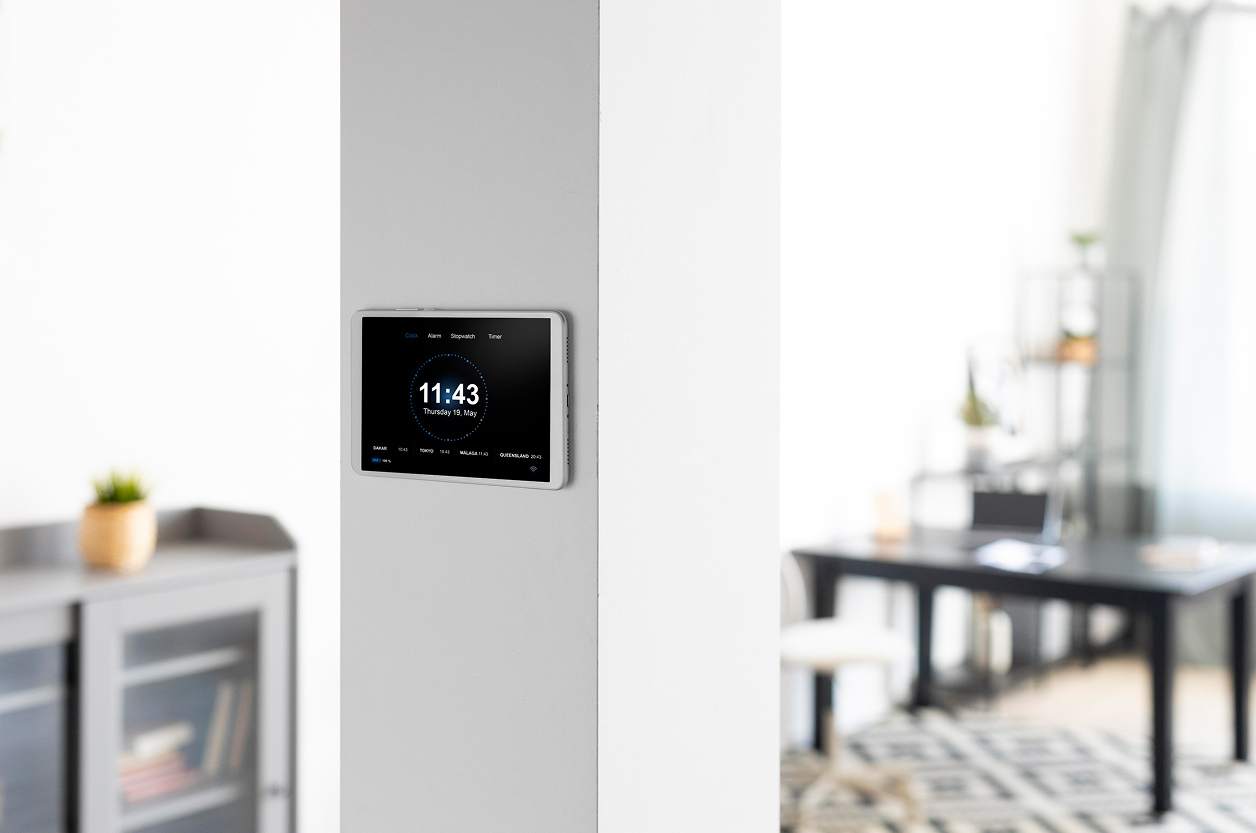
Designing Automations Users Can Trust
A recurring challenge is how to prevent automation conflicts when multiple rules interact. For example, a nighttime security routine may want to lock all doors, while a wellness routine may need to ventilate a room at the same time. Secure automation systems handle this through priority management, contextual exceptions, and clear override rules.
For product developers, this means building transparent logic that users can understand, audit, and adjust as needed. In practical terms, this results in fewer surprise behaviours and greater long-term trust in smart home technology.
The Convergence of Standards, Local AI, and Secure Automation
Matter 1.3, local AI hubs, and secure automation frameworks are not isolated trends. Together they form a unified architecture for smart homes in 2026:
- Matter 1.3 standardizes how devices communicate.
• Local AI hubs interpret context and make decisions.
• Secure automations ensure that decisions are valid and safe.
• Cloud services provide optional enhancements without being required for core operations.
This multi-layered model enables homes to run reliably even under changing network conditions. It also supports high-performance automation, richer energy insights, and new ambient experiences where devices coordinate smoothly without constant user intervention.
Practical Example: A Home That Reacts Naturally
Imagine a home where a family arrives on a winter evening:
- presence detection is confirmed locally
• the door unlocks only after a biometric check
• heating adjusts based on who is home
• lights adapt to the time of day
• security routines switch modes without exposed delays
All of this runs under local control, coordinated through Matter 1.3 devices and executed by a local AI hub that understands household patterns. It is not science fiction anymore — it is where premium smart home systems are heading this year.
AI Overview
In 2026, the smart home landscape evolves toward reliability, privacy, and thoughtful automation. Matter 1.3 strengthens cross-vendor compatibility and improves local operation. Local AI hubs bring fast, context-aware intelligence into the home while protecting user data. Secure automation frameworks ensure predictable and safe device behaviour, even as systems grow more complex. These trends collectively shape a smarter, more stable generation of connected living solutions that feel natural, responsive, and trustworthy.
Our Case Studies