


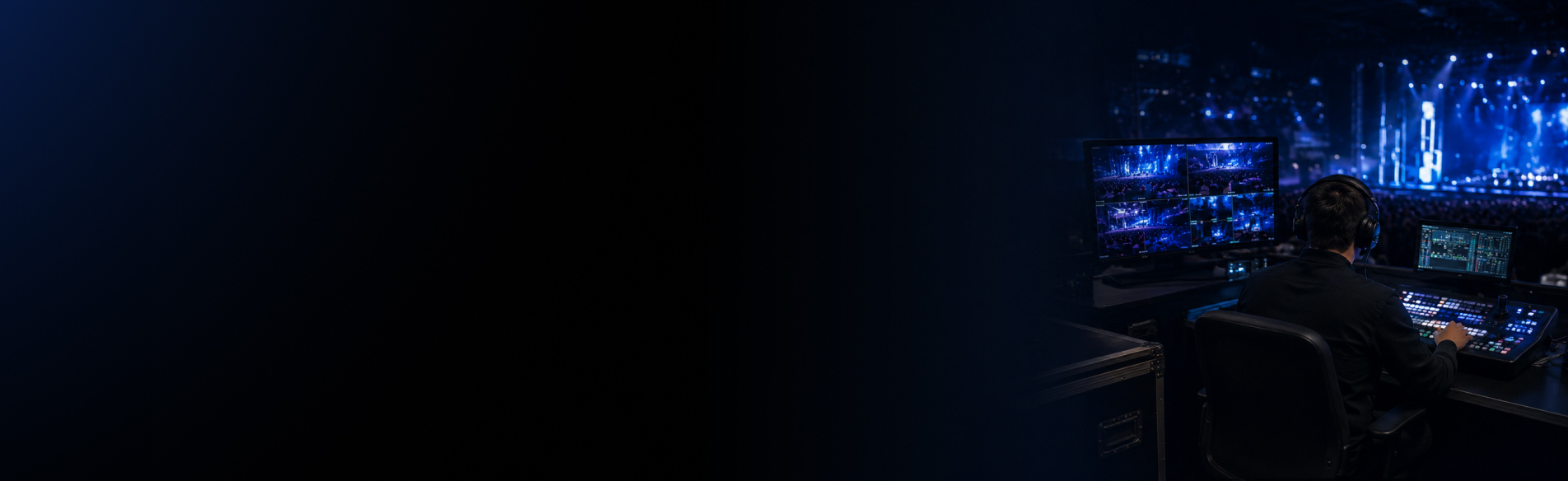
SDI & IP Workflows
Hybrid SDI/IP Workflows for Live Events & AV Installations
Connect SDI cameras, switchers, and routers with IP-based distribution and control without ripping out existing infrastructure.
Deploy production-grade reliability, predictable latency, and clean operations in mixed-vendor environments across IPMX / ST 2110 / NDI + Dante/AES67.

Trusted by Teams Building Real-Time AV Systems






Hybrid SDI/IP Risks You Can’t Ignore
Hybrid SDI/IP systems often fail not in the lab, but under show conditions — when timing, multicast, and redundancy collide. We design the workflow so it stays stable at peak load.
Typical failure points we address:
- Sync drift & A/V skew when SDI timing and IP timing don’t align across endpoints
- PTP mismatch (wrong domain / boundary clock issues) causing unstable genlock and intermittent artifacts
- Dropped frames under burst traffic, oversubscribed links, or misconfigured QoS
- Multicast overload (IGMP/Querier issues) leading to flooding, latency spikes, and random stream loss
- A/V skew during failover when redundancy switches paths without deterministic timing + buffer strategy
What you get instead: predictable latency, clean lip-sync, controlled multicast behavior, and failover that doesn’t “shift” audio/video mid-show.
Why Promwad
Hybrid systems fail when standards meet “vendor islands.” Promwad builds gateways + middleware that unify SDI/HDMI with IPMX, Dante/AES67, Crestron, and other control platforms into one operational ecosystem—so your workflows stay predictable under pressure.
Our Tech Stack
Video
- SDI • HDMI • DisplayPort - IPMX - SMPTE ST 2110 - NDI for events
Audio Networking
Dante • AES67 • Ravenna
Control & Automation
- Crestron • Q-SYS • Extron- Drivers, middleware, and control-plane integration for hybrid deployments
Performance & Processing
- FPGA-based video pipelines and SoC accelerators- Optional embedded AI inference (analytics, monitoring, automation)- Low-latency IP transport tuning (e.g., DPDK / NVIDIA Rivermax) for deterministic delivery in standards-based ecosystems
Security & Network Hardening (NDI / RTP / SIP / PTP)
Threat modeling for hybrid AV-over-IP: stream access, hijacking, replay, DoS, and control-plane abuse Segmentation & traffic control: VLANs/VRFs, ACLs, QoS policies, multicast boundaries (IGMP snooping/querier) Timing security (PTP): domain planning, boundary clock strategy, protection from misconfig/spoofing, time-jump monitoring Secure control integration: Crestron/Q-SYS/Extron authentication patterns, least-privilege roles, secrets handling Secure device lifecycle: signed firmware/update strategy, secure boot options, SBOM-ready component traceability Visibility & auditability: logs/telemetry hooks (Syslog/SNMP/export), health dashboards, incident-ready diagnostics
Get a Hybrid Workflow Review
Share a brief overview of your current setup, and we’ll outline the right architecture—gateways, protocol options, and a practical upgrade path.
Application Areas

Live events (temporary setups)
- Concerts & festivals, sports & esports, conferences & product launches- Mixed SDI sources + IP distribution, fast reconfiguration, predictable operations

Venue & permanent installations
- Arenas, theaters, conference centers, hotels/resorts, control rooms- Centralized AV-over-IP management with hybrid endpoints and clean lifecycle planning
Rental & staging workflows
Repeatable “hybrid-ready” rig designs that scale per venue—without replacing core SDI gear

Hybrid production inside venues
- Multiviewers, LED walls, dynamic signal paths, monitoring/diagnostics- Broadcast-grade expectations translated into ProAV operations
Migration from SDI Islands to IP-Ready Fabric
Promise: Move from “SDI here, IP there” to a unified workflow—without hardware lock-in and without pausing your production schedule.
A phased approach that works in scalable IP distribution:

Case Studies
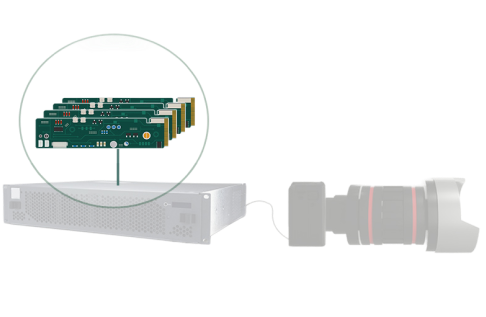
SDI-to-IP for multi-camera event broadcasting
OpenGear SDI-to-IP cards with 10Gb NAS — engineered for 8× 4K120 real-time capture, low-latency transport, and lossless buffering in live event environments
Challenge
A European streaming operator needed to capture and monitor ultra-high-frame-rate video from multiple cameras during sports and music events. The system had to buffer at least 10 minutes of footage and guarantee zero data loss.
Solution
Promwad developed OpenGear-compatible FPGA cards with SMPTE ST 2110 SDI-to-IP Tx/Rx conversion, enabling simultaneous Ethernet streaming and real-time control via web dashboard. A NAS subsystem with SSD array and FPGA-based SAS expander was added to ensure high-throughput capture and stable buffering.
Result
Stable processing of 8× 4K120 streams, simultaneous IP streaming + NAS 10Gb/sec recording, production-grade low latency, and hot-swappable OpenGear deployment.
Full Project Story: OpenGear SDI-to-IP Cards for Multi-Camera Broadcasting
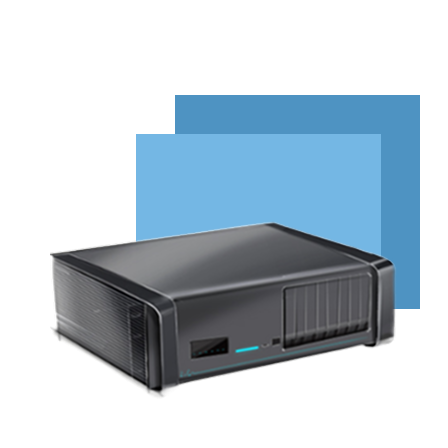
Enterprise NAS with DPDK/SPDK & NDI Streaming
High-performance data storage system for multi-camera 8K workflows — built with zero-copy architecture and modular GPU-accelerated hardware.
Challenge
Existing NAS solutions couldn’t handle multi-camera 8K ingest and NDI streaming due to bandwidth limits, latency, and lack of scalable NVMe/CFexpress storage.
Solution
Developed a modular enterprise NAS with DPDK/SPDK zero-copy data paths, custom NVMe/CFexpress storage unit, dual-power design, high-speed PCIe I/O, and GPU-accelerated decoding (RTX A4500/A6000 ADA). Enabled GUI-controlled hot-plugging and seamless NDI streaming.
Result
2–3× higher throughput, stable 8K/60 fps processing, scalable storage, and portable, power-resilient operation. Delivered a future-ready platform for high-bandwidth video production.
Full Project Story: NDI Streaming for Multi-Camera Environments
How We Ensure Quality
Hybrid AV is unforgiving. We build quality in from the first architecture decision—not as a checkbox at the end.
Our quality foundation:


Event & installation-specific assurance:
Trusted by Leading OEMs and Innovators
Promwad is a trusted R&D partner for global OEMs and product companies developing advanced video, audio, and embedded solutions — including Sony and Vestel.
Our long-term clients value our technical expertise, transparency, and on-time delivery — from initial concept to full production.
We are proud to be:
✓ A design partner of NDI, Lattice, and NXP — bringing top-tier SoC and FPGA expertise to every AV project.
✓ A European R&D hub serving clients across 25+ countries, with a proven record in broadcast, digital signage, and AV-over-IP domains.
Make SDI and IP work as one on your next show or installation
Book a 24h expert call and get a concrete next step: architecture review, phased migration outline, and gateway/middleware options tailored to your signal map.
FAQ
What causes sync drift or PTP mismatch in hybrid SDI/IP systems — and how do you prevent it?
How do you avoid dropped frames and multicast overload (IGMP/QoS) in event AV networks?
How do we integrate SDI cameras and switchers with IPMX or SMPTE ST 2110?
Can we migrate step by step without replacing everything at once?
IPMX vs ST 2110 vs NDI: which should we use for event AV solutions?
How do you ensure sync and lip-sync across SDI and IP paths?
What latency should we expect from SDI ↔ IP gateways?
Can you bridge audio (Dante/AES67) with hybrid video workflows?
Can you integrate Crestron/Q-SYS/Extron control into mixed SDI/IP systems?
Do you deliver hardware and software?