Predict Before It Breaks: How AI and Edge Analytics Redefine Equipment Maintenance

The End of Scheduled Maintenance
For decades, industrial maintenance followed one rule — fix or replace equipment at regular intervals.
This approach worked when machines were simple, but in modern production, downtime costs are enormous and unplanned failures can trigger a chain reaction across connected systems.
Today’s factories, power grids, and transport systems operate in real time, producing continuous streams of sensor data. Every vibration, temperature shift, or electrical anomaly holds a clue about equipment health.
The challenge is not just collecting this data — it’s interpreting it fast enough to act before failure happens.
That’s where AI-enhanced predictive maintenance comes in, powered by embedded sensors, edge analytics, and machine learning models trained to detect subtle patterns that humans or traditional algorithms might miss.
From Preventive to Predictive
Traditional preventive maintenance relies on fixed schedules — servicing machines every few weeks or months. While it reduces catastrophic failures, it often leads to unnecessary part replacements and inefficiency.
Predictive maintenance flips this model. It continuously monitors real-time parameters such as temperature, vibration, current, and pressure. AI algorithms analyze the data and predict when a component is likely to fail.
Instead of reacting to breakdowns, engineers can plan interventions precisely when needed — no sooner, no later.
This transition from preventive to predictive is one of the most transformative steps in the evolution of Industry 4.0.
Embedded Sensors: The Foundation of Intelligence
At the heart of predictive maintenance are embedded sensors that transform mechanical and electrical systems into data-rich assets.
Typical examples include:
– Vibration sensors on motors and bearings to detect imbalance or wear.
– Temperature sensors monitoring thermal drift in power electronics.
– Current and voltage sensors detecting overloads or abnormal harmonics.
– Pressure and flow sensors tracking hydraulic and pneumatic performance.
What’s new is how these sensors integrate directly into PCBs, ECUs, and control modules — not as external add-ons, but as built-in health monitors.
The integration reduces wiring complexity, improves data fidelity, and allows microsecond-level monitoring. Combined with embedded firmware and real-time analytics, systems can now perform on-the-fly health assessments without cloud dependence.
Edge Analytics: Intelligence Where It Matters
Sending every data point to the cloud for analysis is neither scalable nor secure.
Latency, bandwidth costs, and data privacy concerns make it impractical for mission-critical applications.
That’s why predictive maintenance is moving to the edge — where data is processed locally, close to the source.
Edge analytics enable:
– Low-latency anomaly detection without round-trip delays.
– Reduced bandwidth usage by transmitting only relevant insights.
– Higher reliability in disconnected or remote environments.
– Improved security, since sensitive raw data stays on-site.
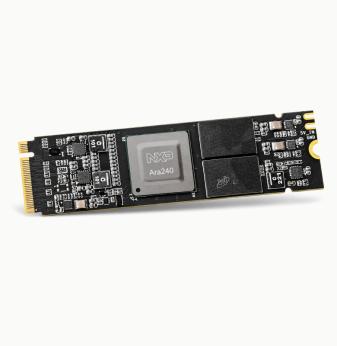
Embedded AI chips, FPGAs, and microcontrollers with ML acceleration make real-time edge inference possible. They execute trained models that classify vibration patterns, detect degradation, and even forecast time-to-failure directly on the device.
Machine Learning in Predictive Maintenance
Predictive maintenance relies on a variety of machine learning techniques — from simple regression models to complex deep learning architectures.
Some common approaches include:
– Anomaly detection: identifying deviations from normal operating conditions.
– Time-series forecasting: predicting future trends from historical data.
– Classification models: determining which failure mode is most probable.
– Clustering: grouping similar behavior patterns to reveal hidden degradation processes.
Training these models typically starts in the cloud or data center using large datasets. Once trained, the models are deployed to edge devices, where they continuously evaluate incoming sensor data in real time.
This hybrid setup — training in the cloud, inference at the edge — combines computational power with local responsiveness.
Real-Time Condition Monitoring
Predictive maintenance systems don’t just predict failures; they monitor the condition of every critical component continuously.
A typical architecture includes:
- Embedded sensors capturing physical parameters.
- Signal conditioning and pre-processing for noise reduction.
- Edge AI modules performing real-time analysis.
- Cloud-based dashboards aggregating insights from multiple sites.
If an anomaly is detected, alerts are generated immediately, allowing operators to intervene before a breakdown occurs.
The result: improved uptime, extended equipment life, and reduced maintenance costs.
Data Quality and Labeling: The Hidden Challenge
AI models are only as good as the data they’re trained on. In industrial environments, collecting accurate and labeled datasets can be difficult — especially when failures are rare.
To overcome this, engineers often use synthetic data generation and physics-based simulation models to augment real-world measurements.
For example, they can simulate bearing faults or overheating scenarios digitally, generating diverse datasets for robust model training.
Combining simulated and real-world data ensures predictive models remain accurate under variable conditions, even when actual failure events are scarce.
Embedded AI Hardware: Making It All Possible
Recent advances in embedded computing have made on-device analytics practical.
Key technologies include:
– Edge AI processors and NPUs for running ML models efficiently.
– FPGAs for parallel signal analysis and feature extraction.
– MCUs with TinyML frameworks enabling AI on ultra-low-power systems.
These components enable constant monitoring without draining energy budgets — essential for remote or battery-powered sensors.
In predictive maintenance, hardware choice often determines feasibility: edge AI platforms must balance performance, power, and ruggedness.
Integrating Predictive Maintenance Across Industries
Manufacturing: Machine tools, conveyors, and robots continuously monitored to detect misalignment or vibration anomalies.
Energy: Wind turbines, transformers, and solar inverters analyzed for temperature and current fluctuations.
Transportation: Trains and aircraft use embedded systems to monitor braking systems, engines, and electrical circuits.
Oil and Gas: Pipelines and drilling equipment use pressure and flow sensors for early leak detection.
Agriculture: IoT-enabled machinery monitors mechanical stress and environmental conditions to reduce downtime during harvest.
Across all these sectors, predictive maintenance converts reactive repair cycles into continuous performance optimization.
AI on the Edge: From Insight to Action
The next stage of evolution is closed-loop maintenance systems — where AI doesn’t just predict failures but automatically triggers corrective actions.
Imagine a robotic arm that detects increasing vibration in its actuator. Instead of waiting for operator input, the system slows motion speed, recalibrates balance, and logs a maintenance ticket autonomously.
Such autonomy transforms maintenance from a manual task into a self-managing process — a true cyber-physical system capable of adapting to its own wear and tear.
The Role of Connectivity and Protocols
For predictive maintenance to work seamlessly, embedded systems must communicate across diverse devices and networks.
Protocols like MQTT, OPC UA, and CANopen ensure standardized data exchange between sensors, edge gateways, and cloud platforms.
Time synchronization through PTP 1588 allows correlation of events across distributed equipment.
Secure connectivity — especially in regulated industries — is achieved through TLS encryption, device authentication, and network segmentation.
In short, connectivity transforms isolated devices into a coordinated ecosystem of intelligent nodes.
Bringing predictive-maintenance data into industrial networks also requires the right communication hardware and embedded protocol stack. Single-pair Ethernet offers one way to connect field-level sensors to these networks. In one such project we integrated a 10BASE-T1L MAC-PHY with PROFINET and OPC UA in a predictive-maintenance sensor.
Benefits That Resonate Beyond Maintenance
The impact of predictive maintenance goes far beyond reducing downtime.
– Operational continuity: fewer unplanned shutdowns.
– Safety improvements: early detection of faults prevents accidents.
– Cost savings: optimized part usage and reduced labor costs.
– Sustainability: longer equipment lifespans reduce material waste.
– Data-driven insights: feedback loops improve overall process efficiency.
When deployed at scale, predictive maintenance becomes a competitive advantage — enabling smarter factories, greener energy grids, and more reliable transport networks.
The Business Case: ROI of Predictive Maintenance
Implementing AI-based maintenance may seem expensive initially, but the ROI is measurable.
Typical results observed across industries:
– Up to 50% reduction in unplanned downtime.
– 30% lower maintenance costs through optimized scheduling.
– 20–40% longer equipment lifespan due to condition-based servicing.
– Higher production throughput with fewer disruptions.
For large industrial players, these numbers translate into millions in annual savings — justifying investments in AI and edge infrastructure.
Challenges and Lessons Learned
Despite its benefits, predictive maintenance isn’t plug-and-play. Common challenges include:
– Insufficient or unbalanced datasets for model training.
– Integration difficulties with legacy PLCs or SCADA systems.
– Limited compute resources on small embedded devices.
– Need for explainable AI to build operator trust.
– Data governance and privacy concerns in cloud-connected systems.
Successful implementations address these issues early through robust design — ensuring every stage, from sensor to analytics, is aligned with operational goals.
Future Directions: From Prediction to Prescription
The next generation of systems will move from predictive to prescriptive maintenance — where AI not only forecasts issues but recommends or executes corrective actions.
By combining predictive analytics with digital twins, engineers will simulate outcomes of maintenance decisions before applying them in the real world.
At the same time, federated learning will allow distributed models to learn across multiple plants or machines without sharing raw data, preserving privacy while enhancing accuracy.
These developments will make predictive maintenance a core pillar of intelligent industry.
Promwad’s Perspective
At Promwad, we see predictive maintenance as more than a data project — it’s a systems engineering challenge.
It requires seamless integration of sensors, embedded firmware, edge AI, and connectivity — the full stack of hardware and software expertise.
Our engineering teams have built embedded and AI-driven monitoring systems for sectors like manufacturing, energy, and transportation, applying domain-specific optimizations to ensure reliability from concept to mass production.
The future of maintenance is proactive, data-driven, and autonomous — and it’s already here.
AI Overview
Key Applications: industrial equipment monitoring, smart factory systems, energy infrastructure diagnostics, fleet maintenance, and condition-based control.
Benefits: reduced downtime, extended asset life, improved safety, lower operational costs, and sustainable resource usage.
Challenges: limited labeled data, edge hardware constraints, integrating AI with legacy systems, and ensuring explainability in predictions.
Outlook: AI-enhanced predictive maintenance is becoming a cornerstone of Industry 4.0, shifting maintenance from reactive to autonomous — with embedded intelligence enabling decisions at the edge.
Related Terms: condition monitoring, edge AI, digital twin, time-series forecasting, vibration analysis, anomaly detection.
Our Case Studies