Balancing Intelligence: Edge AI vs Cloud AI in Modern Embedded Systems

Why This Choice Defines the Future of Smart Devices
Every connected product today — from autonomous drones to industrial controllers — relies on artificial intelligence to interpret data and make decisions.
But where that intelligence runs can make or break the product’s performance, security, and cost efficiency.
Should your AI live in the cloud, where power and scalability are unlimited?
Or at the edge, where decisions happen locally in real time?
This is the central question facing every embedded engineer and product owner building the next generation of intelligent devices.
The answer isn’t binary. The future belongs to hybrid architectures, where cloud and edge complement each other — each doing what it does best.
What Is Edge AI?
Edge AI means running AI algorithms directly on the device or near it — on gateways, embedded processors, or microcontrollers.
Instead of sending all data to remote servers, the system performs inference locally.
This approach drastically reduces latency and bandwidth requirements, allowing real-time decisions even without network connectivity.
Examples include:
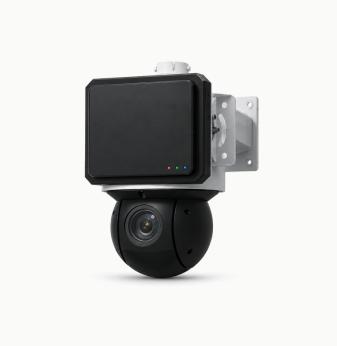
– A security camera detecting motion patterns on-device.
– A robot adjusting grip force through onboard neural inference.
– A car recognizing pedestrians without relying on cloud feedback.
Edge AI turns devices from passive data collectors into autonomous agents.
What Is Cloud AI?
Cloud AI, on the other hand, leverages centralized data centers for heavy processing.
Models are trained, updated, and sometimes executed remotely, using virtually infinite compute power.
This architecture is ideal for:
– Aggregating insights from millions of devices.
– Running large-scale models (like GPTs or multimodal AI).
– Managing complex analytics pipelines.
For example, a cloud-based platform can process terabytes of manufacturing data, identify patterns across plants, and send optimization updates to local controllers.
Cloud AI is about global intelligence — analyzing the big picture beyond a single device.
Edge vs Cloud: The Core Trade-Offs
Choosing between edge and cloud AI involves balancing four key factors:
- Latency: Edge wins. Local inference offers millisecond response times.
- Connectivity: Edge systems keep working offline, while cloud relies on stable networks.
- Scalability: Cloud leads — adding capacity is as simple as provisioning more instances.
- Security and privacy: Edge can protect sensitive data locally, but cloud enables centralized monitoring and patching.
The decision depends on what your device must optimize for: speed, insight, or control.
The Rise of Hybrid AI Architectures
Most modern products no longer choose strictly between edge and cloud.
They combine both — using hybrid AI architectures.
In this model:
– The edge handles real-time inference and critical functions.
– The cloud manages training, long-term storage, and system updates.
For example, an industrial vibration sensor might detect anomalies locally but upload summarized patterns to the cloud for retraining its AI model.
After refinement, the updated model is deployed back to the edge via OTA (over-the-air) updates.
This continuous feedback loop blends the responsiveness of edge computing with the learning capacity of the cloud.
Embedded Constraints: Power, Memory, and Cost
Edge AI introduces hardware challenges that cloud developers rarely face.
Embedded engineers must fit neural inference within strict limits of memory, CPU cycles, and energy consumption.
Techniques like quantization, pruning, and knowledge distillation help shrink models to fit on low-power microcontrollers without sacrificing accuracy.
Hardware also matters:
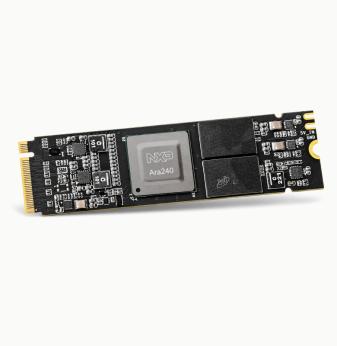
– NPU-enabled SoCs (like NXP i.MX 95 or Qualcomm SA8155).
– FPGAs optimized for parallel inference.
– Specialized ASICs for ultra-low-latency AI.
These innovations make it possible to run neural networks in places where they once seemed impossible — from smart sensors to wearables.
Cloud AI: Strength in Scale
Cloud AI isn’t constrained by hardware.
It thrives on massive datasets and GPU clusters capable of training multimodal models.
This power allows for global insight: identifying patterns across entire fleets of devices or customer networks.
For example:
– Predicting equipment failures across multiple factories.
– Detecting trends in consumer behavior from connected appliances.
– Coordinating energy use across distributed grids.
The trade-off is dependency: without reliable connectivity, the intelligence pipeline slows down or breaks entirely.
That’s why many industries now design failover mechanisms, where essential logic remains local, even if the cloud connection drops.
Security and Data Governance
Edge AI offers strong privacy advantages by keeping raw data on the device.
For industries like healthcare or automotive, this is crucial for compliance with GDPR or ISO 21434 standards.
However, securing distributed intelligence introduces new challenges.
Each edge node must verify updates, manage encryption keys, and detect tampering independently.
In contrast, the cloud centralizes control — simplifying patch management and auditing but creating larger attack surfaces.
A resilient design often combines both:
– Edge devices encrypt and preprocess data.
– Only metadata or AI model deltas are sent to the cloud.
– Secure boot and firmware verification protect device integrity.
Use Cases: When Edge Wins
Autonomous vehicles: require sub-10ms decision cycles — cloud latency is unacceptable.
Industrial automation: edge inference prevents downtime during network disruptions.
Healthcare wearables: protect sensitive biometric data locally.
Smart cameras: perform object detection in real time without streaming video to the cloud.
Edge AI dominates where responsiveness and privacy are non-negotiable.
Use Cases: When Cloud Wins
Predictive analytics: correlating patterns from millions of devices.
Fleet learning: retraining models with aggregated data from all users.
Natural language processing: leveraging large transformer models.
OTA management: coordinating updates and patch deployment.
Cloud AI excels in scaling knowledge across systems, turning localized insights into global optimization.
Hybrid Systems in Action
Let’s take the example of a connected EV charging network.
Each charger runs edge AI that detects anomalies in power flow and user behavior locally, responding instantly to prevent faults.
Meanwhile, the cloud aggregates logs from thousands of chargers, training better fault detection models and optimizing energy distribution at scale.
When a new model is ready, it’s securely pushed back to each charger, closing the learning loop.
This is continuous intelligence — where every device contributes to and benefits from a global ecosystem.
Latency and Bandwidth Economics
In real-world deployments, data movement equals cost.
Streaming raw sensor data to the cloud 24/7 is expensive and often unnecessary.
Edge AI helps by preprocessing data — extracting only the most relevant features before transmission.
This reduces cloud bandwidth usage, minimizes storage costs, and improves responsiveness.
For connected products with thousands of nodes, this architectural decision can save millions in operational expenses annually.
Development and Maintenance Implications
Edge AI development demands close hardware-software collaboration.
Engineers must optimize memory layouts, power modes, and inference pipelines.
Cloud AI development, by contrast, leans toward DevOps and scalable MLOps pipelines.
Models can be deployed continuously, rolled back, or fine-tuned without physical device access.
In hybrid systems, both worlds meet: cloud-based tools monitor and orchestrate distributed AI workloads across fleets of embedded nodes.
For companies designing embedded products “from concept to mass production,” this alignment is crucial.
Testing and Validation
Ensuring reliability in distributed AI systems requires robust validation pipelines.
Each edge model must be tested against multiple firmware versions, hardware variants, and real-world datasets.
Digital twins and simulation frameworks help validate AI behavior before deployment.
Once in the field, telemetry from devices feeds back into cloud dashboards for continuous model monitoring.
This closed feedback loop is what keeps hybrid AI systems both powerful and safe.
The Future: Federated and Self-Learning AI
The next evolution of Edge AI is federated learning — training models locally on devices and sharing only insights or weight updates, not raw data.
This preserves privacy while enabling collective intelligence across distributed systems.
It’s already being explored in automotive fleets, industrial robotics, and consumer IoT.
Combined with on-device retraining, it will allow embedded products to learn continuously, adapting to new environments without central intervention.
Strategic Guidelines for Product Teams
When designing an embedded product, consider:
– Response time: if your use case needs sub-second decisions, choose Edge AI.
– Model complexity: if your algorithms rely on deep neural networks or frequent retraining, lean toward Cloud AI.
– Connectivity reliability: hybrid architecture ensures resilience in unstable environments.
– Regulatory landscape: prioritize local data processing for compliance-heavy sectors.
– Lifecycle management: cloud orchestration simplifies large-scale updates.
The best strategy often combines both — edge for autonomy, cloud for evolution.
Why It Matters
The edge-cloud balance is reshaping embedded product design.
It’s no longer enough to build devices that connect — they must think, learn, and evolve.
The right AI architecture determines how fast they respond, how safely they operate, and how long they remain competitive.
For engineering companies like Promwad, helping clients architect hybrid AI systems means merging deep hardware expertise with data intelligence — from chip to cloud.
That’s where the future of embedded innovation is heading.
AI Overview
Key Applications: automotive, industrial IoT, robotics, healthcare devices, smart infrastructure, and consumer electronics.
Benefits: lower latency, reduced bandwidth, enhanced privacy, scalability, and adaptive intelligence.
Challenges: synchronization between edge and cloud, lifecycle management, cost optimization, and cybersecurity.
Outlook: the future lies in hybrid AI architectures — merging edge autonomy with cloud intelligence for sustainable, self-improving products.
Related Terms: federated learning, edge inference, AI pipeline orchestration, hybrid computing, MLOps for embedded systems.
Our Case Studies