


Multi-Vendor Interoperability Testing for IPMX Deployments: What the Standards Say and Where the Gaps Still Are

The promise behind IPMX — Internet Protocol Media Experience — is that a Pro AV installation built from devices sourced from multiple vendors should work together without proprietary integration work. A transmitter from one manufacturer should discover, connect to, and stream video to a receiver from another manufacturer. HDCP content protection should negotiate end-to-end. NMOS-based control should reach every device on the network regardless of who built it. This is the interoperability contract that IPMX offers, and it is a meaningful advance over the fragmented proprietary AV-over-IP landscape that existed before IPMX began consolidating around SMPTE ST 2110 and VSF TR-10.
The engineering reality in 2026 is that IPMX interoperability works well within defined parameters and remains incomplete in specific areas. The standard is still maturing — VSF TR-10 ratification progressed substantially through 2023 and 2024, and the EBU held its first formal IPMX Tested Event in Geneva in January 2026. The IPMX Tested Event 2025, held at Evertz in Burbank in March 2025 and bringing together twelve companies, confirmed successful interoperability across tested profiles for video, audio, and system behavior while also identifying areas where the test plan needs further development. For integrators and product engineers planning actual deployments, understanding what has been validated, what has not, and where specification interpretation diverges across implementations is more useful than taking the interoperability promise at face value.
What IPMX Is — and What It Adds to ST 2110
IPMX does not replace SMPTE ST 2110. It uses ST 2110 as its media transport foundation and adds a defined set of extensions that address requirements specific to Pro AV workflows. Understanding the extension layers is the prerequisite for understanding where interoperability testing needs to focus.
The core IPMX additions over base ST 2110 are:
- HDMI signal transport: IPMX targets HDMI sources as the dominant input type in Pro AV, whereas ST 2110 targets SDI. This includes support for EDID negotiation, HDMI InfoFrame transport defined in VSF TR-10-10, and HDCP content protection via the HDCP Key Exchange Protocol defined in TR-10-5.
- JPEG XS compression: ST 2110-20 carries uncompressed video. IPMX defines compressed video transport through TR-10-7 and TR-10-11, using JPEG XS compression to deliver 4K60 4:4:4 video over a single 1 Gbps network link. JPEG XS is a visually lossless compression standard with sub-millisecond latency, making it suitable for live production workflows.
- Asynchronous operation: ST 2110 requires all devices to be synchronized to a PTP grandmaster clock. IPMX makes PTP optional, allowing devices to operate asynchronously using RTCP sender reports to communicate timing to receivers. This reduces infrastructure requirements for installations that cannot deploy a PTP grandmaster.
- Extended NMOS requirements: IPMX builds on AMWA NMOS IS-04 and IS-05 for discovery and connection management, with additional requirements defined in TR-10-8 that specify how IPMX devices must expose their capabilities and constraints through NMOS.
Each of these extensions creates an interoperability testing dimension that does not exist in a pure ST 2110 deployment. A multi-vendor IPMX test plan must validate not only that streams are transported correctly but that HDCP negotiation succeeds between specific sender-receiver pairs, that JPEG XS profile parameters are matched correctly, that asynchronous timing produces acceptable output at the receiver, and that NMOS device registration and connection management work across all vendor implementations in the system.
The VSF TR-10 Test Framework — What It Covers
The VSF TR-10 suite is the technical specification foundation for IPMX, and the IPMX Tested program is the corresponding compliance testing framework developed jointly by AIMS and VSF. Understanding the scope of the TR-10 test plan helps define what vendors claim when they say a device is IPMX-compliant.
The TR-10 documents relevant to interoperability testing cover the following areas:
| TR-10 document | Subject | Status as of 2025-2026 |
| TR-10-1 | System definitions and timing requirements | Ratified February 2024 |
| TR-10-2 | Uncompressed video transport | Ratified |
| TR-10-3 | PCM audio transport | Ratified |
| TR-10-5 | HDCP Key Exchange Protocol | Ratified 2024 |
| TR-10-7 | Compressed video (JPEG XS) | Draft, advancing toward ratification |
| TR-10-8 | NMOS requirements | Ratified 2024 |
| TR-10-9 | System environments and device behavior | Draft 2025 |
| TR-10-11 | Constant bit-rate compressed video | Ratified 2024 |
| TR-10-13 | Privacy Encryption Protocol | Draft 2024 |
The pattern visible in this table is significant for integrators: the core uncompressed video and audio transport specifications are fully ratified, as are HDCP key exchange and the base NMOS requirements. Compressed video transport via JPEG XS, system behavior requirements under various network conditions, and privacy encryption are still in draft status. An IPMX device claiming compliance in early 2026 can be fully tested against the ratified specifications but may have implemented the draft specifications in ways that diverge from other vendors, since draft specifications can change before ratification.
The IPMX Tested Event framework — modeled on the JT-NM Tested program that has been used to validate SMPTE ST 2110 compliance since 2018 — addresses this by providing a structured set of test cases that vendors run against each other's equipment in a supervised environment. The March 2025 event at Evertz confirmed successful interoperability across tested profiles and identified specific areas where the test plan required enhancement, particularly around NMOS testing depth and infrastructure configuration requirements. Products from that event were added to the IPMX Tested registry, providing integrators with a list of devices whose interoperability has been externally validated against the current test plan.
Where Interoperability Testing Reveals Real Gaps
The interoperability principle in IPMX — that any compliant sender should work with any compliant receiver — holds within the validated profiles and breaks down at the boundaries between profiles and at points where the specifications leave implementation decisions to the vendor.
The most commonly encountered gap areas in multi-vendor IPMX deployments are:
JPEG XS profile mismatches. JPEG XS supports multiple compression profiles, with the Constrained High and Main profiles relevant to IPMX. TR-10-7 defines how JPEG XS is packaged in RTP for IPMX transport, but the specific encoding parameters — resolution, frame rate, chroma subsampling, bit depth, and compression ratio — must be negotiated or pre-configured to match between sender and receiver. A sender configured for 4K60 4:2:0 at a specific bit rate will not produce usable output at a receiver expecting 4K60 4:4:4 at a different rate. NMOS SDP negotiation handles some of this, but vendor implementations of the SDP parameter parsing for JPEG XS streams have historically shown inconsistencies that the IPMX Tested program continues to work through.
HDCP negotiation across vendor boundaries. HDCP is a content protection mechanism that requires a handshake between the transmitter and the receiver before the protected stream is delivered. In a single-vendor system, both sides share the same HDCP implementation and the handshake is reliable. Across vendor boundaries, the timing of the handshake, the handling of authentication failures, and the retry behavior can differ. The IPMX Tested program includes HDCP test cases based on TR-10-5, and devices that have passed those tests have demonstrated baseline interoperability. Untested device pairs, or pairs where one device has implemented an earlier draft of TR-10-5, remain potential sources of HDCP failure that manifests as the receiver refusing to display content rather than producing a visible error.
Synchronous versus asynchronous timing in mixed deployments. When some devices in a system operate synchronously (PTP-locked) and others operate asynchronously (using RTCP sender reports), the system needs a clear architecture for how these two timing regimes interact. A PTP-synchronized ST 2110 source feeding an IPMX receiver operating asynchronously is a supported configuration — the receiver uses the RTP timestamps from the sender's RTCP reports to manage its output timing. An IPMX sender operating asynchronously feeding a PTP-synchronized ST 2110 infrastructure is more complex: the ST 2110 receiver expects streams to be phase-aligned to PTP, and an asynchronous IPMX sender does not guarantee this. The Evertz engineering team published analysis confirming that IPMX-to-ST-2110 interoperability requires the IPMX sender to operate in PTP-synchronized mode to maximize compatibility — asynchronous IPMX senders feeding ST 2110 receivers will have timing misalignment that degrades the output.
NMOS IS-04 capability exposure. TR-10-8 specifies how IPMX devices must expose their capabilities through NMOS, including which video formats, compression profiles, and audio configurations they support. The granularity with which vendors expose these capabilities varies. A device that exposes coarse capability declarations — "supports JPEG XS" without specifying which profiles and parameter ranges — makes it difficult for an NMOS-based control system to determine whether a proposed connection will succeed before attempting it. Connection failures that occur because the receiver's capabilities were not accurately reflected in its IS-04 registration take longer to diagnose than failures that produce explicit error codes.
Building a Practical Interoperability Test Plan
For a system integrator planning a multi-vendor IPMX deployment, relying entirely on the IPMX Tested registry is necessary but not sufficient. The registry confirms that devices passed the current IPMX Tested test plan against each other in a controlled environment. It does not confirm that those devices work together in the specific network configuration, with the specific video formats, and under the specific operational scenarios of the planned installation.
A practical interoperability test plan for a multi-vendor IPMX deployment should address the following test categories:
- Stream profile compatibility: test each sender-receiver pair with every video format, resolution, frame rate, and compression profile that will be used in production. Do not assume that a pair that works at 1080p60 will work at 4K60 with the same JPEG XS profile.
- HDCP end-to-end validation: test HDCP authentication for every transmitter-receiver pair that will carry protected content. Include authentication retry behavior by deliberately interrupting and restarting the HDCP session.
- NMOS discovery and connection management: verify that all devices register correctly with the IS-04 registry, that IS-05 connection commands succeed between all planned sender-receiver pairs, and that capability declarations accurately reflect what the device will actually support in production.
- PTP synchronization: for synchronous deployments, verify that all devices lock to the PTP grandmaster within the required tolerance and maintain lock under the PTP failover scenario. For mixed synchronous-asynchronous deployments, define which devices operate in each mode and test the boundary conditions.
- Network infrastructure interaction: verify multicast group management (IGMP) for all streams, confirm that the network switch configuration handles the multicast traffic volumes of the planned deployment without dropping packets, and test stream startup and teardown behavior under IS-05 control.
- Failure and recovery scenarios: test what happens when a sender disappears from the network while receivers are connected, when the NMOS IS-04 registry restarts, and when the PTP grandmaster fails and a backup is elected.
The January 2026 EBU IPMX Tested Event in Geneva added a formal certification path to complement the AIMS/VSF testing events, with products that pass added to an online registry. For broadcast and Pro AV deployments in European markets, specifying devices from this registry provides an additional validation tier beyond manufacturer self-declaration.
IPMX and ST 2110 in Mixed Deployments
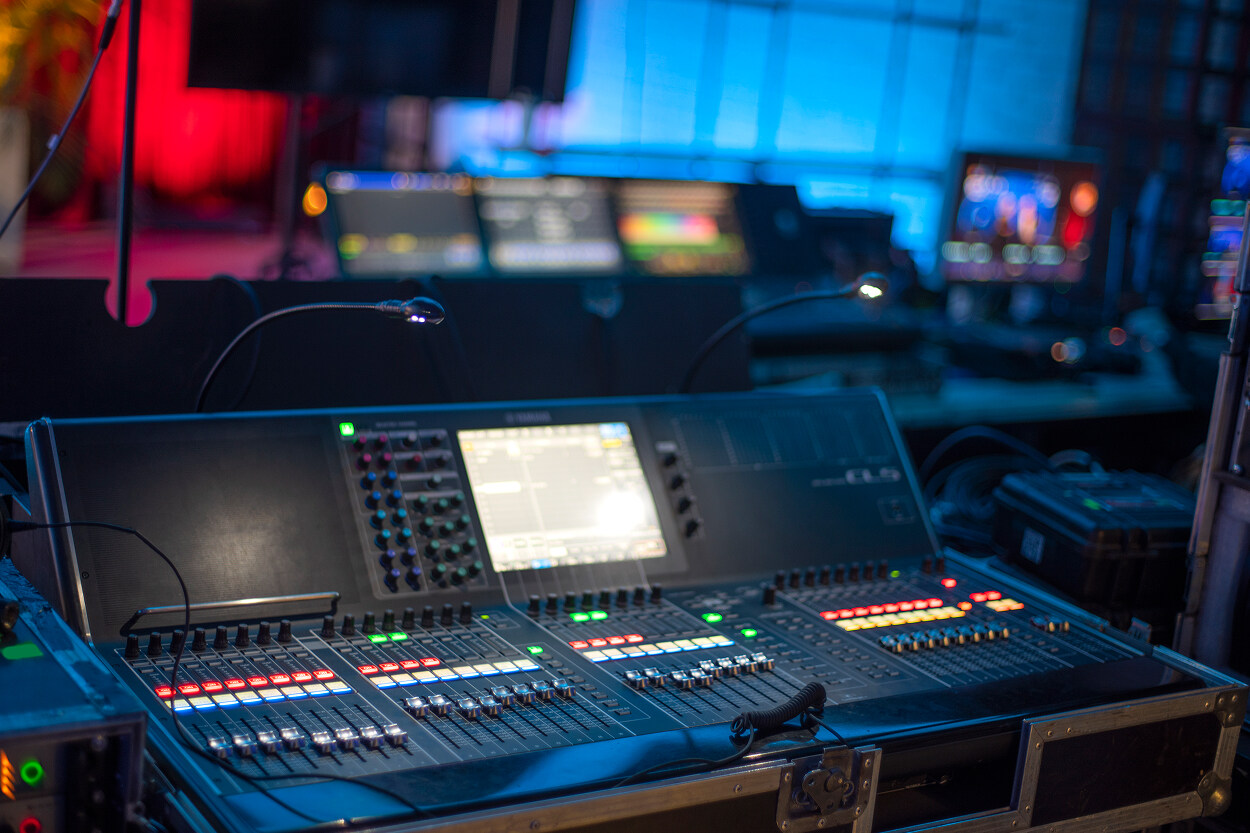
Many practical deployments will not be pure IPMX environments. Production facilities transitioning from SDI to IP often have existing SMPTE ST 2110 infrastructure alongside new IPMX equipment. Corporate AV installations may need to bridge between IPMX Pro AV endpoints and broadcast-grade ST 2110 production equipment. The interoperability testing scope in these mixed environments extends beyond IPMX-to-IPMX validation.
The compatibility boundary between IPMX and ST 2110 depends on which specific streams are involved. For uncompressed video in standard resolutions — 1080p, 4K60 — where the ST 2110-20 stream parameters are compatible with what the IPMX receiver expects, the two systems can exchange streams with a high probability of success, provided that timing is handled correctly and HDCP is not in the path. For compressed video, the ST 2110-22 payload format and the IPMX JPEG XS payload format follow different specifications, and a generic ST 2110-22 sender is not automatically compatible with an IPMX JPEG XS receiver without confirming that the JPEG XS packaging matches the TR-10 specification.
Gateway devices that translate between IPMX and ST 2110 — or between IPMX and NDI, which was demonstrated at ISE 2024 — add an interoperability testing dimension for the gateway itself. The gateway must correctly handle format conversion, timing translation, and protocol mapping in both directions, and these functions need to be validated for each format and direction in the planned workflow.
The AV-over-IP market, projected to grow at roughly 15 percent CAGR through 2030, is large enough that IPMX will continue to gain vendor support and the test framework will continue to mature. The trajectory from VSF's Munich testing event in January 2024, which marked the transition of core IPMX documents from draft to finalized specifications, through the twelve-company IPMX Tested Event 2025 and the EBU's Geneva certification event in January 2026 represents a significant rate of progress for a standard that is only a few years old. Product engineers and integrators who invest in understanding the current state of the test framework and building deployment test plans around it will be better positioned as the standard matures than those who discover the interoperability boundaries during commissioning.
Quick Overview
IPMX is a suite of open specifications built on SMPTE ST 2110, extending it with HDMI transport, HDCP content protection, JPEG XS compression, asynchronous PTP-free timing, and extended NMOS control requirements for Pro AV workflows. Multi-vendor interoperability is validated through the IPMX Tested program, a structured testing framework operated jointly by AIMS and VSF. Core specifications for uncompressed video, audio, HDCP, and base NMOS requirements are ratified; JPEG XS compressed video and system behavior specifications remain in advanced draft stages as of early 2026.
Key Applications
Corporate AV installations requiring HDMI signal transport over IP without proprietary encoders, higher education and digital signage deployments using JPEG XS compressed 4K video over 1 Gbps networks, broadcast facilities bridging IPMX Pro AV endpoints with existing ST 2110 production infrastructure, live event production environments requiring low-latency AV-over-IP with HDCP-protected content, and OB and remote production workflows extending IPMX to multi-site deployments.
Benefits
Ratified TR-10 specifications for core video and audio transport provide a stable implementation target for vendor development and a validated testing basis for IPMX Tested events. The IPMX Tested registry of certified products reduces integration risk by identifying device pairs whose interoperability has been externally validated. JPEG XS compression enables 4K60 4:4:4 delivery over standard 1 Gbps Ethernet, eliminating the 10 Gbps infrastructure requirement of uncompressed ST 2110-20 at 4K resolutions. NMOS IS-04 and IS-05 provide vendor-agnostic device discovery and connection management that replaces proprietary control protocols.
Challenges
JPEG XS transport and system behavior specifications remain in draft, creating potential for implementation divergence that will not be resolved until those documents are ratified and included in formal IPMX Tested test plans. HDCP interoperability across vendor boundaries requires explicit testing for each transmitter-receiver pair, particularly for devices implementing different TR-10-5 draft revisions. Mixed IPMX and ST 2110 deployments require careful timing architecture — asynchronous IPMX senders are not directly compatible with PTP-synchronized ST 2110 receivers. NMOS capability exposure granularity varies across vendors, complicating automated connection management in control systems.
Outlook
The IPMX Tested program matured significantly through 2025 and 2026 with multi-company testing events and EBU-hosted certification. The AV-over-IP market is projected to grow at approximately 15 percent CAGR through 2030, creating continued demand for vendor-neutral interoperability frameworks. Remaining draft TR-10 documents — compressed video, system environments, privacy encryption — are advancing toward ratification, which will close the specification gaps that currently prevent complete interoperability coverage. NMOS testing depth and infrastructure guidelines are being expanded following the 2025 IPMX Tested Event findings, with increased automation planned for future test plan execution.
Related Terms
IPMX, VSF TR-10, AIMS Alliance, SMPTE ST 2110, AMWA NMOS, IS-04, IS-05, JPEG XS, HDCP, TR-10-5, TR-10-7, TR-10-8, HDMI InfoFrame, EDID, PTP, RTCP sender reports, AES67, JT-NM Tested, IPMX Tested, EBU, Pro AV, AV-over-IP, RTP, SDP, multicast, IGMP, content protection, HKEP, asynchronous timing, Evertz, intoPIX, Matrox
Our Case Studies



FAQ
What is IPMX and how does it differ from SMPTE ST 2110?
What is the VSF TR-10 test suite and what does it validate for IPMX?
Why does IPMX-to-ST-2110 interoperability require the IPMX sender to operate in PTP-synchronized mode?
What are the most common HDCP interoperability issues in multi-vendor IPMX deployments?
How does IPMX change the test matrix compared to ST 2110?
What should I store as evidence from automated runs?