AI-Assisted Debugging in 2026: Anomaly Detection in Firmware
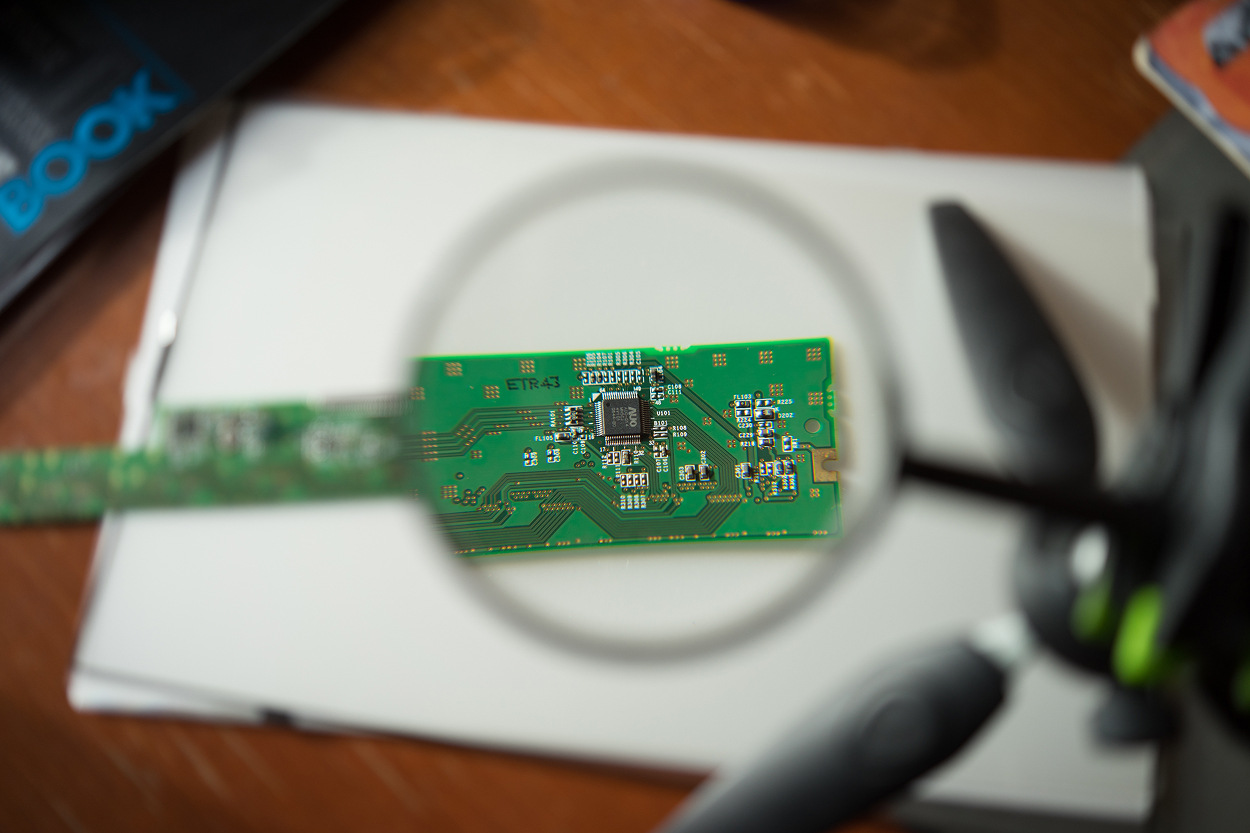
The embedded debugging landscape changes radically in 2026 as AI becomes a core part of the developer workflow. Traditional debugging tools still matter, but they no longer stand alone. With firmware complexity rising across industrial IoT, EVs, robotics, medical systems, and advanced sensors, engineering teams face overwhelming volumes of data, new concurrency issues, multicore interactions, and unpredictable side effects of integration. AI-assisted debugging, once an experimental concept, becomes a practical necessity. The shift is not about replacing engineers but giving them better visibility into patterns, anomalies, and timing behaviours that are impossible to detect with manual tools.
Firmware now operates under constraints that demand proactive analysis: security, safety, OTA updates, real-time load changes, and cross-silicon portability. AI systems embedded in toolchains can process telemetry from thousands of devices, compare traces, identify deviations, and even predict failures before they occur. For embedded teams building products with multi-year lifecycle requirements, anomaly detection becomes a foundational capability for both development and post-deployment support.
This article explains how AI-assisted debugging evolves in 2026, what anomaly detection in firmware really means in practice, and how engineering teams use these technologies to shorten development cycles, increase reliability, and modernise their toolchains.
Why AI-Assisted Debugging Becomes Essential in 2026
Embedded systems grow in complexity every year, but in 2026 the pace accelerates. Several trends converge:
- multicore and heterogeneous architectures become mainstream
• devices must run always-on diagnostics and increased security monitoring
• RISC-V adoption expands debugging diversity
• OTA updates require robust detection of regressions
• AI at the edge introduces new execution pathways and memory patterns
• safety-critical systems demand transparent traceability and documented behaviour
This creates pressure on developers who must track interactions across multiple layers: bootloaders, firmware tasks, communication stacks, AI inference engines, hardware abstraction layers, and middleware. Classic debugging tools, while still vital, cannot process this complexity without machine assistance.
One of the most common long-tail questions from development teams in 2026 is: how do we detect issues that cannot be reproduced in a lab environment but appear in production systems after thousands of hours of runtime? AI-driven anomaly models respond by learning normal execution behaviour and highlighting deviations, even when logs and traces seem normal at first glance.
How AI-Assisted Anomaly Detection Works in Embedded Firmware
AI-assisted debugging relies on statistical modelling, supervised learning, and lightweight inference at various stages of development. The goal is not to run heavy models on MCUs but to integrate AI across the toolchain, from simulation to hardware-in-the-loop testing to field telemetry. The supporting infrastructure identifies anomalies in:
- scheduling behaviour
• interrupt latency patterns
• memory usage trends
• driver state transitions
• sensor fusion pipelines
• communication timing
• power consumption fluctuations
• RISC-V or Arm exception patterns
• ML accelerator behaviour and load
In practice, anomaly detection engines ingest historical traces, maintenance logs, fault dumps, and event timelines from thousands of devices. They learn distributions of what is considered normal under real workloads. These models then flag abnormal states during development or early field deployment.
A common example is detecting subtle race conditions that appear only during specific timing conditions, or identifying memory leaks that grow at rates too small to trigger alarms. Another case is catching divergence between two firmware branches during a multi-stage OTA rollout. AI models highlight these inconsistencies before they propagate to the full fleet.
What kinds of firmware anomalies can AI detect in 2026?
Developers typically ask which specific anomaly patterns can be caught by AI in embedded systems. The key categories include:
- timing drift in real-time tasks
• unusually long interrupt service routines
• inconsistent sensor readings relative to the learned norm
• deviations in CPU load distribution across cores
• abnormal communication retries or packet timing
• flash wear or unusual write cycles
• unexpected power consumption deviations
• micro changes in edge AI inference latency
• hidden deadlocks and livelocks in multithreaded systems
These insights help engineers catch issues long before they degrade the device’s operations or affect user experience.
Practical Overview: AI-Assisted Debugging Tools in 2026
The foundation for today’s AI-assisted debugging workflows was laid by the powerful, tool-centric debugging environments that dominated embedded development in 2025. At that time, engineers relied on advanced probes, trace systems, IDE integrations, and simulation frameworks to inspect firmware behaviour on individual devices. Popular solutions such as high-speed JTAG debuggers, multicore trace tools, RTOS-aware IDEs, and virtual platforms provided deep visibility into execution state, timing, and power consumption.
A representative overview of that tooling era can be found in a 2025 survey of the top debugging tools for embedded systems, which reflects a period when debugging success depended largely on how effectively developers could capture and interpret low-level signals. In 2026, these tools remain essential — but they are now augmented by AI models that operate across datasets, devices, and lifecycles, transforming raw debug data into actionable anomaly insights.
While 2025 established the foundation for AI-assisted diagnostics, the 2026 tools prioritise automation and cross-device intelligence. They combine static analysis, trace interpretation, power profiling, and runtime telemetry under unified dashboards.
In 2026, the leading categories include:
- AI-augmented IDEs with integrated anomaly prediction
• distributed trace analysers for multicore systems
• virtual execution sandboxes with ML-assisted fault clustering
• CI/CD-integrated debugging pipelines with automated triage
• on-device anomaly detection agents for fleet monitoring
• simulation frameworks that compare baseline behaviour against new builds
• self-learning firmware models for regression analysis
Teams no longer rely on single-device debugging. Instead, datasets from hundreds or thousands of devices are used to train and validate anomaly detection models, which provide human-readable insights during development.
Building Predictive Firmware Quality Pipelines
One of the most significant transitions in 2026 is the introduction of predictive debugging workflows. These pipelines combine trace collection, power measurement, logging, stack snapshots, hardware metrics, and static analysis into long-term data storage systems.
These datasets feed ML models that forecast:
- probability of firmware regressions
• risk of timing violations during peak load
• early indicators of memory fragmentation
• potential firmware bottlenecks introduced between commits
• expected effects of OTA updates on field devices
• hotspots in CPU or NPU operations
• unusual patterns in SPI, I2C, or CAN communication
Forward-looking QA teams increasingly ask: can we predict which firmware modules will fail before release? or can we prioritise debugging efforts using statistical evidence instead of guesswork? The answer in 2026 is yes, thanks to stable anomaly detection models embedded in test infrastructure.
Real-World Scenario: Diagnosing Intermittent Anomalies in Industrial IoT Devices
A European industrial IoT company deployed several thousand vibration monitoring nodes across a factory network. The devices ran FreeRTOS on low-power MCUs, with periodic OTA updates. After a major firmware release, only 0.3 percent of devices showed anomalies: unexpected resets, slightly increased CPU load, and occasional communication delays. These issues were impossible to reproduce manually.
An AI-assisted debugging workflow solved the problem by:
- aggregating telemetry from thousands of devices
• learning baseline execution patterns from stable units
• identifying outliers in interrupt timing
• ranking anomalies by likelihood of root cause
• matching the pattern to changes in a new driver version
The model discovered a rare timing interaction between two interrupt sources. Once isolated, developers reproduced the bug in a simulation environment and patched the firmware.
The result was a shorter resolution cycle, clear traceability during audit, and a safer rollout plan for future updates.
Power, Timing, and Multi-Core Interactions: 2026 Challenges
AI-assisted debugging becomes essential for designs involving:
- multi-core Arm and RISC-V platforms
• hybrid MPU-MCU architectures
• AI accelerators and DSPs
• mixed-criticality systems
• tight power budgets
• asynchronous event-driven control loops
As systems become more parallel and distributed, firmware complexity increases. AI helps engineers detect issues such as subtle task interference, unexpected core migration, or irregularities in NPU load balancing.
This is particularly important because industrial, medical, and automotive devices now rely on predictable timing under all conditions. Manual inspection alone no longer guarantees safe behaviour.
AI Debugging Across the Firmware Lifecycle
In 2026, AI plays a role at multiple development stages.
- Early development
Static analyzers enhanced with ML suggest suspicious patterns, unused pointers, unsound state transitions, and potential MISRA deviations. - Integration
AI models compare each new firmware build against a learned performance baseline and highlight emerging regressions even before tests fail. - Pre-production
Simulation tools generate synthetic workloads and identify abnormal execution paths that human developers overlook. - Field operations
Deployed devices run lightweight anomaly agents that record timing deviations, memory drift, and communication irregularities. This data helps predict failures weeks before they surface. - OTA update monitoring
AI models validate the behaviour of updated units, ensuring that rollout stages are stable.
This full lifecycle approach reduces cost and accelerates product iteration.

How AI-Assisted Debugging Supports Regulated Industries
Industries such as medical, industrial automation, automotive electronics, and aerospace demand auditability, determinism, and documentation. AI does not replace these requirements but enhances their feasibility.
In regulated markets, teams must answer questions such as: how do we prove that firmware behaves consistently across long-term deployments? or how do we show that changes do not introduce new risks?
AI-assisted debugging contributes by:
- generating explainable anomaly logs
• clustering issues to simplify root-cause analysis
• documenting behaviour divergence between software versions
• providing statistical evidence during compliance audits
• improving traceability across the firmware lifecycle
This reduces the burden of verification and improves product reliability.
Outlook for AI-Assisted Debugging Beyond 2026
The years ahead will likely bring:
- deeper integration of anomaly detection directly in silicon
• unified debugging standards for heterogeneous processors
• predictive scheduling tools for real-time systems
• hybrid cloud-edge debugging pipelines
• formal verification combined with ML-driven analysis
• automated fault injection scenarios generated by AI
• cross-vendor standardisation of trace formats
Firmware development becomes more data-driven and predictive, enabling teams to build safer, more reliable devices with shorter feedback cycles.
AI Overview
By 2026, AI-assisted debugging becomes a practical tool for embedded developers facing growing firmware complexity. Anomaly detection models learn normal system behaviour, highlight deviations, and support diagnostics across development, testing, and field deployments. This improves reliability for industrial, automotive, IoT, and medical devices and shortens debugging cycles by providing predictive insights into timing issues, memory drift, and multicore interactions. AI-driven debugging enhances traceability and accelerates root-cause analysis, becoming an essential part of modern embedded toolchains.
Our Case Studies