


Smart Dust in 2026: What Actually Works, What Doesn’t, and Why

Smart dust is one of those ideas that refuses to disappear. Every few years it comes back, usually wrapped in bold claims about invisible sensors, autonomous swarms, and a future where everything is measured, everywhere, all the time.
By 2026, the conversation around smart dust has changed. Not because the vision failed, but because reality caught up with it. The technology exists. Prototypes exist. Early deployments exist. What no longer exists is the illusion that smart dust is a simple or universal solution.
If you strip away the metaphors, smart dust today is not about magic particles. It is about building sensing systems at the very edge of what physics, power budgets, and materials allow.
What smart dust really means when engineers talk about it
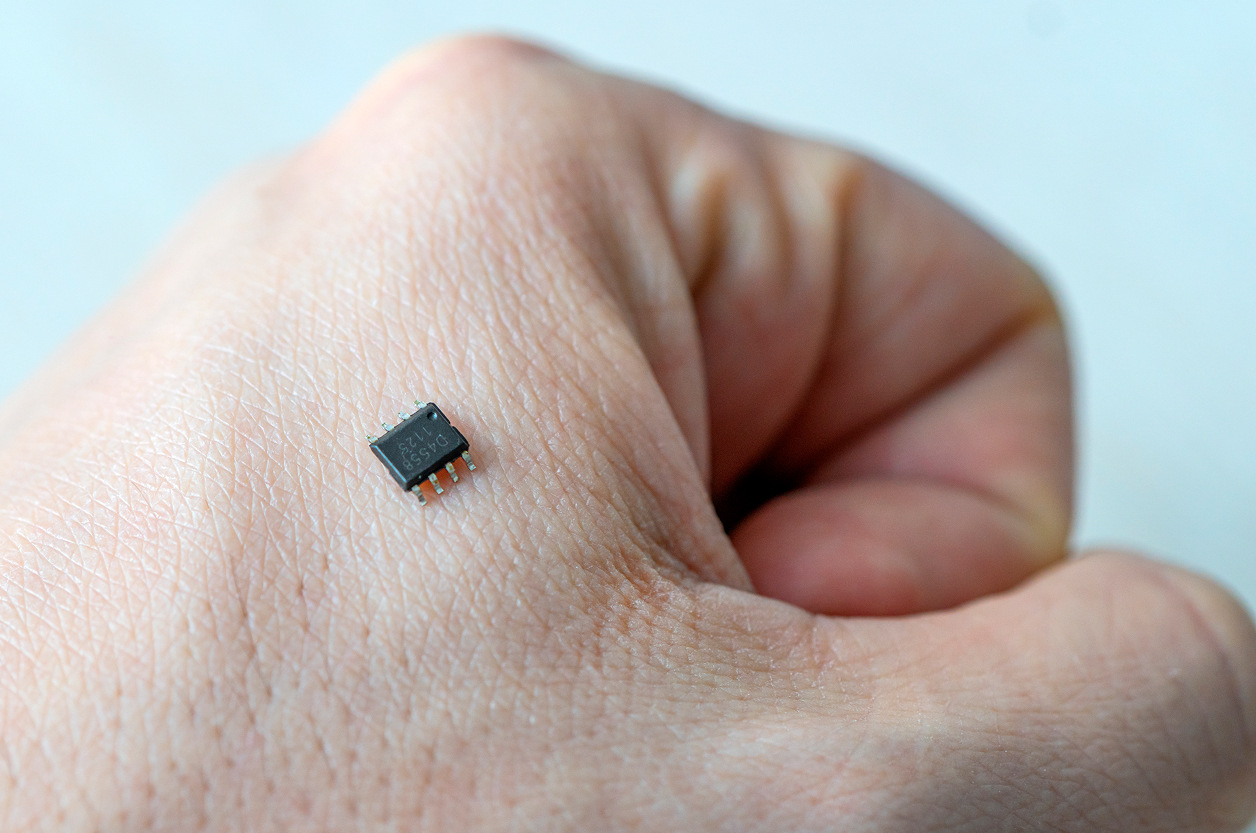
In practical terms, smart dust refers to extremely small sensor nodes, usually based on MEMS technologies, that combine sensing, minimal computation, and some form of wireless communication. These nodes are often called motes.
The original idea was elegant: make them so small and so cheap that you can deploy them by the thousands, let them harvest energy from their environment, and have them quietly observe the world.
In 2026, parts of that vision are real. The scale is close. The power consumption is low. The sensing capabilities are impressive for the size. What is still hard is making all of those properties coexist in a device that survives outside a lab.
So when engineers talk about smart dust today, they usually mean systems inspired by the idea, not pure, autonomous dust clouds.
Much of the confusion around smart dust comes from how the concept is typically introduced. Early smart dust visions emphasized autonomous swarms of microscopic sensors, often glossing over the system-level constraints that ultimately define real deployments. Looking back at these early smart dust visions helps explain both the long-lasting appeal of the idea and why practical implementations today look far more structured and less autonomous than originally imagined.
The part most articles skip: communication is the real constraint
Here is where the story becomes less romantic.
A millimeter-scale device does not have room for a comfortable radio. Power is scarce, antennas are tiny, and transmission range is short. This immediately breaks the popular assumption that each mote can talk directly to the cloud.
In real systems, that does not happen.
Instead, smart dust deployments use layers. Motes sense locally and transmit over very short distances. Larger, more capable nodes collect that data, aggregate it, and handle long-range communication, storage, and security. Without these aggregation layers, the system simply does not function.
This is not a workaround. It is the architecture.
Where smart dust actually earns its place
Smart dust is not a better IoT sensor. It is a different tool, useful only when density matters more than individual reliability.
One example is agriculture. Not “dust everywhere,” but enough micro-sensors to see variations that traditional probes miss. Small temperature or moisture differences across a field can matter, especially for high-value crops. Dense sensing makes those differences visible.
Industrial environments offer another case. Tiny sensors attached to machinery can pick up vibration or thermal patterns that signal early wear. Losing some sensors is acceptable if the overall picture remains intact.
Environmental monitoring fits the same logic. Air quality, localized contamination, or structural degradation in places that are hard to wire or service benefit from dense, disposable sensing.
Biomedical ideas like neural dust or ingestible sensors are still largely experimental. They are technically fascinating, but constrained by safety, validation, and ethics. In 2026, they belong more to controlled trials than to deployment.
Power: no miracles here
The idea of battery-free smart dust is appealing, and sometimes achievable. But it depends heavily on the environment.
Energy harvesting from light, vibration, heat, or RF works only when those sources are present and stable. In the real world, they are often neither. That means fully autonomous operation cannot be assumed.
Most practical designs accept this and focus on predictability rather than purity. Motes sleep most of the time. They wake up briefly, take measurements, transmit small packets, and go back to sleep. Energy harvesting extends lifetime, but does not guarantee continuous operation.
If a use case requires constant connectivity or high data rates, smart dust is probably the wrong approach.
Reliability becomes a materials problem
At this scale, electronics are rarely the weakest point. Packaging is.
Moisture, dust, chemicals, mechanical stress, temperature cycling — all of these affect tiny devices disproportionately. A failure does not have to be dramatic. Small drifts, corrosion, or delamination are enough to kill a mote.
That is why smart dust systems are designed to tolerate loss. Individual nodes are expected to fail. What matters is whether the system still delivers useful information when that happens.
This is a mindset shift compared to traditional embedded systems, where every node is precious.
Privacy and legitimacy are not optional discussions
Invisible sensors trigger obvious concerns, and rightly so.
A system that can observe environments at fine granularity can also observe people. Without strong controls, smart dust becomes a surveillance tool by default. In 2026, that risk is no longer theoretical.
Any serious smart dust project has to address security, access control, and lifecycle management from the start. Who can read the data? Who can disable devices? What happens when the system reaches end of life?
Environmental impact adds another layer. Once dispersed, motes are hard to retrieve. Biodegradable materials, limited lifetimes, or controlled deactivation are increasingly seen as engineering requirements, not ethical afterthoughts.
Data is only useful if you reduce it
Dense sensing generates dense data. Trying to ship everything upstream is a fast way to break the system.
Smart dust architectures that work rely on filtering and summarization. Individual motes do almost nothing. Aggregation nodes detect changes, trends, and anomalies across many sensors, and forward only what matters.
This is where most of the “intelligence” lives today — not inside the dust, but around it.
So where does this leave smart dust in 2026?
Smart dust is real enough to build systems around, but only if expectations are grounded. It is not a universal sensing layer, and it is not self-managing magic.
It is a specialized approach for situations where sensor density matters, individual failures are acceptable, and supporting infrastructure can be deployed.
Progress in this field is steady, not explosive. Better low-power electronics, improved materials, and clearer regulatory boundaries are slowly expanding what is possible.
Conclusion
In 2026, smart dust sits in an uncomfortable but honest place. It works — but only when treated as a system-level engineering problem, not a gadget.
The biggest advances are not about shrinking motes further. They are about designing architectures that accept limited power, short-range communication, failure, and ethical constraints, and still deliver value.
That is what turns smart dust from a recurring idea into a usable technology.
AI Overview
Smart dust in 2026 refers to MEMS-based micro sensor nodes used in dense deployments, supported by aggregation infrastructure rather than operating as fully autonomous particles.
Key Applications: high-density environmental sensing, industrial condition monitoring, precision agriculture, experimental biomedical research.
Benefits: fine-grained spatial insight, deployment in hard-to-access locations, tolerance to individual sensor failure.
Challenges: limited power availability, short communication range, harsh-environment packaging, privacy and security governance, environmental lifecycle management.
Outlook: gradual adoption in specialized use cases as system-level engineering, materials, and governance mature.
Related Terms: smart dust, motes, MEMS sensors, distributed sensing, energy harvesting, edge aggregation, sensor swarms.
Our Case Studies




FAQ
What is smart dust in practical terms?
Where does smart dust actually work today?
Why isn’t smart dust fully autonomous yet?
What are the biggest risks of smart dust systems?
How do smart dust systems scale without overwhelming networks?