


Two Wires to the Field: What 10BASE-T1L Changes for Industrial Connectivity

Most field devices in process automation plants today are connected by one of two mechanisms: a 4–20 mA analog current loop carrying a single process variable at a bandwidth of approximately 30 kbps, or a fieldbus (PROFIBUS PA, Foundation Fieldbus H1) carrying multiple variables at 31.25 kbps over a shared segment. Both technologies were designed in an era when field instruments measured one thing and reported it. Neither was designed for a world where a transmitter may simultaneously report temperature, pressure, vibration spectrum, diagnostic health data, and configuration state — and where all of that data needs to reach the cloud without a gateway translating between three incompatible protocol layers.
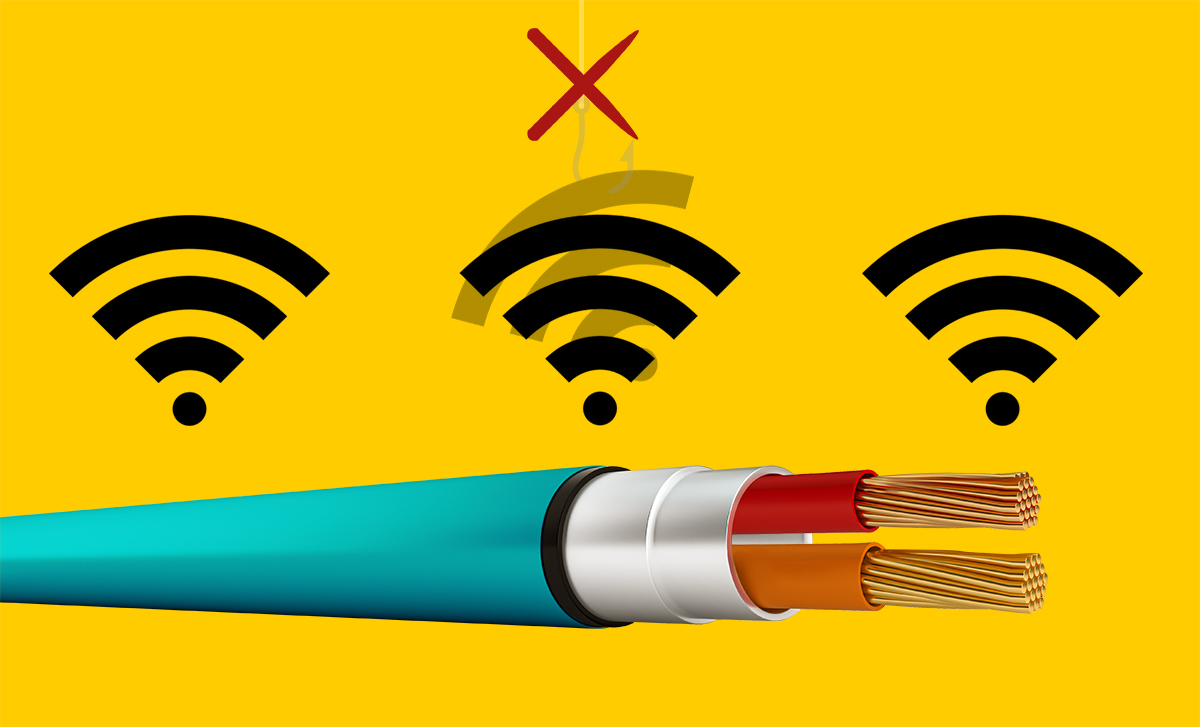
10BASE-T1L is the IEEE 802.3cg-2019 standard that brings Ethernet directly to field instruments over a single twisted pair, at 10 Mbps, over cable runs up to 1000 meters. The number matters: 10 Mbps is roughly 300 times the bandwidth of PROFIBUS PA at 31.25 kbps. More importantly, it is full Ethernet — the same IP stack, the same protocol layers (PROFINET, EtherNet/IP, Modbus-TCP, OPC UA), the same tools that IT engineers already know — running over two wires that can be the same physical cable already installed in the plant. No gateway. No protocol translation. No separate wiring run. A laptop connected to the plant's Ethernet backbone can reach a temperature transmitter in a hazardous area via SSH, OPC UA, or a web interface, with the only conversion at the physical layer.
For embedded firmware engineers designing the next generation of field instruments, 10BASE-T1L is the connectivity architecture their products will need. Understanding its physical layer constraints, power delivery model, safety classifications, and the protocol landscape above it is the prerequisite for designing hardware and firmware that works correctly from day one.
Physical Layer — What 10BASE-T1L Actually Specifies
The IEEE 802.3cg standard defines the physical layer only: line coding, signal amplitude, cable characteristics, and the medium attachment unit (MAU). Everything above the PHY — the MAC, the IP stack, the application protocol — is standard Ethernet, unchanged.
The key physical layer parameters:
- Data rate: 10 Mbps full duplex
- Encoding: PAM-3 (three-level pulse amplitude modulation), same as 100BASE-T1 but at lower symbol rate
- Cable: no specific cable type mandated; requirements expressed as insertion loss and return loss curves. Fieldbus Type A cable (the shielded twisted pair used in PROFIBUS installations) meets the specification and is the recommended choice for reuse of existing plant cabling
- Distance: up to 1000 m at 2.4 V peak-to-peak transmit amplitude; up to 200 m at 1.0 V peak-to-peak transmit amplitude
- Polarity: insensitive to wire reversal — swapping the two conductors does not prevent link establishment, which matters enormously for industrial wiring where polarity mistakes are common
The two amplitude modes are not interchangeable choices for the same application — they reflect different deployment contexts. The 2.4 V mode is for general industrial use at full cable reach. The 1.0 V mode exists specifically for intrinsically safe areas: it limits the energy available on the cable to levels that prevent ignition in explosive atmospheres (ATEX/IECEx Zone 0, 1, 2), at the cost of reduced cable reach. Any device intended for deployment in hazardous areas must use the 1.0 V mode; its firmware and hardware must be verified to operate correctly within that transmit level's reduced margin budget.
The ADIN1100 from Analog Devices is the most widely used 10BASE-T1L PHY in industrial designs. It supports both 1.0 V and 2.4 V modes, operates from 1.8 V or 3.3 V supply, consumes 39 mW in normal operation, and includes cable reach up to 1700 m with autonegotiation — slightly beyond the standard's minimum requirement. Its MII/RMII interface connects directly to any MCU or SoC with an Ethernet MAC. The ADIN1110 extends this with an integrated MAC accessible via SPI, enabling connectivity from microcontrollers that have no native Ethernet MAC — opening 10BASE-T1L to the class of constrained embedded processors (Cortex-M0+, Cortex-M4, low-power RISC-V) that previously could not support Ethernet at all.
Ethernet-APL — What the Process Industry Added
The IEEE 802.3cg standard defines 10BASE-T1L as a general physical layer. The process automation industry needed more: power delivery over the cable, intrinsic safety classification, defined network topology, and rules for hazardous area certification. The Ethernet-APL consortium (formed by ABB, Emerson, Endress+Hauser, Honeywell, Krohne, Pepperl+Fuchs, Rockwell, Siemens, Stahl, Vega, and Yokogawa) specified APL on top of 10BASE-T1L to provide exactly these additions.
APL is not a different standard from 10BASE-T1L — it is an application specification that adds constraints and definitions for process automation use. An APL device is 10BASE-T1L compliant by definition, but a 10BASE-T1L device is not necessarily APL compliant. The APL-specific additions cover:
Power delivery classes: APL defines power sourcing equipment (PSE) classes and powered device (PD) classes. Class A devices receive up to 540 mW (trunk power); Class B up to 1.84 W. For intrinsically safe designs, classes C and D define limited energy budgets: Class C is approximately 500 mW at 1.0 V amplitude mode. These classes align with the Ex i (intrinsically safe) energy limits defined by ATEX and IECEx standards.
Trunk and spur topology: APL networks are structured into trunk segments running at 2.4 V p-p (up to 1000 m) connecting field switches and power switches, and spur segments running at 1.0 V p-p (up to 200 m) connecting individual field instruments. The voltage reduction on spurs enforces intrinsic safety at the instrument end without requiring the trunk infrastructure to operate at intrinsically safe energy levels throughout.
Power over the data pair: APL delivers power over the same two wires carrying data, using a DC bias superimposed on the differential signal. The power coupling and decoupling network in the field device separates the DC power supply from the AC data signal — a standard common-mode choke and coupling capacitor arrangement that ADI's reference designs document in detail.
The following table summarizes the segment types and their parameters:
| Segment | Amplitude | Max length | Typical use | Power class |
| APL trunk | 2.4 V p-p | 1000 m | Switch-to-switch, switch to field switch | High power (Class 4, 14 per IEEE 802.3cg) |
| APL spur | 1.0 V p-p | 200 m | Field switch to field device | Class A, B, C, D |
| General 10BASE-T1L | 2.4 V p-p | 1000 m | Building automation, non-hazardous industrial | Per SPoE specification |
| General 10BASE-T1L | 1.0 V p-p | 200 m | Low-power devices, IS-adjacent | Limited power |
Power Delivery — Single-Pair Power over Ethernet (SPoE)
Power delivery over a single twisted pair requires a different coupling architecture than PoE over standard 4-pair Ethernet, because there is no spare pair to carry DC power. Instead, SPoE superimposes DC power over the differential data signal using a common-mode injection topology: the positive rail connects to both conductors through equal-value inductors, and the field device extracts the power through a matching common-mode filter. The data signal rides on top of the DC bias as a differential signal, which the field device's PHY receiver sees normally because it responds only to differential voltage.
ADI's LTC4296-1 is the PSE controller for SPoE applications in APL field switches and media converters. It manages the SCCP (Serial Communication Classification Protocol) handshake that allows the PSE to identify the connected PD's power class before enabling full power delivery, preventing damage to Class A/C devices from a Class 4 PSE applying full power before classification. The Omnitron OmniConverter 10T/APS media converters use this classification protocol and support delivery of up to 56 W per port for the highest power classes, while also supporting automatic negotiation between 1.0 V and 2.4 V amplitude for mixed spur/trunk connections.
For field device firmware engineers, the SPoE power budget defines the total system budget. A field transmitter powered from a Class A APL spur receives approximately 500 mW maximum from the cable. The device must allocate this budget across:
- 10BASE-T1L PHY: ~39 mW (ADIN1100 typical)
- MCU or embedded processor: depends on device, typically 10–50 mW for Cortex-M class
- Sensors and analog front end: measurement-dependent
- Communication protocol stack: minimal additional compute load
- Safety and diagnostic functions: typically minor
A complete 10BASE-T1L field transmitter — MCU plus PHY plus sensor analog front end — can comfortably fit within a 500 mW budget on a Class A spur, making APL viable for the full population of simple field instruments (temperature, pressure, flow transmitters) that were previously limited to 4–20 mA with HART.
Protocol Stack — What Runs Above the PHY
This is where 10BASE-T1L's most significant practical advantage becomes visible. Because 10BASE-T1L is standard IEEE 802.3 Ethernet at the physical layer, nothing above the MAC layer requires any modification for 10BASE-T1L. A PROFINET device running on a Cortex-A5 with a standard PROFINET stack connects to a 10BASE-T1L segment by swapping its 100BASE-TX PHY for an ADIN1100 — no stack changes, no driver rewrites beyond the PHY register interface, no certification impact on the PROFINET layer.
This transparency is not accidental. The IEEE 802.3cg standard was explicitly designed to be compatible with all existing Ethernet standards at the MAC layer and above, "eliminating the need for complex gateways." A PROFINET controller that manages devices on a 1 Gbps backbone can communicate with an ADIN1100-equipped field instrument on a 10BASE-T1L spur through a standard Ethernet switch that supports rate adaptation — no gateway, no protocol translation, only MAC-layer forwarding.
The implication for firmware development is that a field instrument designed for 10BASE-T1L can run any Ethernet-based industrial protocol without additional certification of the protocol stack itself:
- PROFINET: IEC 61158, runs unchanged over 10BASE-T1L; PROFINET IO field device firmware requires only that the underlying Ethernet driver supports the ADIN1100's MII interface
- EtherNet/IP (CIP over UDP/TCP): ODVA-specified, runs unchanged; the CIP stack sees a standard MAC
- OPC UA: native TCP/IP, works transparently; field devices can expose OPC UA servers directly without gateway translation
- Modbus-TCP: straightforward; Modbus-TCP devices on 10BASE-T1L spurs are addressable from the DCS via standard IP routing
- HART-IP: the HART Foundation's IP-based protocol for HART device management runs over TCP/IP and is directly applicable to 10BASE-T1L instruments that replace HART loop devices
Time-Sensitive Networking (TSN) compatibility is the next layer of the protocol stack evolution. The ADIN6310 field switch from ADI supports TSN extensions including IEEE 802.1AS time synchronization, LLDP, and IGMP snooping, enabling 10BASE-T1L networks to participate in TSN domains that provide deterministic latency for control traffic — relevant for motion control applications that require sub-microsecond timing alongside general process data.
Migration Path — From HART and PROFIBUS to 10BASE-T1L
The practical migration question for plant engineers is not whether 10BASE-T1L is technically superior — it clearly is — but how to migrate from a plant wired for PROFIBUS PA or 4–20 mA HART without rewiring everything simultaneously, and how to manage the transition period where both legacy and new devices coexist on the same infrastructure.
Three migration strategies address different plant situations:
Media converter approach: Install 10BASE-T1L to conventional Ethernet media converters at the marshalling cabinet level. Legacy devices on PROFIBUS or 4–20 mA remain unchanged; new 10BASE-T1L devices connect via the media converter to the same Ethernet backbone. This approach requires no changes to existing devices or to the DCS configuration for legacy devices. It provides immediate access to 10BASE-T1L connectivity for new field device installations without a plant-wide migration.
Fieldbus reuse approach: 10BASE-T1L explicitly allows reuse of existing Fieldbus Type A cable (the 18 AWG shielded twisted pair used in PROFIBUS PA installations). A plant migrating a PROFIBUS PA segment to 10BASE-T1L replaces the PROFIBUS DP/PA coupler with a 10BASE-T1L field switch and replaces field devices as they come up for maintenance or replacement. The cable remains. This is the most economically efficient migration path and is exactly what the 10BASE-T1L standard was designed to enable.
Greenfield APL approach: New installations go directly to full APL topology — trunk cable from the control room to APL field switches in junction boxes, spur cables from field switches to individual instruments. All devices are 10BASE-T1L native. No media converters, no legacy protocol translation, no PROFIBUS or HART segments. This path is the cleanest from a maintenance and operations perspective, and it is the trajectory that major instrument vendors including Endress+Hauser, ABB, Emerson, and Vega are supporting with native APL product lines launched between 2022 and 2025.
The engineering workforce transition argument is real: process plants are losing experienced PROFIBUS and HART technicians to retirement, and graduates entering the field know Ethernet. A plant standardized on 10BASE-T1L requires no specialist fieldbus knowledge to commission, troubleshoot, or replace devices. Any network-aware technician with a laptop, Wireshark, and an IP address can diagnose connectivity issues on a 10BASE-T1L segment without specialized fieldbus analyzers.
---
Quick Overview
10BASE-T1L (IEEE 802.3cg) brings standard 10 Mbps Ethernet to industrial field devices over a single twisted pair at distances up to 1000 m, eliminating the protocol translation gateways required by PROFIBUS PA, Foundation Fieldbus, and 4–20 mA HART. Ethernet-APL extends 10BASE-T1L for process automation with power delivery classes, trunk/spur topology (trunk at 2.4 V p-p up to 1000 m, spur at 1.0 V p-p up to 200 m for intrinsically safe areas), and hazardous area certification support. SPoE delivers up to 500 mW on Class A spurs via common-mode DC injection over the data pair, sufficient for a complete field transmitter. All standard industrial Ethernet protocols — PROFINET, EtherNet/IP, OPC UA, Modbus-TCP — run unchanged above the 10BASE-T1L physical layer. Migration from PROFIBUS can reuse existing Fieldbus Type A cable. ADI's ADIN1100 PHY and ADIN1110 MAC-PHY (SPI interface) are the primary silicon enabling the field device market.
Key Applications
Temperature, pressure, flow, and level transmitters in process plants replacing PROFIBUS PA or 4–20 mA HART with direct Ethernet connectivity, condition monitoring sensors (vibration, acoustic emission) requiring higher bandwidth than legacy fieldbus can support, safety instrumented system (SIS) field devices requiring direct IP connectivity for remote diagnostics and proof testing, new greenfield process automation installations in food and beverage, pharmaceutical, oil and gas, and chemical plants, and building automation controllers requiring 10BASE-T1L connectivity to BACnet/IP or Modbus-TCP devices over long cable runs.
Benefits
Bandwidth jump from 31.25 kbps (PROFIBUS PA) or 30 kbps (HART) to 10 Mbps enables rich diagnostic data, configuration, and process variable reporting from a single field device simultaneously. IP addressability to every field instrument eliminates DCS-level protocol gateways, reduces software complexity, and allows direct cloud or edge analytics access. Reuse of existing Fieldbus Type A cable preserves most of the plant's wiring investment. Standard Ethernet tooling — Wireshark, ping, SSH, web browsers — replaces proprietary fieldbus analyzers for commissioning and troubleshooting. Power delivery over the single pair eliminates separate power wiring runs to field instruments.
Challenges
SPoE power budget of 500 mW on Class A spurs limits connected devices to low-power designs; instruments with high-power transducers, heating elements, or local displays may require separate power runs. The 200 m spur length limit at 1.0 V mode is shorter than the 1875 m segment length achievable with PROFIBUS PA, requiring more field switches in large installations. Intrinsic safety certification of 10BASE-T1L field devices under ATEX/IECEx requires full device-level certification of the power coupling network and energy storage, not just PHY-level compliance with 1.0 V amplitude mode. Legacy DCS systems without native 10BASE-T1L support require media converters during the transition period, adding to infrastructure cost.
Outlook
Major instrument vendors including Endress+Hauser, ABB, Emerson, and Vega launched APL-native product lines between 2022 and 2025. The ADIN6310 multi-port field switch with integrated TSN support positions 10BASE-T1L as compatible with the deterministic networking requirements of advanced process control. The convergence of OPC UA Pub/Sub, TSN, and 10BASE-T1L at the field level is the trajectory toward a single, standards-based communication architecture spanning field instrument to cloud without any protocol translation at any layer — the industrial equivalent of the IT world's flat Ethernet network.
Related Terms
10BASE-T1L, IEEE 802.3cg, Single-Pair Ethernet, SPE, Ethernet-APL, APL, Advanced Physical Layer, SPoE, Single-pair Power over Ethernet, SCCP, classification protocol, trunk, spur, intrinsic safety, ATEX, IECEx, Ex i, Zone 0 Zone 1 Zone 2, 4-20 mA, HART, HART-IP, PROFIBUS PA, Foundation Fieldbus H1, fieldbus migration, Type A cable, insertion loss, return loss, PAM-3, 2.4 V mode, 1.0 V mode, ADIN1100, ADIN1110, ADIN6310, LTC4296-1, PSE, PD, power class, PROFINET, EtherNet/IP, CIP, OPC UA, Modbus-TCP, TSN, Time-Sensitive Networking, IEC 61158, media converter, field switch, power switch, MII, RMII, SPI MAC-PHY, IT/OT convergence, IIoT, Industry 4.0, process automation, field device, transmitter

FAQ
What is the difference between 10BASE-T1L and Ethernet-APL?
10BASE-T1L is the IEEE 802.3cg physical layer standard defining 10 Mbps communication over a single twisted pair at distances up to 1000 m. Ethernet-APL is an application specification built on top of 10BASE-T1L that adds power delivery classes, trunk and spur topology definitions, intrinsic safety specifications for hazardous areas, and EMC requirements specifically for process automation. Any APL device is 10BASE-T1L compliant at the data layer, but a 10BASE-T1L device is not automatically APL compliant — APL compliance additionally requires the power delivery and topology conformance defined by the APL specification.
Can existing PROFIBUS PA cable be reused for 10BASE-T1L?
Yes. Fieldbus Type A cable — the 18 AWG shielded twisted pair used in PROFIBUS PA installations — meets the insertion loss and return loss requirements of the IEEE 802.3cg 10BASE-T1L standard. This cable reuse is a deliberate design decision in the standard and is one of the primary economic arguments for 10BASE-T1L migration in plants with existing PROFIBUS infrastructure. The plant replaces the PROFIBUS coupler and field devices while keeping the cable, reducing the migration cost substantially.
How does SPoE power delivery differ from standard PoE?
Standard PoE uses spare wire pairs in 4-pair cable to carry DC power separately from the data pairs. Single-pair Power over Ethernet has no spare pairs — it superimposes DC power over the differential data signal using common-mode injection. The PSE applies equal DC voltage to both conductors through common-mode inductors, and the field device extracts this common-mode DC while the differential data signal rides on top of it unchanged. The SCCP classification handshake identifies the connected device's power class before full power is enabled. For APL field devices, the Class A power limit is approximately 500 mW, sufficient for a complete field transmitter including MCU, PHY, and sensor front end.
What protocols can run directly over 10BASE-T1L without protocol translation?
All standard Ethernet-based industrial protocols run directly over 10BASE-T1L without modification above the MAC layer: PROFINET, EtherNet/IP (CIP), OPC UA, Modbus-TCP, HART-IP, and TSN-compliant protocols. A field device firmware stack built for any of these protocols requires no protocol-layer changes when the physical layer is changed to 10BASE-T1L — only the PHY driver must be adapted to the ADIN1100 or equivalent transceiver's register interface. This transparency is the standard's most significant practical advantage over fieldbus alternatives, which required gateway translation at every protocol boundary.