


Edge AI for BESS Monitoring: Where Local Detection Adds Value Beyond Standard Alerts
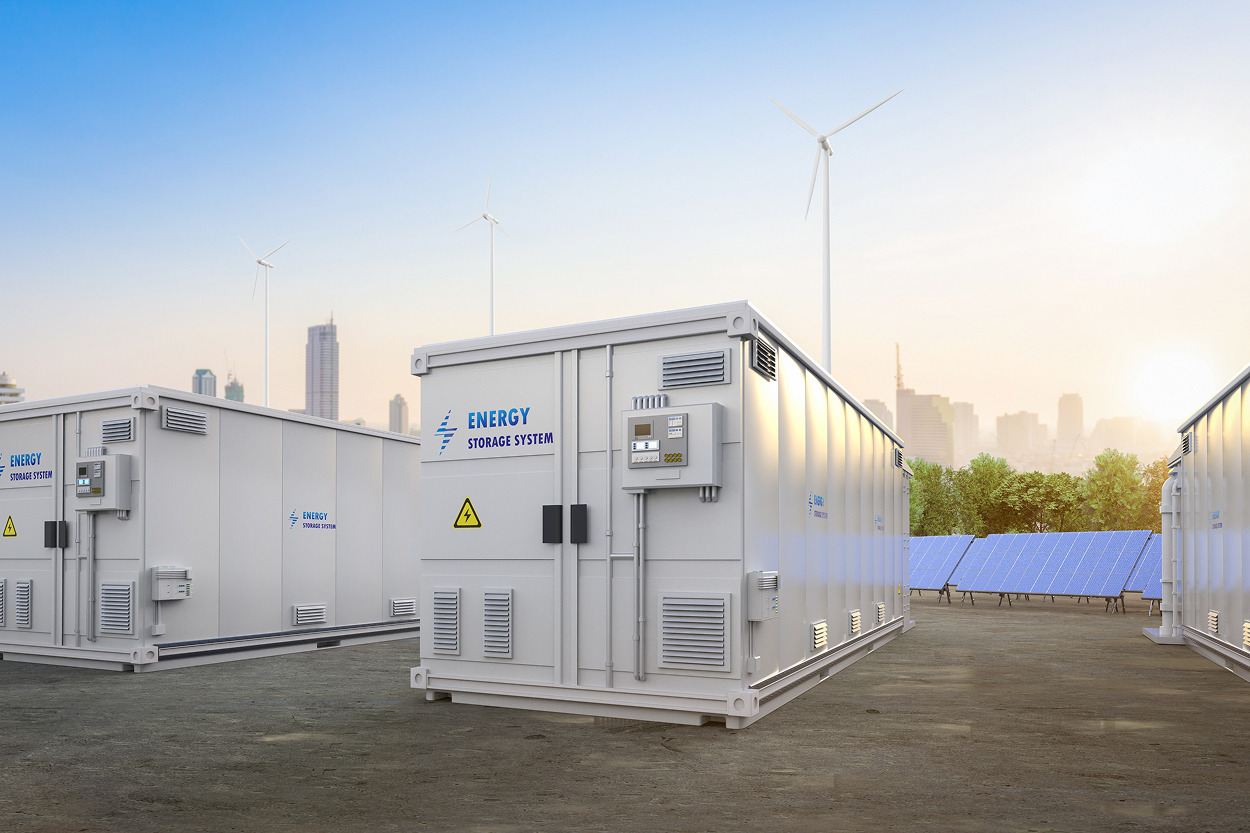
The question for a BESS operator adding AI-based monitoring to an existing site is not whether AI can be useful — it clearly can. The question is where AI running on a cloud platform genuinely closes gaps in the monitoring architecture, and where it does not. Cloud-based battery analytics have real value for long-horizon degradation modeling, fleet benchmarking, and revenue optimization. They are not the right architecture for decisions that have a response time budget measured in seconds, that need to remain operational when connectivity is interrupted, or that address failure mechanisms in systems the BMS does not monitor at all.
Edge AI — inference running on dedicated hardware at the BESS site — fills a different part of the monitoring problem. It is not a replacement for cloud analytics. It is the layer that addresses the monitoring gaps closest to the physical asset, under timing constraints that cloud round-trips cannot meet, and for data streams that standard BMS architecture does not capture. Understanding where local detection adds specific value, and why the architecture matters more than the algorithm, is the engineering basis for evaluating whether edge AI belongs in a BESS monitoring stack.
Why Architecture Matters More Than the Algorithm
The distinction between edge and cloud AI in BESS monitoring is primarily an architectural decision, not an algorithmic one. The same anomaly detection model — a neural network trained on vibration signatures, a multi-variate time series classifier for gas concentration patterns, or a physics-informed model for thermal gradient analysis — can in principle run at the edge or in the cloud. The architectural choice determines what the model can respond to, how quickly it responds, and whether it continues to function when the external conditions change.
Three characteristics of BESS monitoring problems specifically favor edge deployment:
Latency-critical decisions. The 5 to 20 minute off-gas warning window before thermal runaway onset is the most valuable safety interval in a BESS. Within that window, operators can initiate emergency response, notify first responders, and execute controlled shutdown procedures. A detection system that uploads raw gas sensor data to a cloud platform, runs inference, and returns an alert has introduced network latency, processing queue time, and cloud round-trip overhead into a decision chain where minutes are the entire margin. Edge-resident inference — with dedicated detection engines running continuously at the asset — produces alerts in sub-second time after the sensor signal reaches the threshold that warrants classification, because there is no external round-trip in the critical path.
Connectivity independence for safety-critical decisions. BESS assets are frequently located in sites with variable connectivity: rural grid infrastructure, remote energy storage projects, industrial installations behind firewalls with restricted external network access. A monitoring system whose safety-critical alerts depend on cloud connectivity is operationally compromised precisely in the conditions most likely to occur at remote sites. Edge-resident AI continues operating regardless of connectivity state. Connectivity, when available, can be used to synchronize logs and deliver insights to operators — but it is not in the critical path for safety detection.
Monitoring of systems outside BMS scope. HVAC health, container environment, and off-gas analytics require sensor inputs that the BMS does not have: compressor current signatures, refrigerant circuit vibration, humidity at multiple container locations, multi-species gas concentration patterns. Cloud analytics for BMS data cannot address these failure pathways because the data does not exist in the BMS data stream. Edge AI that deploys dedicated sensors for these systems and runs inference locally creates a monitoring layer that is genuinely additive — it covers the failure modes that BMS-centric monitoring misses entirely.
Off-Gas Detection — From Threshold Alarms to Pattern Recognition
The clearest example of where local AI detection adds specific operational value over standard monitoring is off-gas analytics. Most utility-scale BESS installations include gas detectors as required under NFPA 855. The standard configuration produces binary threshold alarms: when a gas concentration exceeds a preset level, an alert is generated. This approach is the correct minimum safety measure. It is also consistently inadequate in practice.
The problem is false-positive rate. HVAC cycling creates temperature-driven VOC concentration changes inside the container. Maintenance activities — cleaning products, personnel bringing equipment — produce gas signals. Sensor drift over time shifts calibration. The result is a detection environment where binary threshold alarms produce frequent false positives that train operators to treat gas alarms as noise. Research and field incident analyses consistently identify alarm fatigue as a contributing factor in delayed response to genuine pre-runaway events. A 10-minute warning window that arrives buried in daily alarm noise is not operationally equivalent to a high-confidence alert that operators can act on immediately.
Edge AI gas pattern recognition addresses this by running multi-gas correlation across simultaneous VOC, hydrogen, CO, and CO₂ sensor outputs, classifying the combined pattern against a library of signatures that includes genuine pre-runaway events, HVAC cycling artifacts, sensor drift patterns, and maintenance activity signatures. The classification produces a confidence-scored alert rather than a binary threshold crossing. A simultaneous VOC and H₂ elevation with a characteristic time signature has a fundamentally different risk profile than a single-gas VOC spike during an HVAC transition. The edge inference distinguishes between them continuously, at the sensor sampling rate, without a cloud round-trip.
The value is quantifiable in operational terms. Fewer false positives mean operators trust the alerts they receive. Trusted alerts mean the 5-to-20-minute pre-runaway window is actually used for emergency response rather than for a verification call to confirm whether the alarm is genuine. The algorithmic capability — multi-variate pattern classification — is not exotic. The architectural requirement — sub-second local inference with no cloud dependency — is what determines whether it works in the operational environment where it is needed.
HVAC Health Monitoring — Detecting Gradual Degradation Before It Becomes a Crisis
HVAC degradation in a BESS container is a slow failure mode. A compressor that delivered optimal performance at commissioning typically shows measurable efficiency decline within the first two to three years of operation — not through a sudden fault, but through gradual refrigerant loss, bearing wear, and thermal cycling effects that compound over thousands of operational hours. The coefficient of performance drops incrementally. The batteries run slightly hotter on every cycle. The degradation rate accelerates. No alarm is triggered at any stage until a threshold is breached, by which point significant capacity loss has already occurred and the HVAC system may be months away from failure.
Edge AI for HVAC health monitoring targets this gradual degradation pattern through two complementary detection approaches. The first is compressor current signature analysis and vibration trending. A healthy compressor draws current in a characteristic pattern across its operating cycle; bearing wear, refrigerant loss, and mechanical imbalance each produce distinguishable signatures in that current waveform. Vibration sensors on the compressor body provide an independent feature set. An anomaly detection model trained on healthy baseline signatures flags deviations that correspond to specific fault modes weeks to months before those faults produce failure-level thermal effects. This is predictive maintenance for the HVAC subsystem — the same approach that has been widely validated in industrial rotating equipment monitoring — applied to the specific operating environment of a BESS container.
The second approach is continuous COP tracking normalized against ambient temperature and load conditions. A cooling system's efficiency in absolute terms varies with ambient; a meaningful performance metric requires comparing actual COP against the expected COP for the current ambient and load conditions. Edge-resident normalization — continuously computing the expected COP baseline from local temperature and power measurements and comparing it against measured cooling output — produces a running efficiency score that declines as the HVAC system degrades. This score surfaces the gradual efficiency loss that is invisible to both the BMS and to absolute threshold monitoring, and creates the leading indicator that allows maintenance to be scheduled before the degradation reaches the cells.
The operational consequence of catching HVAC degradation early is significant. Research on cooling optimization in BESS shows that maintaining proper thermal management can reduce maximum cell temperature differences from tens of degrees to single digits and improve effective COP by a factor of several. Translated into asset economics, the avoided accelerated aging on a large BESS represents a meaningful fraction of the asset's replacement cost over its operational life.
Environmental Monitoring — Closing the Humidity and Condensation Gap
Container humidity monitoring is among the most straightforward additions to a BESS monitoring stack, and among the most consistently absent from standard deployments. The BMS has no humidity sensors. Standard BESS inspections occur at intervals of weeks to months. HVAC cycling inside the container creates humidity spikes that occur dozens of times per day and are never captured in any monitoring data stream.
DNV's analysis of documented BESS fire investigations identified condensation on electrical components from faulty humidity control as a direct fire cause. Korean ESS fire investigations from the major incident cluster between 2017 and 2019 found condensation combined with dust contamination as a mechanism for insulation breakdown. These are not theoretical risk pathways — they are documented causal chains in real incidents, and the data that would have revealed them in advance simply did not exist in the monitoring architecture deployed on those sites.
Edge-resident environmental monitoring closes this gap through continuous humidity measurement at multiple container heights, real-time dew point calculation, and condensation probability scoring on critical electrical surfaces. The condensation probability metric is the operationally relevant output: it translates the combination of relative humidity, local surface temperature, and thermal gradient into a direct risk indicator that maintenance teams can act on without requiring thermodynamic expertise. A raw humidity reading requires interpretation; a condensation probability score above a defined threshold on a busbar or connection point is an unambiguous maintenance trigger.
The baseline learning capability of edge-resident AI is particularly valuable here. Humidity patterns inside a container are highly site-specific — they depend on the local climate, the HVAC cycling behavior, the container orientation, and the seasonal variation. A model that learns the site-specific normal humidity pattern over the first weeks of operation can distinguish between the humidity spike that follows a normal HVAC cycle and the elevated baseline humidity that indicates seal degradation, drainage issues, or HVAC malfunction. Static thresholds set at commissioning cannot make this distinction; adaptive baselines that learn from the site's actual operating pattern can.

Thermal Gradient Detection — What Point Sensors Miss
The standard BMS temperature monitoring architecture places thermistors at selected locations within the module — typically near module centers and terminal connections. These point sensors capture the temperature at their location accurately. They do not capture the spatial temperature distribution across the cell stack, which under realistic operating conditions is significantly non-uniform.
Thermal gradient monitoring through spatial temperature arrays — arrays of temperature sensors positioned to resolve the temperature distribution across rack faces and enclosure volumes — addresses this by providing the spatial resolution needed to detect hotspot formation before those hotspots propagate. Edge AI running continuously on this spatial data performs two functions that static threshold monitoring cannot: it distinguishes normal thermal cycling patterns from emerging imbalances that indicate specific fault modes, and it identifies the precursor signatures of hotspot development that appear in the spatial gradient data before they reach the temperature magnitude that would trigger a BMS alarm.
The failure chain that caused the Victorian Big Battery fire in Australia in 2021 — compressor failure leading to cooling loss, leading to localized thermal stress in a battery rack — produced thermal signatures that preceded the critical event. The detection of those signatures required spatial thermal data and anomaly classification against a learned baseline. Neither was present in the monitoring architecture at that site. The BMS reported all cells within its configured limits until the localized thermal event had already developed to a critical stage.
The engineering approach for spatial thermal monitoring combines thermal gradient arrays with edge inference that runs six detection engines simultaneously: thermal gradient anomaly, HVAC power consumption trending, gas pattern classification, environmental risk scoring, compressor health, and COP efficiency scoring. Running these in parallel on dedicated edge hardware at the asset produces a composite situational picture of the BESS environment that no individual sensor or alert threshold can provide. The value is not in any single detection capability — it is in the correlated picture across multiple physical domains simultaneously, which is what allows high-confidence early warning rather than isolated point alerts.
Deployment Architecture — What OEM-Agnostic Actually Means
A practical requirement for BESS edge monitoring that is often underspecified is OEM independence. A utility-scale BESS fleet typically includes equipment from multiple battery OEMs, acquired across different project vintages, each with proprietary BMS architectures and SCADA interfaces. A monitoring solution that requires BMS integration or SCADA modification for each OEM limits deployment to sites where the integration engineering is feasible and approved by the OEM — which, in practice, means it cannot be deployed across a mixed fleet without a significant integration program.
Edge AI monitoring that deploys dedicated sensors alongside the existing equipment — without connecting to the BMS CAN bus, without modifying the SCADA data model, without requiring OEM firmware access — is genuinely fleet-scalable. The dedicated sensors for temperature arrays, gas detection, humidity, and compressor monitoring are installed physically adjacent to the BESS equipment. The edge computing unit processes those sensor streams locally. The BMS and SCADA continue to operate exactly as before. The edge platform adds a monitoring layer that the existing architecture does not have, without touching the existing architecture.
This deployment model — which allows a pilot at a single asset to be operational within a defined timeframe and then scaled to additional sites with the same hardware and software configuration — is materially different from integration-dependent approaches. For operators managing fleets across multiple sites and OEMs, the distinction between a monitoring layer that requires per-site OEM integration and one that can be deployed independently determines whether the monitoring program scales or remains a single-site pilot.
The absence of cloud dependency for safety-critical decisions and the absence of BMS integration requirements are not simply implementation conveniences. They are the architectural choices that determine whether the monitoring system is operationally reliable across the diverse environments, connectivity conditions, and equipment configurations that characterize real BESS deployments at scale.
Quick Overview
Edge AI for BESS monitoring addresses the failure mechanisms and physical systems that standard BMS architecture does not cover — HVAC health, container environmental conditions, off-gas patterns, and spatial thermal gradients. The architectural case for edge deployment rests on three factors: latency requirements for safety-critical detection that cloud round-trips cannot meet, connectivity independence for reliable operation at remote sites, and the need to process sensor streams from systems outside BMS scope. The value is not in replacing cloud analytics for long-horizon degradation modeling — it is in closing the monitoring gap between the BMS data stream and the full physical environment of the BESS asset.
Key Applications
Utility-scale and C&I BESS assets where EPRI failure data shows balance-of-system and environmental failures exceed cell-level failures, multi-vendor BESS fleets where OEM-agnostic deployment without BMS integration is required, remote or connectivity-limited sites where cloud-dependent monitoring creates operational gaps, operators seeking NFPA 855-compliant off-gas analytics with reduced false-positive rates, and new BESS projects in the first two years of operation where failure rates are documented to be highest.
Benefits
Sub-second on-site inference eliminates cloud latency from the critical path for safety-critical off-gas and thermal anomaly detection. Multi-gas pattern recognition distinguishes genuine pre-runaway signatures from environmental interference, reducing false positives and making the pre-runaway warning window operationally actionable. Continuous COP tracking detects HVAC degradation months before it affects cell temperatures. OEM-agnostic deployment without BMS or SCADA integration enables fleet-scale rollout without per-site integration engineering.
Challenges
Dedicated sensor deployment inside containers and HVAC enclosures requires physical access and installation coordination. Adaptive baseline learning requires a commissioning period before anomaly detection becomes site-calibrated. Integrating edge alert outputs into existing O&M workflows requires organizational change alongside technical deployment. Hardware ruggedization for the operating temperature range and EMC environment of BESS installations must be validated for long-term reliability.
Outlook
BESS deployment continues to scale globally, with grid-scale energy storage capacity additions growing each year as renewable integration drives demand. EPRI, DNV, and insurance market analyses continue to identify balance-of-system and environmental failures as the dominant failure pathways in documented BESS incidents. Regulatory and insurance frameworks — including evolving NFPA 855 requirements and insurer mandates for demonstrated hazard mitigation — are creating pressure to expand monitoring coverage beyond BMS data. Edge AI platforms that deploy without OT network modification are positioned to become a standard layer of BESS O&M infrastructure alongside existing BMS and SCADA systems.
Related Terms
edge AI, BESS monitoring, thermal runaway, off-gas detection, HVAC monitoring, COP tracking, condensation risk, on-site inference, EPRI failure database, NFPA 855, multi-gas correlation, VOC detection, hydrogen detection, BMS blind spots, balance of system, predictive maintenance, anomaly detection, OEM-agnostic deployment, compressor health monitoring, humidity monitoring, OT network, sub-second response
Our Case Studies


FAQ
Why is cloud-based AI insufficient for safety-critical BESS monitoring decisions?
What is the specific advantage of multi-gas correlation over single-gas threshold alarms for off-gas detection?
How does continuous COP tracking detect HVAC degradation before it affects battery health?
Does edge AI for BESS monitoring require BMS integration or SCADA modification?