


Mobile UI Frameworks in the Factory: What Flutter and AOSP Actually Deliver for Industrial HMI
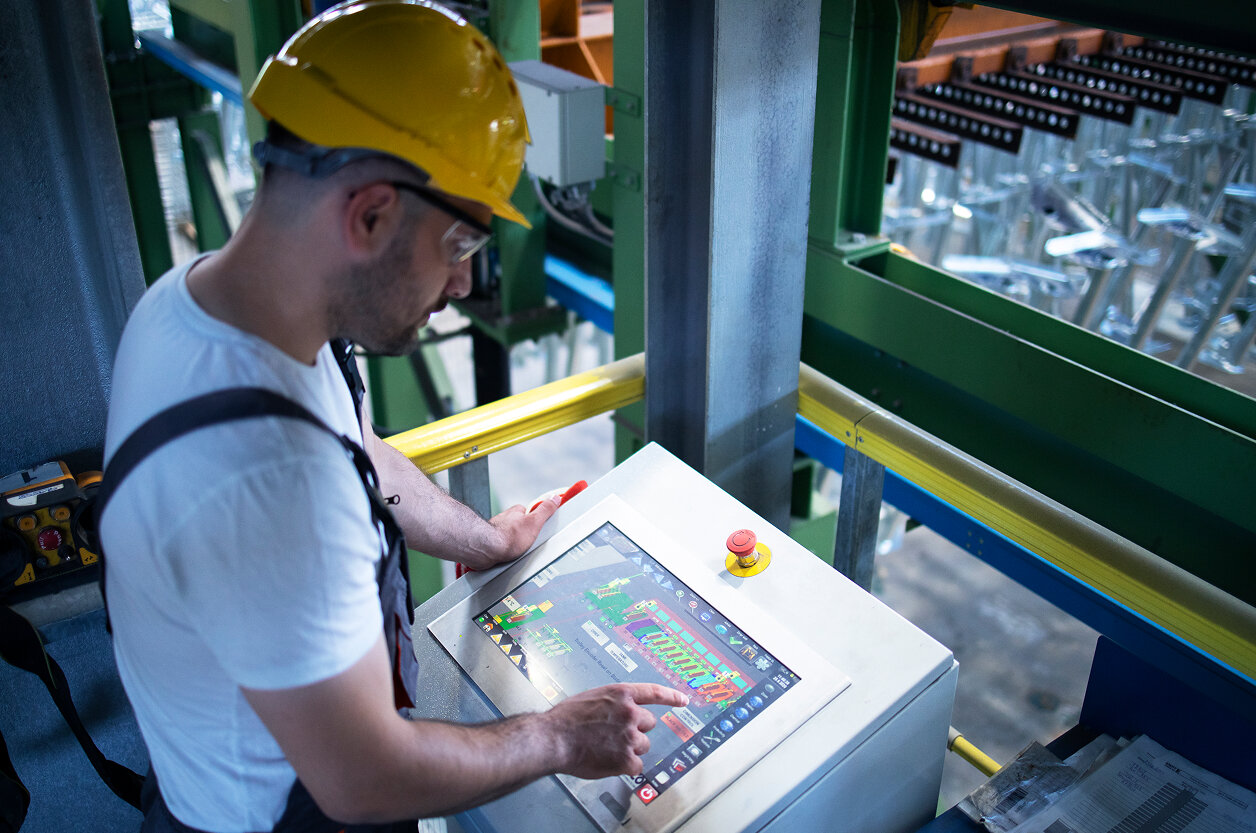
Industrial human-machine interfaces have always lived between two competing pressures: operators want UIs that look and behave like the consumer devices they use every day, and the machine systems underneath demand deterministic behavior that consumer software stacks were never designed to provide. For most of the industry's history, purpose-built HMI frameworks won by default — Qt, proprietary SCADA UI engines, and custom RTOS-based rendering stacks had the timing control and process isolation that industrial environments required, even if their development experience was decades behind mobile.
Flutter and AOSP represent the mobile industry's most capable answer to the question of what a UI stack can accomplish on constrained hardware. Flutter renders 60 to 120 fps animations on mid-range smartphone SoCs. AOSP runs productively on hardware far below the specifications of a typical industrial panel PC. The developer ecosystem is enormous, tooling is modern, and the learning curve for teams that have built consumer apps is nearly flat. The question for industrial HMI is not whether these stacks can make a good-looking UI — they demonstrably can. The question is where the architectural boundaries lie, what stays permanently on the wrong side of those boundaries, and how to design a system that extracts the UI productivity advantage without importing the real-time liabilities.
What Flutter Actually Is on Embedded Hardware
Flutter is not a UI toolkit in the conventional sense of wrapping OS-provided widgets. It owns its entire rendering pipeline: a C/C++ engine that manages text, images, and the Dart runtime; a rendering layer built on Skia (and increasingly on Impeller, the next-generation renderer designed to reduce shader compilation stutter); and the Dart application layer where all widget logic, state management, and business logic live. Nothing goes through the host OS's widget system. The pixel output is Flutter's output, not Android's Views or Linux's GTK.
This architecture has a significant implication for embedded deployment: Flutter does not require Android. On embedded Linux targets — Raspberry Pi, i.MX8M, AM625, Rockchip RK3588 — Flutter runs via a custom embedder that handles the host platform integration: window system or direct framebuffer access, input events, GPU surface creation. The flutter-pi project from KDAB, one of the most widely used open-source Flutter embedders, enables Flutter applications on Raspberry Pi targets using the DRM/KMS subsystem directly, bypassing Wayland or X11 entirely for the lowest possible display stack latency. This means the embedded Linux BSP team and the UI development team can work with a common codebase, but the deployment target is embedded Linux, not Android.
For AOSP deployments, the relevant configuration for industrial HMI is not standard Android — it is AOSP stripped of Google services, with the UI layer customized to a single-application kiosk model. The SurfaceFlinger compositor, HAL layer, and hardware abstraction remain; the Play Store, Google Mobile Services, and the standard Android launcher are removed. What remains is a robust, well-tested platform with GPU-accelerated graphics, a mature security model, a comprehensive HAL abstraction layer for SoC peripherals, and the ability to run Flutter applications natively as the primary foreground application.
Dart applications in production deploy as AOT (ahead-of-time) compiled native ARM binaries, not interpreted bytecode. This eliminates the JIT compilation latency that affected early Flutter deployments and produces native-performance machine code that the CPU executes directly. The JIT mode — used during development for the hot reload feature that refreshes UI changes in under a second — is not what runs in field firmware.
The Real-Time Boundary and Why It Matters
The central engineering challenge when using Flutter or AOSP for industrial HMI is architectural: mobile UI stacks are designed for interactive responsiveness on consumer devices, not for deterministic integration with industrial control systems. These are different requirements, and conflating them produces systems that feel fast to a developer but violate the assumptions that safety and reliability depend on.
Dart's garbage collector is the first concrete example. Dart uses a generational GC that is designed to minimize visible pause times for typical UI workloads — short GC pauses in the range of 1 to 5 milliseconds for minor collections, with periodic major collections that can take longer. For a weather app, a 3-millisecond pause is imperceptible. For an HMI that is directly processing machine signals and updating safety indicators, an unscheduled GC pause during a critical display update is a timing violation. Flutter applications can minimize GC pressure through careful object lifecycle management — reducing allocations in the hot rendering path, pre-allocating objects rather than creating them on every frame, using object pools for frequently created data structures — but cannot eliminate GC entirely. The GC is a managed runtime characteristic, not a tunable parameter.
The Android framework's scheduling model adds further non-determinism. The Linux kernel underlying AOSP uses the Completely Fair Scheduler (CFS) by default. CFS does not provide the deterministic interrupt response time or task priority enforcement that industrial control loops require. Realtime priorities can be applied to threads on Android through the native POSIX thread API, and Android's render thread runs at elevated priority, but the overall system does not provide the scheduling guarantees of an RTOS or an RT-patched Linux kernel. Any attempt to implement control logic — PLC-equivalent functionality, closed-loop feedback, safety interlock management — inside the Android application layer is architecturally incorrect and potentially dangerous.
AOSP's process model provides strong isolation between applications, but it also introduces Android's activity lifecycle, system service dependencies, and the Binder IPC mechanism as the path between the HMI application and any system-level services. Binder calls are the standard Android inter-process communication mechanism, and while they are fast by general IPC standards, they are not zero-cost and are not real-time. An HMI application that polls a machine state variable through Binder calls to a system service is introducing IPC latency into the signal path that does not exist when the same data is read directly from shared memory or a HAL-managed data structure.
The Architecture That Works
The pattern that industrial products using Flutter or AOSP on HMI hardware consistently converge on is a strict two-layer architecture with a well-defined interface between them.
The control layer runs on separate hardware or a separate OS partition on the same hardware, implements all real-time functions — PLC logic, closed-loop control, safety interlocks, timing-critical I/O — and exposes its state to the HMI layer through a defined communication interface: shared memory mapped across the partition boundary, OPC UA server, MQTT broker, Modbus TCP, or a proprietary protocol appropriate to the domain. The control layer has no dependency on the HMI layer. If the HMI crashes, reboots, or takes a GC pause, the control layer continues executing, the machine continues operating safely, and the HMI reconnects when it recovers.
The HMI layer, running Flutter or AOSP, has read access to the machine state exposed by the control layer and write access to operator commands that are sent through the same interface. It renders this state as a fluid, visually capable UI at 60 fps. It does not implement control logic. It does not hold references to machine state that the control layer needs to access atomically. The HMI is a display and input device for the control system, architecturally equivalent to a remote terminal in a traditional SCADA setup, even though it may be physically collocated on the same board.
This architecture mirrors how Android Automotive is structured for infotainment systems: the Vehicle HAL layer handles vehicle signals and safety-critical functions; the Android application layer renders the IVI interface and sends user commands to the HAL through defined interfaces. The HMI layer has no direct access to vehicle control. The architectural separation is enforced by the layer boundaries, not by developer discipline. Industrial HMI on AOSP should implement the same principle, with a domain-appropriate control interface replacing the Vehicle HAL.
On hardware platforms where the control and HMI layers run on separate cores of the same SoC — which is common on recent Cortex-A + Cortex-M heterogeneous SoCs like NXP i.MX8M Plus or TI AM62x — the control layer can run on a Cortex-M core under a dedicated RTOS while the Cortex-A cores run AOSP or embedded Linux with Flutter. The inter-core communication uses a defined message-passing interface with known latency characteristics. The SoC provides hardware mechanisms for this, typically a shared memory region with hardware mailbox notification, that achieves sub-millisecond inter-core message delivery without either layer needing to know about the other's internals.
Flutter on Embedded Linux vs. Flutter on AOSP — Choosing the Platform
Both embedded Linux and AOSP can host Flutter as the HMI rendering engine, and the choice between them is a product architecture decision rather than a Flutter decision.
Embedded Linux with Flutter is the lighter-weight path. The BSP team maintains the Linux distribution using Yocto or Buildroot; Flutter runs via flutter-pi or a custom embedder on top of DRM/KMS or Wayland. The system image can be smaller, boot time is shorter, and the BSP maintenance overhead is lower than AOSP. Industrial protocol integration — OPC UA client, Modbus, CANopen — is implemented as native Dart packages or through Flutter platform channel bridges to C libraries. This path suits products where the HMI is the primary application, peripheral management is straightforward, and the team has strong embedded Linux capability.
The platform choice also affects how stable the embedded software stack remains once the HMI is integrated with GPU rendering, industrial protocols, peripheral services, and production validation. A build that works during early UI prototyping may still fail when BSP changes, runtime dependencies, and CI requirements start moving together, which makes embedded toolchain stability under HMI integration load part of the architecture decision, not a late-stage integration task.
AOSP adds value when the product requires a richer application ecosystem, multi-application HMI architecture, WiFi and cellular connectivity management, Android's security model for application isolation, or integration with the Android Automotive or Android Things industrial frameworks. The HAL abstraction that AOSP provides for SoC peripherals — camera, display, audio, sensors — reduces the custom driver development required for hardware that has AOSP BSP support from the SoC vendor. NXP's AOSP BSP for i.MX8 and i.MX95, TI's for AM6x, and Rockchip's for RK3588 are maintained references that substantially reduce bring-up time compared to a bare embedded Linux port for the same hardware.
The comparison table below captures the practical decision dimensions:
| Dimension | Embedded Linux + Flutter | AOSP + Flutter |
| Boot time | Faster (typically 2–5 s to UI) | Slower (8–15 s typical AOSP) |
| System image size | Smaller (100–400 MB typical) | Larger (1–3 GB typical) |
| BSP maintenance | Yocto/Buildroot + LTS kernel | AOSP release cadence |
| App ecosystem | Single-app or small set | Multi-app with Android ecosystem |
| Hardware abstraction | Custom HAL per peripheral | Standardized Android HAL |
| Team profile | Embedded Linux + Dart | Android/AOSP + Dart |
| Security model | Custom hardening required | Android security framework |
Industrial Protocol Integration
The most practically significant gap between Flutter's consumer origin and industrial HMI requirements is industrial protocol support. A factory floor HMI that does not speak OPC UA cannot communicate with a Siemens or Beckhoff PLC. A building automation panel that does not support Modbus TCP or BACnet cannot read sensor data from the building's existing infrastructure.
Flutter's native Dart ecosystem has limited coverage of industrial protocols. OPC UA integration requires either a Dart wrapper around an existing C library (open62541 is the standard open-source reference) exposed through Flutter's foreign function interface, or a native background service that manages the OPC UA connection and exposes data to Flutter through a platform channel. KDAB and basysKom have demonstrated OPC UA integration for Flutter-based industrial HMI, and the Flutter OPC UA client work has been publicly documented through the industrial Flutter community; the integration is achievable but requires more implementation effort than it does in Qt, which ships QtOpcUa as a first-class module.
The platform channel approach for protocol integration follows a standard pattern: the native side (C/C++ on Linux, Java/Kotlin on Android) manages the protocol connection, subscribes to data items, and pushes updates through the channel to Dart as structured messages. The Dart side maintains a local state mirror updated by the channel and rebuilds the widget tree from state changes. The channel overhead — a serialization and thread-crossing cost for each update — is acceptable for HMI display refresh rates (multiple times per second) but would be prohibitive for tight control loops (hundreds of times per second), reinforcing why control logic must not live in the Flutter layer.
OPC UA's publish-subscribe model aligns well with Flutter's reactive widget tree: the OPC UA subscription delivers value changes to the native layer, the native layer posts them through the platform channel, and Flutter's state management propagates the change to the widgets that depend on it. A well-implemented Flutter HMI with OPC UA integration can display machine data latencies in the 50 to 200 millisecond range end-to-end — adequate for operator monitoring and control, and well below the threshold of human perception for display updates.

Realistic Assessment — Where Flutter and AOSP Fit and Where They Do Not
Flutter and AOSP for industrial HMI is an appropriate choice in a specific and well-defined product category: HMI panels and operator interfaces where the primary requirement is a modern, fluid, maintainable UI, where the real-time and safety-critical control logic is segregated to a separate hardware layer, and where the development team's productivity with Dart and modern tooling is a meaningful competitive advantage.
Toyota has deployed Flutter in Automotive Grade Linux-based infotainment systems, demonstrating the scalability of the approach in high-volume production — though with the same architectural separation between infotainment and vehicle control that the pattern above describes. The Automotive Grade Linux HMI reference design includes Flutter integration with OPC UA client and Wayland compositor support, providing a validated reference architecture that industrial product teams can adapt.
Flutter and AOSP are not appropriate as replacements for an RTOS or real-time Linux in the control layer, as hosts for PLC logic or closed-loop feedback control, or in safety-critical software contexts where IEC 62304 or IEC 61508 certification requires software safety analysis that neither Dart nor the Android framework is designed to support. The Dart runtime, the GC, the Skia rendering engine, and the Android framework layers are not certified for functional safety use and are not candidates for certification without prohibitive effort.
The correct product architecture is clear: use Flutter or AOSP where they are genuinely better than the alternatives — in the UI presentation layer, where their rendering quality, developer productivity, cross-platform code reuse, and modern tooling create real value — and keep industrial control, real-time I/O, and safety-critical logic in the layer where it belongs.
Quick Overview
Flutter and AOSP bring modern UI rendering, developer productivity, and cross-platform code reuse to industrial HMI — on the condition that the architecture maintains a hard boundary between the UI presentation layer and the control layer. Flutter's Dart runtime, GC, and Skia/Impeller rendering engine produce fluid 60-fps interfaces on mid-range embedded SoCs but are not designed for real-time or safety-critical software. AOSP provides a comprehensive hardware abstraction and security model for industrial panel hardware but introduces Android's non-deterministic scheduling model across the application layer. The viable architecture runs control logic on a separate real-time layer — RTOS on a companion MCU, Cortex-M core on a heterogeneous SoC, or RT Linux — with Flutter or AOSP as a display-and-input terminal that communicates through OPC UA, MQTT, or shared memory.
Key Applications
Industrial panel PCs and operator consoles for factory automation where a modern touch UI is commercially required, automotive infotainment and digital cockpit systems using AGL or AOSP with separated ADAS and vehicle control layers, building automation and energy management HMIs connecting to BACnet/IP and Modbus backends through Flutter platform channels, medical device secondary displays where the safety-critical monitoring runs on a certified RTOS partition, and equipment that needs cross-platform UI code reuse across embedded panel, mobile app, and web portal.
Benefits
Flutter's AOT-compiled Dart code produces native-performance rendering on ARM targets; hot reload during development cuts UI iteration cycles from minutes to seconds. AOSP's Android HAL abstraction reduces custom driver work for SoC-integrated peripherals with vendor BSP support. The developer talent pool for Flutter is substantially larger than for Qt or proprietary HMI frameworks, reducing hiring and training costs. Cross-platform code sharing between the embedded HMI, the mobile companion app, and a web dashboard from a single Dart codebase is a concrete engineering efficiency for products that span multiple client form factors.
Challenges
Industrial protocol coverage in the Flutter/Dart ecosystem — OPC UA, Modbus, CANopen, PROFINET — requires custom native integration work that Qt provides as built-in modules. AOSP boot times of 8 to 15 seconds are problematic for products requiring sub-3-second cold-start to operational display; reducing them requires optimization effort across the bootloader, init sequence, and application startup. The strict architectural separation required between HMI and control layers means Flutter or AOSP cannot replace an RTOS on existing single-board designs where both layers currently run on one processor without hardware redesign. Functional safety certification covering the Dart runtime or Android framework layers is not viable under current standards.
Outlook
The commercial trajectory is clear: Toyota's AGL-based Flutter deployment in production vehicles, Automotive Grade Linux's inclusion of a Flutter-based HMI reference design, and the growth of Flutter industrial ecosystem work by KDAB, basysKom, and the industrial Flutter community are establishing the architectural patterns and validated tooling that industrial product teams need to adopt the stack with confidence. The OSADL community has explicitly addressed Flutter for embedded Linux HMI as an active industry topic. As heterogeneous SoCs with dedicated real-time cores become standard in industrial SoC roadmaps — the AM62x, i.MX8M, and RK3588 families all provide this — the hardware architecture that enables the clean separation between Flutter HMI and real-time control becomes increasingly straightforward to implement.
Related Terms
Flutter, Dart, AOT compilation, flutter-pi, embedder, AOSP, Android Open Source Project, SurfaceFlinger, Android HAL, Vehicle HAL, AGL, Automotive Grade Linux, Impeller, Skia, OPC UA, open62541, platform channel, Binder IPC, GC pause, RTOS, Cortex-M, heterogeneous SoC, i.MX8M Plus, AM62x, RK3588, DRM/KMS, Wayland, Qt, industrial HMI, SCADA, KDAB, basysKom, CFS scheduler, RT Linux, PREEMPT-RT, IEC 62304, IEC 61508, panel PC, operator interface, kiosk mode, Yocto, Buildroot
Our Case Studies

FAQ
Can Flutter run on embedded Linux without Android?
Yes. Flutter uses a custom embedder to integrate with the host platform — the embedder handles window system integration, input events, and GPU surface creation. The flutter-pi embedder runs Flutter on Raspberry Pi and other ARM Linux targets using DRM/KMS directly, without Android, Wayland, or X11. Other embedders support Wayland-based deployments on industrial SBCs. The Flutter application runs as AOT-compiled native ARM code on the same Dart VM that is used on Android and iOS targets.
Why is Dart's garbage collector a concern for industrial HMI but not a disqualifier?
Dart's GC introduces occasional pauses — typically 1 to 5 milliseconds for minor collections — that are non-deterministic and cannot be scheduled around critical UI events. For operator displays and monitoring interfaces where the control logic runs independently, these pauses cause momentary animation stutter rather than functional failures. GC pressure can be reduced through careful object lifecycle management in the hot rendering path. The GC becomes a disqualifier only if the Flutter layer is incorrectly used for timing-critical tasks like control loop execution or safety interlock management, which it should not be regardless of GC behavior.
What is the correct architecture for an industrial HMI running Flutter or AOSP alongside real-time control?
Control logic, closed-loop feedback, safety interlocks, and real-time I/O must run on a separate hardware layer — either a separate microcontroller running an RTOS, or a dedicated real-time core on a heterogeneous SoC — that exposes machine state through a defined communication interface: shared memory, OPC UA, MQTT, or a hardware mailbox. The Flutter or AOSP HMI reads this state and renders it, and sends operator commands back through the same interface. The HMI layer has no direct access to machine I/O and no dependency from the control layer. If the HMI crashes, control continues safely.
When the HMI layer runs on AOSP or embedded Android, the same separation principle applies beyond Flutter itself. Robust Android architecture for embedded and industrial HMI should define the lifecycle model, process boundaries, build reproducibility, device coverage, and integration points with the control layer before the UI stack reaches production.
How does OPC UA integration work in a Flutter-based industrial HMI?
OPC UA integration uses Flutter's platform channel mechanism: a native-side component (C/C++ on Linux, Java/Kotlin on Android) manages the OPC UA client connection using open62541 or another OPC UA library, subscribes to the required nodes, and pushes value changes through the platform channel to Dart as structured messages. The Dart side maintains a state map updated by incoming channel messages and triggers widget rebuilds through Flutter's state management. End-to-end latency for a displayed value update from a PLC through OPC UA to the Flutter widget is typically 50 to 200 milliseconds, determined primarily by the OPC UA subscription interval and network round-trip, not by Flutter's rendering pipeline.