


Non-Invasive Monitoring for Grid Assets: A Practical Path to Better Visibility

The visibility gap in grid asset management is well understood by anyone who has spent time working in utility operations. Large portions of the transmission and distribution network generate no continuous condition data — they are inspected periodically, monitored at SCADA points separated by miles of uninstrumented infrastructure, and otherwise relied upon to perform until a fault makes their failure visible. For assets that are not instrumented, the first indication of a developing problem is typically the outage it causes.
Closing this visibility gap through conventional instrumentation methods is expensive and disruptive. Installing metering, protection, or condition monitoring hardware on energized assets at distribution voltages requires either live-line work with qualified crews, or planned outages that affect customers and consume constrained maintenance windows. At transmission voltages, the work is more complex and the outage costs are higher. The result is that utilities make rational economic decisions to instrument only the highest-criticality assets — large transmission transformers, critical substation buses, high-value feeders — and leave the rest of the network in the dark.
Non-invasive monitoring changes the economics and the operational constraints of this decision. Sensors that clamp onto conductors without interrupting the circuit, thermal and visual systems that observe asset condition from a safe distance, distributed fiber optic sensing that uses existing cable infrastructure to monitor kilometers of overhead line, and low-power wireless nodes that harvest energy from the line they monitor all represent approaches to adding monitoring capability without the planned outage, the live-line crew, or the metering circuit installation that conventional instrumentation requires. The practical question for utility engineering teams is not whether non-invasive monitoring is valuable in principle — it clearly is — but which approaches deliver reliable, actionable data in specific deployment contexts, and how to integrate that data into existing operations workflows.
What Non-Invasive Monitoring Actually Means for Grid Applications
The term non-invasive covers a range of monitoring approaches that differ significantly in what they measure, how they attach to the asset, and what data quality they produce. Understanding the distinctions matters for selecting the right approach for specific asset types and monitoring objectives.
Contact-based but non-interrupting sensors are perhaps the largest and most practically valuable category. Split-core current transformers clamp around a conductor without requiring the conductor to be disconnected or the circuit to be de-energized. High-frequency current transformers (HFCTs) clamp around ground leads or conductor surfaces to measure the high-frequency partial discharge pulses from insulation degradation. Temperature sensors attach to conductor surfaces or equipment housings with adhesive or mechanical clamping. These approaches make physical contact with the asset but do not interrupt the circuit or require the asset to be de-energized. For distribution voltage assets, they are typically installable by a two-person crew in minutes without special live-line equipment.
Proximity-based sensing operates without physical contact using the electromagnetic and thermal fields that energized grid assets inherently produce. Rogowski coils placed near conductors measure current without galvanic connection. Electric and magnetic field sensors derive load current and voltage from the fields in the vicinity of uninsulated transmission conductors. Thermal cameras mounted at safe distances measure surface temperatures of bushings, connections, conductor surfaces, and substation equipment without any proximity to live parts. Acoustic sensors and vibration accelerometers pick up the signatures of partial discharge, arcing, and mechanical faults through the structure-borne or airborne acoustic fields they generate.
Remote sensing technologies — satellite imagery, airborne LiDAR, drone-based thermal and visual inspection — extend the monitoring reach to line corridors, tower structures, and vegetation encroachment over large geographic areas. These approaches are particularly valuable for the overhead transmission and distribution line infrastructure that extends across terrain inaccessible to ground crews on a routine basis.
Distributed fiber optic sensing transforms existing optical ground wire (OPGW) or all-dielectric self-supporting (ADSS) cable already installed on transmission lines into a continuous sensor array that measures temperature, vibration, and acoustic signals along the entire cable length. Prisma Photonics deployed this approach on PG&E's existing optical fiber infrastructure in 2025 to monitor 80 miles of transmission lines without installing any equipment on the powerlines themselves — the fiber cable already in the ground wire functions as the distributed sensor.
Each of these approaches has specific strengths, measurement limitations, and deployment constraints that determine where it adds genuine value and where it falls short of what utilities need.
Distribution Feeder Visibility — The Largest Monitoring Gap
Distribution feeders represent the largest single category of monitored grid assets in terms of circuit-miles, and the category with the lowest density of continuous monitoring instrumentation. A typical distribution feeder runs 10 to 20 miles from the substation through residential and commercial areas, with thousands of poles, dozens of connections, switching devices at key points, and service transformers at each customer connection. The substation relay and metering equipment at the feeder head measures voltage, current, and power flow at the substation bus. Between the substation and the customer meter, there may be no continuous electrical monitoring at all.
This visibility gap has three operational consequences. First, fault location is difficult: when a protective device operates on the feeder, the relay log tells the utility that a fault occurred on the feeder and the approximate distance from the substation estimated by impedance calculation, but does not identify the specific section unless sectionalizing devices downstream also reported. Locating the fault requires crew dispatch, visual inspection, and often trial-and-error restoration with customers out of service throughout the process. Second, load management is reactive: the utility knows feeder loading at the substation head but cannot observe load distribution along the feeder or identify sections approaching thermal limits without monitoring at intermediate points. Third, power quality events — voltage sags, momentary interruptions, harmonic disturbances from inverter-based loads — are invisible unless a customer complaint triggers a power quality investigation with portable instruments.
Non-invasive monitoring at mid-feeder points addresses all three of these visibility gaps. Clamp-on current and voltage sensors at key sectionalizing points create a monitoring architecture that provides load flow data, fault current signature capture for improved fault location, and power quality monitoring at representative locations. The sensors self-power from the magnetic field of the conductor, require no wired communication installation, and communicate via cellular or mesh radio to a central platform. Installation time for a single monitoring node is measured in hours rather than the days required for a metered PT/CT installation with secondary wiring and protection coordination.
GE Vernova's Multilin Intelligent Line Monitoring System is one commercialized approach in this space: end-to-end line monitoring with analytics that enables dynamic line ratings on distribution feeders, conductor thermal management, and feeder-level performance data. Utilities deploying similar solutions have reported the ability to identify loading hotspots that were previously invisible, defer infrastructure investments by confirming capacity that static ratings understated, and significantly reduce fault location time by capturing fault current signatures at multiple points along the feeder rather than only at the substation.
Dynamic Line Rating — Non-Invasive Sensing for Capacity Visibility
Dynamic line rating is the application of non-invasive transmission line sensing that has the clearest near-term economic case and the most active regulatory attention in 2025 and 2026. FERC Order 1920, issued in 2024, requires that transmission owners consider using grid-enhancing technologies including dynamic line ratings when planning system upgrades. The DOE has documented DLR enabling 10 to 40 percent capacity increases on transmission lines monitored under actual weather conditions versus static worst-case ratings.
The economic evidence is substantial. PPL Electric's deployment of DLR sensors on three historically congested 230 kV transmission lines produced congestion cost savings on a single line that exceeded 65 million dollars in the first winter compared to the prior year, and the utility avoided an estimated 50 million dollar reconductoring project. Oncor increased transmission line capacity by 6 to 14 percent across Texas operations. Duquesne Light boosted line capacity by 25 percent in a Pennsylvania pilot program. These are not marginal improvements — they represent meaningful increases in the productive capacity of existing infrastructure without capital investment in new conductors or towers.
The non-invasive aspect of DLR sensor deployment is fundamental to its cost economics. Sensors clamp onto transmission conductors using a live-line installation procedure that avoids forced outages. The sensors power themselves from the line current they measure, eliminating the need for external power supply installation. Communication is cellular or short-range wireless to a base station, eliminating the need for wired communication infrastructure that would require civil works along the line corridor.
Distributed fiber optic sensing offers an alternative non-invasive DLR approach for lines where OPGW or ADSS cable is already installed. AP Sensing's DTS technology measures conductor temperature directly along the entire cable length in the OPPC configuration, providing spatially continuous temperature data rather than the point measurements of clamp-on sensors. This approach eliminates the question of sensor placement optimization — the entire line is monitored at meter-scale spatial resolution — but requires that optical fiber suitable for distributed sensing is present in the cable installation.
Heimdall Power's Neurons, recognized as one of TIME Magazine's Best Inventions of 2025, provide a third architecture: lightweight sensors that attach to transmission line conductors and function as real-time monitors of line tension, temperature, sag, and electrical load, transmitting data wirelessly to a central analytics platform. The PG&E collaboration launched in December 2025 combines Heimdall Power DLR sensors, Prisma Photonics distributed fiber sensing, and EPRI technical evaluation in an 18-month field demonstration specifically designed to validate asset health monitoring alongside DLR for transmission lines.
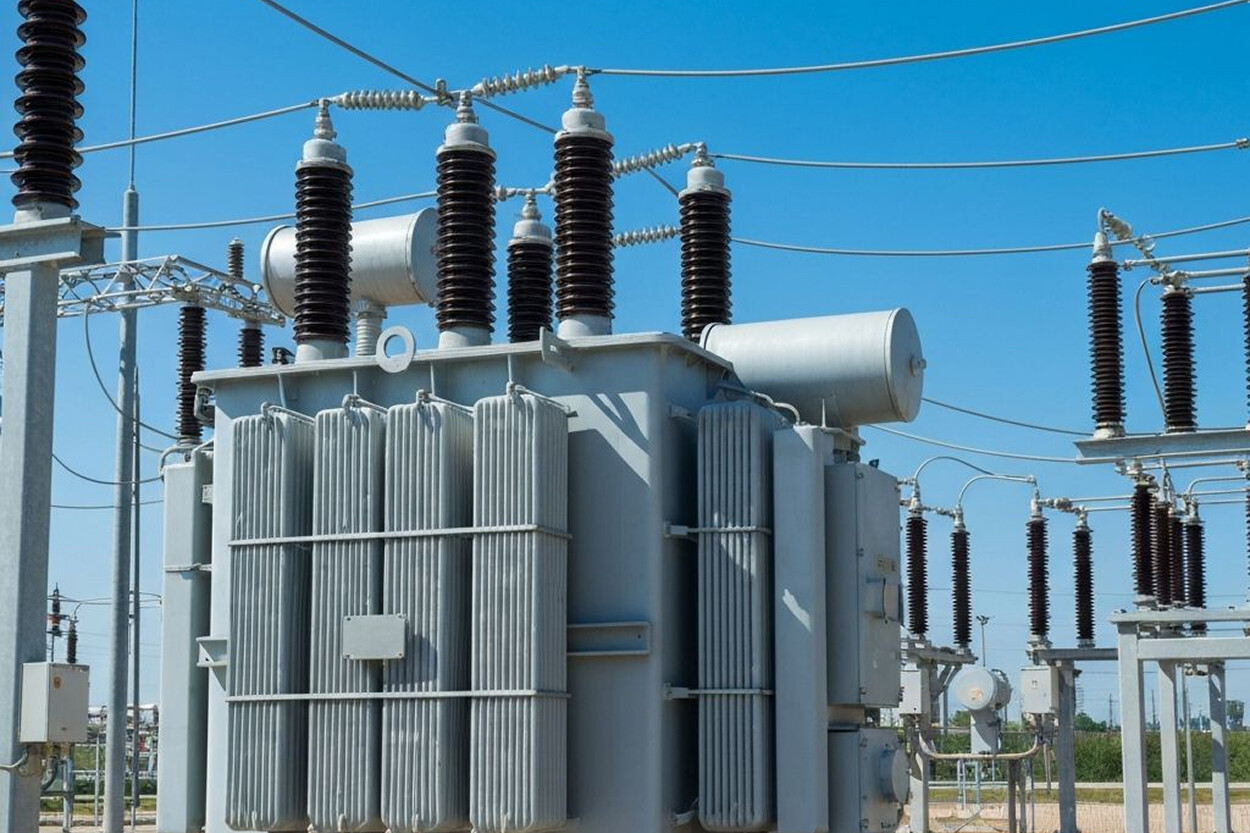
Substation Equipment — Thermal and Acoustic Non-Invasive Monitoring
Within substation environments, non-invasive monitoring using thermal imaging and acoustic sensing addresses failure modes in equipment that cannot be continuously monitored with conventional instrumentation without complex secondary circuit installations.
Thermal imaging of substation equipment — transformers, bushings, switchgear, cables, and connections — identifies hotspots caused by deteriorating connections, insulation degradation, and cooling system failures. The measurement is entirely remote: a thermal camera mounted at safe distance from live equipment captures surface temperature distributions across all visible equipment faces continuously, without any attachment to or contact with the energized assets. Automated analysis software compares thermal images against baseline conditions and flags anomalies for review.
The detection capability of continuous thermal monitoring exceeds that of periodic infrared surveys, which are the standard industry approach to this measurement. An annual infrared survey captures conditions on a single day; a connection that loosens gradually due to thermal cycling may be perfectly normal on survey day and show a 40°C anomaly three weeks later. Continuous monitoring with 24-hour coverage detects that anomaly when it first appears rather than at the next annual survey. Systems With Intelligence's Touchless Monitoring approach specifically targets this gap: utility-grade thermal and visual sensors providing continuous 24/7 coverage of substation assets including transformers, bushings, arrestors, and breakers, with automated anomaly detection that alerts operations and maintenance teams before a fault develops.
Acoustic and ultrasonic sensing provides a non-invasive monitoring dimension that thermal imaging cannot reach: conditions inside equipment housings where surface temperature may remain normal while internal degradation generates acoustic signatures. Partial discharge activity in transformer insulation, cable terminations, and switchgear generates acoustic pulses in the 20 kHz to 300 kHz frequency range that propagate through metal enclosures and equipment structures. Contact-based acoustic emission sensors attached to equipment surfaces detect these pulses without interrupting any circuit. Airborne ultrasonic detectors and acoustic cameras identify corona discharge and surface tracking on overhead equipment from a safe operating distance.
Underground cable joints and splices in distribution vault environments are a specific high-value application for compact thermal sensors. Cable joint failures in underground distribution vaults are a significant outage cause in urban utilities, and conventional monitoring is complicated by access restrictions in confined spaces. Low-power IoT-based thermal sensors deployable in vault environments monitor cable joint temperatures continuously, detecting the thermal signature of insulation degradation and contact resistance increase that precedes joint failure. The sensors operate wirelessly, eliminating the need for communication infrastructure installation in confined underground spaces, and alert maintenance teams to developing issues that would otherwise only become visible when the joint fails and causes an extended outage.
Wide-Area Grid Visibility — Phasor Measurement and Distribution PMUs
Wide-area situational awareness for transmission system operations relies heavily on phasor measurement units (PMUs), which provide GPS-timestamped voltage and current phasor measurements at high sample rates — typically 30 to 120 samples per second — that enable real-time observation of system dynamics including oscillations, frequency deviations, and voltage stability margins. Hitachi Energy's WAMS platform is one example of wide-area monitoring built on PMU data: system-wide oscillation detection, state estimation support, and grid model improvement from high-fidelity synchronized measurements.
PMUs at transmission substations are not strictly non-invasive — they require connection to existing protection-grade voltage and current transformers — but the incremental cost of adding PMU measurement to an already-instrumented substation is relatively low. The visibility gap for PMU data is not at transmission substations but at the distribution level, where grid-edge inverter-based resources, EV charging load, and distributed storage are creating dynamic behaviors that transmission PMU networks cannot observe with sufficient geographic resolution.
Distribution-level phasor measurement — DPMUs — addresses this gap using either dedicated measurement devices that clamp onto distribution conductors at key feeder points, or secondary-circuit connections to distribution system metering infrastructure. Advanced metering infrastructure (AMI) smart meters, deployed at scale in most North American utilities, provide a distributed measurement network across the customer distribution system with sufficient coverage to observe load distribution, power quality events, and voltage excursions at customer connection points. Utilities including PG&E have integrated AMI data with distribution management systems to create feeder-level visibility that approaches the observability of a densely instrumented distribution network at the cost of leveraging infrastructure that was already deployed for billing and demand management purposes.
The combination of feeder-head SCADA data, mid-feeder clamp-on sensors at key sectionalizing points, and AMI data from customer meters creates a layered observability architecture that provides meaningful visibility across the distribution network without requiring the full instrumentation cost of metered installations at every distribution circuit junction.
Deployment Constraints and Integration Requirements
The practical challenges that utility engineering teams encounter when deploying non-invasive monitoring fall into several consistent categories that are worth addressing explicitly.
Data quality and calibration over time. Clamp-on current sensors are susceptible to positioning errors — a split-core sensor not fully closed, a sensor placed on the wrong conductor phase, or a sensor with inconsistent contact to the conductor surface produces inaccurate measurements. Unlike a metered PT/CT installation with calibrated instrument transformers and secondary wiring of known impedance, clamp-on sensors in field conditions require validation processes during commissioning and periodic accuracy checks over their service life. Sensors that self-power from line current face accuracy limitations at low current levels and calibration drift over temperature cycles. These are manageable issues with proper installation procedures and validation protocols, but they mean that non-invasive sensor data should not be treated as metered quality without independent validation.
Communication and data management. Each deployed sensor node generates a continuous data stream that must be communicated to a management platform, stored, processed, and integrated with operational systems. A utility deploying hundreds of distribution feeder sensors is adding significant data volume to its operational technology infrastructure. Cellular communication, which is the most practical backhaul for sensors in field locations without existing communication infrastructure, adds recurring operating cost per sensor that must be factored into the total cost of ownership alongside the hardware cost. Data management platforms that ingest, process, and integrate sensor data from multiple hardware vendors — which is the typical reality in a utility that has deployed monitoring hardware from different manufacturers at different times — require normalization and integration engineering proportional to the vendor diversity.
Integration with operational workflows. Sensor data that feeds a standalone dashboard without integration into the distribution management system, outage management system, or work order platform provides situational awareness but limited operational value. The utility operations center monitoring a feeder fault needs the sensor data integrated with the OMS fault model and the crew dispatch system, not in a separate application that requires a separate login. Achieving this integration requires engagement between the monitoring hardware vendor, the utility's OT systems vendor, and the utility's own IT and OT engineering teams — an organizational complexity that is consistently underestimated in pilot deployments.
Cybersecurity is an explicit concern for any sensing infrastructure that connects to cellular networks or other external communication paths and has a data path into utility operational technology systems. NERC CIP standards apply to certain BES asset monitoring, and utility cybersecurity teams appropriately scrutinize any new OT network connection point. Non-invasive sensors deployed at distribution level are generally outside NERC CIP scope, but integration pathways into substation systems or EMS/DMS platforms bring cybersecurity review requirements into scope. Planning the data architecture and communication security from the beginning of a deployment project rather than addressing it as an integration afterthought avoids the most common sources of deployment delay.
The utilities that are making the most effective use of non-invasive grid monitoring in 2025 and 2026 are those that have approached it as an asset management program rather than a technology pilot — defining the specific operational decisions they want to improve, selecting monitoring approaches calibrated to those decisions, building the integration with operational systems in parallel with the hardware deployment, and establishing ongoing processes for acting on what the monitoring reveals. The hardware and sensor technology has matured to the point where it is reliable in field conditions. The operational processes for acting on continuous condition data are where most utilities are still in the early stages of development.
Quick Overview
Non-invasive grid asset monitoring uses sensing technologies that add continuous condition visibility to transmission and distribution infrastructure without requiring planned outages or interruption of live circuits. The approaches span clamp-on current and voltage sensors for distribution feeder mid-points, self-powered sensor nodes for transmission line dynamic line rating, distributed fiber optic sensing for overhead line temperature and acoustic monitoring, and thermal and acoustic cameras for substation equipment condition monitoring. Dynamic line rating deployments using non-invasive line sensors have demonstrated 10 to 40 percent capacity increases versus static ratings and documented congestion cost savings in the tens of millions of dollars per line at several U.S. utilities. The distribution feeder visibility gap — the unmonitored section between substation head metering and customer AMI meters — represents the largest single opportunity for condition visibility improvement in most utility asset portfolios.
Key Applications
Distribution utilities seeking fault location accuracy improvement and feeder load visibility without planned outage instrumentation programs, transmission utilities implementing dynamic line rating under FERC Order 1920 requirements and DOE grid-enhancing technology programs, substation operations teams adding continuous thermal monitoring of bushings, connections, and cable terminations between periodic infrared survey campaigns, utilities with OPGW or ADSS cable on transmission lines seeking to activate distributed sensing without additional hardware installation, and underground cable distribution utilities monitoring vault joint and splice conditions in confined-space environments.
Benefits
Clamp-on distribution sensors provide mid-feeder current and voltage data without outages, enabling fault current signature capture at multiple points that significantly reduces fault location crew time. Self-powered DLR sensors require no external power supply installation and no outage for conductor attachment, making fleet-scale deployment economically viable at transmission voltages. Thermal camera monitoring provides 24/7 continuous coverage of substation equipment between annual infrared surveys, detecting deteriorating connections weeks to months before they reach failure temperatures. Distributed fiber optic sensing converts existing OPGW cable into a spatially continuous temperature and acoustic sensor array covering entire line segments without hardware installation on energized conductors.
Challenges
Clamp-on sensors produce lower measurement accuracy than metered instrument transformer installations and require careful installation, validation, and periodic calibration review. Self-powered sensors face accuracy limitations at low current levels. Cellular communication backhaul for remote sensors adds per-sensor recurring cost and introduces cybersecurity review requirements for OT integration pathways. Data management and workflow integration for large non-invasive sensor deployments requires normalization across multiple vendor formats and integration engineering with OMS, DMS, and work order systems that is consistently underestimated in pilot deployment scoping.
Outlook
FERC Order 1920's requirement that transmission owners consider grid-enhancing technologies including DLR is accelerating non-invasive sensor deployment on transmission lines across the United States. DOE grid-enhancing technology funding programs and the Grid Resilience and Innovation Partnerships program are supporting utility deployments that generate the field evidence needed to move from pilot to fleet-scale implementation. The convergence of lower-cost wireless IoT hardware, improved cellular connectivity, and cloud analytics platforms is making non-invasive distribution feeder monitoring economically accessible to utilities that could not justify the cost of conventional mid-feeder instrumentation. FERC's broader grid modernization direction and the electricity demand growth from data centers and electrification are creating strong incentives for utilities to extract more capacity from existing assets rather than building new infrastructure.
Related Terms
non-invasive monitoring, dynamic line rating, DLR, FERC Order 1920, grid-enhancing technologies, split-core current transformer, Rogowski coil, distributed fiber optic sensing, OPGW, ADSS, Distributed Temperature Sensing, Distributed Acoustic Sensing, distribution feeder monitoring, thermal imaging, partial discharge acoustic sensing, HFCT, phasor measurement unit, PMU, DPMU, AMI, wide-area monitoring, SCADA, OPGW, Heimdall Power Neurons, Prisma Photonics, PG&E DLR demonstration, grid observability, condition-based maintenance, substation thermal monitoring
Our Case Studies

FAQ
What does non-invasive monitoring mean for grid assets and how is it different from traditional instrumentation?
What is dynamic line rating and how does non-invasive sensing make it practical?
Why is the distribution feeder the most significant monitoring gap for most utilities?
How does distributed fiber optic sensing work for overhead line monitoring?