Why Grid Asset Prioritization Requires Continuous Monitoring
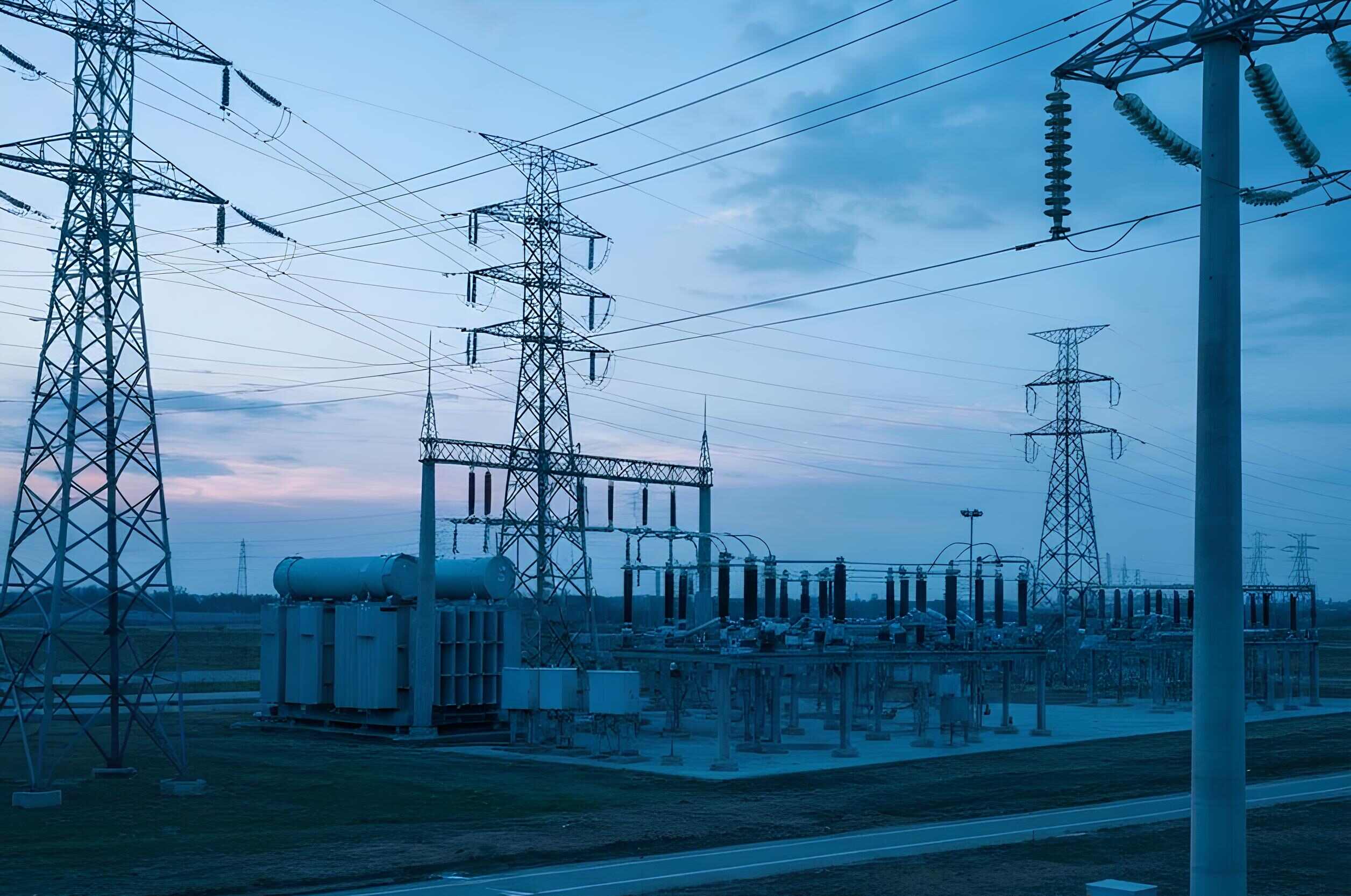
Electric grids across Europe are entering a new operational reality. Distribution infrastructure is aging, renewable generation is expanding rapidly, and equipment replacement cycles are becoming longer and more expensive.
In Germany alone, around 500,000 power transformers will be needed by 2045 as the grid is modernized to support electrification and renewable integration. At the same time, transformer prices have increased by 60–80% since 2020, while lead times have stretched sharply — averaging around 120 weeks in 2024, and reaching 80–210 weeks for large transformers.
Under these conditions, replacing equipment purely based on age is no longer viable. Utilities and distribution system operators (DSOs) must prioritize which assets truly require intervention and which ones can continue operating safely.
The difficulty is that many grid operators still lack continuous visibility into asset health. In practice, asset condition is often assessed through periodic inspections such as oil sampling, scheduled testing, or visual checks rather than continuous operating data. This leaves utilities with limited visibility into how equipment behaves between inspections.
This creates a major visibility gap. Between inspections, utilities have almost no operational insight into how assets behave. Failures therefore appear unexpectedly, forcing emergency replacement events that can cost €3–11 million per transformer failure, including equipment replacement, outage costs, and system disruption.
Condition-based monitoring is emerging as a response to this challenge. By continuously observing asset behavior through sensors and edge analytics, grid operators can identify degradation earlier, prioritize maintenance decisions, and reduce catastrophic failure risks.
Stop Replacing Transformers
You Could Have Saved
A single transformer failure can cost €3–11M, while replacement costs have risen 60–80% since 2020 and lead times now stretch beyond two years. Grid Promwad installs clamp-on sensors on transformers, solar parks, and wind turbines in 2–4 hours — with no outage, no wiring into the asset, and no need to modify the existing OT environment. On-device anomaly detection helps rank fleet health and feed maintenance actions into systems such as SAP PM or IBM Maximo. Built for DSOs, IPPs, and renewable O&M teams.
Why grid assets are aging faster than they can be replaced
Electrical infrastructure was historically designed around long asset lifetimes. Distribution transformers often remain in operation for several decades, and replacement strategies traditionally relied on predictable lifecycle planning.
However, modern grid conditions are placing new stresses on these assets.
Renewable energy integration introduces fluctuating load patterns that many transformers were not originally designed to handle. Solar parks may inject power into the grid during peak daylight hours, while evening demand creates rapid load reversals. Wind generation adds further variability depending on weather conditions.
These operational dynamics increase thermal cycling, mechanical stress, and load volatility. Over time, this accelerates insulation degradation, core looseness, and cooling inefficiencies.
At the same time, utilities face a growing backlog of aging equipment. Even if grid operators attempted to replace all aging transformers immediately, manufacturing capacity and logistics constraints would prevent this. The replacement pipeline simply cannot keep up with the aging installed base.
This is why prioritization becomes essential. Grid operators must identify which assets actually require intervention rather than attempting to replace infrastructure purely according to age-based schedules.
What breaks the traditional maintenance model
Several structural factors are undermining the maintenance strategies historically used in electrical grids.
First, replacement costs have risen sharply. Transformers depend heavily on raw materials such as copper and electrical steel, which have experienced price volatility. Combined with supply chain disruptions and manufacturing bottlenecks, this has increased equipment costs significantly.
Second, lead times for new transformers have expanded dramatically. In many regions, utilities may wait two to four years for delivery after placing an order. This makes emergency replacements extremely difficult.
Third, traditional inspection methods provide limited operational visibility. Periodic oil sampling and visual inspections capture equipment condition at a single moment in time. They cannot reveal how the asset behaves during daily operation or under changing load conditions.
Because of this, utilities often operate with incomplete information. An asset may appear healthy during its last inspection but develop degradation months later without any early warning signals.
Why age-based replacement is inefficient
Age-based maintenance assumes that equipment condition correlates strongly with calendar age. While this assumption simplified planning in the past, it produces increasingly inefficient outcomes in modern grids.
Two transformers of identical age may experience completely different stress profiles depending on location, load patterns, environmental conditions, and renewable energy exposure.
A transformer that has operated under moderate load for decades may still have substantial remaining lifetime. Meanwhile, a much younger unit located near renewable generation infrastructure may experience frequent load fluctuations that accelerate wear.
When replacement decisions rely solely on age, utilities may replace equipment that still has years of useful life while failing to detect assets that are degrading rapidly.
This creates two costly outcomes: premature capital expenditure and unexpected operational failures.
Condition-based monitoring offers a more precise approach by evaluating asset health directly rather than relying on age as a proxy.
Why the lack of continuous monitoring creates blind spots
Transformer failures rarely appear completely without warning. Mechanical degradation, insulation fatigue, and thermal stress typically develop gradually.
However, without continuous monitoring these early indicators remain invisible.
Periodic inspections may confirm that a transformer is healthy at a specific moment, but they cannot detect degradation that begins shortly afterward. This explains why a significant share of transformer failures occurs within 12 months of the previous inspection.
Continuous monitoring closes this visibility gap. Sensors installed on the exterior of equipment can measure vibration patterns, thermal behavior, load changes, and environmental conditions throughout daily operation.
When these signals begin to deviate from expected patterns, anomaly detection systems can identify the problem early. This allows maintenance teams to investigate the asset before degradation progresses into catastrophic failure.
Why non-invasive monitoring matters operationally
Many traditional monitoring systems require intrusive modifications to equipment or deep integration with operational technology networks. Such projects often involve wiring changes, protocol integration work, and planned outages.
For utilities managing hundreds or thousands of transformers, deploying such monitoring systems at scale is extremely challenging.
Non-invasive monitoring takes a different approach. Instead of modifying internal transformer components, clamp-on sensors can be installed externally on the equipment housing.
Typical sensor configurations include vibration, temperature, humidity, and current sensors that attach directly to the transformer exterior. Because installation does not require internal wiring, deployment can often be completed in two to four hours per asset.
No shutdown is required. The grid remains operational while monitoring infrastructure is installed.
In the GridPulse approach described on the page, these sensors connect wirelessly to an industrial edge gateway that performs anomaly detection locally. Processing data at the edge reduces network load and ensures that only summarized health indicators are transmitted to centralized dashboards.
This architecture allows utilities to monitor large numbers of assets quickly without modifying their operational infrastructure.
How fleet-wide health ranking changes asset prioritization
Monitoring becomes significantly more valuable when asset data is aggregated across the entire fleet.
Instead of analyzing transformers individually, utilities can evaluate operational health across hundreds of assets simultaneously. Each asset can be assigned a health score based on vibration trends, thermal patterns, load behavior, and environmental exposure.
In the GridPulse architecture, this functionality is represented through FleetView, which aggregates monitoring data across transformers, inverters, and storage systems.
Fleet-wide health scoring allows asset managers to rank equipment by condition rather than age. Maintenance planners can then focus on the 20–50 assets out of several hundred that present the highest operational risk.
This approach changes capital planning. Healthy assets can remain in service longer, while maintenance budgets focus on equipment that genuinely requires intervention.
Why renewable infrastructure complicates asset visibility
Grid operators increasingly manage not only transformers but also renewable energy infrastructure such as solar parks, wind turbines, and battery storage systems.
Across the DACH region alone, approximately 262 GW of renewable capacity operates under fragmented monitoring environments.
Solar parks typically rely on vendor-specific monitoring platforms for inverter diagnostics. Wind farms often use separate turbine monitoring systems. Battery storage solutions may provide yet another monitoring interface.
These monitoring silos make it difficult to maintain a unified view of asset health.
In solar installations, inverter failures account for roughly 43% of downtime. Wind turbine maintenance can represent around 30% of total project costs, with a large portion of these events occurring unexpectedly.
When monitoring systems operate independently, operators struggle to identify patterns across their entire energy infrastructure.
GridPulse addresses this issue through GridPulse Park, which applies the same sensor architecture used for transformers to renewable assets such as inverters, turbine gearboxes, and battery storage racks. By collecting vibration and thermal signals from multiple asset classes, operators gain a unified monitoring layer across the grid.
Why a 90-day monitoring pilot is the best entry point
Large monitoring transformations can appear complex for utilities responsible for thousands of assets. For this reason, many organizations begin with a limited pilot deployment.
A typical monitoring pilot focuses on 10–20 critical assets, such as transformers, solar inverters, or battery racks.
Sensors and edge gateways are installed during a short deployment phase. Monitoring then continues for approximately 90 days, during which anomaly detection models analyze operational patterns.
During the monitoring period, utilities receive continuous health reports identifying abnormal behavior patterns, early degradation signals, and potential failure risks.
At the end of the pilot, operators receive a fleet health assessment that identifies which assets require attention and estimates the operational impact of wider monitoring deployment.
This approach allows grid operators to evaluate condition monitoring using real operational data rather than theoretical models.
Where this monitoring approach connects to Promwad expertise
Promwad’s engineering teams work in several technical domains relevant to grid monitoring platforms. These include embedded systems development, industrial communication integration, edge computing architectures, and AI-based anomaly detection systems.
Predictive monitoring platforms rely heavily on these engineering foundations. Sensors, gateways, communication protocols, and analytics systems must function together in complex industrial environments while maintaining reliability and cybersecurity compliance.
The GridPulse architecture described on the page reflects this layered design approach: Sense → Edge → Cloud → Act.
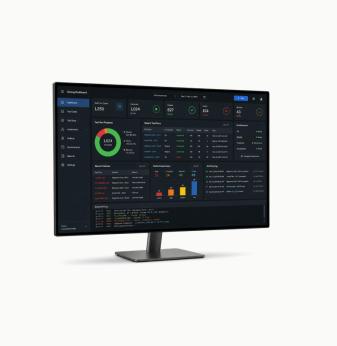
Clamp-on sensors collect operational signals. Edge gateways perform local anomaly detection. Cloud systems aggregate fleet data. Operational dashboards provide asset health insights and trigger automated work orders through maintenance systems such as SAP PM or IBM Maximo.
This layered architecture allows monitoring platforms to integrate into existing grid operations without replacing existing SCADA systems or operational infrastructure.
Why condition-based monitoring is becoming essential for modern grids
Electrical grids are becoming more complex, more distributed, and more heavily loaded as renewable generation expands.
At the same time, infrastructure replacement cycles are slowing due to cost inflation and supply constraints.
Under these conditions, asset management strategies must evolve. Age-based replacement schedules are no longer precise enough to guide maintenance planning across thousands of assets.
Condition-based monitoring provides a data-driven alternative. By continuously observing how assets behave during real operation, utilities can detect degradation earlier, prioritize maintenance budgets more effectively, and prevent catastrophic failures.
For grid operators responsible for transformers, renewable assets, and storage infrastructure, continuous monitoring is becoming a key foundation of modern grid asset management.
AI Overview
Grid asset monitoring platforms use sensors and edge analytics to continuously observe the health of transformers, renewable energy systems, and battery storage infrastructure. Instead of relying on age-based replacement schedules, utilities can prioritize maintenance and capital investment using real condition data.
Key Applications: transformer condition monitoring, renewable asset monitoring, predictive grid maintenance, utility asset prioritization.
Benefits: earlier fault detection, reduced catastrophic failures, improved CAPEX planning, unified monitoring across asset types.
Challenges: integrating monitoring across heterogeneous infrastructure, managing large telemetry volumes, adapting maintenance workflows to condition-based decision making.
Outlook: as renewable energy expansion and infrastructure aging accelerate, condition-based monitoring will become a critical capability for reliable grid asset management.
Related Terms: transformer predictive maintenance, power grid monitoring systems, renewable asset monitoring, condition-based maintenance utilities, grid infrastructure analytics.
Our Case Studies