



Ethernet-APL
Ethernet-APL & 10BASE-T1L Field Device Engineering
Bringing Ethernet down to the field level touches both sides of a device at once: interface electronics and power budget on one side; protocol stacks and diagnostics on the other. In most product teams these areas belong to different specialists, and the handover between them carries most of the schedule risk.
Promwad develops and modernizes industrial field devices with 10BASE-T1L and Ethernet-APL connectivity. One cross-functional team covers MCU and MAC-PHY selection, schematic and PCB design, board bring-up, firmware, PROFINET and OPC UA integration, and device diagnostics.

One Physical Layer, Two Levels of Requirements

10BASE-T1L
10BASE-T1L is the physical layer. Defined in IEEE 802.3cg: 10 Mbit/s Ethernet over a single twisted pair, reaching up to 1,000 m.
Ethernet-APL
Ethernet-APL builds on that physical layer and adds what process automation requires: the APL port profile, power supplied over the same pair, and intrinsic safety for hazardous areas under IEC TS 60079-47 (2-WISE).
A device can use 10BASE-T1L without falling into the Ethernet-APL scope. Which of the two your product needs depends on where it will be installed and how it will be powered.
Let's settle that before the architecture is fixed. It's usually the first thing we discuss.
Why Promwad
One engineering partner for the full hardware, firmware, and embedded software stack of a field device, from PHY selection to a certified-ready product.

Who We Work With
We work with companies that put field devices on the market:

If you operate a plant and you're planning a network-wide rollout, your DCS vendor or system integrator is the better first call. Our work starts one level down, inside the device.
What We Build

Ethernet-APL / 10BASE-T1L field devices
Sensors. Transmitters. Condition-monitoring devices. Measurement equipment. Industrial interface boards. Gateways, where single-pair Ethernet is part of device-level connectivity rather than the plant backbone.

Device modernization
Adding Ethernet-based connectivity to an industrial product that already has a customer base. New interface electronics, new firmware, same core measurement and the same field behavior your users expect. The goal is a new connectivity option inside an existing product architecture, with the product's identity intact.

Custom industrial electronics
MCU-based designs, schematic and PCB layout, interface and power electronics, embedded firmware, on-device diagnostics, and sensor integration. This is the base layer under everything else on this page.
Hardware & Connectivity Engineering
What we design at the board level:
- 10BASE-T1L integration and MAC-PHY selection
- MCU selection, integration, and board architecture
- schematic design and multilayer PCB layout
- sensor front ends and interface electronics
- industrial power and interface design
- board bring-up and hardware/firmware integration
- signal integrity and EMC-aware layout for field environments
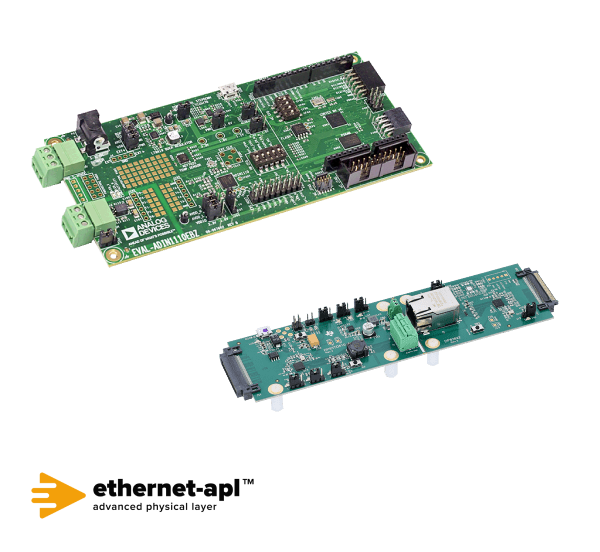
Case study: we've integrated the Analog Devices ADIN1110 10BASE-T1L MAC-PHY into an industrial predictive maintenance sensor, from schematic through bring-up to a working protocol stack.
Embedded Software & Protocol Integration
This is where a field device stops being a board and starts being a product:
- embedded firmware on FreeRTOS
- HAL and BSP development, device drivers
- PROFINET integration
- OPC UA, including open62541-based implementations
- device diagnostics and status reporting
- bootloader and firmware update, including MCUboot
- sensor data acquisition and on-device processing
- device communication logic and state handling
Our senior engineers own both sides of the boundary. When the PHY link comes up but the protocol stack doesn't, one team debugs it instead of two teams scheduling a call.

Most of our work sits under NDA, but we can discuss architecture decisions and design trade-offs in a call.
Modernizing Legacy Field Devices
Legacy industrial interfaces
4–20 mA, HART, Modbus RTU
Modern field connectivity
PROFINET, OPC UA, 10BASE-T1L / Ethernet-APL
Case Study: One flow meter program combined PROFINET, HART, and Modbus RTU in a single device. Other projects were built around 4–20 mA. The predictive maintenance sensor below runs 10BASE-T1L with PROFINET and OPC UA.
Why Ethernet-APL Now
Ethernet-APL has moved past specification work and pilot benches. A few signals worth knowing if you're setting a 2027–2028 product roadmap:
 The SDOs finalized the SPE and Ethernet-APL specifications in November 2025. Power over Data Line classes and connectors are now defined for SPE, Ethernet-APL Power Class B allows devices up to 1.16 W in the 2nd edition of IEC TS 63444, and a conformance test system is in place.
The same work extends single-pair Ethernet into discrete, non-hazardous environments such as automotive and packaging, beyond the process-industry origins of Ethernet-APL.
NAMUR published NA 195, a best-practice worksheet covering selection, planning, installation, commissioning, and operation of PROFINET via Ethernet-APL.
Endress+Hauser, together with Covestro, BASF and Yokogawa, ran a large-scale Ethernet-APL scalability test extending validation to heterogeneous multi-vendor process automation environments.
Commercial APL field switches are shipping from R. Stahl, Phoenix Contact, Pepperl+Fuchs, and Softing, including Zone 1 hardware.
For a device manufacturer the timing matters: APL support is starting to appear in tender questionnaires, while the engineering lead time for a field device is 12 to 18 months.
Brownfield Engineering Considerations
Most of the real work is fitting an Ethernet-enabled device into an architecture that already runs, so a modernization program lives or dies on these questions:
Half of this work is deciding what not to change.
Case Studies
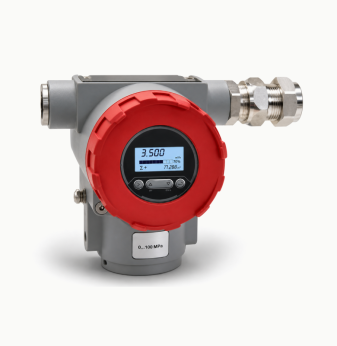


Where We Can Join the Project

From there we expand into adjacent hardware and software layers when it makes sense, and stay out of them when it doesn't.
Planning an Ethernet-APL or 10BASE-T1L Device?
Bring the architecture question, the PHY selection, the firmware gap, or the modernization roadmap. You'll talk to engineers who have built this stack, and you'll leave with a straight answer about scope, risk, and where the certification path gets expensive.