BMS Controllers Under Double Pressure: Functional Safety and Cybersecurity in One MCU Platform
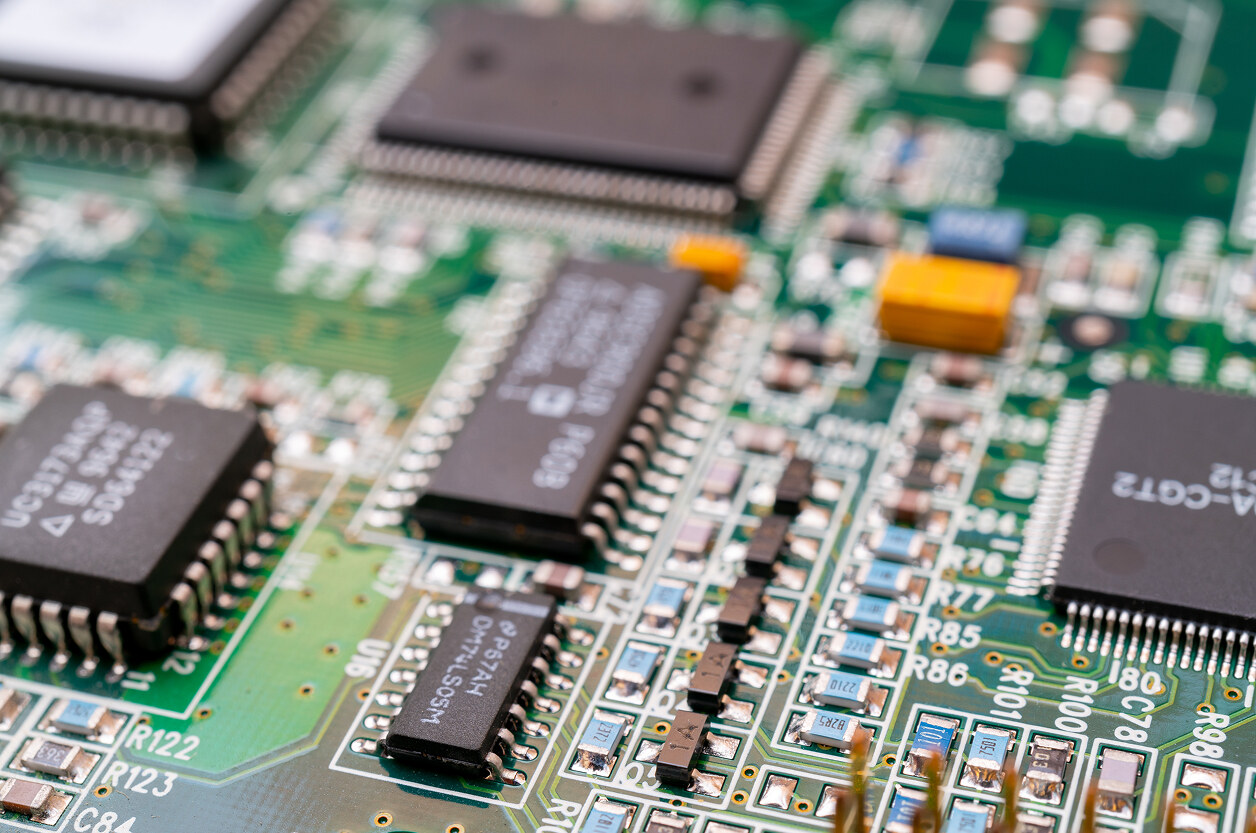
A battery management system sits at the intersection of two risk domains that automotive engineering has historically kept separate. Functional safety, governed by ISO 26262, focuses on preventing harm caused by electrical and electronic system failures. Cybersecurity, addressed by ISO/SAE 21434, focuses on protecting systems against deliberate attacks that exploit vulnerabilities. For many ECUs, one standard applies more directly than the other. For a BMS controller in a modern EV or hybrid, both apply simultaneously, and the MCU platform has to support the requirements of each without compromising either.
This dual obligation has reshaped how BMS MCUs are selected and how BMS firmware is structured. Chipmakers now produce devices that combine lockstep CPU cores for ASIL D coverage with hardware security modules capable of AES, RSA, and ECC operations. The engineering team designing a BMS can no longer treat functional safety and cybersecurity as separate workstreams that converge only at system integration. The architecture decisions interact from the earliest concept phase.
Why a BMS Is Subject to Both Disciplines
The functional safety argument for a BMS is straightforward. The controller measures cell voltages, module temperatures, and pack current, detects isolation faults, and manages contactor and thermal control. Failures in any of these functions can result in thermal runaway, uncontrolled contactor closure, or incorrect state-of-charge estimation that puts a vehicle into an unsafe operating condition. High-voltage traction packs at 400 to 800V require precise measurement, galvanic isolation, and functional safety targets typically reaching ASIL C or ASIL D for the most critical protection functions.
The cybersecurity argument is more recent but equally concrete. A BMS communicates over CAN-FD or Ethernet with the vehicle network, receives OTA software updates, and in many architectures may be integrated into broader vehicle control or communication architectures. An attacker who can inject fraudulent cell voltage data over CAN does not need to physically compromise the pack to create a hazardous condition. The cybersecurity threat surface of a BMS is real, and UNECE WP.29 regulation R155, which entered into force for new vehicle types in mid-2022, requires manufacturers to demonstrate a cybersecurity management system covering the full vehicle lifecycle including components like the BMS.
ISO/SAE 21434 was built on structural concepts similar to ISO 26262 and provides a lifecycle framework for vehicle cybersecurity. Both standards share a common process logic: define the item, assess risks and threats, and implement mitigations. ISO 26262 does this through HARA — hazard analysis and risk assessment. ISO/SAE 21434 does it through TARA — threat analysis and risk assessment. Running both analyses for a BMS produces overlapping findings that need to be managed without creating contradictory requirements in the MCU architecture.
The MCU Platform Challenge
The central engineering problem is that functional safety and cybersecurity impose partially competing demands on the microcontroller.
Functional safety at ASIL D requires hardware redundancy. The canonical implementation is a lockstep dual-core configuration: two processor cores execute the same instruction stream in parallel, and a comparator block flags any deviation. This catches transient faults from radiation or EMI as well as systematic hardware failures. The lockstep approach is well understood, mature in toolchain support, and accepted by safety assessors. Its limitation from a cybersecurity perspective is that both cores execute identical code — lockstep does not provide security diversity, so any vulnerability in the firmware is present in both cores simultaneously.
Cybersecurity, particularly for key management and secure boot, requires a hardware security module. An HSM is an isolated processing environment within the MCU that holds cryptographic keys in protected memory, runs authentication and encryption routines independently of the main CPU cores, and cannot be directly read or overwritten by application software running outside the HSM boundary. Automotive MCUs with integrated HSMs can comply with the EVITA Full information security level, covering symmetric key operations, public key infrastructure support, and secure non-volatile key storage.
The tension is resource allocation. The HSM consumes silicon area and draws current. The lockstep cores consume a significant portion of the available compute budget managing safety monitoring tasks. Designing BMS firmware that runs the core battery algorithms, contactor control logic, balancing routines, CAN stack, OTA bootloader, and cryptographic operations within the constraints of a safety-partitioned, HSM-equipped MCU is a genuine embedded systems engineering challenge — not primarily a compliance checkbox problem.
How HARA and TARA Interact in a BMS Context
The practical question for a BMS development team is when and how to run the two risk analyses and how to handle cases where their outputs conflict. Several scenarios sit directly at the intersection of both analyses:
- Contactor control commands received over a compromised CAN bus: a safety hazard caused by a security attack
- State-of-charge estimation corrupted by injected sensor data: incorrect driver display plus possible unsafe charging behavior
- OTA firmware update that introduces a latent functional fault: the update mechanism is a cybersecurity attack surface, but its effect is a functional safety violation
- Secure boot failure triggering a safe-state transition: a security mechanism with functional safety consequences if it causes an unintended vehicle shutdown
These scenarios illustrate that HARA and TARA cannot be run in complete isolation for a BMS. Merging the two analyses during the concept phase reduces redundant effort and avoids inconsistencies between the safety and security requirement sets. Co-engineering both from the start reduces the risk of producing a design where a cybersecurity mitigation compromises a functional safety mechanism or vice versa.
MCU Platform Options and What They Actually Provide
The BMS MCU market has consolidated around platforms from Infineon, NXP, Renesas, and STMicroelectronics. All have added HSM capabilities and strengthened ASIL D documentation in recent years. The table below summarizes the positioning of the major platforms:
| Platform | Cores / Configuration | ASIL | HSM | Key interfaces |
| Renesas RH850/U2C | 4 cores (2 lockstep), up to 320 MHz | ASIL D | Cryptographic hardware accelerator | CAN-XL, CAN-FD, Ethernet TSN, LIN, I3C |
| NXP S32K376 | 4× Cortex-M7, up to 320 MHz | ASIL D capable | HSM, secure boot, OTA support | CAN-FD, LIN, SPI, Ethernet |
| Infineon AURIX TC3xx | 3× TriCore + lockstep | ASIL D | HSM, EVITA Full | CAN-FD, FlexRay, Ethernet, LIN |
| Infineon AURIX TC4x | Multi-core, next-gen | ASIL D | Enhanced HSM | CAN-XL, Ethernet TSN, CAN-FD |
What the datasheet comparisons do not show is the software development burden. Each platform ships with its own safety software libraries, FMEDA documentation packages, and secure boot reference implementations. These accelerate development but do not replace engineering judgment. An HSM secure boot implementation needs to be integrated with the OTA update strategy in a way that the bootloader's failure mode does not violate BMS safe-state requirements. This requires coordinated design between the security architect and the functional safety engineer from the start of firmware development.
Practical Architecture Patterns for a Dual-Compliant BMS
Three architectural patterns appear repeatedly in production BMS designs targeting simultaneous ASIL D and ISO 21434 compliance.
Single MCU with partitioned execution. The HSM handles all cryptographic operations and holds the root of trust. The main lockstep cores run the safety-critical battery algorithms under ASIL D. Non-safety tasks such as telematics data logging run in a separate memory partition with lower ASIL allocation. Memory protection units enforce the partition boundaries and prevent application code from writing into safety-critical RAM regions. This is the lowest-cost implementation and is suitable for BMS ECUs in the 400V range where MCU compute budget is sufficient for both workloads.
Dual-MCU safety architecture. A primary MCU running the BMS algorithms is monitored by a secondary safety MCU that independently cross-checks contactor states, voltage limits, and current thresholds. The secondary MCU can open the contactors if it detects a discrepancy, regardless of the state of the primary. This pattern was common before HSM-equipped lockstep MCUs became widely available, and it remains the design of choice when OEMs require a fully independent safety channel.
Modular safety SoM approach. A two-board configuration uses a functional safety System-on-Module for the safety computing functions and a separate BMS application board for cell monitoring and balancing. This allows each board to be developed and qualified to its specific ASIL level independently, and is attractive for platform reuse across different pack configurations and voltage classes.
Where Development Teams Most Often Encounter Problems
Experience from BMS development projects across EV and heavy vehicle platforms surfaces a consistent set of integration challenges when functional safety and cybersecurity are combined on one MCU platform:
- Secure boot and startup time: HSM-based secure boot adds latency to ECU startup. If the BMS must make contactor decisions quickly after power-on, the startup sequence must be architected so safety mechanisms initialize before HSM authentication completes, or the latency must be formally accepted in the vehicle startup architecture.
- TARA findings that generate new safety requirements: a TARA identifying replay attack on the OTA channel as high-severity may result in a requirement to authenticate firmware before update. This check must itself be verified as part of the ASIL software development process.
- Diagnostic coverage and HSM opacity: ASIL D hardware requires quantified diagnostic coverage for each hardware element. The HSM is typically a black-box IP block within the MCU, and vendors provide partial FMEDA documentation. Full coverage transparency for the HSM requires close coordination with the MCU vendor.
- OTA update policy collisions: ISO 26262 requires change impact analysis and re-verification for software changes. Cybersecurity best practice recommends rapid patch deployment for discovered vulnerabilities. Aligning the two is an organizational challenge as much as a technical one.
Teams working on BMS development from concept to production — including engineering companies that operate across automotive hardware and embedded software domains — typically find that these integration points consume more project time than the initial platform selection and compliance documentation combined.
Regulatory Direction and What It Means for Design Choices
UNECE R155 is already mandatory for new vehicle types in European markets and a growing number of other jurisdictions. ISO/SAE 21434 is increasingly a de facto requirement driven by OEM supplier mandates, even where it is not legally compulsory as a standalone standard. The forthcoming ISO/SAE PAS 8475, which formalizes Cybersecurity Assurance Levels as a counterpart to ASIL, will add another layer of structured assessment to the security analysis process for BMS and other safety-critical ECUs.
The practical implication for BMS hardware designers is that the HSM is no longer optional in new EV programs. OEM supplier requirements increasingly mandate secure boot, firmware signing, key storage in hardware, and documented cybersecurity lifecycle management as baseline deliverables. MCU selection that ignores HSM capability or defers cybersecurity architecture to a later program phase creates rework risk when OEM requirements are reviewed at system design gate.
At the same time, the functional safety demands are not softening. 800V pack architectures, longer vehicle lifecycles, and the extension of BMS functions to include gateway and VCU roles in some zonal architectures are pushing ASIL D requirements further into the BMS controller specification. The MCU that works for a 400V 2025 BMS may be undersized for an 800V 2027 program if it lacks compute headroom to run expanded monitoring functions alongside the safety and security overhead.
Quick Overview
Battery management system controllers in modern EVs are subject to simultaneous requirements from ISO 26262 functional safety and ISO/SAE 21434 cybersecurity standards. Meeting both on a single MCU platform requires coordinated architecture from the concept phase, combining lockstep CPU cores, hardware security modules, and formally partitioned firmware.
Key Applications
Traction BMS controllers in battery electric and plug-in hybrid vehicles, gateway-integrated BMS ECUs combining battery management and VCU functions, BMS designs in commercial EVs and heavy vehicles requiring ASIL C or ASIL D coverage, OTA-capable BMS platforms subject to UNECE R155 cybersecurity regulation.
Benefits
Integrated MCU platforms reduce hardware footprint compared to split-MCU architectures while supporting ASIL D lockstep operation and EVITA-level HSM security. Co-engineering HARA and TARA from the concept phase reduces requirement conflicts and avoids late-stage rework. Hardware-enforced memory partitioning allows ASIL D safety code and non-safety application tasks to coexist on the same device without interference.
Challenges
Secure boot latency can conflict with fast BMS startup requirements. FMEDA diagnostic coverage for HSM blocks is partially opaque without vendor-specific documentation. OTA patch deployment cadence and ISO 26262 change management processes require organizational alignment. TARA findings may generate new safety requirements that extend the safety case scope late in development.
Outlook
UNECE R155 enforcement and growing OEM supplier mandates for HSM-equipped ECUs are making cybersecurity a baseline BMS requirement. ISO/SAE PAS 8475 will further formalize Cybersecurity Assurance Levels as a parallel structure to ASIL, increasing documentation requirements for BMS certification. Next-generation MCU platforms targeting 800V architectures are expanding compute headroom to accommodate both safety monitoring and cryptographic operations without performance tradeoffs.
Related Terms
ISO 26262, ISO/SAE 21434, ASIL D, HARA, TARA, hardware security module, lockstep CPU, secure boot, EVITA Full, UNECE R155, UNECE R156, CAN-FD, OTA firmware update, FMEDA, contactor control, state of charge, safe state, AEC-Q100
Our Case Studies