Deterministic Networking Inside Vehicles: TSN in Automotive Ethernet
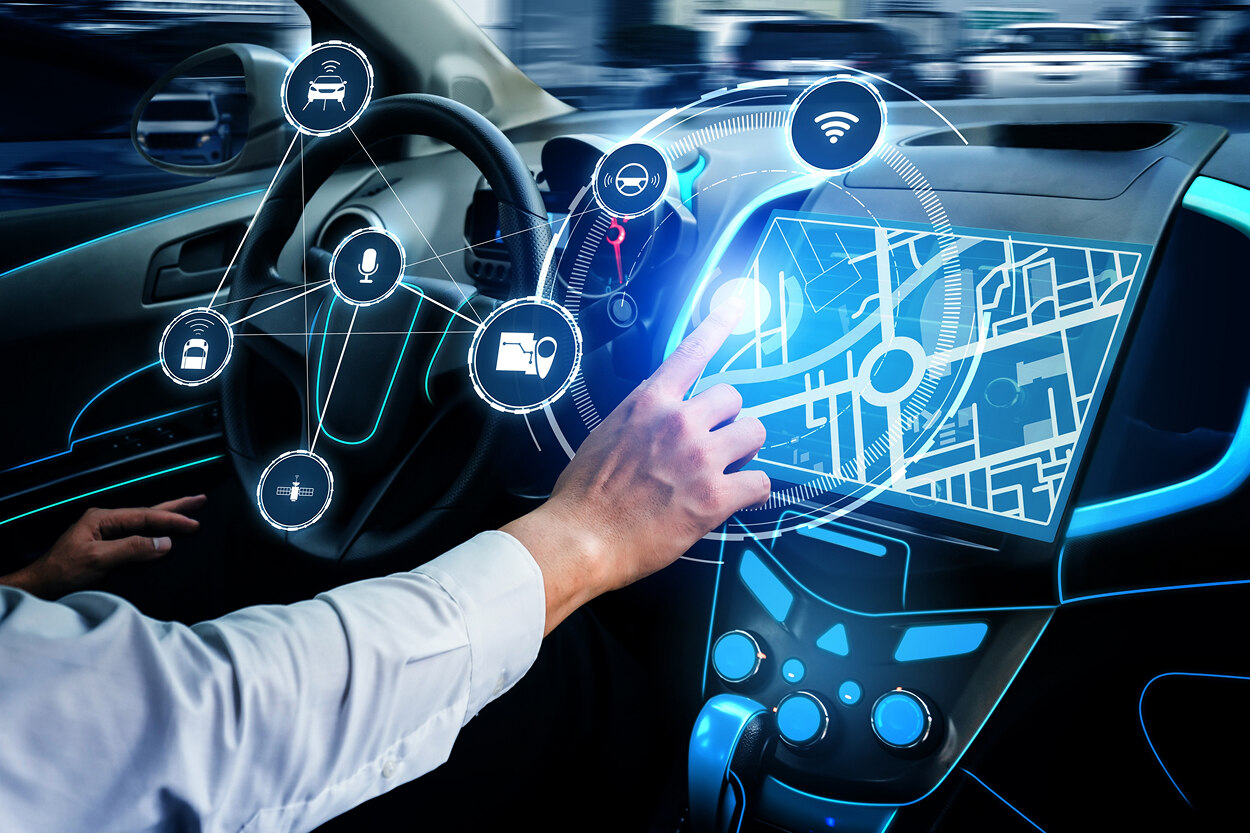
Modern vehicles increasingly depend on Ethernet as the backbone of in-vehicle communication. Camera systems, radar sensors, high-resolution displays, ADAS compute platforms, infotainment domains, and zonal controllers all exchange large volumes of data across shared networks. As this transition accelerates, the automotive industry faces a fundamental engineering requirement: predictable communication latency.
This requirement is often described as deterministic networking. In practice, deterministic networking means that messages reach their destination within a known and bounded time window, regardless of other traffic on the network. For vehicle systems that combine safety-critical control loops, real-time sensor streams, and high-bandwidth infotainment data, achieving deterministic behavior over Ethernet is not optional. It is essential to the reliability of the entire platform.
Time-Sensitive Networking (TSN) has therefore become a key architectural technology for automotive Ethernet. TSN extends standard IEEE Ethernet with mechanisms that allow time-synchronized communication, traffic prioritization, and deterministic scheduling across network devices. These capabilities allow multiple types of data traffic with different timing requirements to coexist on the same network infrastructure without interfering with each other.
The relevance of TSN grows as vehicles move toward centralized computing, zonal architectures, and software-defined vehicle (SDV) platforms. In these architectures, a single Ethernet network may carry control signals, sensor data, diagnostics, and multimedia streams simultaneously. Without deterministic scheduling and traffic isolation, these systems would face unpredictable latency and potential functional interference between domains.
TSN addresses this problem by turning Ethernet into a predictable communication platform rather than a best-effort data network.
Deterministic communication in vehicle networks
Historically, vehicle communication networks relied on fieldbus technologies such as CAN, LIN, and FlexRay. These technologies were designed specifically for deterministic communication in embedded systems.
For example:
- CAN provides prioritized message arbitration.
- FlexRay provides time-triggered communication cycles.
- LIN supports low-cost deterministic communication for simple devices.
These networks provided reliable communication for traditional electronic control units (ECUs). However, they were not designed to carry large volumes of sensor data or multimedia streams.
Modern vehicle platforms increasingly rely on Ethernet because it offers significantly higher bandwidth. Automotive Ethernet links now range from 100 Mbps to multi-gigabit speeds, enabling high-resolution cameras, radar processing pipelines, and complex infotainment systems.
However, standard Ethernet was originally designed for general computing networks, where traffic timing requirements are less strict. In a conventional Ethernet network, packets compete for bandwidth, and delays can vary depending on network congestion.
For safety-critical automotive systems, this behavior is unacceptable. Control signals for braking systems, steering assist, or perception pipelines cannot depend on best-effort message delivery. These signals must arrive within defined timing constraints.
TSN modifies Ethernet behavior so that deterministic communication becomes possible even when multiple traffic types share the same physical network.
What Time-Sensitive Networking adds to Ethernet
Time-Sensitive Networking is a collection of IEEE standards that extend Ethernet to support deterministic communication. Instead of being a single protocol, TSN includes several complementary mechanisms that work together to control traffic timing and network behavior.
Key TSN capabilities include:
Time synchronization.
Devices on the network share a common clock using IEEE 802.1AS. This synchronization allows all nodes to operate on the same timeline, enabling coordinated scheduling of network transmissions.
Traffic scheduling.
IEEE 802.1Qbv introduces time-aware shaping, allowing network switches to schedule when certain traffic classes are allowed to transmit. This prevents high-priority traffic from being delayed by lower-priority messages.
Traffic shaping and bandwidth control.
Standards such as 802.1Qav and 802.1Qch help regulate traffic flows so that bandwidth is reserved for specific data streams.
Frame preemption.
IEEE 802.1Qbu allows high-priority frames to interrupt lower-priority transmissions, reducing latency for critical traffic.
Together, these mechanisms allow Ethernet networks to support predictable communication patterns that resemble time-triggered industrial networks while maintaining compatibility with standard Ethernet infrastructure.
For automotive platforms, this capability allows multiple software domains to share the same network without compromising timing requirements.
Latency budgeting in automotive networks
Deterministic networking is closely connected to the concept of latency budgeting.
Latency budgeting is the process of calculating how much communication delay is allowed across each stage of a system so that the overall application timing requirements are satisfied.
In a modern vehicle, latency may accumulate across several stages:
- sensor data capture
- network transmission
- ECU processing
- control command transmission
- actuator response
For example, an advanced driver assistance system may require perception data to travel from a camera to a central compute platform within a fixed time window. If the network introduces unpredictable delays, the control algorithms may operate on outdated sensor data.
TSN helps control latency by allowing engineers to define deterministic transmission schedules. Instead of packets competing randomly for bandwidth, scheduled traffic ensures that critical messages are transmitted at predictable times.
This makes it possible to construct a reliable latency budget for the entire system. Each network segment can be assigned a known maximum delay, enabling engineers to verify that system timing requirements are satisfied.
AVB vs TSN in automotive networks
Before TSN gained widespread attention in automotive systems, Audio Video Bridging (AVB) was often used to transport multimedia streams over Ethernet.
AVB is a set of IEEE standards originally developed to support synchronized audio and video transmission across Ethernet networks. It introduced mechanisms for time synchronization and bandwidth reservation, enabling media streams to maintain consistent timing.
In automotive systems, AVB was commonly used for applications such as:
- in-vehicle infotainment
- rear-seat entertainment systems
- audio distribution
- camera streaming to displays
While AVB improved Ethernet determinism for multimedia traffic, it was designed primarily for media applications rather than mixed-critical embedded systems.
TSN builds on the concepts introduced by AVB but expands them significantly. TSN provides more comprehensive mechanisms for traffic scheduling, priority control, and deterministic communication.
The main differences include:
Broader traffic support.
TSN supports both media streams and control traffic with strict timing constraints.
Stronger scheduling control.
Time-aware shaping allows precise transmission scheduling, improving predictability for critical messages.
Better coexistence of traffic types.
TSN enables mixed-critical workloads on a shared network.
For this reason, automotive Ethernet architectures increasingly treat AVB as an early step toward deterministic Ethernet, while TSN represents the broader framework needed for SDV-era vehicle platforms.
Mixed-critical traffic in software-defined vehicles
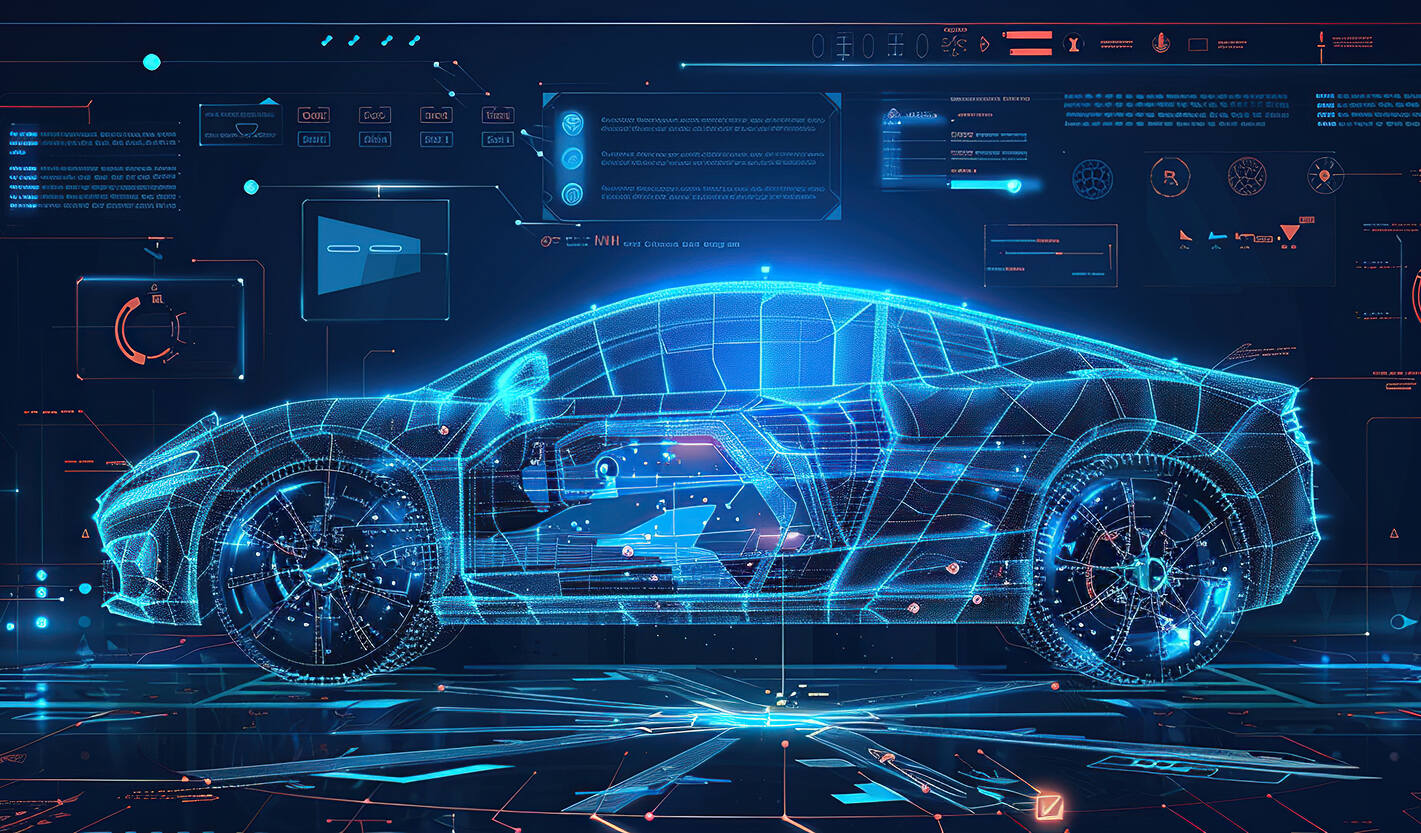
One of the most important reasons TSN is gaining importance in automotive engineering is the emergence of mixed-critical workloads.
In modern vehicles, the same network infrastructure may carry traffic with very different requirements. For example:
- safety-critical control messages
- perception sensor streams
- diagnostics and telemetry data
- infotainment video streams
- software update traffic
Each of these traffic types has different latency tolerance and reliability requirements.
Safety-critical control loops require extremely low and predictable latency. Sensor pipelines require high bandwidth but may tolerate slightly more delay. Infotainment traffic typically tolerates variable latency as long as user experience remains acceptable.
Without traffic isolation mechanisms, these workloads could interfere with each other. High-bandwidth video streams might delay control messages, or background diagnostic traffic might consume network capacity needed for perception pipelines.
TSN allows engineers to define traffic classes with different priorities and transmission schedules. By controlling when different traffic types are allowed to transmit, TSN ensures that critical data flows remain predictable even when the network carries large volumes of non-critical traffic.
TSN in zonal and centralized vehicle architectures
The rise of zonal vehicle architectures further increases the importance of deterministic networking.
In traditional automotive electrical architectures, ECUs were distributed across the vehicle, each responsible for specific functions. Communication between these units often relied on multiple bus technologies such as CAN or FlexRay.
Zonal architectures reorganize the vehicle network by grouping devices based on physical location rather than function. Local zonal controllers manage sensors and actuators within a vehicle region and connect to central compute platforms through high-speed Ethernet networks.
This design significantly reduces wiring complexity and improves scalability, but it also concentrates communication traffic onto shared Ethernet networks.
As a result, deterministic scheduling becomes essential. A single zonal network may carry traffic from cameras, actuators, infotainment displays, and diagnostic services simultaneously.
TSN provides the scheduling and synchronization mechanisms required to ensure that critical communication paths remain predictable even as network complexity increases.
In production, this is where zonal architecture becomes especially difficult: TSN settings must match real mixed traffic, not only the theoretical network design. ADAS streams, OTA updates, diagnostics, and infotainment can all compete for the same backbone if traffic classes, synchronization, and gate-control lists are not validated together. These zonal production challenges for automotive Ethernet TSN show why deterministic networking has to be treated as an architecture input, not a late integration task.
Deterministic networking and ADAS sensor pipelines
ADAS and automated driving systems place particularly strict requirements on network timing.
Modern perception stacks rely on synchronized sensor inputs from cameras, radar, lidar, and ultrasonic sensors. These data streams must reach the compute platform within specific timing constraints so that perception algorithms can combine them correctly.
If sensor data arrives late or inconsistently, perception algorithms may produce inaccurate results.
TSN enables deterministic transport of sensor data streams by combining time synchronization with traffic scheduling. When all network devices share a synchronized clock, sensor data frames can be transmitted according to predefined time windows.
This approach improves timing predictability across the entire perception pipeline. It also allows multiple sensors to operate within a coordinated timing framework, simplifying sensor fusion algorithms and reducing latency variability.
Where deterministic networking connects to Promwad expertise
Promwad’s public automotive materials describe expertise in several architectural areas closely related to deterministic networking in modern vehicle platforms.
These include:
- centralized ECU and zonal architecture engineering
- automotive Ethernet integration
- embedded software development for high-performance ECUs
- AUTOSAR Adaptive environments
- platform integration for SDV architectures
In these architectures, networking infrastructure becomes a key component of overall system behavior. Deterministic communication, predictable latency, and integration of multiple software domains are essential for reliable platform operation.
TSN therefore fits naturally within the broader engineering challenges associated with SDV platform integration, centralized compute platforms, and Ethernet-based vehicle networks.
Conclusion
Deterministic networking has become a central requirement for modern automotive architectures. As vehicles consolidate functions into centralized compute platforms and zonal networks, Ethernet must support predictable communication across many different traffic types.
Time-Sensitive Networking provides the mechanisms needed to transform Ethernet from a best-effort network into a deterministic communication platform. Through synchronized clocks, traffic scheduling, and bandwidth control, TSN enables multiple domains with different timing requirements to coexist on the same infrastructure.
The transition from AVB toward broader TSN frameworks reflects the growing complexity of vehicle software platforms. Mixed-critical workloads, sensor-heavy perception pipelines, and cloud-connected development environments all depend on reliable network timing.
For engineering teams building software-defined vehicles, deterministic networking is no longer an optional optimization. It is a fundamental element of how modern vehicle platforms are designed, validated, and scaled across future vehicle generations.
AI Overview
Deterministic networking is becoming essential in modern vehicles as Ethernet replaces legacy automotive networks. Time-Sensitive Networking enables predictable latency, scheduled communication, and coexistence of multiple traffic types in shared automotive Ethernet infrastructures.
Key Applications: zonal vehicle architectures, cockpit domain controllers, ADAS sensor pipelines, centralized compute platforms, automotive Ethernet backbones.
Benefits: predictable latency, reliable sensor communication, support for mixed-critical workloads, improved network efficiency, scalable vehicle architectures.
Challenges: network configuration complexity, synchronization requirements, validation of deterministic timing, integration with legacy communication systems.
Outlook: as software-defined vehicles evolve, TSN is expected to become a foundational technology for deterministic in-vehicle networking and centralized vehicle compute architectures.
Related Terms: automotive Ethernet, software-defined vehicle, zonal architecture, deterministic networking, AVB, automotive hypervisor, ADAS sensor fusion, mixed-critical systems.
Our Case Studies