Combining Deterministic EtherCAT Motion Control with Smarter AI Vision in Industrial Automation
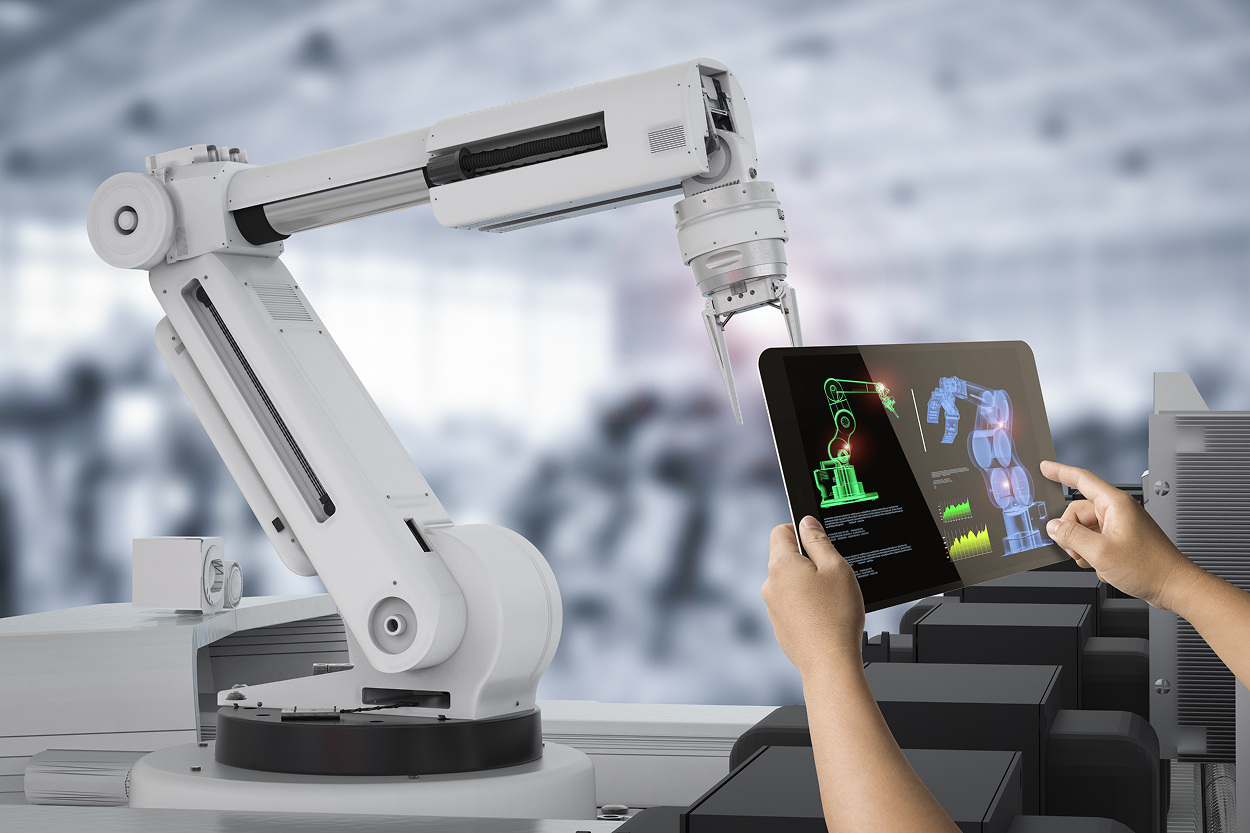
Industrial automation is changing in a very specific way. Motion control still has to be deterministic, repeatable, and safe, but machines are also being asked to see more, classify more, and adapt more. That means a production system is no longer judged only by whether axes move on time. It is also judged by whether the machine can interpret scenes, detect variable parts, align to imperfect inputs, and make better decisions from visual context. This is why EtherCAT and AI vision are increasingly being discussed together. They solve different problems, but modern machines often need both at the same time.
EtherCAT remains one of the core technologies for deterministic industrial motion, while machine vision keeps expanding as automation becomes more flexible and less dependent on perfect fixturing. The machine vision market is projected to grow from USD 15.83 billion in 2025 to USD 23.63 billion by 2030. That matters because the growth is not coming only from classic inspection. It is coming from systems that need vision to influence live machine behavior. At the same time, EtherCAT continues to be positioned by the EtherCAT Technology Group and Beckhoff as a high-performance automation network built around deterministic communication and precise synchronization. Put simply, the market is pushing machines toward a combination of harder real-time control and richer perception at the same time.
That combination creates a real engineering challenge. Motion control wants bounded timing, predictable execution, and low jitter. AI vision wants large data throughput, model inference, image preprocessing, and adaptation to visual variability. If teams mix those worlds carelessly, they usually get one of two bad outcomes. Either the vision stack becomes so isolated that it cannot influence motion in a useful way, or the control stack becomes so entangled with heavy perception workloads that deterministic behavior starts to suffer. The central question is therefore not whether EtherCAT and AI vision can coexist. They clearly can. The real question is how to partition the system so that motion stays deterministic while perception becomes smarter.
In 2026, this is no longer an edge case. Robot arms, delta robots, packaging lines, machine-tending cells, sorting systems, inspection stations, and hybrid robotics platforms increasingly need both hard real-time motion and AI-assisted perception. NVIDIA’s Isaac ecosystem has made perception tooling more accessible for robotics teams, while industrial automation vendors continue to push tighter synchronization between control and vision. Promwad’s public robotics and machine vision materials point in the same direction from the implementation side: the company publicly shows EtherCAT-based robotics control, industrial machine vision, Jetson-based robotics development, and a robotics platform built around Jetson with EtherCAT support. That makes this topic commercially and technically relevant rather than theoretical.
Why these two worlds now need each other
For a long time, motion and vision could be separated more cleanly. The motion side handled axes, interpolation, synchronization, torque loops, and deterministic sequencing. The vision side handled inspection, positioning checks, and occasional part finding. That model worked well when the visual problem was narrow and the motion program was largely fixed.
That is no longer enough for many machines. Modern cells increasingly need visual adaptation. A robot may need to locate a part with slight pose variation, classify the next object, check orientation, detect defects, estimate offset, or respond to clutter. A sorting system may need visual recognition before routing. A packaging machine may need dynamic quality checks that influence downstream motion. In all of those cases, vision is no longer only for final inspection. It starts affecting the live control logic of the machine.
At the same time, the motion side has not become less demanding. EtherCAT’s value remains what made it valuable in the first place: fast communication, high synchronization quality, and deterministic behavior. Distributed clocks, precise timing, and stable cycle behavior matter because servo loops, coordinated axes, registration, fast I/O response, and safety-relevant sequencing do not tolerate the timing unpredictability that can come with heavy AI workloads.
So the reason EtherCAT and AI vision now need each other is straightforward. Vision is moving closer to the machine’s decision loop, while motion control still requires tight determinism. That makes integration necessary, but naïve integration dangerous.
The first rule: do not put the AI model inside the hard real-time loop
This is the most important architectural rule, and many teams learn it the hard way. AI inference should influence deterministic motion, but it should not become the deterministic motion loop.
The reason is simple. Even a highly optimized inference pipeline is not the same thing as a fixed-cycle control task. Camera input varies. Preprocessing varies. Model complexity varies. System load varies. A Jetson or edge GPU can deliver excellent performance, but AI pipelines are still not a substitute for the strict timing behavior required by servo control, safety-relevant sequencing, or fieldbus synchronization.
So the right architecture is usually layered. EtherCAT handles the deterministic side: drives, distributed I/O, synchronized motion, and time-critical machine logic. The vision and AI layer runs beside it on an IPC, edge accelerator, Jetson, or hybrid compute platform. That layer produces guidance, classification, offsets, inspection outcomes, grasp candidates, or quality decisions. The control layer then consumes those results at defined boundaries. In other words, AI should update the machine’s decisions, not replace the timing contract of the control network.
This distinction matters because engineers sometimes assume that “real time” means one thing across the whole system. It does not. There is a major difference between a bounded sub-millisecond control loop and a high-performance inference pipeline that is merely fast. Both can be useful. They just should not be treated as interchangeable.
This separation becomes critical in robotics and physical AI systems where perception, planning, and motion run on the same edge SoC. Even when EtherCAT keeps the fieldbus side deterministic, the application processor can still introduce jitter through ROS 2 scheduling, AI inference bursts, shared memory bandwidth, or thermal throttling. That is why teams need to evaluate deterministic motion loops under physical AI workloads as an integrated system problem: the AI model may be fast enough, and the EtherCAT cycle may be stable in isolation, but the machine only behaves correctly if the full perception-to-motion path holds its timing under sustained combined load.
The same principle applies to NVIDIA-based robotics platforms that combine Jetson or Orin compute with industrial Ethernet communication. Perception, ROS 2 planning, and AI inference can run on the edge compute side, but servo-drive communication still needs a deterministic path with bounded latency and jitter. In practice, keeping AI off the hard real-time motion loop means separating the compute layer from the industrial communication layer, so EtherCAT, PROFINET, or EtherNet/IP exchange can remain predictable while AI continues to influence machine decisions at defined boundaries.
The second rule: synchronize vision to motion, not motion to vision
This sounds subtle, but it changes system stability. In poorly designed architectures, motion ends up waiting on perception in an uncontrolled way. That usually creates cycle jitter, unpredictable dwell times, and difficult state logic.
A better model is to let motion proceed deterministically and give the vision system well-defined synchronization points. Image acquisition, strobe lighting, or timestamped measurement should be tied to deterministic motion events. Vision then produces results that the machine consumes in the next allowed phase. The control system stays structured.
This is especially important in applications like pick-and-place, conveyor tracking, web handling, and fast inspection. If the camera is unsynchronized, the AI model may still be accurate in isolation, but its output can arrive at the wrong time relative to encoder position or axis state. In production, timing error is often more damaging than classification error. A very smart perception result applied too late is operationally useless.
This is one of the biggest reasons EtherCAT remains valuable in vision-heavy systems. It is not because EtherCAT performs inference. It is because it keeps the machine physically and temporally coherent while smarter perception is added.
The third rule: split the system into three layers
For most real machines, the cleanest architecture has three layers.
The first layer is deterministic control. This includes EtherCAT master behavior, servo control, fast I/O, machine sequencing, safety handling, and anything else that depends on strict timing. This layer should stay lean and predictable. It is where cycle time and jitter matter most.
The second layer is real-time coordination. This is where machine states, task scheduling, image-trigger timing, result handoff, pose updates, and deterministic event boundaries live. This layer often sits in the IPC or central controller and mediates between motion and vision.
The third layer is perception and AI. This includes image acquisition pipelines, feature extraction, object detection, segmentation, pose estimation, anomaly detection, and model inference. Jetson-class platforms are strong in this layer because they offer accelerated perception packages and deployable edge performance. Promwad’s public robotics material also fits here, particularly its Jetson-based robotics services and the public Jetson platform with EtherCAT support.
This three-layer model matters because it gives teams a practical answer to the question of where each function should live. If a function depends on bounded cycle execution, put it in the deterministic layer. If it depends on AI inference or image content, keep it in the perception layer. If it has to translate between those worlds, place it in the coordination layer. Most integration failures happen when teams collapse those layers too early.
Where EtherCAT adds the most value in AI vision systems
EtherCAT is not valuable in these architectures because it performs neural inference. It is valuable because it keeps the machine physically coherent while AI makes it smarter.
The first place EtherCAT adds value is synchronized actuation. If a vision model determines a pick point or a correction offset, the drives and I/O still have to execute the response deterministically. EtherCAT is strong here because synchronization quality matters more than algorithm complexity once the machine has to move.
The second place is vision timing. Camera triggers, strobes, encoder-correlated acquisition, and precise timestamps all benefit from deterministic synchronization. This is especially useful when image acquisition must line up with machine position rather than simply happen “fast enough.”
The third place is scale. In real industrial systems, AI vision is not the only load. There are drives, sensors, encoders, safety nodes, lighting, valves, and often multiple motion axes. EtherCAT provides a scalable deterministic backbone for that environment. AI vision can then be added as a smarter layer on top, without asking the fieldbus to become an AI runtime.
Where AI vision adds the most value to EtherCAT-driven machines
The mistake on the other side is to think vision is only for visual inspection after the real work is done. In 2026, AI vision increasingly changes how motion systems can behave.
The first gain is flexibility. A deterministic machine can execute perfect motion and still be operationally brittle if every part must arrive in exactly the same pose. AI vision reduces that brittleness by interpreting the scene. That means fewer fixtures, more tolerance for variation, and more adaptive cells.
The second gain is richer perception. Traditional machine vision can do a lot, but AI vision is especially useful when the problem is not just thresholding or geometric matching. Classification of mixed parts, visual anomaly detection, pose estimation in clutter, and context-dependent object interpretation are areas where AI perception adds real value.
The third gain is smarter machine decisions. Once the machine can classify, localize, and interpret more of the environment, it can adapt motion instead of only executing fixed patterns. In practice, that means smarter pick points, dynamic reject logic, vision-guided alignment, variable recipe selection, and more robust handling of real-world noise. The motion layer remains deterministic, but the machine becomes less rigid overall.
The most common integration mistakes
The first mistake is trying to run everything in one cycle model. This usually happens when teams assume that because the machine needs one result, all software should behave like one unified real-time application. In reality, inference and motion control have different timing properties. They should be integrated, but not flattened into one execution model.
The second mistake is ignoring synchronization. A model may detect correctly, but if image acquisition, lighting, and motion state are not aligned precisely enough, the practical result will still be poor. This is why distributed-clock synchronization and time-based triggering matter so much in combined motion-vision systems.
The third mistake is overloading the controller with perception responsibilities that belong on an edge AI platform. The more complex the model, the more important it becomes to keep inference on hardware designed for that workload. Jetson-class platforms and accelerated robotics stacks exist precisely because generic control runtimes are not always the right place for AI-heavy robotics perception.
The fourth mistake is weak validation. Teams may validate model accuracy and motion accuracy separately, but fail to validate the timing relationship between them. In production, the combined system is what matters. Integrated motion-vision systems are increasingly too complex to validate only on the floor.
The same caution applies when the machine behaves incorrectly even though the software stack appears healthy. Timing errors, unstable motion, or inconsistent feedback can be mechatronic failures that look like firmware but live in mechanics or sensing, which is why debugging has to correlate control data with physical measurements instead of treating the software layer as the default cause.
What a practical architecture looks like in 2026
In a modern robotics or machine-automation cell, the EtherCAT side often includes servo drives, encoders, remote I/O, safety devices, lighting control, and timing-critical machine logic. A PC-based controller or industrial IPC orchestrates the state machine and handles time-aware communication between subsystems. The AI vision side runs on an IPC with accelerator support or on an edge platform such as Jetson, where image pipelines, AI models, and robotics middleware can execute with high throughput. Results are passed back to the control layer at defined synchronization points.
This is not hypothetical. The building blocks already exist in the market. Deterministic fieldbus infrastructure is mature. Edge AI platforms are mature enough for industrial deployment. Vision frameworks are richer than they were even a few years ago. What matters now is not whether the stack is possible, but whether the stack is partitioned correctly.
The important point is that the machine should be architected around deterministic boundaries, not around the hope that all software can behave like a servo loop. The most successful systems in 2026 are the ones that know exactly where perception ends, where coordination begins, and where hard real-time control must remain protected.
Where Promwad fits factually
This topic needs a careful but fairly strong Promwad angle. Promwad’s public site does not present a named public case study saying it delivered one flagship production cell with the exact EtherCAT-plus-AI-vision partitioning model described in this article. It would be wrong to claim that. But the public fit here is stronger than generic adjacent expertise. Promwad publicly shows EtherCAT-based robotics and motion-control work, membership in the EtherCAT group, industrial machine vision solutions, robotics engineering with NVIDIA Jetson and Isaac, a public Jetson robotics platform with EtherCAT support, and industrial automation services spanning software, motion, and vision. That is enough to make this topic highly credible for Promwad’s blog without overstating the public evidence.
The safest formulation is therefore this: Promwad publicly operates in the engineering domains that determine whether such architectures succeed, including deterministic industrial networking, motion-control integration, machine vision, edge AI robotics, and hybrid platform design. That is a strong factual position and does not require inventing a public case that has not been published.
Conclusion
Combining EtherCAT with AI vision is not about forcing two trends together. It is about solving a real industrial problem. Machines need deterministic motion and smarter perception at the same time. EtherCAT remains valuable because it preserves synchronization, timing discipline, and scalable control. AI vision becomes valuable because it reduces rigidity, adds context, and lets machines respond to variation more intelligently. The engineering challenge is to keep those benefits from interfering with each other.
The systems that win in 2026 are usually the ones that treat motion and perception as coordinated but distinct layers. Let EtherCAT own the deterministic machine backbone. Let the AI vision stack own interpretation. Let a well-designed coordination layer connect them with precise timing and clear responsibility boundaries. That is how you get a machine that is both predictable and smarter.
AI Overview
EtherCAT and AI vision complement each other when the machine needs both timing discipline and richer perception. The strongest architectures keep motion deterministic, place AI inference on suitable edge compute, and connect both through well-defined synchronization and coordination layers.
Key Applications: robot guidance, pick-and-place, conveyor tracking, dynamic inspection, packaging systems, machine tending, and hybrid robotics platforms where visual context influences motion decisions.
Benefits: deterministic motion, better adaptability to part variation, cleaner timing alignment between vision and control, reduced workcell rigidity, and more scalable integration of smart perception into industrial machines.
Challenges: keeping AI out of the hard real-time loop, synchronizing image acquisition to motion correctly, validating combined timing and perception behavior, and partitioning functions across control, coordination, and AI layers without architectural confusion.
Outlook: the direction is toward tighter but cleaner integration. Machines will keep adding richer perception, but deterministic networking and real-time control will remain essential. The most successful systems will treat AI vision as a powerful decision layer built around, not instead of, deterministic motion infrastructure.
Related Terms: EtherCAT, distributed clocks, deterministic motion control, industrial machine vision, edge AI, NVIDIA Jetson, robot guidance, synchronized acquisition, real-time coordination.
Our Case Studies