


The Smart Grid Is Built in Firmware: Embedded Control and Telemetry at the Grid Edge
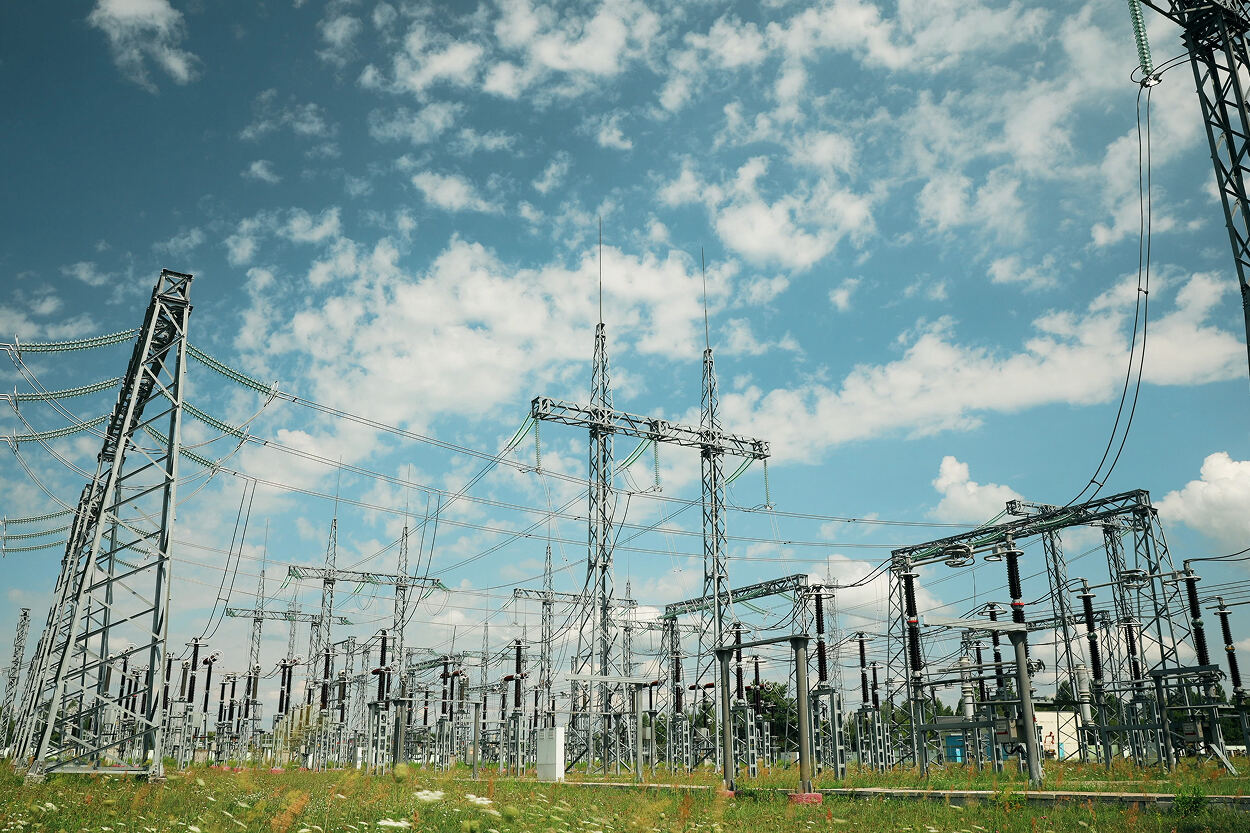
A dashboard is the output of a smart grid, not the source of it. The visualization that shows a utility operator real-time feeder loading, protection event logs, and DER dispatch status exists because somewhere in the field — in substations, on distribution poles, inside inverter enclosures, at BESS sites — embedded firmware is measuring physical quantities, executing protection logic, managing communication transactions, and transmitting structured telemetry. Remove the embedded intelligence at the edge and the dashboard goes dark. The monitoring platform has no data. The control system has no actuation path. The smart grid disappears.
This distinction matters because grid modernization investment and discussion are disproportionately concentrated at the software and analytics layers. Utilities procure advanced distribution management systems, energy management platforms, and AI-driven fault prediction tools with significant budget and organizational attention. The embedded devices that those systems depend on — intelligent electronic devices, remote terminal units, grid-edge controllers, protocol gateways, inverter firmware — receive comparatively less systematic engineering attention, even though they are the layer where most of the technically demanding problems actually live.
The response time requirements for grid protection are 4 to 16 milliseconds. A cloud analytics platform cannot satisfy that requirement. An energy management system cannot satisfy it. Only firmware running on dedicated real-time hardware at or near the protected asset can close the loop within the time budget that grid protection demands. The consequence of this architectural reality is that the embedded layer is not an implementation detail that can be sorted out after the system architecture is defined. It is the architecture. The decisions made at the embedded layer — about processor selection, real-time operating system, communication protocol stack, time synchronization, and firmware update strategy — determine what the smart grid can actually do.
What the Edge Layer Is and What It Has to Do
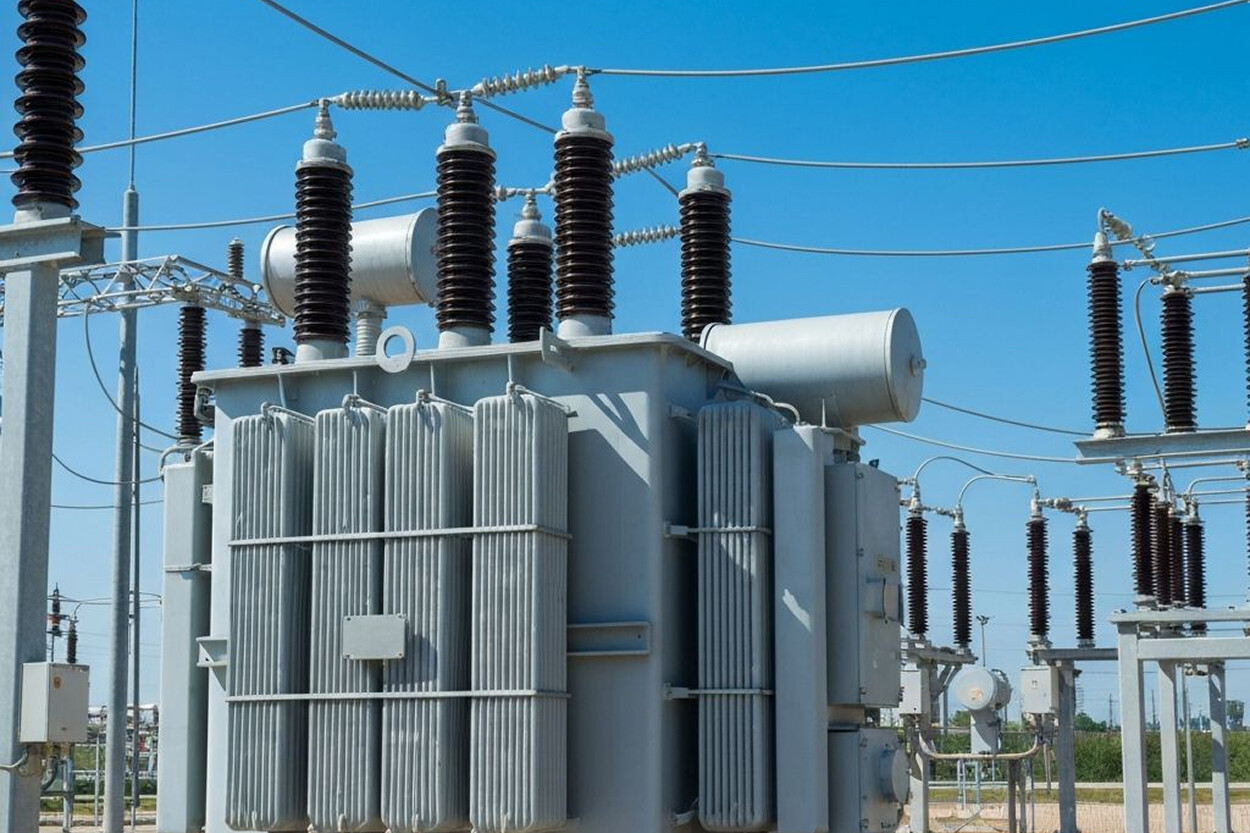
The grid edge encompasses every device that sits at the boundary between the digital control world and the physical electrical infrastructure. Intelligent electronic devices in substations measure current and voltage, execute protection algorithms, and issue trip commands to circuit breakers. Remote terminal units collect discrete input status from switchgear and send control commands from SCADA. Distribution automation controllers manage recloser coordination and fault isolation on feeders. Grid-edge energy management systems dispatch distributed energy resources in response to local grid conditions. Smart inverters execute volt-var control, frequency response, and ride-through functions that IEEE 1547-2018 requires.
Each of these device categories has a distinct set of requirements that define what the embedded system must provide:
| Device category | Primary function | Timing requirement | Key embedded capability |
| Protection relay / IED | Fault detection and trip | 4–16 ms | Deterministic real-time control loop |
| RTU / data concentrator | SCADA telemetry and control | 100 ms–1 s | Protocol stack, I/O management |
| Distribution automation controller | Feeder self-healing | 100 ms–10 s | Local decision logic, IED coordination |
| Grid-edge EMS | DER dispatch and VVO | 1–60 s | Optimization algorithms, IEC 61850 |
| Smart inverter | Grid support functions | Cycle-level (< 20 ms) | Real-time control, IEEE 2030.5 comms |
| BESS controller | Charge/discharge management | Sub-second | State estimation, safety interlocks |
The timing requirement column is where the architecture diverges most sharply from cloud-based approaches. Protection relay firmware operates on a processor executing a deterministic control loop that samples current and voltage at each power system cycle — 50 or 60 Hz — applies overcurrent, differential, and distance protection algorithms, and generates a trip output within a few milliseconds of detecting a fault. This loop cannot be interrupted by OS scheduling jitter, network latency, or any other non-deterministic behavior. The hardware must be a dedicated real-time processor or FPGA, not a general-purpose Linux box with best-effort network connectivity.
For device categories with less demanding timing requirements — RTUs, grid-edge EMS, distribution automation controllers — the embedded platform can be a more capable general-purpose processor running an RTOS or a hardened Linux distribution, with the protection-critical functions either absent or handled by dedicated co-processors. The point is that the timing taxonomy shapes the hardware selection, operating system choice, and software architecture before a single line of firmware is written.
IEC 61850 — The Protocol Architecture That Makes Grid Devices Interoperable
IEC 61850 is the foundational communication standard for substation automation and increasingly for distribution automation and DER integration. Understanding what it provides — and what it does not — is necessary context for embedded engineers working on grid-connected devices.
IEC 61850 defines three things: an information model (how grid equipment and functions are described in a standardized data hierarchy using logical nodes), a set of communication services (how data is exchanged between devices), and a configuration language (how substations are documented in machine-readable form using Substation Configuration Language, SCL). The communication services most relevant to embedded development are:
GOOSE (Generic Object-Oriented Substation Event): a publish-subscribe mechanism for fast binary status exchange between IEDs over a substation LAN. GOOSE messages carry protection trip signals, breaker status, interlocking signals, and other time-critical binary data with millisecond latency on the substation Ethernet. GOOSE eliminates the dedicated copper pilot wire connections that traditional relay coordination required, replacing them with Ethernet messages that can be routed to any device on the LAN. A protection relay that publishes a GOOSE trip message when it detects a fault, and a circuit breaker controller that subscribes to that message and trips the breaker on receipt, have replaced what was previously a physical current loop between two panels with a software subscription. The embedded firmware in both devices must implement the GOOSE stack correctly, handle retransmission timing in the absence of acknowledgment, and detect loss of GOOSE heartbeat from subscribed publishers.
Sampled Values (SV): a streaming service that carries digitized voltage and current waveform samples from merging units to protection relays at high sampling rates — typically 80 or 256 samples per power cycle. SV enables the process bus architecture in which current transformers and voltage transformers connect to merging units at the switchgear rather than running copper pilot cables to the relay panel. The relay receives digitized waveform data over fiber and applies its protection algorithms to the digital samples. The embedded requirements for SV processing are demanding: the relay must synchronize its sample timing to the SV data stream using IEEE 1588 Precision Time Protocol, buffer and align samples from multiple merging units, and detect SV stream loss without triggering a false trip.
MMS (Manufacturing Message Specification): the client-server protocol used for SCADA-to-IED communication — reading measurements, writing set points, accessing event logs, and downloading configuration. MMS carries the non-time-critical data that SCADA and HMI systems need.
The practical consequence of implementing IEC 61850 in embedded firmware is that the developer must correctly implement all three of these protocol layers, handle their interaction correctly, and produce an IED configuration file (SCL format) that accurately describes the device's data model so that engineering tools and other IEDs can configure connections to it. IEC 61850 conformance testing — conducted through accredited test laboratories using KEMA or similar test suites — validates the implementation against the standard, but conformance testing verifies that the protocol mechanics are correct, not that the application logic using them is correct or that the device interoperates correctly with all other IEC 61850 devices it will encounter in the field.
Time Synchronization — The Invisible Foundation
Every piece of grid telemetry data carries a timestamp, and the utility of that data depends entirely on how accurate those timestamps are. An event recorded by an IED at one substation can only be correlated with an event recorded at another substation — for sequence-of-events analysis after a fault, for phasor measurement, for protection coordination validation — if both timestamps are referenced to a common time source with sufficient accuracy.
The accuracy requirements differ by application. SCADA telemetry requires millisecond-level accuracy, which IRIG-B time distribution from a GPS clock can provide across a substation. Phasor measurement units require microsecond-level accuracy for the angle measurements that define synchronized phasors. IEC 61850 Sampled Values require submicrosecond synchronization between merging units and the relays that process their data.
IEEE 1588 Precision Time Protocol (PTP), profiled for power systems in IEC 61850 as the SMPTE profile is for broadcast systems, provides submicrosecond synchronization over Ethernet with hardware timestamping support in network switches and end devices. Implementing IEEE 1588 in embedded firmware requires hardware timestamp capability in the network interface — software timestamping introduces jitter that degrades synchronization accuracy below what protection and phasor measurement applications require. The firmware must implement the Best Master Clock Algorithm (BMCA) for grandmaster election, handle grandmaster switchover without disturbing the control loop, and maintain synchronization within specification during transient network events that temporarily disrupt PTP message exchange.
The failure mode when time synchronization is lost or degraded is not always visible. A device operating in IEEE 1588 holdover mode — maintaining its last synchronized time using a local oscillator — accumulates time error at a rate determined by the oscillator quality. An RTU using a low-quality oscillator that loses GPS synchronization in a remote location may report timestamps that drift by seconds per day without any alarm indication. The sequence-of-events analysis after the next fault will show event sequences that appear impossible, because the relative timestamps from that RTU are no longer trustworthy. Time synchronization integrity monitoring — detecting and alarming on excessive synchronization error or holdover conditions — is a firmware responsibility that is systematically underimplemented in field devices.
Telemetry Quality — The Gap Between Data Generation and Actionable Information
Grid edge devices generate data continuously. The question of whether that data is actionable depends on a set of data quality properties that the embedded firmware is responsible for maintaining.
The most commonly overlooked quality dimension is measurement uncertainty. A current measurement from a protection-class CT and relay combination has a known accuracy specification at rated current. At low current levels — below 10 percent of rated — the accuracy may degrade substantially. A feeder monitoring application that relies on current measurements from a protection relay that was specified and calibrated for protection, not metering, may be making load balance calculations on data with 5 to 15 percent uncertainty that is never communicated to the analytics application consuming the data. IEC 61850 includes quality attributes — including validity flags (Good, Invalid, Questionable), origin source indicators, and test mode flags — that devices can use to communicate data quality alongside the measurement value. These flags are rarely populated consistently across devices from different manufacturers, and analytics applications that do not check quality flags before using data will silently incorporate invalid measurements into calculations.
The second quality dimension is temporal consistency. Modern grid edge systems often mix data from devices with different reporting rates and latency characteristics: a protection relay logging 200 events per second during a fault, an RTU polling at once per second over a serial SCADA connection, and an AMI meter reporting at 15-minute intervals all feeding the same analysis. Correctly interpreting a sequence of events requires understanding not just the timestamps on each record but the temporal resolution and reporting latency of each data source. A protection relay event with microsecond timestamp accuracy provides a very different level of temporal information than an RTU binary input report with one-second polling resolution, but both arrive at the SCADA system as timestamped events. The firmware layer is responsible for ensuring that the timestamp resolution communicated with each data point accurately reflects the actual temporal accuracy of the measurement.
The third quality dimension is completeness under communication impairment. When the communication path between a field device and SCADA is interrupted, the device must buffer data locally and transmit it in order when connectivity is restored, so that the SCADA historian does not have gaps during the outage period. This store-and-forward capability is a firmware requirement: the device must have sufficient non-volatile storage to buffer data for the expected maximum communication outage duration, a local time source accurate enough to maintain correct timestamps during the outage, and a recovery mechanism that transmits buffered data without overwhelming the communication channel on reconnection. These requirements are straightforward to specify but frequently underimplemented — a device with nominally compliant SCADA communication that loses connectivity events during communication outages is providing lower operational value than a device with robust offline buffering.
The Protocol Diversity Problem — What Embedded Gateways Actually Do
The grid edge is not a clean IEC 61850 world. The existing installed base of grid equipment communicates over DNP3, IEC 60870-5-104, Modbus RTU, Modbus TCP, proprietary serial protocols from legacy automation vendors, and — at the distribution edge and customer premises — IEEE 2030.5, SunSpec Modbus, and OCPP for EV charging. A utility deploying a new distribution automation system or integrating DERs into its grid management platform must interface with this protocol diversity, and the device at the junction point is the protocol gateway — an embedded system whose primary function is translating between protocol worlds while preserving data integrity, temporal accuracy, and security.
Protocol gateways that simply translate message formats without preserving semantic fidelity create subtle but consequential data quality problems. A DNP3 binary counter value translated to an IEC 61850 integer accumulator may have the same numeric value but different rollover behavior. A Modbus register that represents reactive power as a signed 16-bit integer with vendor-specific scaling, when converted to an IEC 61850 analog value, needs not just the numeric translation but the correct engineering unit, scaling, and deadband configuration. A gateway that translates syntax without preserving semantics produces data that appears correct to the consuming application but carries hidden errors.
The architectural alternative to individual point-to-point gateways — one per field protocol, one per site — is the multi-protocol edge controller that aggregates inputs from multiple field devices using their native protocols, normalizes them to a common internal data model, and publishes to upstream systems through a standardized protocol. Embedded implementations of this architecture using IEC 61850 as the upstream interface and DNP3/Modbus/IEEE 2030.5 as the downstream field interfaces are the practical building block of grid modernization programs that must integrate new distributed intelligence with existing field equipment. Promwad's smart grid protocol work, which spans IEC 60870-5 series, IEC 61850, DNP3, SunSpec Modbus, IEEE 2030.5, and power line communication protocols on embedded FPGA and SoC platforms, reflects the engineering breadth that multi-protocol grid edge development requires.
Cybersecurity in Embedded Grid Devices — Where the Attack Surface Actually Is
Smart grid cybersecurity is discussed primarily in terms of SCADA network architecture, IT/OT network segmentation, and compliance with NERC CIP standards. The embedded device level — where the firmware that implements protection, control, and communication actually runs — is the layer where many of the most consequential vulnerabilities reside, and it is the layer where security properties are most difficult to retrofit after the fact.
The attack surface in an embedded grid device includes: the communication interfaces through which the device receives commands and configuration (Ethernet, serial, cellular), the protocol implementations that parse and execute those inputs, the firmware update mechanism, the authentication and access control for configuration interfaces, and the device's response to malformed or unexpected inputs. A protection relay whose firmware incorrectly handles malformed GOOSE messages — parsing a crafted packet in a way that overwrites stack memory — has a vulnerability that is entirely in the firmware layer and has nothing to do with network architecture. A smart inverter whose firmware update mechanism does not verify the integrity of a firmware image before flashing it can be programmed with malicious firmware if an attacker gains access to the update channel.
IEC 62443 defines a cybersecurity framework for industrial automation systems, with Part 4-2 specifying technical security requirements for embedded component level products. IEEE 1686 defines cybersecurity requirements specifically for intelligent electronic devices used in power systems, covering authentication, access control, audit logging, firmware update integrity, and physical security. Compliance with these standards during device development requires security analysis of the firmware architecture — specifically identifying all external input paths, validating that input handling code is written to reject malformed inputs without undefined behavior, implementing firmware update verification with cryptographic signature checking, and logging security-relevant events to tamper-resistant storage.
Secure boot — verifying the integrity of firmware from the boot ROM through the application at power-up — is the foundational security property that prevents persistent firmware modification. Key storage using hardware security modules or secure enclaves prevents extraction of cryptographic keys used for firmware signing and communication authentication. These security properties are significantly easier to design into a hardware platform from the start than to add to an existing design, which is why grid-connected embedded device development increasingly treats security as a first-class architecture requirement rather than a compliance exercise conducted near product release.
Quick Overview
Grid intelligence is not delivered by management platforms — it is executed by embedded firmware in field devices. Protection relays, RTUs, distribution automation controllers, smart inverters, BESS controllers, and protocol gateways collectively implement the measurement, protection, control, and communication functions that enable grid management systems to operate. The timing requirements for protection functions — 4 to 16 milliseconds — are only achievable with dedicated real-time embedded hardware at the asset location. IEC 61850 provides the communication framework that enables interoperability between these devices through GOOSE high-speed binary exchange, Sampled Values waveform streaming, and MMS client-server communication. Telemetry data quality — accuracy, temporal consistency, and completeness under communication impairment — is a firmware responsibility that determines the operational value of the analytics and management layers above it.
Key Applications
Protection relay and IED firmware development for substation automation, RTU and data concentrator development for SCADA telemetry in transmission and distribution substations, multi-protocol gateway development for integrating legacy DNP3/Modbus field devices with IEC 61850 distribution management systems, smart inverter firmware for IEEE 1547-2018 compliance including volt-var control and ride-through, grid-edge energy management systems for DER dispatch and distribution circuit segment optimization, and BESS controller embedded firmware for charge/discharge management and grid support functions.
Benefits
Deterministic real-time protection loops in dedicated embedded hardware meet the millisecond timing requirements that cloud and general-purpose platforms cannot. IEC 61850 GOOSE messaging eliminates dedicated copper pilot wiring between relay panels while providing comparable latency for protection coordination. Multi-protocol gateway architecture with internal data model normalization provides semantic fidelity in protocol translation that point-to-point converters cannot guarantee. Store-and-forward telemetry buffering with local IEEE 1588 time reference maintains data completeness and timestamp integrity during communication outages.
Challenges
IEC 61850 implementation requires correct protocol mechanics across GOOSE, SV, and MMS service layers with conformance-tested implementations, plus application logic validation that conformance testing does not cover. IEEE 1588 hardware timestamping requires network interface hardware support that not all embedded platforms provide at the accuracy needed for protection and PMU applications. Multi-protocol field integration demands firmware that handles protocol diversity, semantic translation, and input validation across legacy and modern protocol ecosystems simultaneously. Cybersecurity requirements per IEC 62443-4-2 and IEEE 1686 — secure boot, firmware update integrity, authentication, audit logging — require security to be designed into the hardware and firmware architecture rather than added post-development.
Outlook
The convergence of grid modernization investment, DER proliferation, and electricity demand growth from data centers and electrification is driving a significant increase in grid-edge device deployment. IEC 61850 extension beyond the substation to distribution feeders and DER interfaces — including IEC 61850-7-420 for DER communication — is expanding the standard's relevance from transmission protection to the full grid edge. IEEE 1547-2018 compliance requirements for inverter-based DERs are creating sustained demand for certified embedded firmware for smart inverters and energy storage. The embedded intelligence at the grid edge is transitioning from a relatively static infrastructure layer to an active platform for distributed control, local optimization, and real-time grid support, making the firmware that runs on it a more consequential engineering discipline than it has historically been recognized as.
Related Terms
IEC 61850, GOOSE, Sampled Values, MMS, SCL, IED, RTU, smart inverter, IEEE 1547-2018, IEEE 1588, PTP, BMCA, IEC 60870-5-104, DNP3, Modbus, IEEE 2030.5, SunSpec, BESS controller, grid edge computing, distribution automation, protection relay, fault detection, real-time embedded, RTOS, volt-var control, ride-through, IEC 62443, IEEE 1686, secure boot, NERC CIP, feeder automation, merging unit, process bus, phasor measurement unit, wide-area protection
Our Case Studies

FAQ
Why can cloud platforms not handle grid protection control functions?
What does IEC 61850 GOOSE messaging replace in substation protection systems?
What are the main data quality properties that embedded firmware must maintain for grid telemetry?
Why is IEEE 1588 hardware timestamping important for grid edge devices?