From Edge AI to Physical AI: Our Takeaways After Qualcomm Dragonwing IoT Day 2026

Solution Architect, Industrial & Robotics at Promwad
Qualcomm Dragonwing IoT Day in Nuremberg this March was more than a prelude to Embedded World 2026 and more than our traditional visit to our partner event. For our team at Promwad, it was a useful checkpoint for understanding where embedded intelligence is heading next.
The strongest signal from the event was not simply that edge AI is growing. It is that the market is moving beyond isolated inference demos toward production architectures that combine AI, deterministic control, connectivity, and lifecycle scalability in one system design. That shift was visible across Qualcomm’s announcements around Arduino VENTUNO Q, its strategic collaboration with NEURA Robotics, and its broader message on industrial edge AI.
Edge AI is becoming infrastructure, not a side project
One of the clearest takeaways from the event was that edge AI is no longer being treated as a standalone experiment. It is becoming part of the operational backbone of industrial systems.
Qualcomm's current Dragonwing positioning reflects exactly that: a portfolio aimed at factory automation, robotics, machine vision, industrial infrastructure, and other environments where AI has to coexist with rugged hardware, real-time behavior, and long product lifecycles.
The same message came through in the panel session "AI Embedded Innovation Powered by Dragonwing," where the discussion centered on how AI at the edge is reshaping industrial systems.
For OEMs, that changes the engineering question:
The challenge is no longer "How do we add AI to the device?" but "How do we design an embedded platform where AI can operate reliably alongside industrial networking, control logic, sensor fusion, and field deployment constraints?"
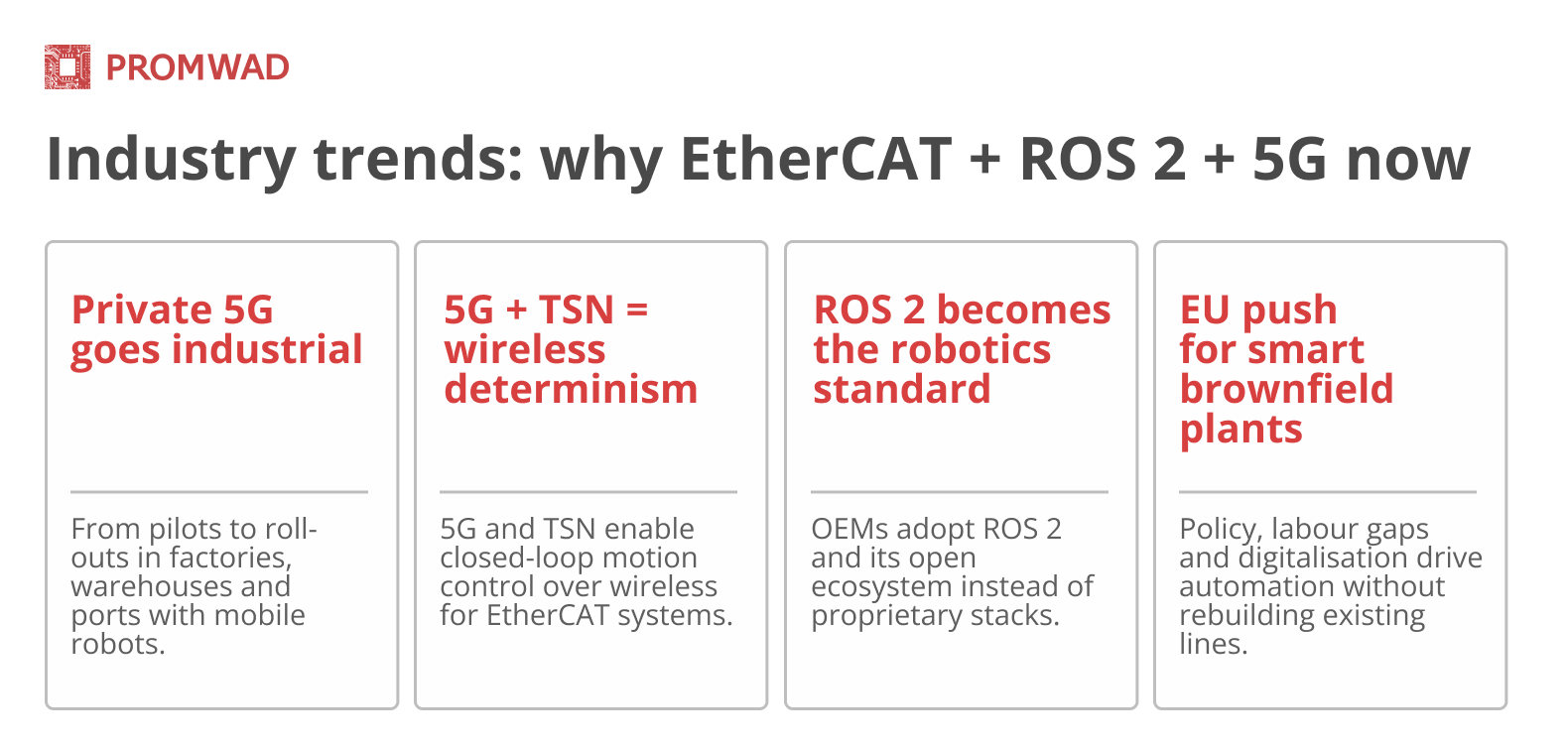
This is exactly the type of problem we solve at Promwad. In one of our robotics projects, we built a reusable software stack that combines real-time motion control, ROS 2, and 5G on a single embedded controller, specifically to avoid the usual pattern of one-off integrations, custom gateways, and fragile middleware.
Physical AI is no longer a buzzword
The second major shift is the rise of what the industry increasingly calls Physical AI. At Dragonwing IoT Day, Qualcomm and its partners framed the next wave of robotics as systems that do not just analyze data locally, but also perceive their environment, make decisions in real time, and act safely in the physical world.
Qualcomm's new collaboration with NEURA Robotics is a strong marker here: the partnership combines Qualcomm robotics platforms, including the Dragonwing IQ10 Series, with NEURA's cognitive robotics stack to advance physical AI and cognitive robotics.
That matters because real robotic systems do not run one workload at a time. They ingest camera streams, interpret sensor data, plan motion, manage actuators, and remain responsive under strict timing constraints.
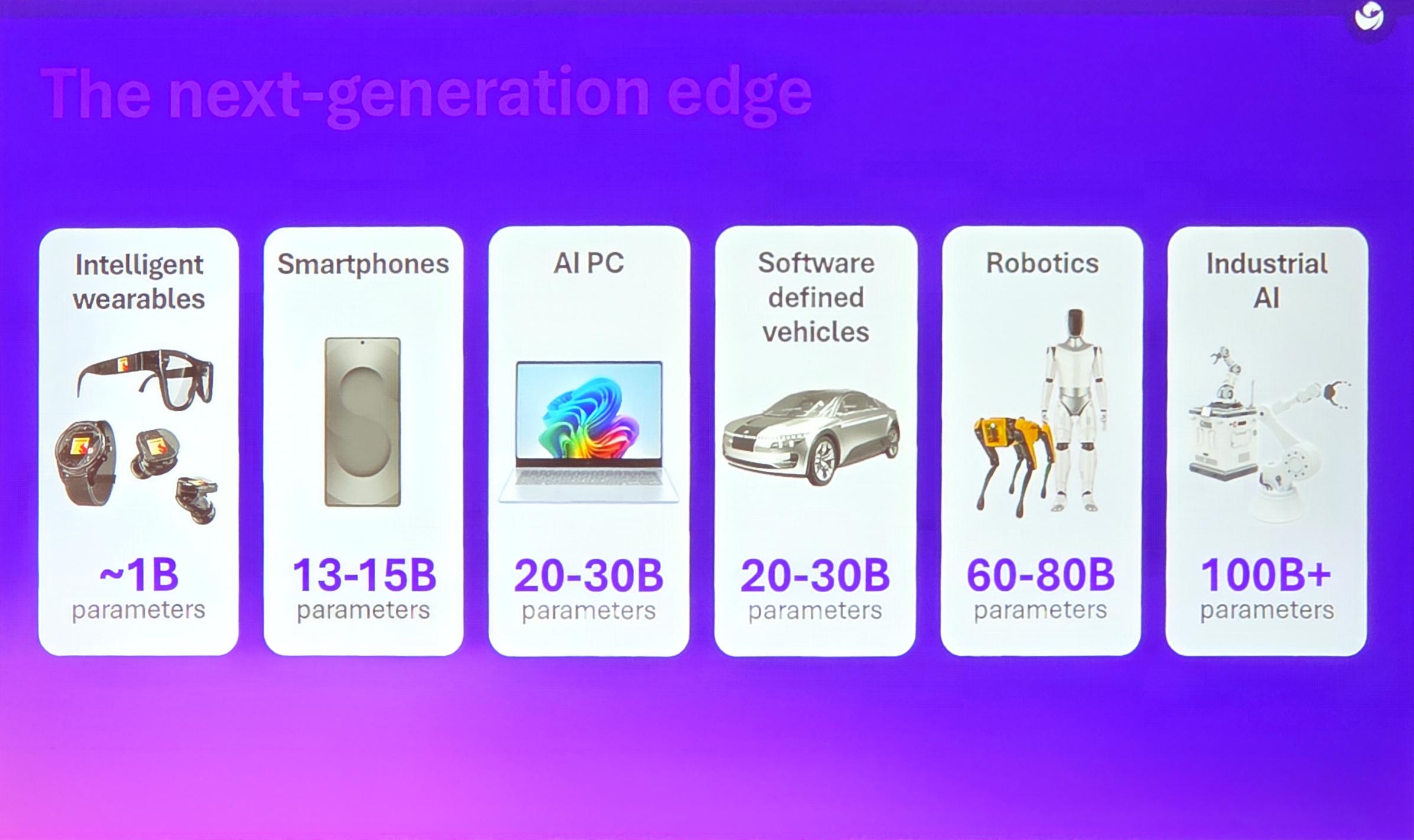
The next generation adge presented at Dragonwing IoT Day, Nuremberg, 2026
In practice, Physical AI is not a marketing phrase. It is an architectural requirement: perception, reasoning, and motion control must be designed as one heterogeneous system. Qualcomm's robotics messaging around the IQ10 Series makes that clear, positioning it for advanced robotics workloads with up to 700 TOPS of on-device AI performance.
At Promwad, we already work in that model. Our autonomous mobile robotic kit, built on the Qualcomm Dragonwing RB3 Gen 2 Dev Kit, combines wireless connectivity, machine vision, lidar-based navigation, voice interaction, and motion control into a practical robotics platform
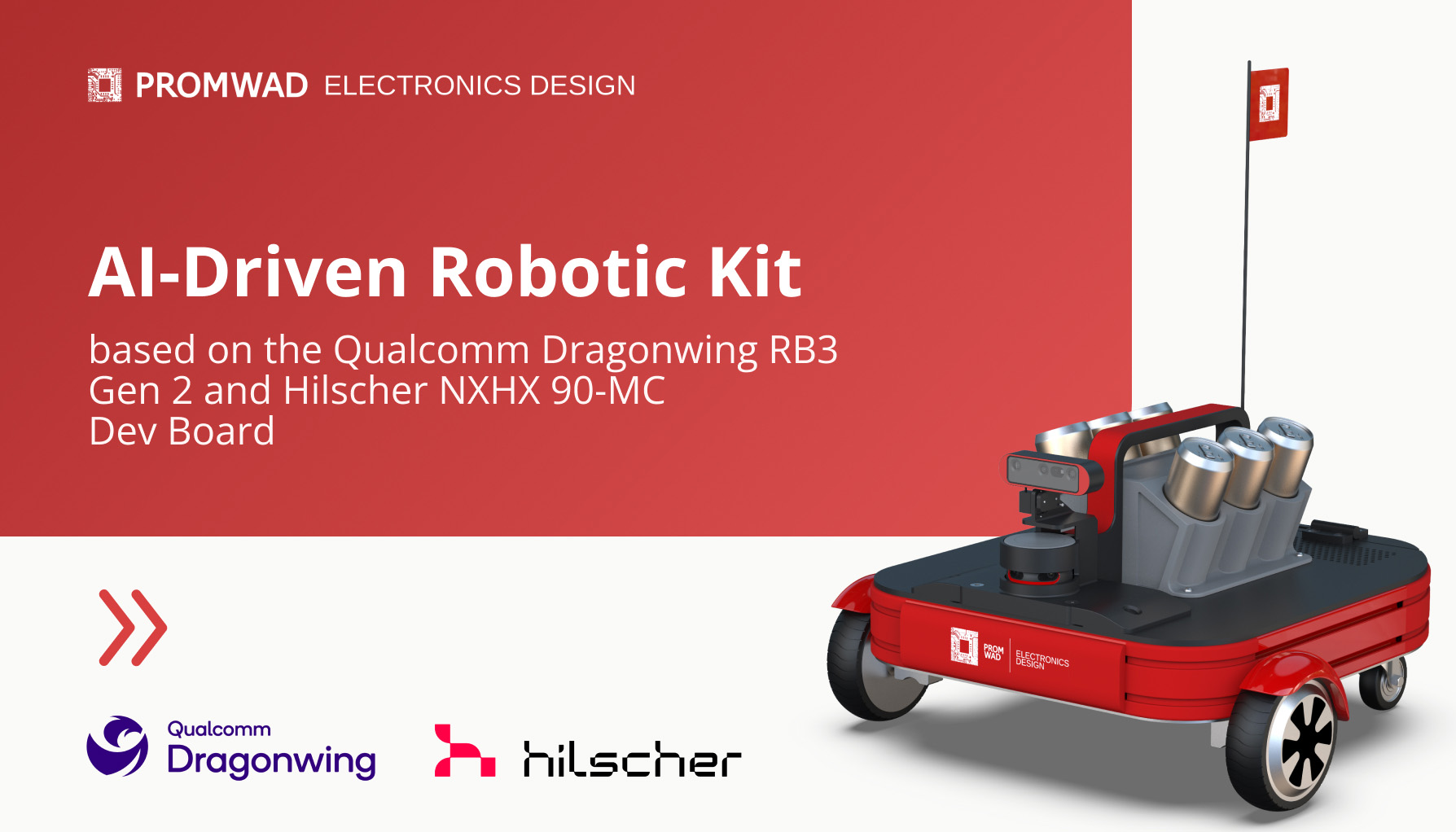
It was designed not as a lab curiosity, but as an engineering basis for real service-robot use cases such as delivery, guest assistance, and other mobile applications where safe navigation in crowded environments is critical.
The winning pattern is heterogeneous design
Another important signal from the event was that the industry is converging on heterogeneous architectures rather than monolithic compute. Arduino VENTUNO Q is a good example.
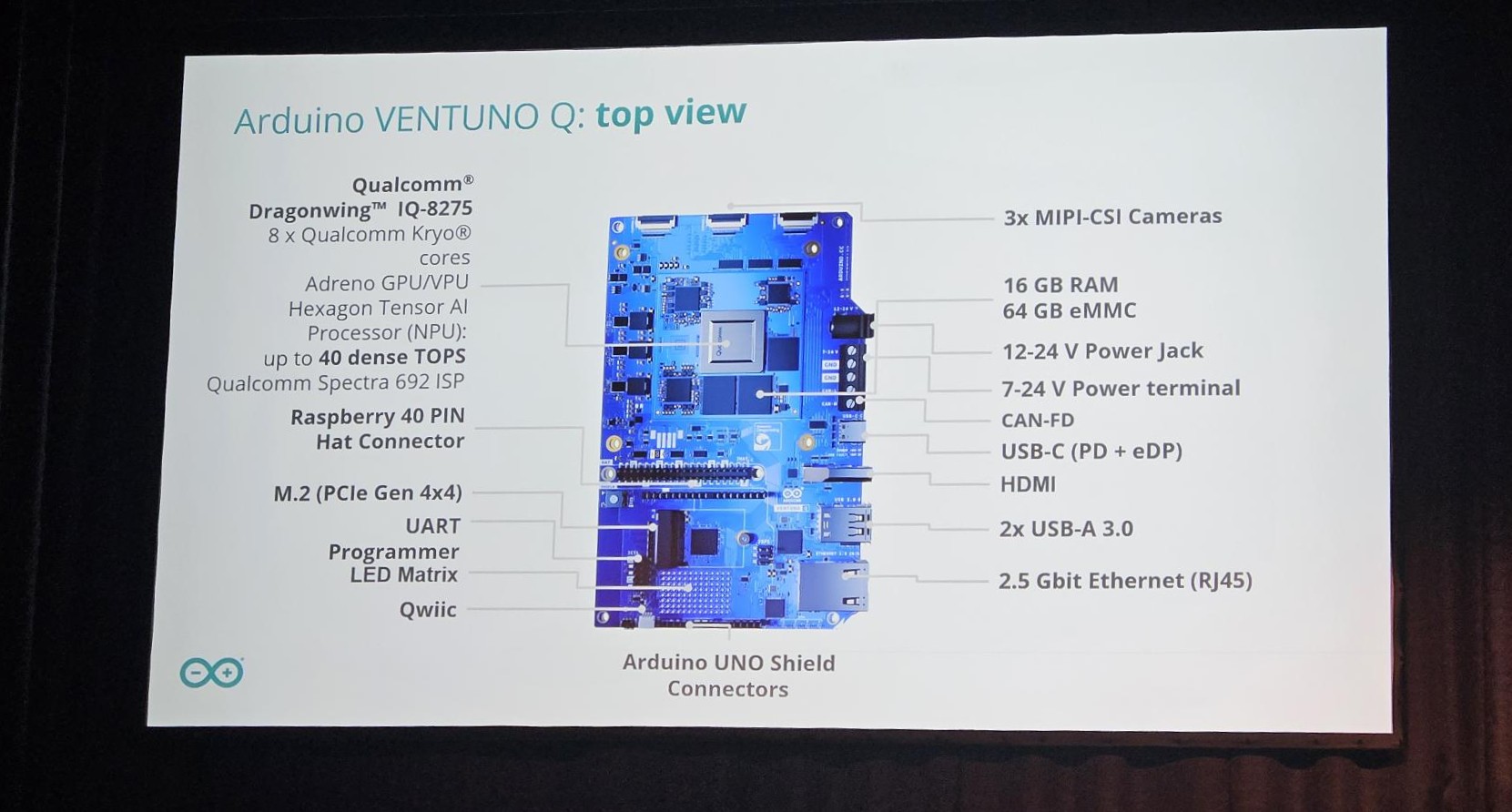
Adruino VENTUNO Q presented at Dragonwing IoT Day, Nuremberg, 2026
Qualcomm says the board combines the Dragonwing IQ8 Series with a dedicated STM32H5 microcontroller, pairing up to 40 dense TOPS of AI performance with deterministic real-time control on a single development platform. That is a meaningful pattern for robotics, machine vision, and industrial edge devices because it reduces integration overhead and brings perception, decision-making, and actuator control closer together.
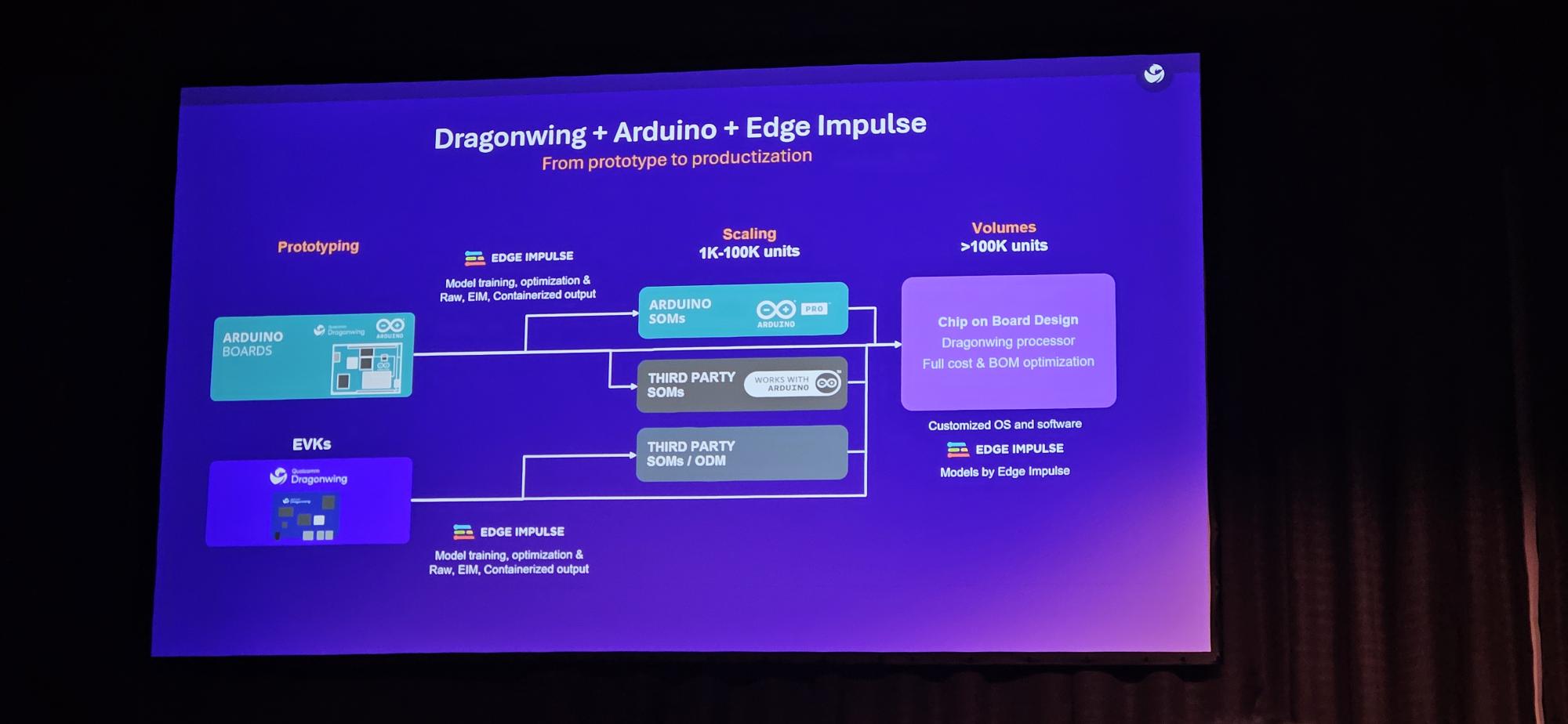
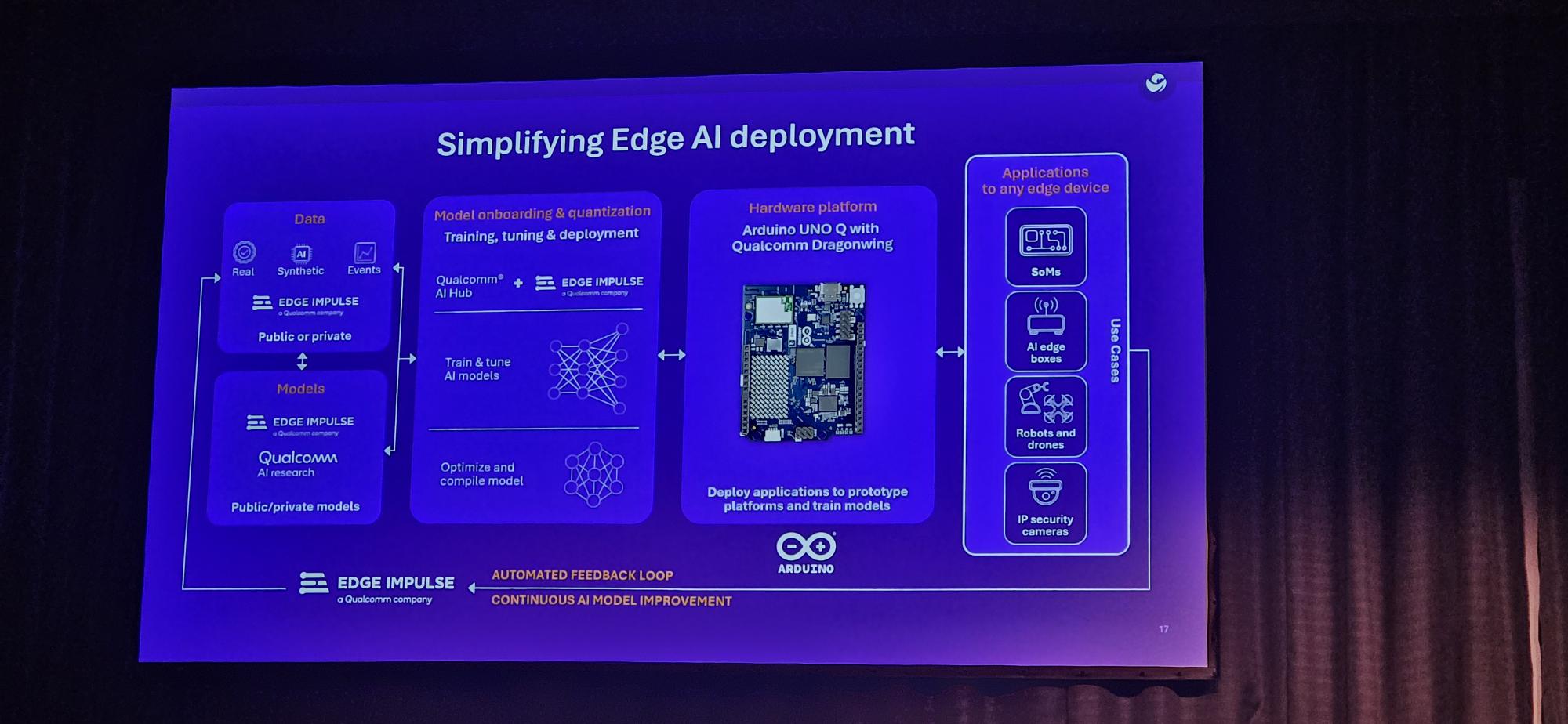
Edge AI deployment with Adruino presented at Dragonwing IoT Day, Nuremberg, 2026
What these shifts mean for industrial OEMs
For product teams in robotics, industrial automation, utilities, and intelligent edge equipment, the practical implication is straightforward: platform selection now has to consider AI throughput, real-time behavior, connectivity, software portability, and long-term maintainability together.
Qualcomm's March announcements reinforce that broader system view, from on-device robotics processors to Siemens-focused on-prem industrial AI and connectivity models. Qualcomm says its Siemens factory model combines private 5G and local AI acceleration for applications such as worker assistance, diagnostics, and industrial automation workflows.
That aligns with what we see in customer projects. Successful embedded AI systems are no longer built by bolting inference onto an existing controller. They are built by designing the stack end to end: hardware architecture, BSP, embedded Linux or RTOS layers, middleware, networking, sensor integration, safety partitioning, and validation flow.
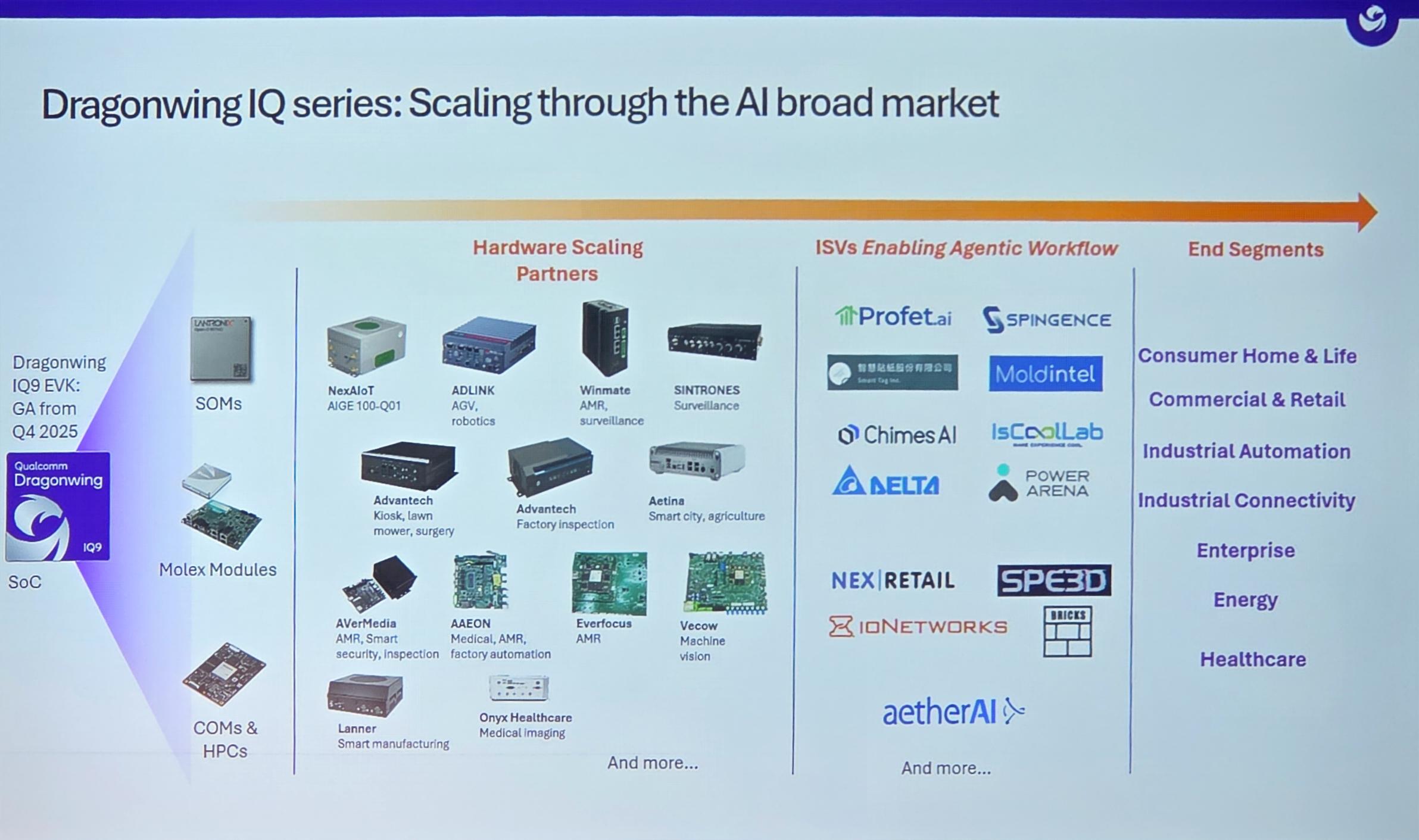
Dragonwing IQ series presented at Dragonwing IoT Day, Nuremberg, 2026
How Promwad applies these shifts in practice
What makes Qualcomm Dragonwing relevant for Promwad is not just access to modern silicon. As an official Qualcomm design partner, we often work with these platforms long before they reach the broader market. But the real value lies not in early access itself - it is in turning that silicon into a deployable embedded product for specific applications.
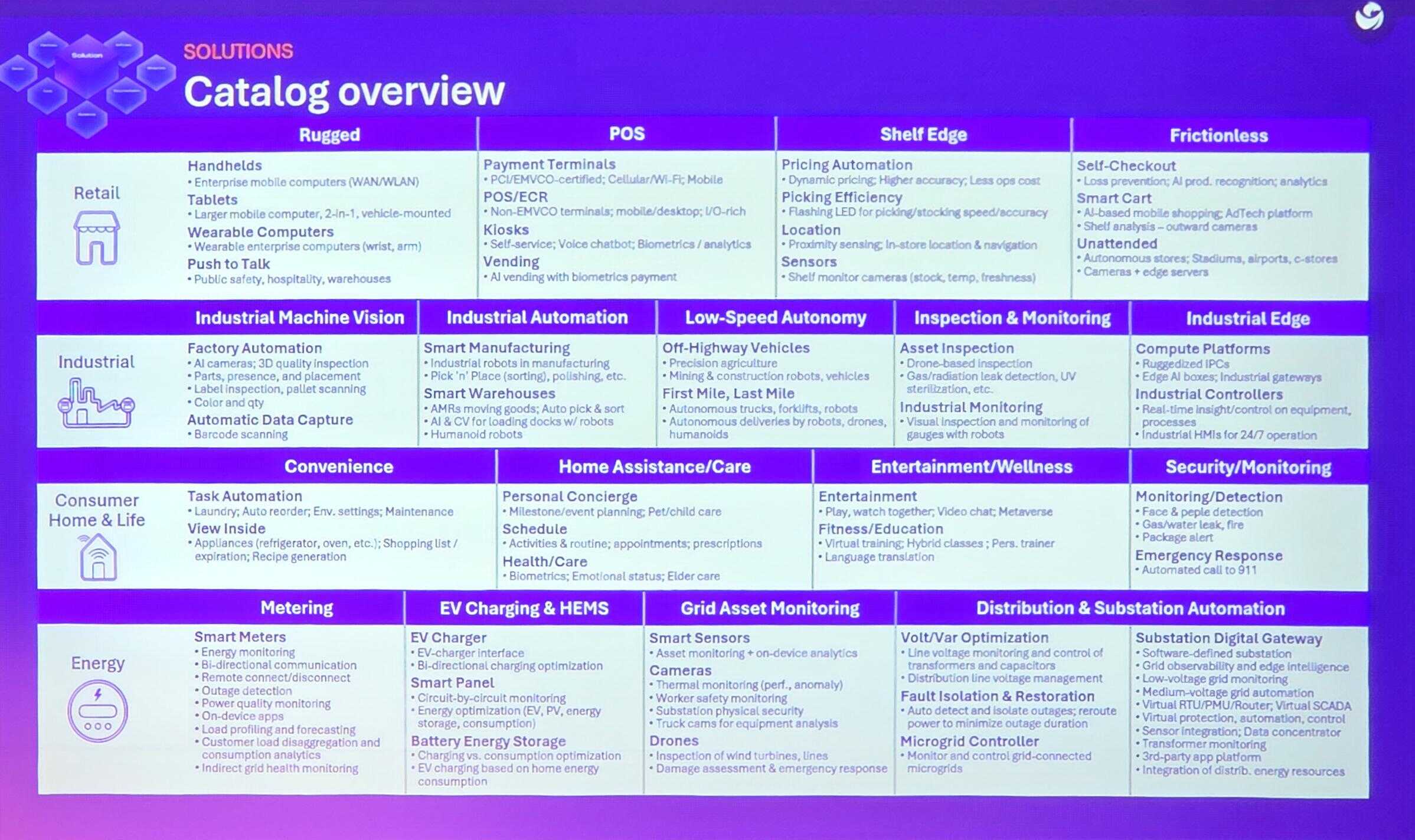
Egde AI applications presented at Dragonwing IoT Day, Nuremberg, 2026
That is why we see Qualcomm Dragonwing IoT Day 2026 not as a one-week news item, but as confirmation of a larger market direction. The industry is moving from Edge AI as a feature to Physical AI as a system architecture. And in that transition, the companies that win will be those that can integrate AI compute, deterministic control, connectivity, and embedded software into one robust product platform.
Qualcomm’s latest announcements make that direction clearer. Our job at Promwad is to help customers build on it.
If you are planning a new robotics platform, an industrial edge AI device, or another embedded product based on Qualcomm technologies, our engineering team can help you turn those capabilities into a robust production-ready system: from architecture design and BSP development to AI integration, connectivity, and prototyping.
Our Case Studies