


Centralized or Zonal? ECU Architecture Strategies for Software-Defined Vehicles in 2026

The vehicle as a distributed compute platform
Automotive electronics architecture has undergone a structural transformation over the past decade. Vehicles are no longer organized around isolated mechanical subsystems but around integrated compute platforms that orchestrate sensing, decision-making, and actuation. Modern cars contain large software stacks governing propulsion, safety, comfort, infotainment, and driver assistance. As feature complexity grows, the legacy model of distributing hundreds of small electronic control units throughout the vehicle introduces scaling limitations.
Traditional architectures accumulated controllers organically as functions were added. Wiring harnesses expanded, network dependencies multiplied, and software update coordination became increasingly difficult. Integration complexity rose alongside cybersecurity exposure and validation overhead. In 2026, these limitations are widely recognized as barriers to scalable vehicle platforms, particularly for manufacturers pursuing software-defined vehicle strategies.
The industry response centers around restructuring compute topology rather than merely improving component capability. Centralized and zonal architectures represent two complementary approaches aimed at simplifying integration, improving update agility, and enabling consistent compute abstraction across product lines.
Evolution from distributed ECUs to consolidated domains
The transition toward modern architectures began with domain-based consolidation. Instead of dedicated controllers for every function, manufacturers grouped related subsystems under domain controllers responsible for powertrain, chassis, body electronics, or infotainment. This reduced hardware fragmentation but maintained functional silos that constrained cross-domain coordination.
As automated driving features and over-the-air update requirements expanded, domain models exposed new limitations. Data exchange latency between domains, heterogeneous software stacks, and fragmented lifecycle management complicated system evolution. Consequently, the next architectural step shifted toward higher levels of compute consolidation.
Central compute models reduce the number of primary processing nodes and enable application-based execution environments rather than function-bound controllers. Zonal architectures restructure physical distribution, focusing on wiring efficiency and modular deployment. Both approaches reflect the industry’s move toward treating vehicles as integrated computing environments rather than collections of independent modules.
Central compute architecture fundamentals
Consolidation of processing resources
Centralized architectures concentrate compute power into a small number of high-performance processing units. These units execute multiple vehicle functions through virtualized software environments, often separating safety-critical tasks from user-facing workloads. This structure allows flexible software deployment, unified lifecycle management, and efficient resource utilization.
Shared processing enables coordinated data handling across perception, control, and user interfaces. Instead of transmitting signals through multiple intermediate controllers, sensor inputs can be evaluated directly by centralized logic layers that generate coherent responses.
Advantages for software lifecycle management
Central compute platforms simplify update orchestration and system maintenance. Unified compute environments support platform-wide software distribution, reducing fragmentation during feature deployment or patch management. Resource pooling also improves computational elasticity, enabling dynamic workload allocation aligned with driving scenarios or energy constraints.
Such architectures align naturally with software-defined vehicle strategies, where features evolve after production and differentiation occurs through digital capabilities rather than hardware variations.
Engineering constraints and risk factors
Centralization introduces design challenges requiring mitigation strategies. Fault tolerance becomes critical because failures may affect multiple functions simultaneously. Thermal dissipation and power distribution demand careful planning due to concentrated compute density. Security posture must account for elevated impact potential associated with centralized attack surfaces.
Addressing these challenges requires redundancy planning, hardware isolation mechanisms, and robust system monitoring frameworks embedded from early development stages.
In practice, redundancy alone does not guarantee continued vehicle control after a fault. For safety-critical powertrain functions, engineering teams increasingly distinguish between architectures that simply detect failures and those capable of maintaining controlled operation while the vehicle remains in motion. Designing fail-operational power electronics at system level requires coordinated fault handling across traction inverters, low-voltage power distribution, braking systems, and vehicle controllers rather than isolated component protection.
Zonal architecture fundamentals
Geographic distribution of control
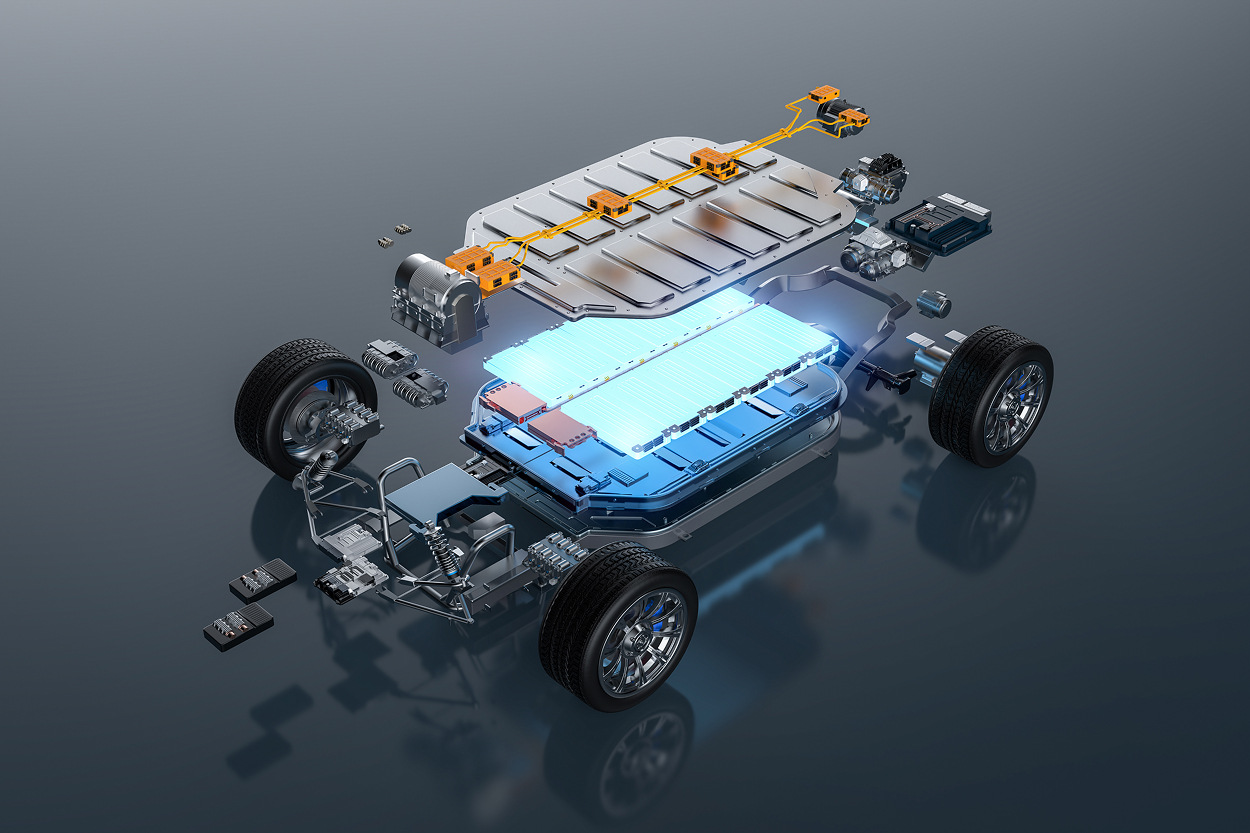
Zonal architectures organize controllers according to physical vehicle regions rather than functional domains. Each zone manages local sensors, actuators, and communication endpoints, connecting to backbone compute nodes through high-speed networks. This layout significantly reduces wiring complexity and improves modularity during assembly and servicing.
Local aggregation of signals enhances electrical efficiency and simplifies packaging, particularly important for electric vehicle platforms where weight and energy optimization directly influence range and cost.
Manufacturing and scalability advantages
Zonal modularity enables standardized subsystem integration across vehicle variants. Platform reuse improves production flexibility and reduces engineering duplication across product lines. Software allocation can shift between zones and central compute depending on configuration, supporting scalable architecture strategies aligned with market segmentation.
Complementary relationship with central compute
Zonal and central models are not mutually exclusive. Zonal systems excel at managing physical connectivity and distributed sensing, while centralized platforms handle computationally intensive decision-making. Integration of both provides balance between physical efficiency and logical coherence.
Software-defined vehicle enablement
Both architectures support the transition toward software-defined vehicles where functional differentiation depends on software deployment rather than hardware variation. SDV strategies require deterministic communication layers, virtualized execution environments, and update mechanisms capable of supporting lifecycle evolution.
OTA updates, feature provisioning, and adaptive system behavior rely on architectural consistency and predictable data exchange. Central and zonal topologies provide the infrastructure necessary for virtualization frameworks, workload isolation, and modular software lifecycle governance.
Automotive manufacturers pursuing SDV strategies increasingly align platform development around these principles to enable service-based revenue models and accelerated innovation cycles.
Networking, virtualization, and operating environments
Ethernet as backbone infrastructure
High-speed automotive Ethernet replaces legacy field buses for backbone communication, supporting large sensor data volumes and real-time control messaging. Time-sensitive networking capabilities ensure deterministic delivery essential for safety-critical coordination.
Hypervisor-based isolation
Virtualization technologies enable concurrent execution of heterogeneous workloads on shared processors. Safety-certified real-time tasks operate alongside infotainment or connectivity environments within isolated partitions. This structure supports mixed-criticality systems without compromising functional integrity.
The same isolation and resource-allocation decisions also affect connected cockpit services. For example, in-vehicle payments under centralised compute may cross the HMI partition, connectivity environment, secure hardware, and external payment backend while competing with infotainment and perception workloads. Without explicit CPU, memory-bandwidth, IPC, and network-latency budgets, a technically valid transaction can still time out or appear stalled at the screen.
Software frameworks and validation ecosystems
Standardized frameworks facilitate portability and certification compliance. Middleware abstraction and model-based engineering practices ensure predictable deployment across architectures. Hardware-in-the-loop and simulation-based validation strengthen development assurance while reducing physical prototyping cycles.
Power and thermal integration challenges
Compute consolidation elevates power distribution complexity. High-performance processing units draw significant current, requiring advanced management strategies to maintain system reliability. Zonal distribution assists voltage stability, while centralized nodes depend on sophisticated cooling integration.
Digital modeling and predictive simulation tools now form standard components of system design, enabling engineers to assess thermal behavior and energy flows before hardware realization.
Hybrid deployment as dominant industry trajectory
Most manufacturers pursue hybrid architectures combining centralized decision platforms with zonal signal aggregation. This approach balances resilience, performance, and scalability while accommodating transitional legacy integration.
Hybrid strategies enable gradual migration from distributed architectures without disruptive redesign cycles. They also provide flexibility for integrating evolving autonomy capabilities and connectivity requirements over successive platform generations.
In practice, architectural strategy only becomes meaningful once translated into engineering and deployment realities across vehicle platforms. Examining centralized vs zonal ECU architectures from an implementation perspective highlights how domain consolidation evolves toward centralized compute nodes, how zonal controllers reduce wiring and assembly complexity, and how technologies such as AUTOSAR Adaptive, Ethernet TSN, and hypervisor isolation enable scalable software-defined vehicle platforms. This complementary viewpoint grounds topology decisions in real-world integration tradeoffs faced by OEM and Tier-1 engineering teams.
Strategic implications for OEM ecosystems
Architectural transformation reshapes supplier relationships and engineering competencies. Software capability becomes a primary competitive differentiator, shifting investment priorities toward embedded platforms, cybersecurity, and lifecycle orchestration.
Digital service enablement and data-driven feature deployment create new monetization models, while collaboration models between manufacturers and suppliers increasingly revolve around software ecosystems rather than component procurement.
Safety, security, and lifecycle assurance
Centralized and zonal architectures must comply with rigorous safety and cybersecurity standards. Secure execution chains, encrypted communication, and anomaly detection frameworks mitigate operational risk. Integration of safety and security engineering into early design phases ensures sustainable compliance and resilience.
Intelligent monitoring systems enhance system robustness by detecting irregular behavior and isolating affected components without service disruption.
Long-term outlook for vehicle compute topology
Industry trends indicate convergence rather than competition between architectural models. Future vehicle platforms will combine centralized intelligence for complex perception and planning tasks with distributed zonal structures for efficient physical management.
Advancements in semiconductor integration and edge AI acceleration will continue blurring distinctions between layers, supporting adaptive compute allocation across vehicle contexts. Vehicles are evolving into persistent computing environments where software and connectivity define functional identity throughout operational life.
AI Overview: ECU Architecture Evolution
Centralized and zonal architectures restructure vehicle electronics to support scalable compute integration, efficient connectivity, and software-defined lifecycle management.
Key Applications: compute consolidation, zonal signal aggregation, OTA lifecycle enablement, ADAS processing integration, vehicle platform scalability
Benefits: reduced wiring complexity, improved update coordination, scalable compute utilization, modular manufacturing
Challenges: redundancy engineering, thermal constraints, cybersecurity assurance, software complexity
Outlook: Hybrid architectures blending centralized intelligence with zonal efficiency will define next-generation automotive platforms.
Related Terms: ECU consolidation, automotive Ethernet backbone, SDV infrastructure, domain controller evolution, hypervisor isolation, vehicle compute topology
Our Case Studies













FAQ
What differentiates zonal from centralized ECU architecture?
Why are OEMs transitioning away from distributed ECUs?
Do zonal architectures replace central compute?
How does Ethernet influence ECU architecture evolution?
Are centralized architectures riskier for safety?
How do these architectures support OTA updates?