Dashcam Product Development
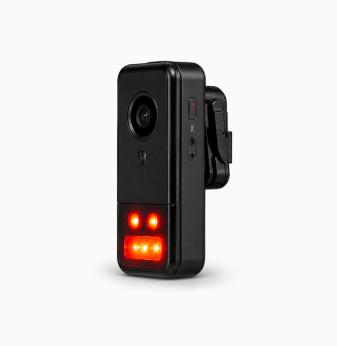
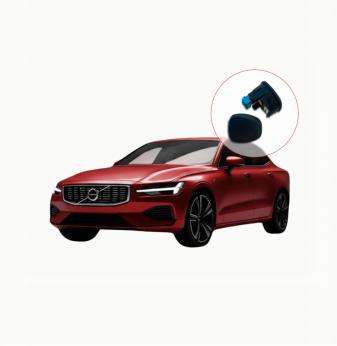
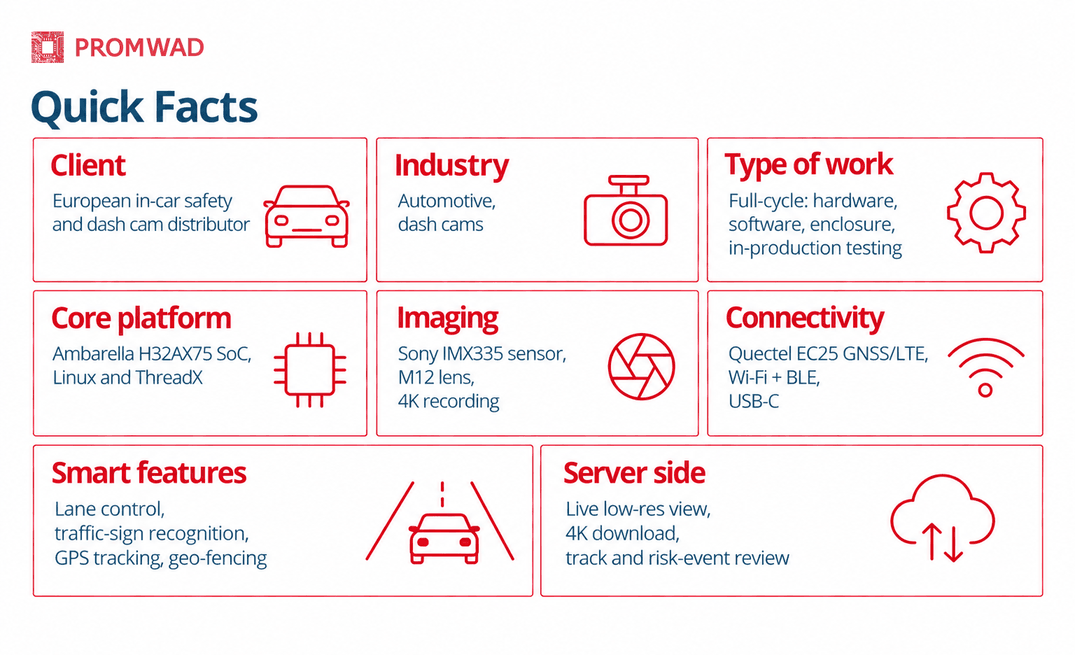
Project in a Nutshell: For a European distributor of in-car safety and dash cam solutions, Promwad ran the full development of a connected, screenless dash cam, hardware, software, enclosure, and in-production testing, on an Ambarella H32AX75 SoC with a Sony IMX335 sensor and a Quectel EC25 GNSS/LTE module. It streams to a smartphone over Wi-Fi and to a server side for 4K download, track review, and geo-fencing, with added GPS tracking, lane control, and traffic-sign recognition.
Client
A European distributor of in-car speed awareness, dash cam security, and audio solutions.
Challenge
The client turned to Promwad for the dash cam product development. The project included:
- specification development;
- hardware design and software development;
- enclosure design and prototyping;
- in-production software testing.
Solution
1. Hardware design
We have designed the dash cam hardware with the following features:
|
|
2. Software development
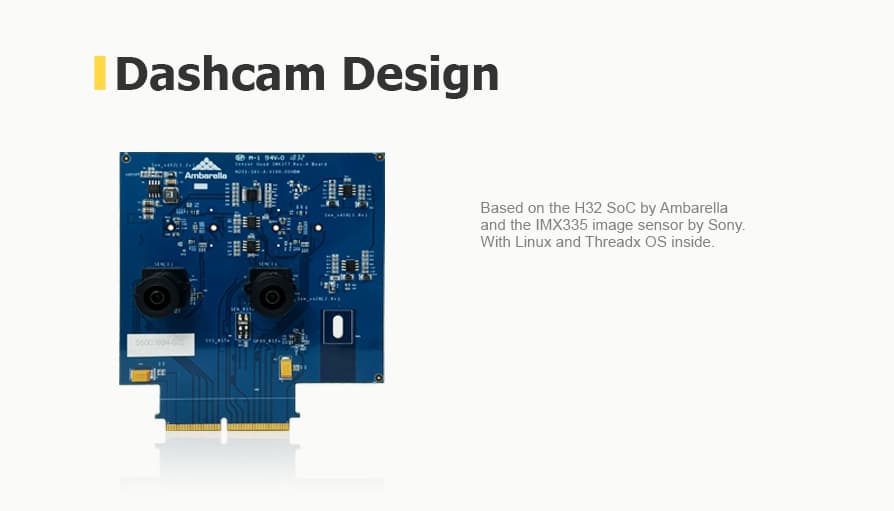
The chosen Ambarella hardware platform and its core runs on Linux and Threadx OS.
We designed drivers for peripheral devices and the device’s logic within the project.
The designed dash cam has no screen, so it works in conjunction with a smartphone. We made the data streaming from a device to a smartphone possible through Wi-Fi.
One more distinct feature of the dash cam is its capability to operate with a server side. In a user account on the server, it’s possible to watch low-resolution video or download 4k video. Besides, the user can browse their tracks, review risky situations, geo-fence exits, speeding, etc.
3. Enclosure design
We took into account every single client requirement during the enclosure design stage. The prototyping consisted of two iterations:
- We printed the prototype on a 3D printer, and checked its assemblability together with the PCBs; we also checked the operation of the antenna.
- We produced a sample of the enclosure by milling.
Outcome
- GPS tracking;
- server-side data storing;
- security system function;
- a warning system for emergencies;
- lane control feature;
- sign recognition;
- car registration stack integration.