Designing with NXP in Stockholm: Live On-Device Conversational Edge AI
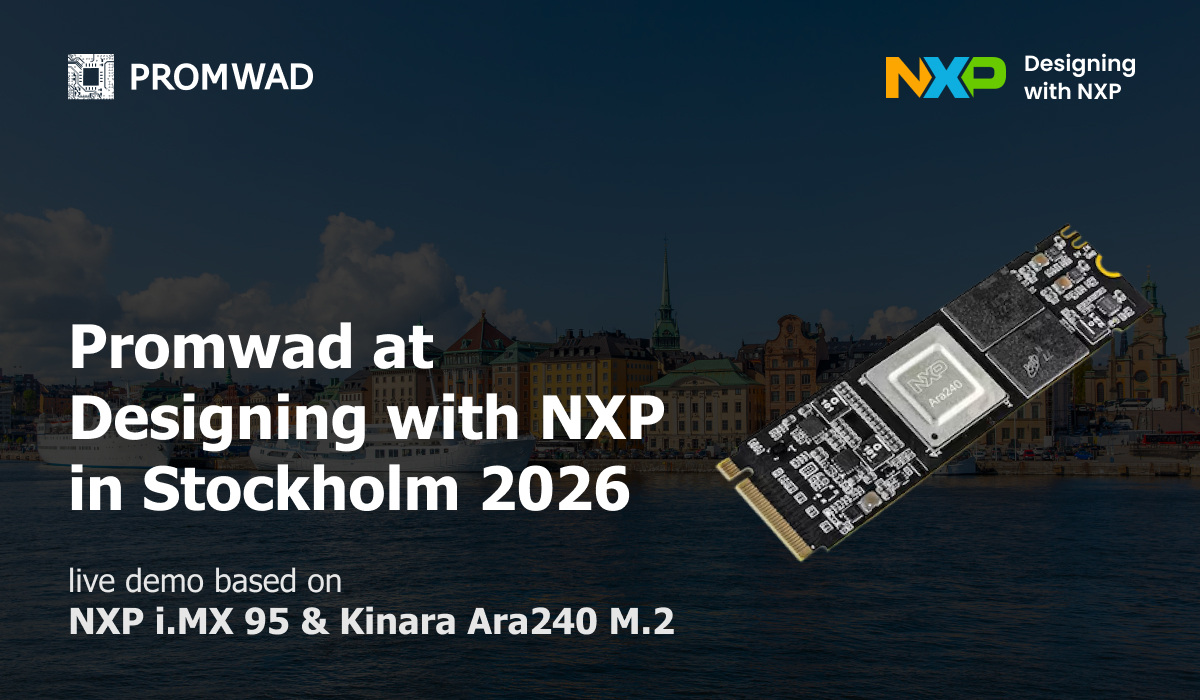
On October 1, 2026, Promwad joins Designing with NXP in Stockholm with a working edge AI demo built on the NXP i.MX 95 processor and the NXP Ara240 AI accelerator. A local LLM agent takes plain-language commands and controls real hardware. No cloud is involved at any point.
I will be on site with the hardware and available for one-on-one meetings throughout the day!
CTO at Promwad
An Engineer-First Day
Designing with NXP is a focused technical program for teams actively designing next-generation systems. The curriculum is built around real engineering use cases: system architecture decisions, design tradeoffs, and implementation techniques that shorten development cycles and reduce risk.
Participants work directly with NXP engineers and technology specialists, and leave with validated approaches, reference designs, and toolchain knowledge they can apply to a live project. That is exactly the room where an edge AI demo gets useful questions. So we are bringing hardware.
What We are Showing
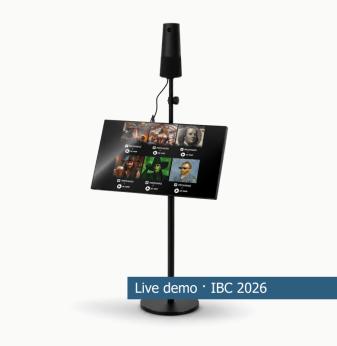
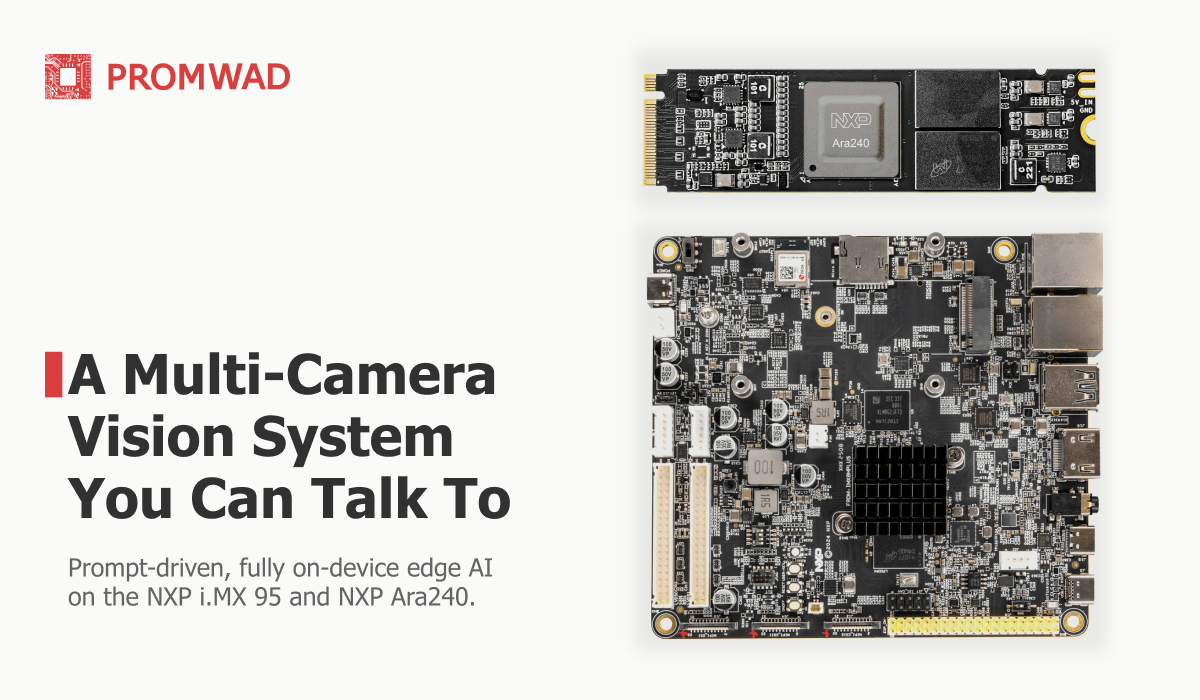
Our reference design pairs two NXP platforms with a discrete AI accelerator and runs multi-camera video analytics alongside a local large language model agent.
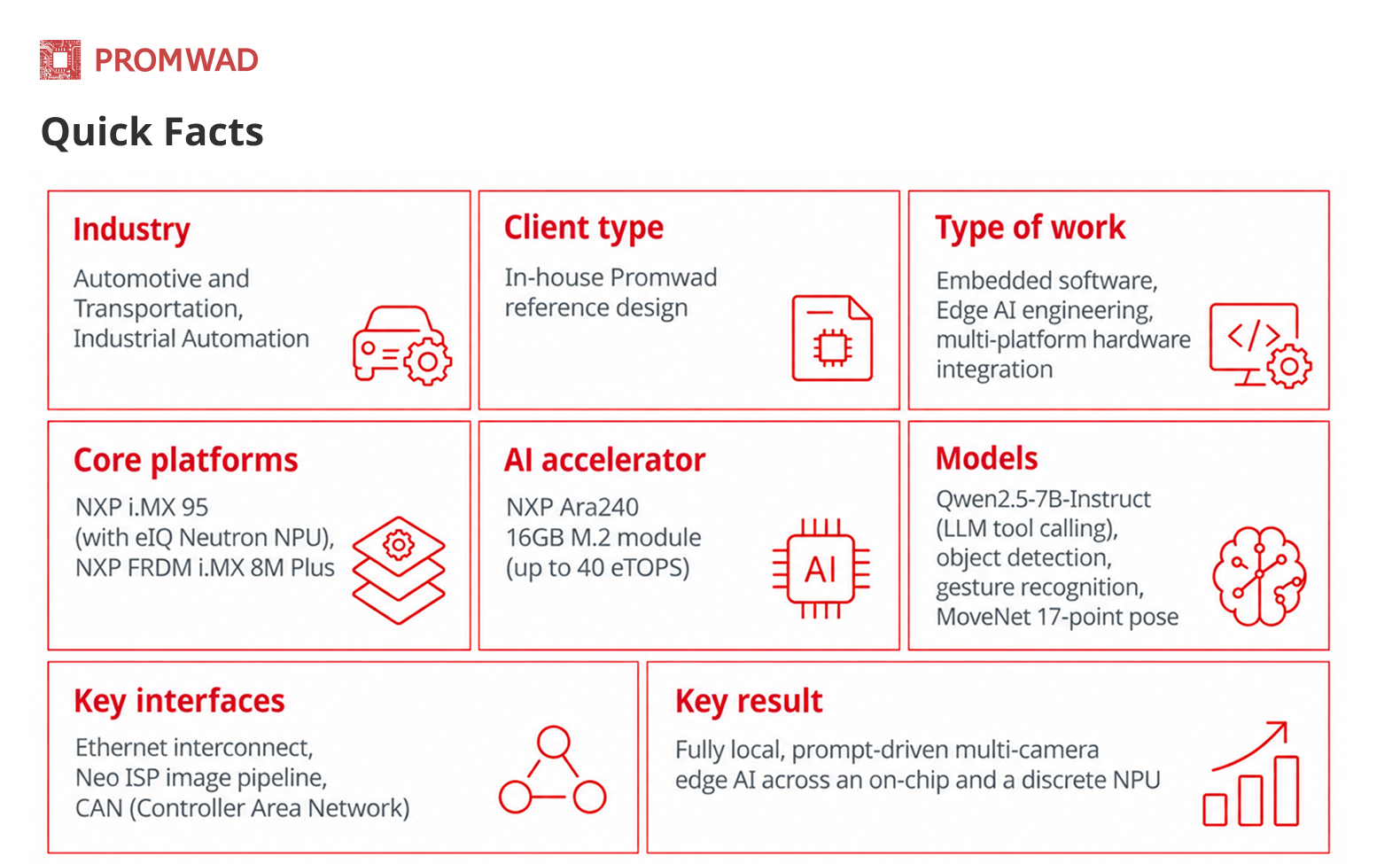
- NXP i.MX 95 (host processor). Real-time control and on-device vision on the eIQ Neutron NPU, handling four cameras for object detection, gesture recognition, and 17-point pose estimation.
- NXP FRDM i.MX 8M Plus (carrier board). Hosts the AI accelerator and links it to the i.MX 95 over Ethernet.
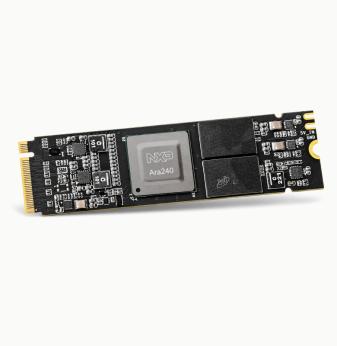
- NXP Ara240 (discrete NPU, up to 40 eTOPS). Runs the language agent, Qwen2.5-7B-Instruct, which turns natural-language requests into tool calls.
A single typed command reconfigures the live system:
- Show only camera 2 / Pull everyone who passed a camera in the last thirty minutes / Bind a gesture / Zoom a feed / Etc.
The agent reaches all the way into the image pipeline: through the Neo ISP on the i.MX 95, it can brighten or darken a feed, raise contrast, or switch it to black and white. Recognized events are mirrored on a CAN LED panel, the way an automotive ECU would consume them.
Everything runs on the device. There is no cloud and no external dependency.
The Engineering Problem Behind the Demo
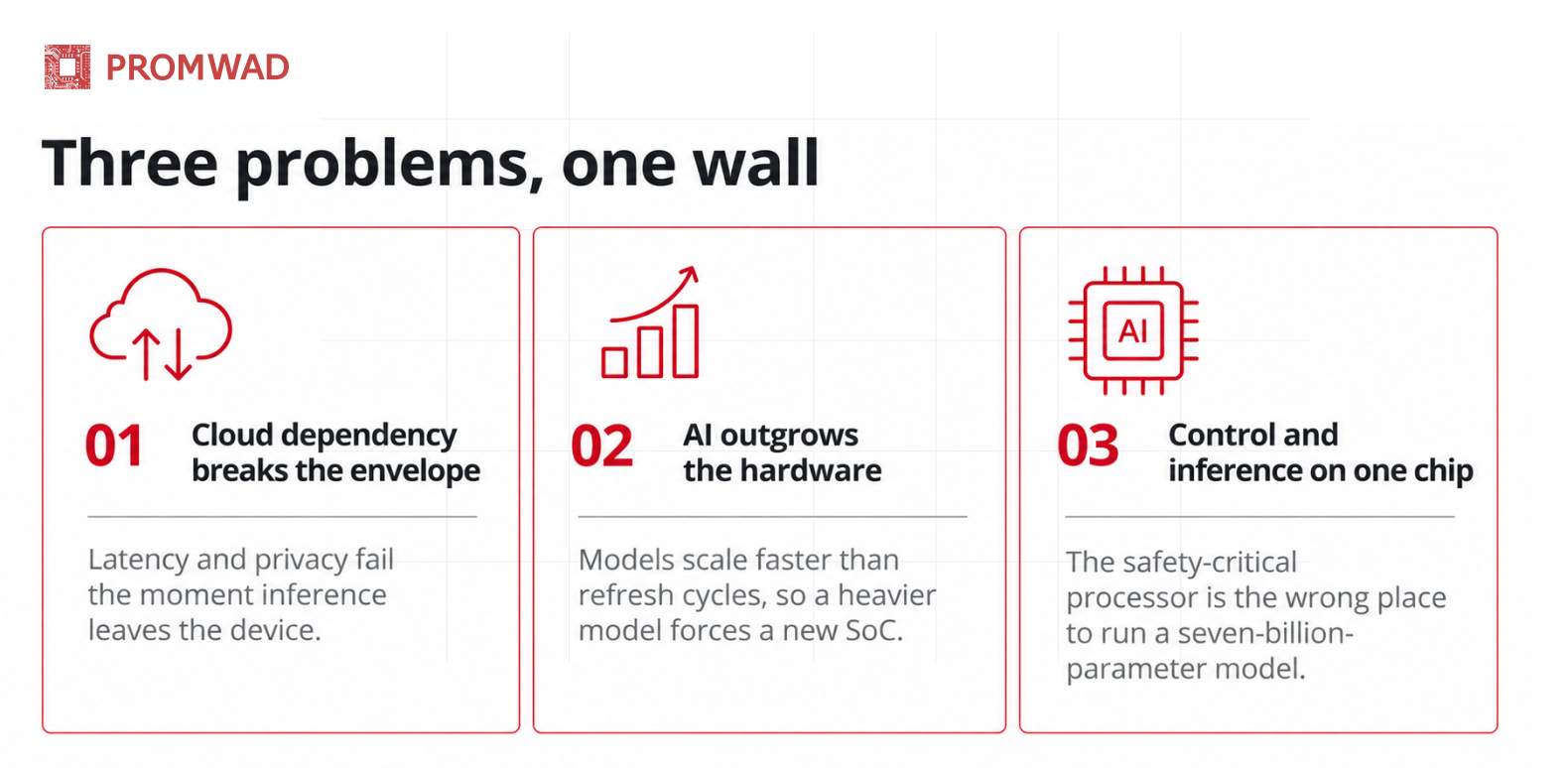
Teams building vision-enabled products hit the same three walls:
- Cloud dependency breaks the envelope. Latency and privacy guarantees fail the moment inference leaves the device.
- AI outgrows the hardware. Models scale faster than product refresh cycles, so a heavier model forces a new SoC.
- Control and inference collide on one chip. A safety-critical processor is the wrong place to run a seven-billion-parameter model.
Because the Ara240 is an M.2 M-Key module, the AI workload can grow without changing the base platform. That is the architectural point of the design, and the engineering economics follow from it: multi-camera streaming, detection, gesture recognition, prompt-driven analytics, and CAN integration all fit on two NXP development boards plus a single accelerator module.
Where It Applies
- Automotive and transportation. Gesture and natural-language control of multi-camera systems, with recognized events signaled to an ECU over CAN. Relevant to digital cockpit and IVI interaction, driver and cabin monitoring, and surround view.
- Industrial automation. Plain-language operator control of multi-camera setups where cloud connectivity is not guaranteed, including inspection and monitoring stations running several feeds at once.
For an OEM or Tier-1, the design shows how to add an edge AI interaction layer on top of an existing central display and voice assistant without giving up latency, privacy, or the current platform.
Why Teams Bring These Projects to Promwad
Promwad is a European R&D partner with 22+ years in electronics design services and more than 100 engineers in embedded systems development, hardware design, firmware, FPGA, AI/ML, and safety-critical design. We have built on NXP silicon since 2008, joined the NXP Partner Program in 2021, and hold NXP Early Access Partner status, which gives our teams early development kits, training, and direct technical support.
This demo has already been through the toughest audience there is: NXP engineers and their customers at NXP Tech Days Istanbul (2025) and Stuttgart (2026).
Book a meeting in Stockholm
If you are attending Designing with NXP on October 1, message me me on LinkedIn to reserve a slot. Bring your architecture questions: camera count, latency budget, NPU headroom, functional safety constraints, BOM targets. Thirty minutes with the hardware in front of you is worth a month of desk research.
Not traveling to Stockholm? Book an Expert Call with our engineers, or start here:
- See how the demo works: the full case study, including platform roles, models, and interfaces.
- Edge AI Engineering: our full range of edge AI services, from on-device vision and model porting to production-ready embedded systems.
Our Case Studies