VPN

Solutions

Secure VPN Solutions & Apps Development

Discover our cutting-edge VPN solutions designed for our clients to meet the growing need for secure and private online communication. We employ traffic obfuscation, dynamic IP allocation, AES-256 encryption, and failover mechanisms to ensure uninterrupted service.

At Promwad, we leverage the latest innovations in the industry and provide end-to-end cybersecurity software engineering services. Our team can build tailor-made solutions from scratch, integrate them into embedded systems, and modernise your legacy telecom software.

VPN Solutions We Develop for Our Clients

VPN solutions at Promwad include tools and services for establishing encrypted connections to private networks over the Internet. We can be your reliable technology partner, providing cybersecurity software engineering services to incorporate VPN features into your products and infrastructure.

Personal VPN

We develop custom solutions for personal software providers to enhance online privacy, bypass geo-restrictions, and encrypt internet traffic for individual users.

Corporate VPN

We create enterprise solutions to enable secure remote access for employees in a distributed network of offices and corporate VPN providers.

Integrated VPN features in telecom devices

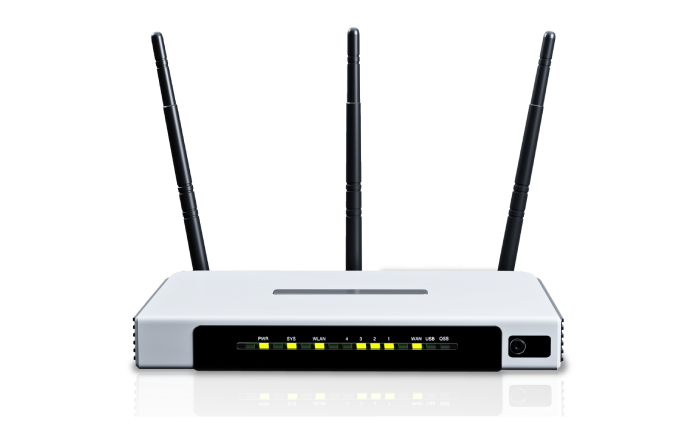
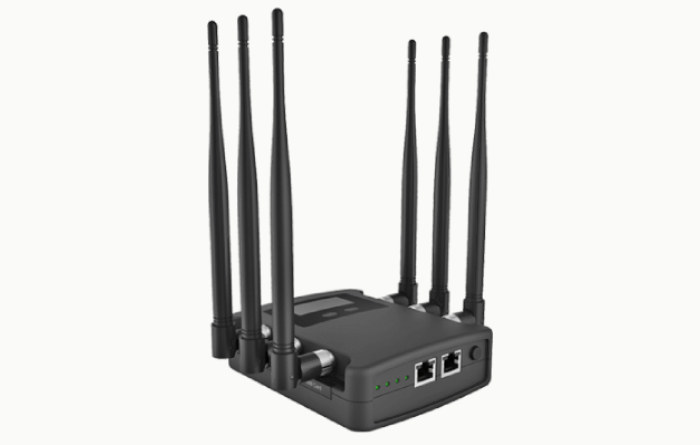
We add advanced VPN features to telecom equipment: network servers, routers, VPN gateways, network appliances, WiFi and IoT devices, and data storage.

For regulated markets, we build the VPN stack on FIPS 140-3-validated cryptography and align device security with the EU Cyber Resilience Act, ready for US federal and EU procurement.

Our VPN App Development Services

Architecture design


Our key principles when designing robust and scalable architectures include the following:

  • Selecting optimal components, protocols, and other technologies for secure software with its architecture that can easily accommodate future growth and increased user demands.
  • Considering multi-protocol support, tunnelling methods, and load-balancing techniques to achieve high availability and fault tolerance.
Client-side VPN app development


We develop user-friendly client VPN solutions with seamless integration across various platforms, including Linux, Windows, macOS, iOS, and Android, ensuring compatibility across multiple devices.

Our team implements tailor-made features such as automatic server selection, protocol switching, and intuitive settings to enhance the user experience.

Server-side app development


Our team specialises in server-side VPN app development, ensuring the smooth handling of incoming and outgoing traffic. We focus on:

  • Ensuring scalability and security for your VPN infrastructure along with the capability of handling high traffic volumes without compromising performance.
  • Optimising server performance by implementing efficient connection management techniques, load balancing strategies, and caching mechanisms.
  • Implementing logging and monitoring functionalities to track VPN server activities, identify potential issues, and maintain a secure and stable network environment.

VPN integration


Network integration services at Promwad include these processes:

  • Ensuring compatibility with network devices, such as routers, switches, and firewalls.
  • Configuring routing policies to facilitate seamless VPN connectivity within your network environment.
  • Addressing network-specific challenges, such as NAT traversal, routing issues, and port forwarding.
  • Supporting network integration systems and providing infrastructure upgrades to enhance scalability.

Encryption and VPN security compliance


What we do within our security software development services:

  • Implement industry-leading encryption algorithms, such as AES (Advanced Encryption Standard) and RSA (Rivest-Shamir-Adleman).
  • Employ secure key exchange protocols, advanced authentication mechanisms, and adherence to data protection and privacy regulations.
  • Conduct regular security assessments, vulnerability scanning, and penetration testing to mitigate risks.
  • Provide options such as network and application-level firewalls, intrusion detection and prevention systems, and secure VPN gateways.
  • Integrate FIPS 140-3-validated crypto modules into IPsec, IKEv2, and TLS stacks, with approved-mode configuration and a clearly defined cryptographic boundary.
  • Migrate VPN products from FIPS 140-2-era crypto to FIPS 140-3, and align device security with CRA: secure boot, signed updates, SBOM, and vulnerability handling. 

Quality assurance and testing


We offer comprehensive VPN QA services, applying best testing practices to resolve any issues or vulnerabilities of your solution. 

Our team employs manual and automated QA techniques and performs functional, compatibility, regression, penetration, and integration testing.

Deployment and configuration


We provide expert assistance in smooth VPN deployment and configuration. Our services include:

  • Proper installation and validation of configurations.
  • Guidance on optimal settings to ensure your product operates efficiently and securely.

Ongoing maintenance


We offer post-deployment support and assistance to keep your software up-to-date as your business requirements evolve. What we do:

  • Monitor performance, applying necessary updates and patches.
  • Proactively address emerging issues to ensure secure remote access and operations.

Our Case Studies on VPN Solutions

Design of Secure Mobile Network Router

We built a mobile network router that provides reliable connectivity and traffic monitoring even in areas with limited network coverage.

The device offers enhanced security features, including VPN, Tor, StingRay surveillance blocking, and IMEI changing, providing additional protection against cyber threats.

The small mobile router includes an LTE modem and a WiFi module operating in dual-band 2.4GHz/5GHz, a power supply and a rechargeable battery.


Read more


Design of Portable Router with 3 LTE/3G Modems

At Promwad, we have developed a turnkey device for Internet access via LTE or 3G from three mobile operators simultaneously.

The device boasts several key features:

  • Multi-channel LTE aggregation, allowing the simultaneous use of up to three LTE connections. 
  • Possibility to enhance security and encryption.
  • Equipped with a built-in battery, the device can operate independently without relying on a constant power source. Additionally, the battery can serve as a power bank, allowing users to charge their devices on the go.


Read more


Security Upgrade of x86 Router for Certification Compliance

Our team ensured the client's router was secure and compliant with regulatory requirements by thoroughly testing various protocols. In this project, we used OPNsense, a robust firewall and open-source routing platform based on FreeBSD.

We extended the x86 hardware features with OPNsense, providing enhanced security mechanisms:

  • VPN and Tor connectivity
  • Changing IMEI
  • A secure residential and data-server proxy
  • Hardware encryption acceleration

The result was a certified network router that met national security standards.


Read more


Our Tech Stack

Network protocols

OpenVPN, WireGuard, IP security (IPSec), layer 2 tunnelling protocol (L2TP)/IPSec

Obfuscation methods

Secure socket tunnelling, Shadowsocks, Obfsproxy

QoS techniques

Rate limiting, classification and marking, queuing and scheduling, shaping and policing

Hardware acceleration for encryption

Cryptographic coprocessors, FPGA to tailor specific encryption algorithms, hardware encryption blocks in ARM CPU

Encryption protocols and algorithms

Post-quantum encryption (ML-KEM, ML-DSA per NIST FIPS 203/204, hybrid schemes), SSL/TLS, IKEv2, symmetric encryption (AES), asymmetric encryption (RSA, ECC), hash algorithms (SHA2, SHA-3)

Compliance-ready cryptography

FIPS 140-3-validated crypto modules, approved-mode configuration, NIST-approved algorithms (AES-GCM, SHA-2/SHA-3, ECDSA, ECDH), engineering aligned with CRA and FIPS 140-3

We Work With

icon rocket

Startups

We assist startups in VPN app development by providing engineering teams to meet their challenges head-on, bridge resource gaps, and speed up business growth.

icon enterprises

Enterprises

We provide comprehensive cybersecurity software engineering services for VPN providers and telecom equipment companies of any size.

icon partners

Tech Partners

We can be your reliable technology partner, building solutions tailored to your objectives. Our team is ready to become an integral part of your project.

Why Promwad

Our clients include VPN providers and network equipment makers with their own security teams. They bring in Promwad when a VPN has to run inside a device, scale on servers, and meet regulatory requirements in several markets at once. 

End-to-end VPN ownership

One cross-functional team of 100+ engineers covers the full VPN stack: embedded firmware for routers and gateways, server-side infrastructure, cloud, and client apps for Linux, Windows, macOS, iOS, and Android.

Regulatory readiness

We engineer VPN products for your target markets: FIPS 140-3 for US federal and critical-infrastructure buyers, CRA-aligned security for the EU, and GDPR, CCPA, and CPRA data protection with data minimisation and consent management.

Post-quantum cryptography

ML-KEM and ML-DSA (NIST FIPS 203/204) in hybrid schemes with classical algorithms, backed by our FPGA team and partnership with Lattice, so long-lifecycle products stay secure as quantum threats mature.

Custom VPN features

Selective encryption, configurable IP masking, DNS leak protection, traffic obfuscation, failover, and censorship and geo-restriction bypass, tailored to your product and users.

Our Cooperation Models

Flexible approach to suit your current needs

Number one

Time & Material

Perfect for evolving projects. You control the budget and milestones, while we ensure transparency and fast team scaling.

Number Two

Dedicated Team

Your long-term engineering capacity — a self-managed, domain-focused team integrated into your workflow for steady, predictable delivery.

Number Three

Fixed Price

Ideal for well-defined tasks with clear outcomes. Scope, budget, and timelines are set upfront to guarantee predictable results.

Do you need a quote for your VPN app development?


Tell us about your project

We’ll review it carefully and get back to you with the best technical approach.

All information you share stays private and secure — NDA available upon request.

Prefer direct email?
Write to info@promwad.com

Secured call with our expert in 24h
Plug-in model for your full-cycle R&D
Secured call with our expert in 24h
22 years of engineering expertise
Secured call with our expert in 24h
500+ projects for OEMs in EU & US
Secured call with our expert in 24h
MVP in 8–10 weeks — predictable delivery
Secured call with our expert in 24h
Featured at IBC, Embedded World, MWC

FAQ

Can you prepare our VPN gateway for FIPS 140-3 and CRA requirements?


Yes, on the engineering side. We integrate FIPS 140-3-validated crypto modules into your VPN stack, configure approved mode, define the cryptographic boundary, and prepare the technical groundwork an accredited lab expects.

For the EU market, we add CRA-aligned device security: secure boot, signed updates, SBOM, and vulnerability handling. Testing is performed by NIST-accredited laboratories and validation certificates are issued by the CMVP; we make sure your product arrives ready.


How does post-quantum cryptography differ from traditional cryptographic algorithms, and why is it important for VPN security?


Post-quantum cryptography differs from traditional methods by utilising mathematical approaches resistant to attacks by quantum computers. It is critical for VPN security as quantum computers have the potential to break current encryption standards. Implementing post-quantum cryptography ensures long-term security and protection of sensitive data transmitted over VPN connections, safeguarding against future advancements in quantum computing technology.


What are the main challenges in implementing post-quantum cryptography, and how do you overcome them?


The main challenges involve transitioning from traditional cryptographic algorithms, compatibility with existing systems, and performance implications due to the computational complexity of post-quantum algorithms. We overcome these challenges through careful algorithm selection, integration of hybrid encryption schemes, performance optimisation techniques, and ongoing research and collaboration with experts in the field.


How do network integration services enable seamless implementation of VPN solutions with diverse network components and protocols?


Our network integration services involve analysing the existing network infrastructure, identifying compatibility issues, and implementing DPI network monitoring. To achieve seamless integration, our experts configure routers, firewalls, and other network devices to support VPN protocols, establish secure connections, and enable efficient traffic routing.

Our goal is to ensure that your new product seamlessly interacts with the network, enabling businesses to achieve uninterrupted communication while maintaining compatibility with various operating systems and platforms.


How do you handle user authentication and access control?


We handle them through robust mechanisms such as username/password authentication, multi-factor authentication, or integration with existing identity providers. Access control policies are enforced based on user roles, permissions, or specific criteria to ensure authorised access to resources.


What actions do you take to protect against DNS leaks and ensure the privacy of user data?

We implement DNS leak protection at the VPN client level, use secure DNS resolvers, and perform rigorous testing to identify and mitigate potential vulnerabilities. We also adhere to best practices in encryption and tunnelling protocols to safeguard data transmission.


How do you address compatibility issues with different operating systems and platforms in secure software engineering?


We employ comprehensive testing and adaptation methods to ensure seamless functionality across various environments. We consider platform-specific requirements, APIs, and networking frameworks to provide consistent performance and user experience across diverse systems.