Invisible UX: Haptics in Steering Wheels & Seats
When the Interface Is Tactile Instead of Visual
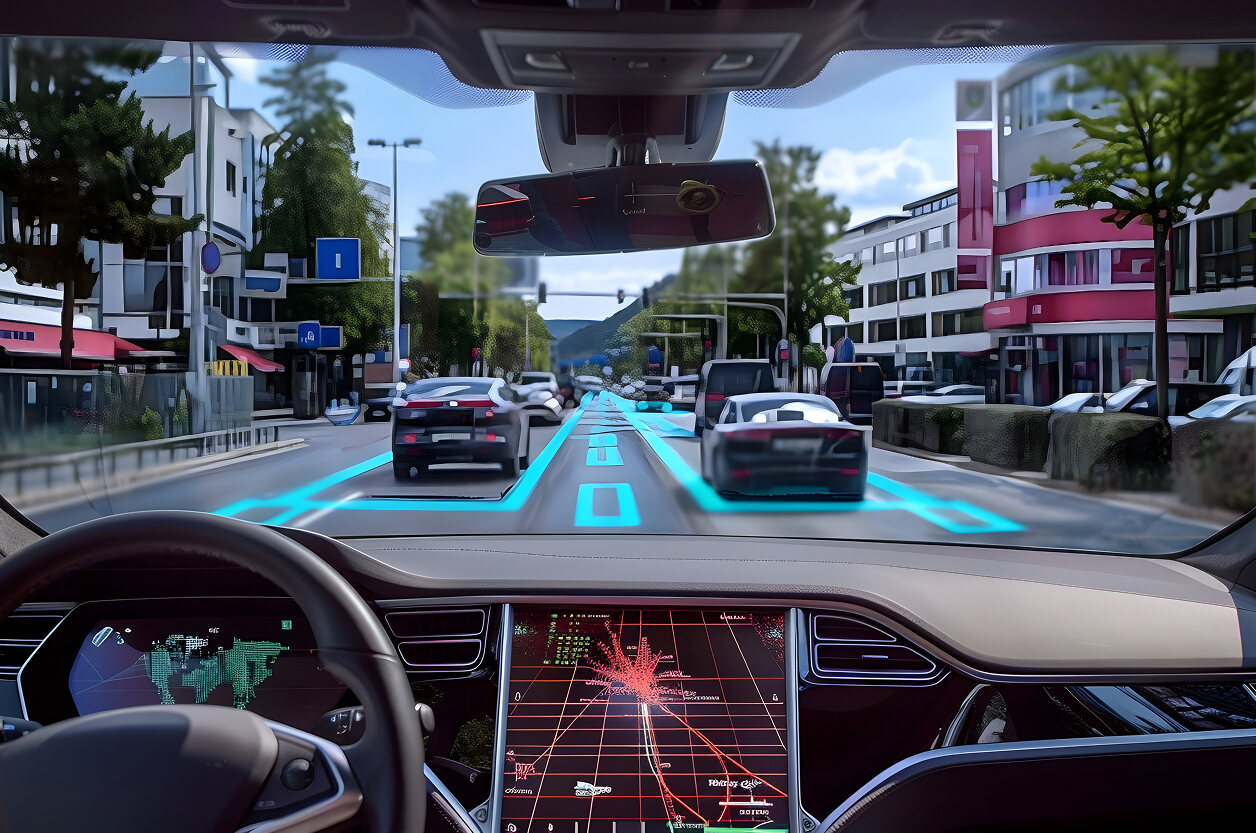
In modern vehicles, the dominant narrative around UX revolves around screens: digital clusters, center stacks, augmented reality head-up displays, ambient lighting systems. Yet the most effective interface layer in many safety scenarios is neither visual nor auditory. It is tactile.
Haptic feedback embedded in steering wheels and seats has evolved from a novelty feature into a structured communication channel between vehicle systems and the driver. In ADAS-equipped vehicles, tactile signals often represent the fastest, least cognitively demanding way to deliver directional or urgent warnings.
Unlike visual alerts, which require eye movement and processing, or audio alerts, which compete with infotainment soundscapes, haptics operate through mechanoreceptors in the skin and muscles. The steering wheel is already in constant contact with the driver. The seat provides stable body coupling. This physical continuity makes them ideal carriers of low-latency, spatially meaningful signals.
“Invisible UX” does not mean passive UX. It means interaction that occurs below the threshold of visual attention but above the threshold of perception.
ADAS as the Primary Driver for Automotive Haptics
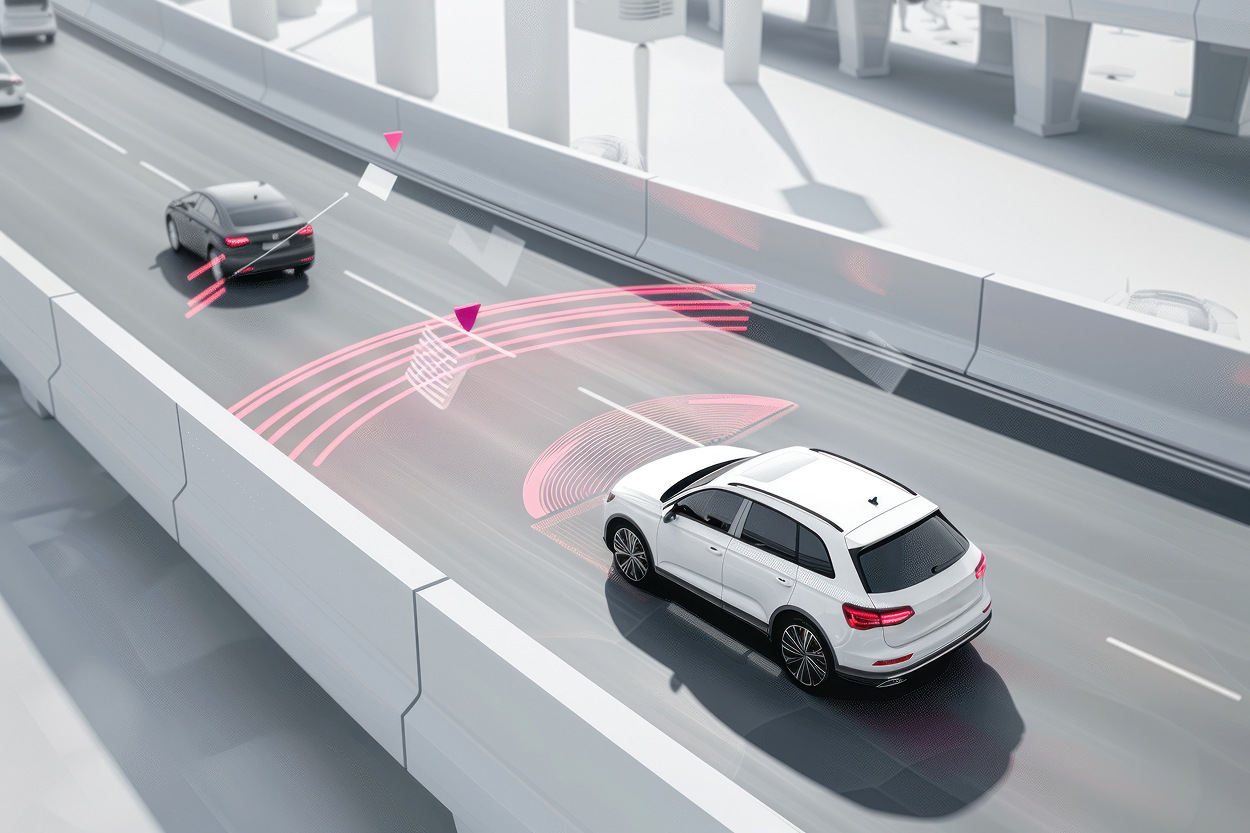
The widespread integration of Advanced Driver Assistance Systems has fundamentally changed the notification architecture inside vehicles. Systems such as Lane Departure Warning, Lane Keeping Assist, Blind Spot Detection, and Forward Collision Warning generate events that require rapid driver acknowledgment.
These warnings must satisfy several constraints simultaneously:
- Minimal distraction
- Immediate perception
- Clear directional association
- High reliability
For example, when a vehicle drifts toward the left lane boundary, a vibration localized on the left side of the steering rim or the left seat bolster creates a direct spatial mapping between event and sensation. The driver does not need to interpret a symbol or identify a tone.
From an engineering perspective, this mapping reduces cognitive load and shortens reaction time. From a UX perspective, it reinforces intuitive trust in driver assistance features.
However, this requires more than placing a vibration motor inside a steering wheel. It requires controlled waveform generation, precise timing, and robust integration with ADAS control units.
Actuator Technologies: Precision vs Cost vs Response Time
Automotive haptic systems typically rely on four main actuator classes: ERM (Eccentric Rotating Mass), LRA (Linear Resonant Actuator), voice-coil actuators, and piezoelectric elements. Each introduces different engineering trade-offs.
ERM motors are mechanically simple and cost-efficient. They operate by rotating an off-center mass to generate vibration. Their simplicity makes them attractive in cost-sensitive platforms. However, ERMs exhibit relatively slow spin-up and spin-down times, which limits their suitability for tightly constrained latency budgets. They also provide limited waveform flexibility.
LRAs operate through a resonant mass-spring system driven at a specific frequency. They offer faster response, improved energy efficiency, and more controllable amplitude characteristics. In steering wheel applications where sharp tactile pulses are required, LRAs are increasingly favored. Their drawback lies in the need for dedicated driver circuits and tighter frequency control.
Voice-coil actuators extend precision further. They allow fine control over displacement and force profile. This enables nuanced haptic signatures, particularly useful for differentiating between warning severities. Integration complexity and cost are higher, and mechanical coupling must be carefully engineered to avoid unwanted resonance.
Piezoelectric actuators provide extremely fast response and high-frequency output but are sensitive to mechanical mounting conditions and cost constraints. They are more common in high-end touch surfaces than in seat structures.
Selecting an actuator type is not only a cost decision; it directly affects latency envelope, waveform flexibility, and perceived premium quality.
Mechanical Integration: Where UX Meets Material Science
Steering wheels and seats are mechanically complex assemblies. Steering wheels must accommodate airbags, heating elements, wiring harnesses, and sometimes capacitive touch sensors. Available internal volume is limited, and the rotational interface requires reliable power transmission via slip rings or rotary couplers.
The placement of actuators within the steering rim influences perceived intensity and directionality. If positioned too centrally, vibrations may feel diffuse. If poorly damped, vibrations may resonate unpredictably through the steering structure.
Seat integration is even more variable. Seat foam acts as a damping medium. Occupant weight, posture, and clothing significantly affect tactile transmission. Engineers must account for:
- Foam density
- Frame stiffness
- Mounting rigidity
- Frequency attenuation
Finite element analysis and physical validation are required to ensure that a designed waveform at the actuator translates into a perceptible and distinct sensation at the driver’s body.
Invisible UX depends on invisible mechanical modeling.
Latency Modeling: From Sensor to Skin
In ADAS-triggered scenarios, tactile feedback must occur within a tightly defined latency budget. End-to-end delay includes:
- Sensor detection and perception processing
- ADAS ECU decision logic
- Vehicle network transmission
- Haptic controller processing
- Actuator activation delay
Human tactile perception is sensitive to delays that break the causal link between event and feedback. If a lane departure vibration occurs noticeably after steering deviation, the signal feels disconnected and reduces driver trust.
Engineering targets typically aim for sub-100 millisecond total delay from trigger to tactile output. ERM actuators may struggle to meet this envelope without predictive pre-activation strategies. LRA and voice-coil systems provide more predictable activation curves.
Latency is not only about speed. It is about consistency. Variability between 60 ms and 140 ms feels less reliable than a consistent 90 ms response.
Network Architecture: CAN, LIN, and Automotive Ethernet
Haptic modules typically communicate over CAN, CAN FD, or Automotive Ethernet depending on vehicle architecture. In legacy domain-based E/E architectures, steering wheel modules may connect via LIN for local control and CAN for system-level events.
As vehicles transition toward zonal architectures, haptic control units increasingly interface with centralized compute nodes via Ethernet backbones.
Synchronization between visual, auditory, and tactile outputs requires coordinated message timing across networks. A forward collision alert, for example, may simultaneously trigger:
- Instrument cluster warning
- Audible chime
- Steering wheel vibration
If network prioritization is misconfigured, haptic feedback may lag behind visual alerts, disrupting perceptual coherence.
Deterministic message delivery on in-vehicle networks therefore becomes a UX parameter, not just a communication parameter.
Functional Safety Implications
When haptic feedback forms part of a safety-related warning path, it enters the scope of ISO 26262 functional safety considerations. The critical questions include:
- Is the haptic output a primary or redundant warning channel?
- What diagnostic coverage exists for actuator failure?
- Is there fallback notification through visual or audible channels?
In many architectures, haptic alerts are considered supportive rather than sole warning mechanisms. Nonetheless, failure detection, actuator self-test routines, and monitoring feedback are often implemented.
The invisible nature of tactile signals does not exempt them from safety analysis. On the contrary, their role in driver response pathways requires structured validation.
Signal Encoding and Perceptual Design
Effective haptic UX depends on waveform design. Simply activating vibration is insufficient. Engineers and UX designers collaborate to define signal libraries that encode meaning through:
- Pulse duration
- Frequency modulation
- Amplitude ramping
- Spatial distribution
A short double pulse may indicate a minor informational cue. A sustained high-amplitude vibration may indicate urgency. Alternating left-right pulses can communicate directional correction.
Consistency across vehicle generations reinforces driver familiarity. Inconsistent encoding erodes trust and increases confusion.
Invisible UX must be perceptually legible.
Power, Thermal, and Durability Constraints
Automotive environments impose severe durability requirements. Actuators must operate across temperature ranges from -40°C to +85°C or higher. Steering wheels may experience constant micro-movements, shocks, and long-term fatigue cycles.
Seat haptics operate alongside heating and ventilation systems, sharing packaging space and power domains.
Continuous vibration patterns increase thermal load. Slip ring interfaces must sustain repeated current transfer without degradation.
Automotive-grade qualification is mandatory. Consumer haptic components rarely meet lifecycle requirements without adaptation.
Trade-Off Analysis: Value vs Complexity
The integration of steering wheel and seat haptics introduces additional hardware, software, and validation complexity. However, it also delivers measurable UX benefits:
- Reduced driver distraction
- Faster reaction to ADAS alerts
- Increased perceived refinement
- Differentiation in premium segments
In entry-level vehicles, cost pressure may restrict actuator sophistication. In higher segments, haptics become a brand-defining tactile signature.
The decision to implement invisible UX is strategic. It balances engineering investment against perceptual impact.
Future Trajectory: Software-Defined Haptics
As vehicles adopt centralized computing platforms and over-the-air update capabilities, haptic behavior becomes software-defined. Pattern libraries can evolve post-sale. Feedback intensity can adapt to driver profiles.
Emerging use cases include:
- Navigation guidance through directional pulses
- EV regenerative braking modulation feedback
- Autonomous mode transition cues
- Personalized tactile themes
Haptics are transitioning from fixed hardware feature to programmable UX layer.
Invisible UX is becoming adaptive UX.
AI Overview
Invisible UX in automotive systems leverages haptic feedback in steering wheels and seats to communicate ADAS warnings and system states through tactile perception. Engineering considerations include actuator selection (ERM, LRA, voice-coil, piezoelectric), latency budgeting, mechanical integration, network synchronization via CAN or Ethernet, and ISO 26262 safety implications. While haptics enhance driver awareness and reduce visual distraction, they introduce integration complexity, durability constraints, and waveform design challenges.
Our Case Studies