


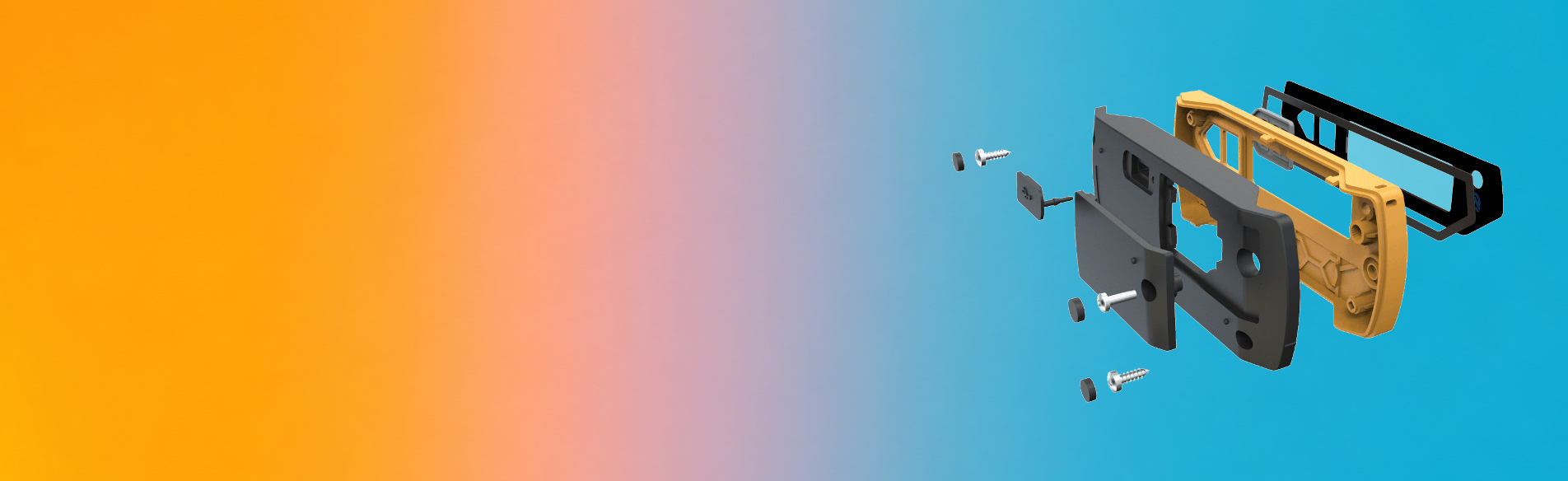
Mechanical
Design
Enclosure & Mechanical Design Services for Electronics
Your enclosure has 2 audiences: the people who use the device and the factory that builds it 100,000 times. A design that works for both reaches market faster and keeps its margin.
Promwad designs your enclosure for manufacture from day one: materials, seals, cooling and tolerances are settled before the first sample, ready for prototyping and mass production.

Why OEMs Bring Their Enclosures to Promwad
DFM from day one
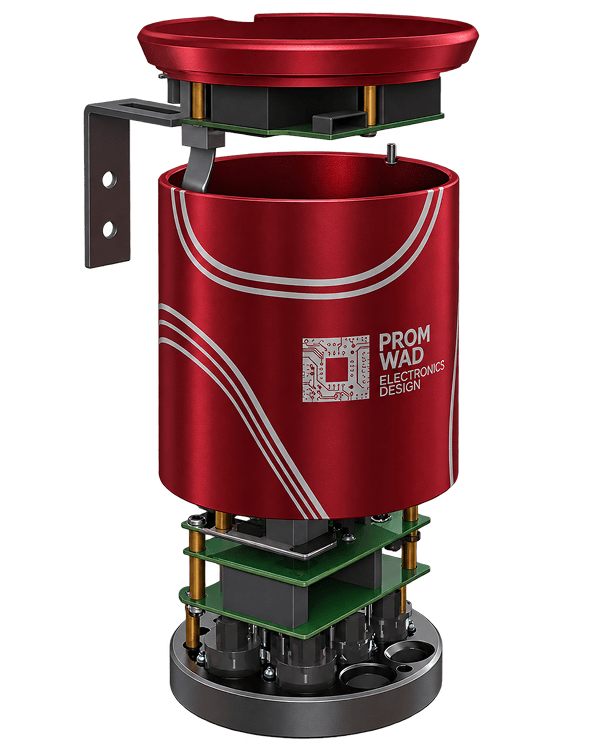
Mechanical and production engineers review draft angles, wall thickness, tolerances and assembly together, starting with the first model
Board and enclosure in one loop
Our PCB designers sit in the same team. So board layout and enclosure shape get designed together, around one thermal model
Simulation before tooling
Heat, mould filling and drop behaviour get checked in software before any metal is cut or plastic is moulded. Thermal analysis →
Production on your terms
Partner factories in Europe and Asia, or your own production site. We prepare the design for whichever you pick
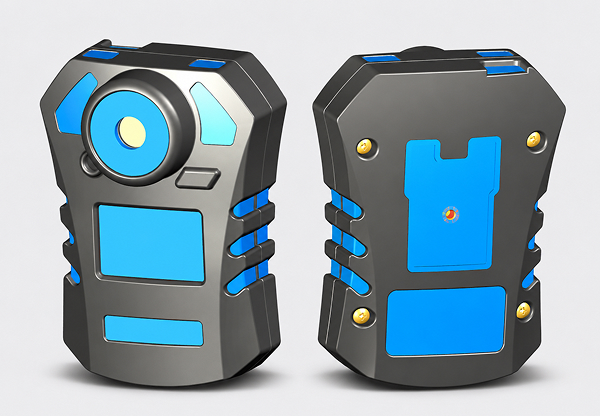
Products We’ve Designed


Tools, Materials and Standards
Design tools
SolidWorks and Creo for 3D CAD and drawings. Native files and STEP go to you at the end.
Manufacturing technologies we design for
- injection moulding, including 2K overmoulding
- sheet metal bending and stamping
- aluminium extrusion and CNC milling
- laser cutting
- 3D printing for prototypes
Plastic enclosures for electronics
ABS, ABS+PC, PC, PE, PVC, PMMA and polyamides for housings. TPU for seals, soft-touch grips and overmoulded buttons.
Plastic parts go into production through injection moulding and production launch →
Curious about recycled or lower-impact grades? We'll compare them with your baseline on look, cost and tooling.
Sheet metal and metal enclosures
Stainless steel, aluminium, aluminium-magnesium alloys and brass, finished by anodising or hand polishing.
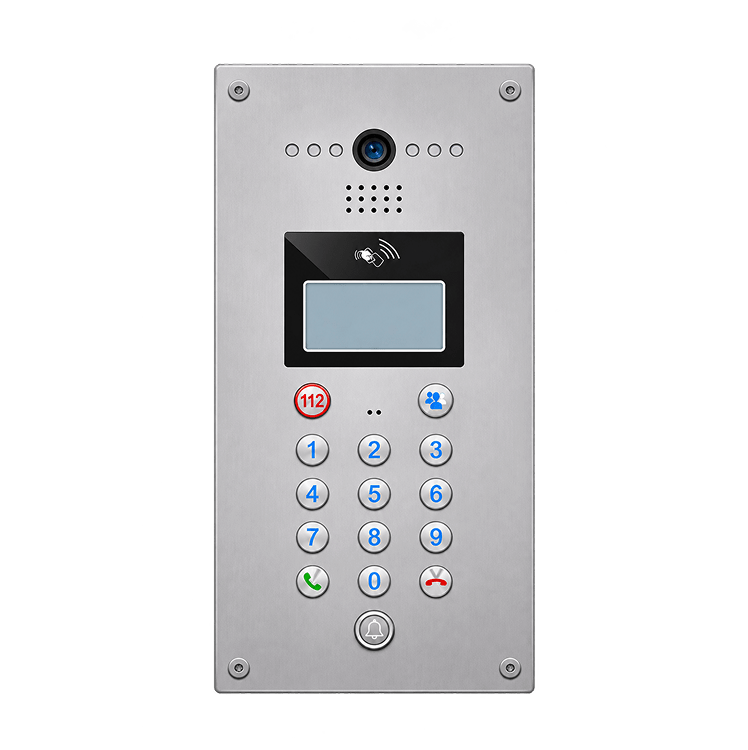
Metal is often the right call for lower volumes, for devices that need EMC shielding, or for vandal-resistant designs like our street intercom panel with its stainless steel front.
Glass, ceramics, rubber and wood
Quartz glass, ceramics, rubber, wood and wood-plastic composites, when the product calls for them.
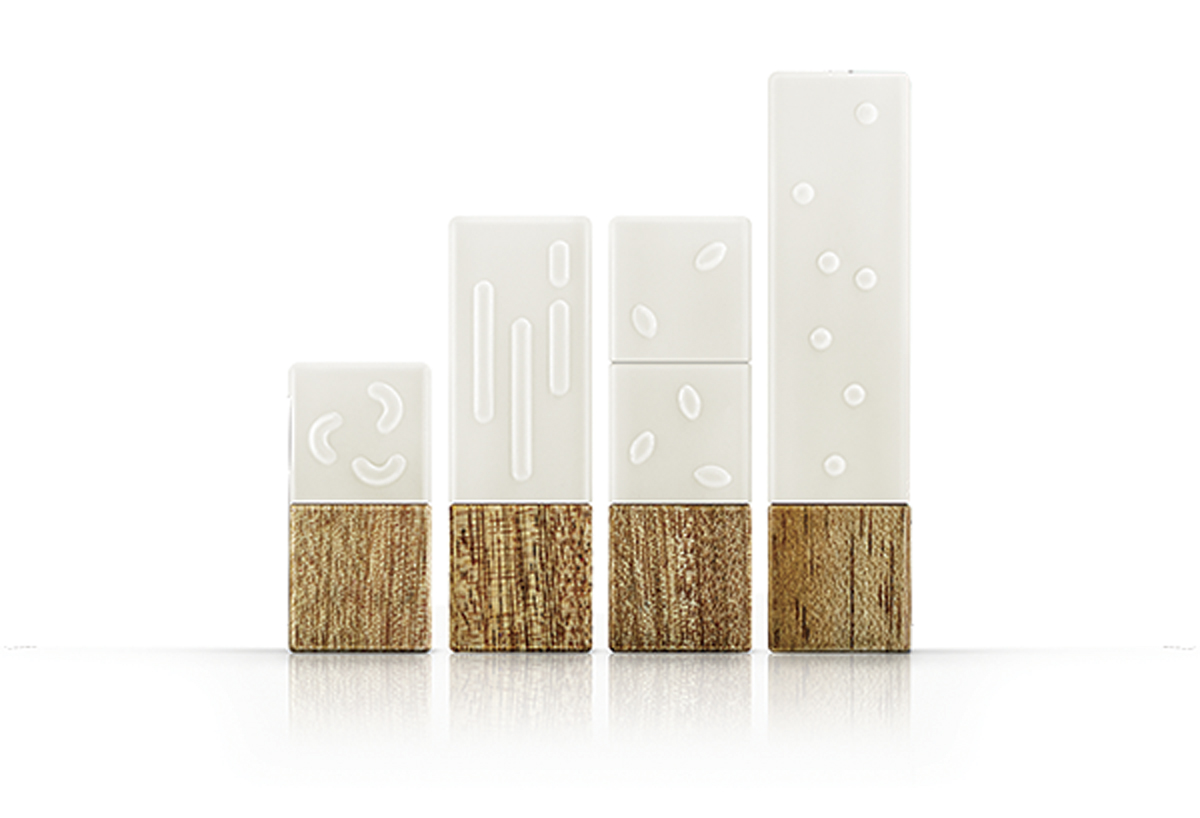
Qoobi One's outer shell, for example, is engraved quartz glass. And Lapka's iPhone sensors are 19 mm blocks of uncoated dark hardwood, picked after testing wood, plastic and steel samples.
Prototype materials and mixed-material joints
Some production plastics can't be used for prototypes. We pick the closest analogue and document what differs, so your test results still mean something.
Where plastic meets metal, glass or rubber, we design the joint for sealing and durability, then check it on the sample.
Colour you can reproduce anywhere
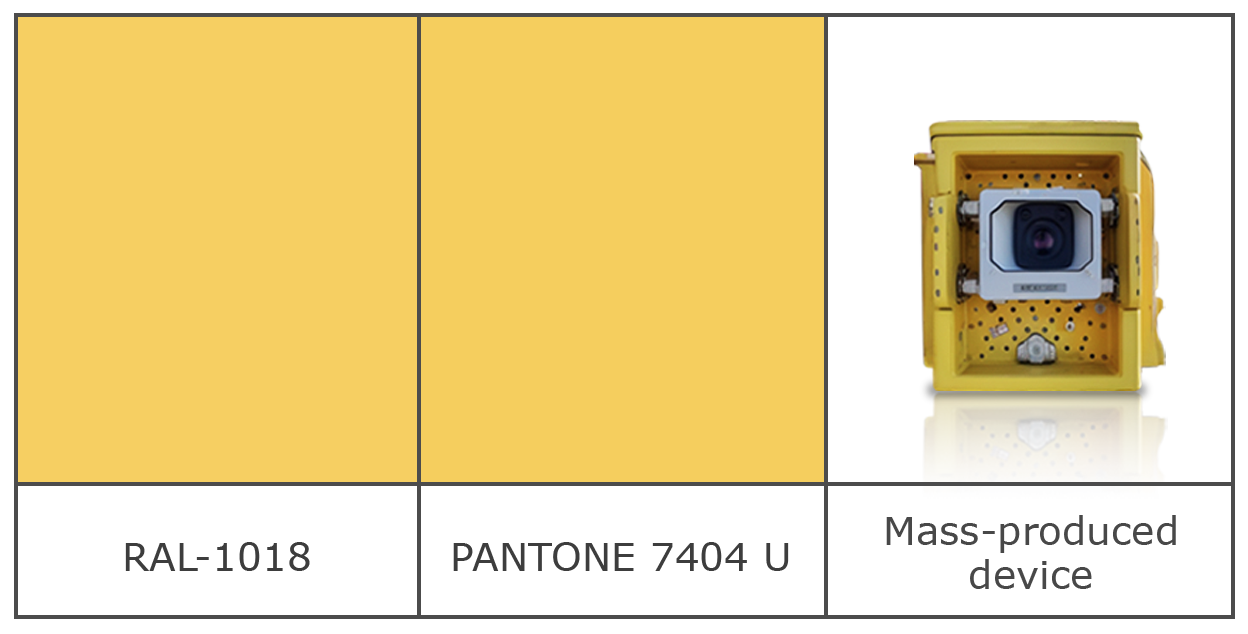
We specify colour by RAL (2,000+ shades) or Pantone (10,000+). So a factory in Asia gets the same grey you approved in Europe or America.
If 2 shades look the same, we'll pick the one with the cheaper pigment.
Surface finish
Finish decides how the device feels in the hand and how it ages. We pick it with you in the renders: matte or gloss, textured or polished, painted, anodised or left raw.
What drives the choice: where the device lives, who uses it, how often it's touched, what see-through parts reveal inside, and what sun and cleaning chemicals do to the surface.
Logos and markings go on the same way, by silkscreen, pad printing or engraving.
Sealing
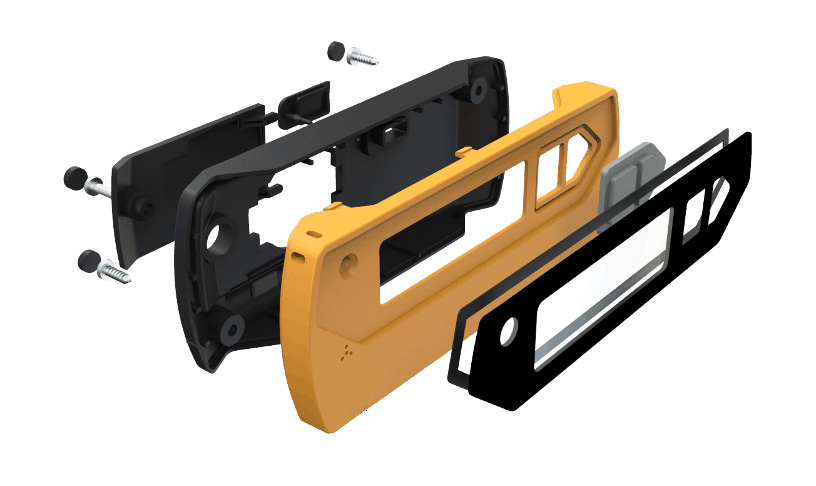
We design sealing into the enclosure: gasket grooves, overmoulded seals, sealed connectors and screw positions that press each joint evenly. Then partner labs test it against the IP rating in your spec.
Examples:
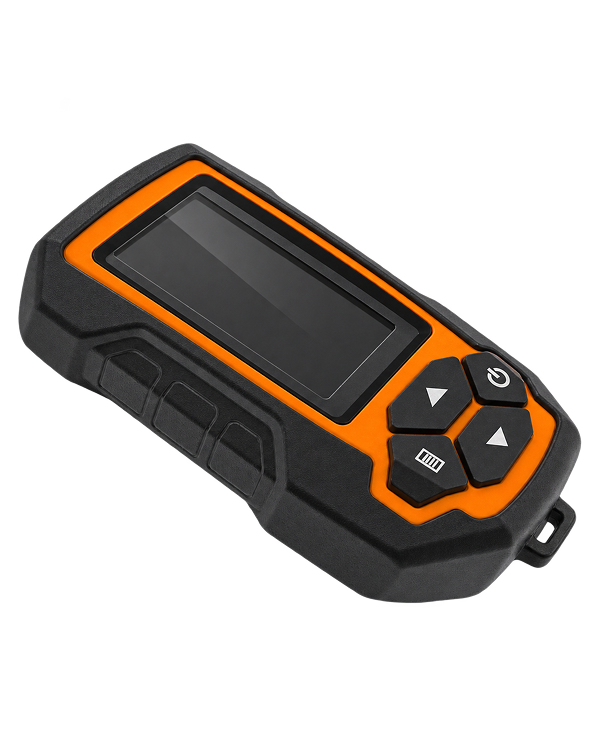
- Fish Finder echo sounder: one TPU overmould on the glass top forms the gasket, buttons and bumper. With a hermetic sensor connector, it's IP67.
- Lapka breathalyzer: a sealed polypropylene inner enclosure guides breath to the alcohol sensor and keeps vapour away from the electronics, so nothing corrodes.
Standards We Design To
IP rating
IK impact rating
flammability of plastics
environmental and shock
shock and vibration
rail
automotive
EMC
Tests run at our partner labs.
Engineering Problems We Solve

From CAD to Factory
One team carries your enclosure from the final CAD file to the first production run:
We freeze the design only after it passes a full DFM review and you approve the materials.
3D-printed or milled, in production or analogue material. PCB & enclosure prototyping →
Fit, assembly, sealing and heat checked on the samples; IP and drop tests at partner labs.
Mould design, trial shots and first parts in Europe, Asia or at your own site.
assembly
PCB assembly, enclosure and final test through our contract manufacturing →
Tight budget? Sometimes a ready-made enclosure from a partner supplier, customized with cut-outs, inserts and your colors, does the job for less. We'll tell you when that's the better route.
Enclosure Design Case Studies
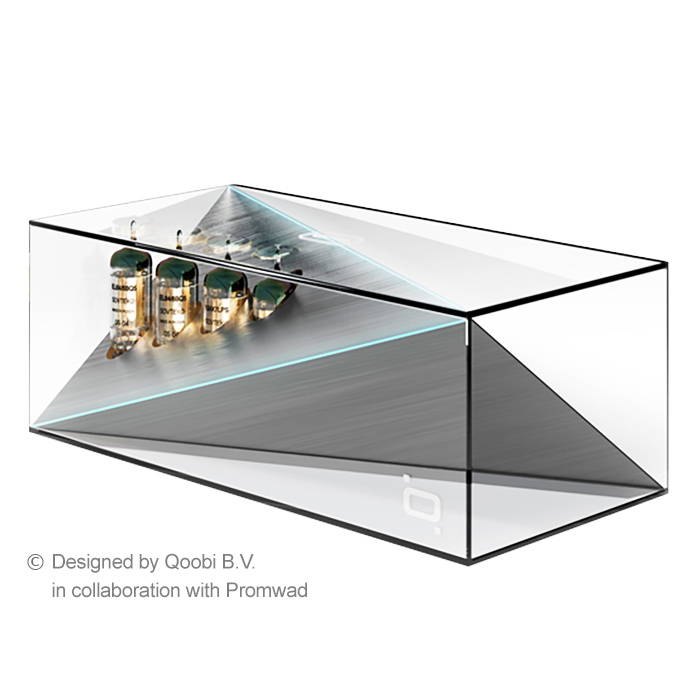
Qoobi One Wireless Tube Preamp
Task: Qoobi, a Dutch audio startup, had an enclosure concept and needed a mechanical design a factory could actually build.
What we did: Mechanical design based on the client’s concept: board mounts, light guides, stiffeners, an assembly scheme and a 3D model. Final build: a hand-polished anodized aluminum inner case that cools the tubes, inside an engraved quartz glass shell.
Result: the prototype debuted at CES, where Stevie Wonder stopped by the booth and praised the sound. Also, Qoobi One won the Gold A’ Design Award and a Red Dot Award, plus CES Innovation Awards recognition.
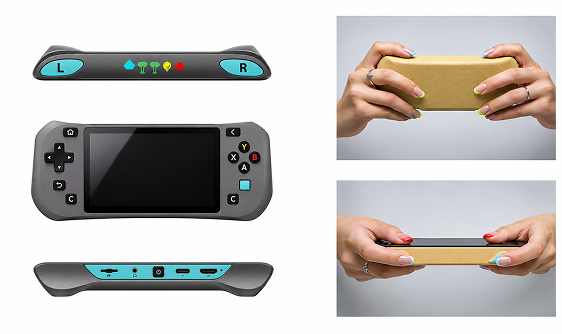
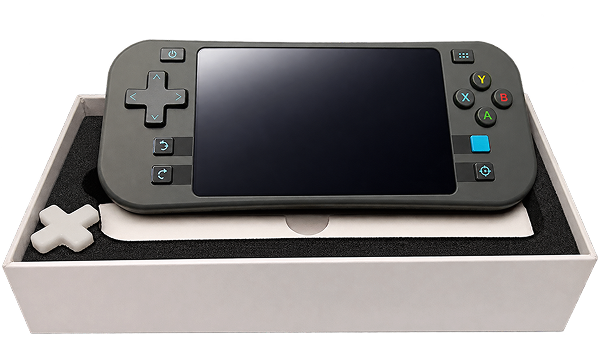
Game Console
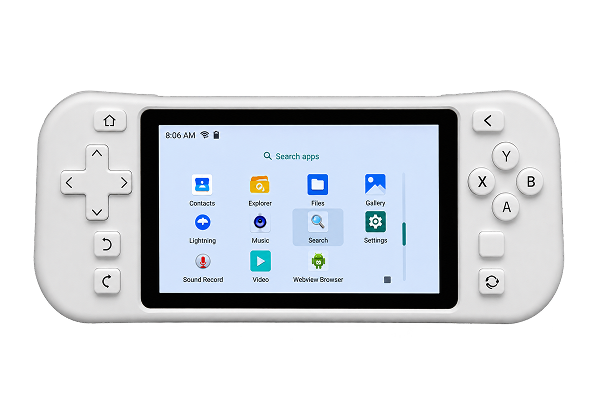
Task: A European game developer needed a pocket-sized console that feels right in both adult and child hands, with a simple, functional look.
What we did: We started with research into where rival consoles fail: cramped grips, slippery cases, dirt-catching shapes and fingerprints. Then came 18 sketches, foam and plasticine mock-ups, a 3D scan of the chosen model, and 3D-printed and milled samples to tune the grip and buttons.
Result: the client approved the final prototype and started mass production of a console with a grippy, fingerprint-resistant finish.
Fish Finder Echo Sounder
Task: A European maker of echo sounders for amateur and professional fishing needed a new-generation fish finder in its corporate style.
What we did: Sketches and renders around the display, buttons and sensor connector, with the PCB fit agreed with the client's team. FDM and milled samples checked assembly. Production uses 2K molding: a TPU overmold on the glass top forms the buttons, bumper and gasket.
Result: a rubberized IP67 enclosure with a hermetic sensor connector that survives a 1.5 m drop and works down to −30 °C. It became the base for a whole series of the client's fish finders.
How We Keep Enclosure Quality Under Control
The same five gates as our industrial design work, with the engineering checks at each one:
- G0 Requirements: IP and IK ratings, temperature range and applicable standards fixed in the spec.
- G1 Concept: material and process chosen together with the industrial design.
- G2 Design freeze: DFM review, tolerance stack-up, thermal and mold checks passed.
- G3 Prototype validation: fit and assembly on samples; IP, drop and environmental tests at partner labs.
- G4 Production release: tooling approved, first parts inspected against the golden sample.
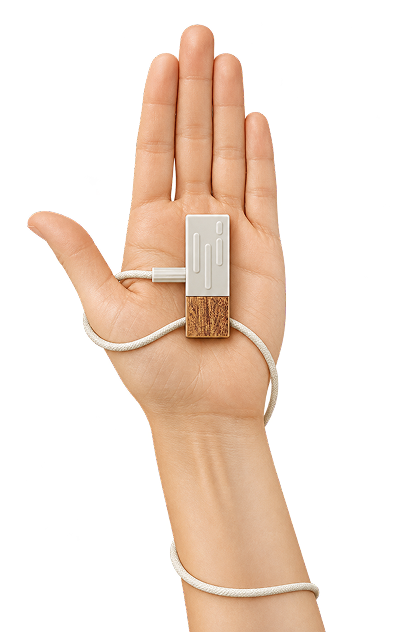

"We pay special attention to materials, suppliers and production specifics. So our clients get parts at the factory without molding defects like warping, sink marks or weld lines, and an enclosure that lasts."
— Ivan Kuten, Managing Director & Tech Advisor at Promwad GmbH
What You Receive (the IP Is Yours)
We work under ISO 9001 and sign an NDA before you share a single file.
Trusted by Product Companies and OEMs
"Promwad has done a great job of managing their part in our projects. Their main strength is that they offer all the skills we need, such as mechanical design, firmware and software development, PCB layout, and schematic generation"

"At Kino-mo, we have developed the 3D Holo-Display, an innovative product which makes it possible to project 3-D images in the air. We turned to Promwad with the task of manufacturing new samples"







Design Done? We'll Take It to Production
Send us your CAD, a drawing or just the board, and a senior mechanical engineer will map its route to production in Europe, Asia or on your own line.
FAQ: Enclosure and Mechanical Design
What's the difference between industrial design and mechanical design?
Plastic or metal: how do you choose an enclosure material?
Can you design an enclosure to IP67 or IP68?
Can prototypes be made from the production material?
Can you prepare the design for our own factory?
Can you review an enclosure designed by someone else?
Which CAD formats do we receive?