


Automotive DC Microgrids Inside Vehicles: Architecture, Control, and Failure Modes in Modern Powernets
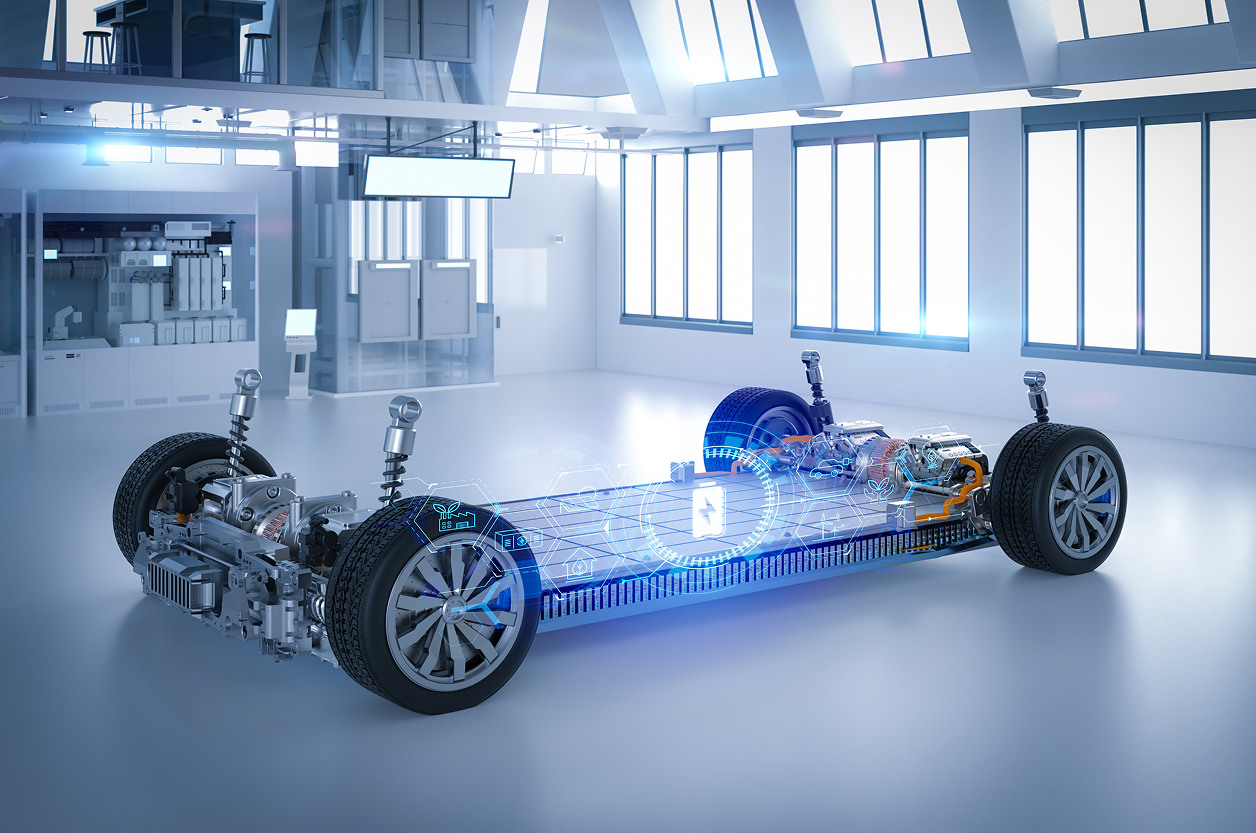
The traditional automotive powernet was never designed to be intelligent. It was designed to be sufficient. A 12V battery, an alternator or DC/DC source, a fuse box, and a wiring harness distributing energy to loads. The system was largely passive. Protection was mechanical or thermal. Power distribution followed fixed paths. Control logic existed separately in ECUs and had little awareness of how energy moved through the system.
That model is no longer viable. Modern vehicles combine electrification, software-defined functionality, centralized compute, and distributed sensing into a system where power distribution directly affects system behavior. The number of high-power loads is increasing. The dynamic nature of loads is increasing. The coupling between software and power availability is increasing. At the same time, zonal architectures are restructuring how functions are physically distributed inside the vehicle.
The result is a fundamental shift. The powernet is no longer passive infrastructure. It is becoming a distributed, actively managed DC system. Framing it as an automotive DC microgrid is not about terminology. It is about recognizing that power inside the vehicle is now routed, converted, monitored, and controlled in a way that resembles a managed DC network rather than a static harness.
Why the legacy 12V powernet stops working at scale
The limitations of the traditional 12V architecture emerge from basic electrical constraints. Power is the product of voltage and current. If voltage is fixed at 12V, increasing power demand requires increasing current. As vehicles integrate more electrified functions such as electric pumps, compressors, active suspension, advanced driver assistance systems, and high-performance compute, current levels rise significantly.
High current introduces several issues simultaneously. Wiring cross-sections must increase to handle current without overheating. This increases copper mass, cost, and packaging complexity. Voltage drops across the harness become more significant, especially for loads located far from the source. Thermal losses increase, reducing overall efficiency.
These issues are not isolated. They compound as the system scales. More loads increase peak demand. More peak demand increases current. Higher current increases losses and wiring complexity. At some point, the architecture becomes inefficient and difficult to manage.
This is why the transition to higher low-voltage rails, particularly 48V, is not optional. It is a direct response to scaling limits. By increasing voltage, the same power can be delivered with lower current, reducing losses and allowing more efficient distribution. However, introducing 48V does not simply replace 12V. It creates a multi-domain system that must be actively managed.
From single-rail distribution to multi-domain DC systems
Modern vehicles increasingly operate with multiple voltage domains. A high-voltage traction battery powers propulsion systems. A 48V domain supports higher-power auxiliary loads. A 12V domain remains for legacy components and low-power electronics.
The key architectural shift is not the presence of multiple voltages, but how they interact. In a traditional system, conversion between domains is centralized and limited. In a modern architecture, conversion is distributed. Local DC/DC converters are placed closer to loads or integrated into zonal controllers.
This changes the flow of energy inside the vehicle. Instead of a single source distributing power directly to all loads, energy is distributed at higher voltage and then converted locally. This reduces current in long harness segments and allows more flexible system design.
However, it also introduces new complexity. Each conversion stage has efficiency losses, thermal constraints, and dynamic behavior. The system must manage not only distribution but also conversion under varying load conditions.
Zonal architectures as the structural foundation
Zonal architectures are the key enabler of in-vehicle DC microgrid behavior. Instead of organizing ECUs by function, the vehicle is divided into physical zones. Each zone contains a controller responsible for communication, local processing, and increasingly, power distribution.
This creates natural aggregation points for energy. Instead of long harness runs from a central fuse box to every load, power is delivered to zones and distributed locally. This reduces wiring complexity and enables local decision-making.
The zone controller becomes a hybrid node. It is not only a communication gateway but also a power management unit. It must handle switching, protection, conversion, and monitoring for the loads within its zone.
This is where the microgrid analogy becomes accurate. Each zone behaves like a local distribution node in a DC network. It receives power, distributes it, converts it, and manages faults locally while coordinating with the rest of the system.
Power distribution becomes a control problem
In a passive system, power distribution is determined by wiring. In a distributed DC system, it is determined by control logic. This introduces a new class of engineering problems.
The system must decide how to allocate power under varying conditions. Loads have different priorities. Safety-critical systems must remain powered under all conditions. Comfort functions can be shed if necessary. Startup sequences must be coordinated to avoid inrush currents that destabilize the system.
This requires real-time knowledge of system state. Voltage levels, current flows, thermal conditions, and fault states must be monitored continuously. Decisions must be made based on this data, often within tight timing constraints.
The powernet becomes part of the control architecture. It is no longer independent from vehicle software. Instead, it must interact with higher-level control systems that manage vehicle behavior.
Fault isolation and selective protection
One of the most significant changes in a distributed DC architecture is how faults are handled. In a traditional system, protection is largely passive. A fuse opens when current exceeds a threshold, disconnecting the affected branch. This is simple but not selective.
In a microgrid-like architecture, faults must be managed more precisely. The system must identify the location and type of fault, isolate it without affecting unrelated branches, and maintain operation where possible.
This requires active protection elements such as electronic fuses and smart switches. These devices can detect overcurrent conditions, respond quickly, and provide diagnostic information. They can also support controlled behavior such as retrying a connection or limiting current instead of disconnecting completely.
Fault isolation becomes a system-level function. It must consider the impact of disconnection on overall vehicle behavior. Disconnecting a non-critical load is acceptable. Disconnecting a load that supports vehicle control may not be.
DC/DC conversion as a first-class architectural element
In a multi-domain system, DC/DC converters are no longer peripheral components. They are central to system behavior. They define how energy moves between voltage domains and how loads are supplied.
Converters must handle dynamic load changes, maintain efficiency across operating conditions, and manage thermal constraints. They must also respond to faults, either by isolating themselves or by supporting continued operation under degraded conditions.
Bidirectional converters introduce additional complexity. They allow energy to flow between domains in both directions, enabling functions such as load balancing and backup supply. However, they also require more complex control and protection strategies.
The placement of converters becomes a critical design decision. Centralized conversion simplifies control but increases distribution losses. Distributed conversion reduces losses but increases system complexity.
Observability: making power visible to software
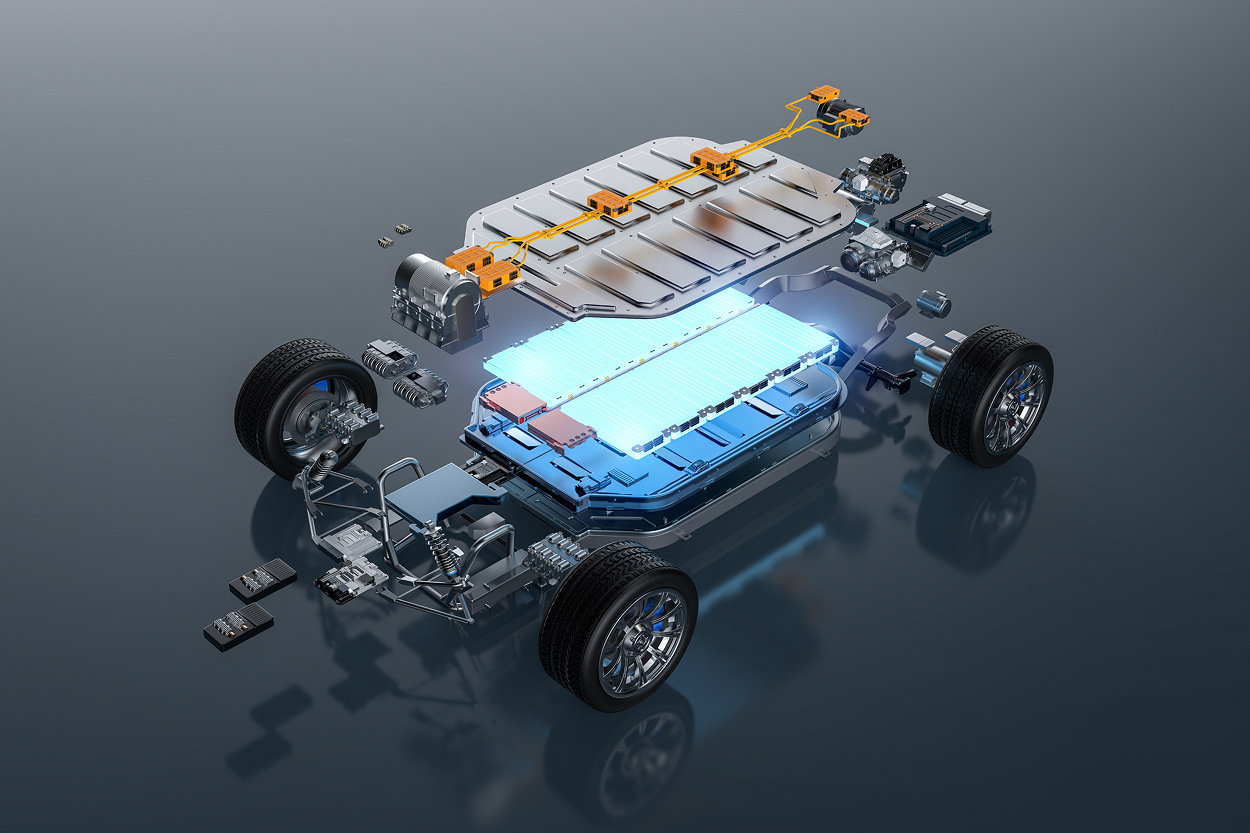
A defining characteristic of a DC microgrid is observability. The system must know what is happening at each node. In automotive systems, this means measuring current, voltage, temperature, and fault conditions at multiple points.
This data must be available to control systems in real time. It enables load prioritization, fault management, and optimization of power distribution. Without observability, the system cannot move beyond passive behavior.
This requires integration between power electronics and communication systems. Measurement data must be collected, processed, and transmitted efficiently. Latency and reliability become critical factors.
Observability also supports diagnostics and maintenance. Faults can be detected earlier and localized more precisely, reducing downtime and improving reliability.
Failure modes unique to distributed powernets
Distributed power architectures introduce new failure modes that do not exist in traditional systems. Interactions between converters, loads, and protection elements can create complex behaviors.
For example, simultaneous startup of multiple loads can create inrush currents that exceed local capacity. If not managed properly, this can trigger protection mechanisms and cause cascading failures.
Converter instability can propagate across domains, affecting voltage levels in multiple parts of the system. Faults in one zone can influence neighboring zones if isolation is not properly implemented.
Thermal constraints can lead to gradual degradation rather than immediate failure. Components operating near their limits may reduce performance or fail intermittently, complicating diagnosis.
These failure modes require system-level analysis. Traditional component-level validation is not sufficient.
Trade-offs in architecture design
The move toward distributed DC systems introduces trade-offs that must be carefully managed. Reducing wiring mass improves efficiency but increases reliance on local conversion and control. Increasing observability improves control but adds cost and complexity.
Smart protection improves fault handling but introduces additional components and software dependencies. Distributed conversion reduces losses but complicates thermal management and EMI design.
These trade-offs are not purely technical. They affect cost, packaging, and development timelines. Engineering teams must balance these factors based on vehicle requirements and target markets.
Where the architecture is going
The evolution toward automotive DC microgrids is incremental rather than abrupt. Vehicles are not transitioning to a fully distributed architecture in a single step. Instead, elements of the architecture are being introduced gradually.
48V systems are becoming more common for higher-power loads. Zonal architectures are reducing wiring complexity. Smart power distribution is replacing passive protection in critical areas. DC/DC conversion is becoming more distributed.
Over time, these elements will converge into a more cohesive system. The powernet will become increasingly software-defined, with greater flexibility and control.
Final assessment
Automotive DC microgrids are not a theoretical concept. They are an emerging reality driven by the scaling limits of traditional powernets and the requirements of modern vehicles.
The key shift is not the introduction of new components, but the change in how the system is viewed. Power distribution is no longer a passive function. It is an active, controlled system that interacts with vehicle software and behavior.
This requires new approaches to architecture, control, and validation. Systems must be designed to manage energy dynamically, handle faults intelligently, and operate reliably under a wide range of conditions.
For engineering teams, the challenge is to build systems that are both flexible and robust, balancing complexity with reliability. The concept of a DC microgrid provides a useful framework for understanding this challenge, even if the terminology continues to evolve.
Quick Overview
Automotive powernets are evolving into distributed DC systems with active control, multiple voltage domains, and intelligent power management.
Key Applications
48V systems, zonal architectures, distributed DC/DC conversion, smart power distribution.
Benefits
Reduced wiring, improved efficiency, better fault management.
Challenges
Increased complexity, integration effort, validation requirements.
Outlook
Vehicle powernets will become increasingly software-defined and microgrid-like as electrification and system complexity grow.
Related Terms
48V architecture, zonal E/E architecture, DC/DC converter, smart fuse, power distribution, software-defined vehicle, low-voltage powernet
Our Case Studies













FAQ
What is an automotive DC microgrid?
Why are vehicles moving to 48V architectures?
What role do zonal architectures play in power distribution?
Why are smart fuses replacing traditional fuses?
What is the main challenge of distributed powernets?
What should I store as evidence from automated runs?