Why Battery Thermal Management in EVs Is Now a Software-and-Hardware Problem
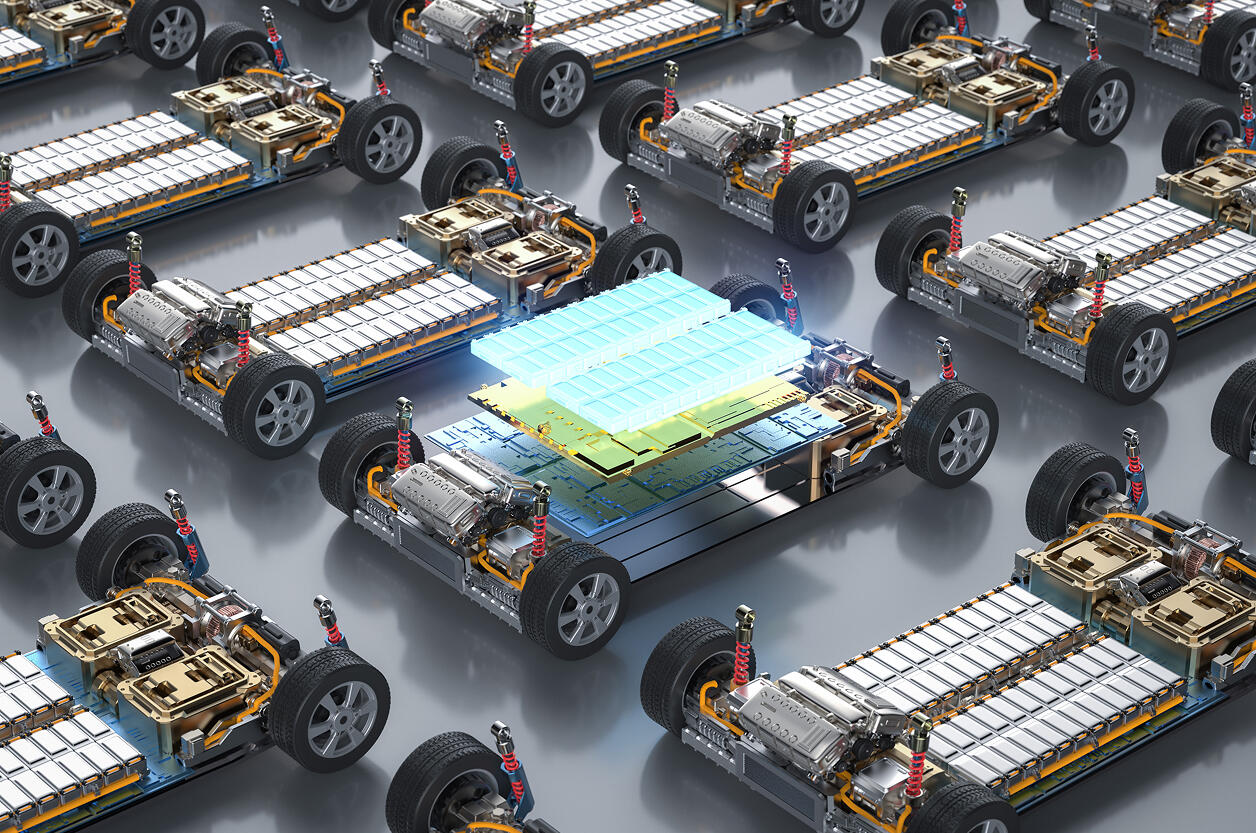
Battery thermal management used to be discussed mainly as a pack-cooling topic. That view is outdated. In 2026, battery thermal management in electric vehicles is no longer just about liquid loops, chillers, plates, pumps, or heat exchangers. It has become a combined software-and-hardware problem because battery temperature now directly affects fast charging, safety, usable power, battery ageing, winter performance, warranty exposure, and the real-world consistency of the driving experience. Once EV platforms moved toward higher energy density, faster charging, and broader climate use cases, thermal control stopped being a secondary subsystem. It became one of the core factors that determine whether the battery pack delivers the performance promised on paper.
This shift is visible in both the market and the engineering stack. One market estimate values the broader EV thermal management system market at just over $4 billion in 2026 and projects it above $7 billion by 2030. That kind of growth is not driven by mechanical cooling hardware alone. It reflects the fact that thermal management now touches software-defined charging behavior, control strategies, pack architecture, and cross-domain vehicle optimization. At the same time, NREL continues to position thermal management as a direct lever for battery performance, life, and efficiency, and describes advanced thermal management analysis and optimization as an active part of EV engineering. That is the clearest sign of the shift: the industry no longer treats temperature control as a support function. It treats it as a design discipline.
The reason is simple. A battery pack does not experience temperature as an isolated physical phenomenon. It experiences it through charging current, ambient conditions, cell chemistry, pack geometry, coolant flow, driver behavior, vehicle load, software limits, and thermal predictions. That means the hardware can no longer solve the problem on its own. A well-designed cooling loop still matters, but it is not enough if the BMS cannot interpret the thermal state correctly, if the control software cannot precondition the pack before charging, if the vehicle cannot manage temperature gradients between cells, or if the platform cannot adapt to ageing and changing real-world conditions. In practical terms, thermal management has become a system problem, and system problems always become software problems too.
Why battery thermal management matters more now than it did a few years ago
The first reason is fast charging. Higher charge rates create more heat, and more heat makes temperature control harder exactly when the driver expects the vehicle to charge quickly. This is one of the most important changes in EV engineering. Battery thermal management is no longer only about keeping the pack safe under heavy use. It is now tied directly to charging performance. If the pack is too cold, charging speed falls. If it is too hot, the system has to limit power to protect the cells. If temperature is uneven across the pack, performance, ageing, and balancing all become less predictable. That means charging speed is no longer defined only by charger power or battery chemistry. It is also defined by how well the thermal system and the control software work together.
The second reason is battery life. Heat accelerates degradation, and low temperatures reduce available power and usable energy. Those tradeoffs have been known for years, but they are much more commercially important now because the battery pack is both the most expensive component in the vehicle and one of the strongest determinants of resale value, warranty cost, and customer satisfaction. A thermal system that keeps the pack inside a safe range but allows persistent gradients, hot spots, or poor fast-charging control may still pass basic validation while quietly shortening pack life. In 2026, that is not a minor optimization issue. It is a business issue.
The third reason is safety. Thermal runaway remains one of the most serious failure modes in lithium-ion systems. But in real product development, safety is not only about catastrophic events. It is also about how early the system detects abnormal heating, how well it contains propagation risk, how intelligently it limits power, and how clearly it distinguishes between temporary heat stress and a developing fault condition. Those behaviors are driven by sensing, estimation, diagnostics, and control logic as much as by pack hardware.
The fourth reason is climate variability. EVs are expected to deliver a consistent experience in winter starts, summer traffic, repeated DC fast charging, steep-grade driving, fleet duty cycles, and mixed urban-highway usage. The hardware does not change between those conditions, but the thermal strategy must. That is another reason thermal management has become software-heavy. The same pack needs different behavior depending on whether it is about to fast-charge, sit idle, support high discharge, or protect itself from cold-weather performance loss.
Why this is no longer only a hardware problem
The hardware side is still fundamental. Cell selection, module spacing, cooling-plate design, refrigerant or coolant architecture, heat exchanger sizing, thermal interface materials, enclosure design, sensor placement, and mechanical repeatability all influence pack temperature behavior. A weak hardware design creates constraints that software cannot fully fix. If the pack has poor heat extraction paths, large thermal gradients, or insufficient cooling capacity, the controls team will spend the rest of the program trying to manage around structural limitations.
But the software side now decides how much value the hardware actually delivers. That is the part the industry increasingly recognizes. A battery thermal system is not just a cooling circuit. It is a controlled thermal environment. Someone has to decide when to preheat, when to cool aggressively, when to reduce charge power, when to derate discharge, how to estimate internal temperature, how to respond to ambient conditions, and how to balance thermal protection against charging speed and driver expectations. Those decisions live in software, even when the actuators are physical.
That is why thermal management is now deeply connected to the BMS. Renesas’ battery-management material reflects this clearly by emphasizing accurate temperature monitoring, diagnostics, balancing, and pre-validated firmware functions for safe battery operation. Promwad’s public BMS material points in the same direction. Its EV and BMS pages describe scalable BMS hardware and software for automotive battery packs, while its public 96-cell EV and HEV case study explicitly includes battery thermal management, cooling or heating control, diagnostics, and fault-handling logic. That is exactly the right level of interpretation for this article: thermal management is no longer just fluid routing. It is controlled behavior built into the battery system.
Software also matters because not every thermal state is directly measurable. A pack can have sensor readings, but it still needs estimation. Engineers want to know not only surface temperature, but also gradients, trends, stress accumulation, likely heat generation under the next operating mode, and the difference between what the pack feels now and what it will need five or ten minutes from now. Once the problem is predictive rather than reactive, it becomes a modeling problem. And modeling problems are solved in software.
Fast charging made thermal control predictive
One of the clearest signs that battery thermal management is now software-and-hardware combined is preconditioning. Preconditioning is a software decision that uses hardware resources. The vehicle decides that the pack should be heated or cooled before the charging event begins, not after the problem becomes visible at the charger. That single shift changes the logic of the whole thermal system. Instead of reacting to heat, the vehicle predicts the thermal need based on route, charger destination, ambient conditions, pack state, and expected charging power.
This is important because many EV thermal problems are not best solved in the moment they occur. If a cold battery arrives at a high-power charger, charging performance is already compromised before the charger is plugged in. If a hot battery reaches a charging stop after aggressive driving, cooling capacity may already be under pressure. Predictive thermal management tries to move the system into the right operating window in advance. That is not a pure cooling problem. It is a control-strategy problem supported by thermal hardware.
This is also where software quality becomes visible to the end user. Drivers may never see the cooling plate design, but they will absolutely notice whether the vehicle charges slowly in winter, derates too early after repeated fast charging, or delivers inconsistent range in mixed conditions. In other words, thermal software has become part of the customer experience.
Pack design still matters, but software now determines how well it scales
As EV packs get larger, more energy-dense, and more tightly integrated into vehicle platforms, pack-level thermal design becomes more constrained. Designers are balancing crash safety, cost, manufacturability, structural integration, weight, sealing, and packaging. That makes it harder to treat thermal design as an isolated optimization exercise. A very effective cooling concept that is difficult to manufacture, difficult to service, or too expensive at scale will not win. A mechanically elegant pack that creates poor thermal uniformity will also not win.
This is where software becomes the scaling layer. Hardware defines the physical envelope, but software determines how intelligently that envelope is used. It can coordinate pump and fan behavior, charging limits, coolant routing logic, thermal zones, heater activation, and failure responses. It can adapt strategies to region, duty cycle, and pack ageing. It can separate cold-weather behavior from high-ambient behavior. It can prioritize longevity in one mode and short-term performance in another.
That does not mean software can compensate for poor thermal architecture indefinitely. It cannot. But it does mean that in 2026, the best thermal systems are no longer the ones with the most aggressive cooling hardware alone. They are the ones where physical design and control strategy were developed together.
Thermal management is now tied to battery intelligence
A modern EV battery does not simply need protection. It needs interpretation. This is where the conversation moves beyond classical BMS logic into battery intelligence, digital twins, and adaptive control. Promwad’s public article on battery digital twins is especially relevant here because it describes the twin as an electrical plus thermal model with ageing behavior, synchronized from live telemetry and linked to decisions such as charging limits, power limits, and service flags. That description captures exactly why battery thermal management is now part software problem: temperature is no longer just a measurement. It is an input to a continuously updated model that influences control decisions.
This matters because thermal stress is cumulative. One hot event is not the whole story. Repeated fast charging, seasonal extremes, uneven coolant distribution, cell mismatch, and ageing all change how the pack should be managed over time. A pack that behaved acceptably when new may need different control behavior later in life. A fleet vehicle with repeated DC fast charging needs a different thermal strategy than a private car with mild use. A cold-region vehicle needs different behavior than a warm-climate one. That is why static calibration is no longer enough. Thermal management now needs adaptive logic.
Digital models and estimation layers are especially useful because the battery pack is not transparent. Engineers cannot instrument every cell in every production vehicle at research depth. They need models that infer likely internal state from the signals available in the vehicle. That is exactly where software, controls, and analytics become central.
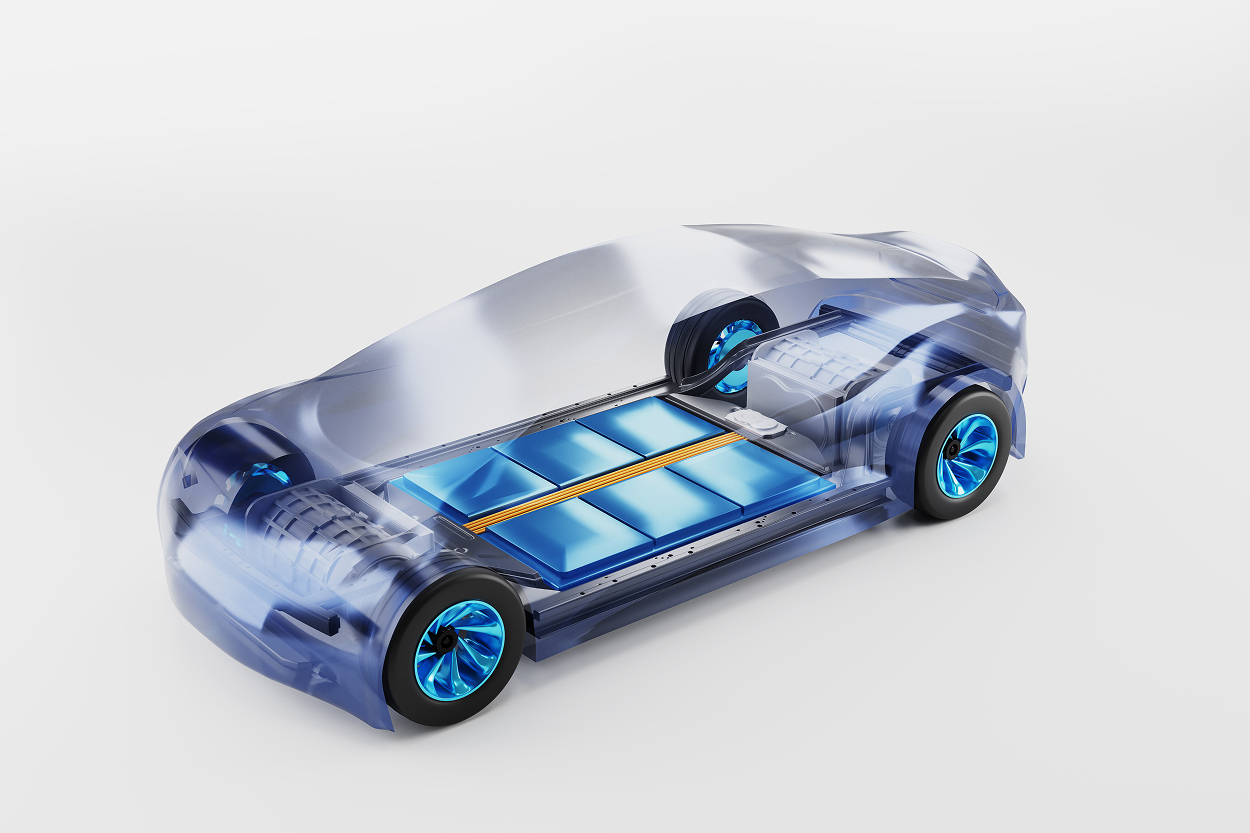
Thermal management now affects range, charging, safety, and warranty at the same time
Another reason this topic has become more important is that thermal decisions now have visible tradeoffs. Stronger cooling may protect the battery, but it also draws energy. Aggressive preheating may improve charging, but it affects vehicle efficiency. Conservative derating may protect lifetime, but it can reduce customer satisfaction if the vehicle charges too slowly or limits performance earlier than expected. That means thermal management is no longer a single-objective optimization problem. It is a balancing problem between range, charge speed, lifetime, safety, and cost.
NREL’s public work on vehicle thermal management reinforces this systems view by connecting thermal optimization with improved battery performance, battery life, and vehicle efficiency. Magna’s 2026 commentary reaches a similar conclusion from the supplier side, arguing that thermal management, not battery size alone, will define the next generation of EV performance. Those are different voices pointing to the same industry reality: thermal management now shapes value creation across the vehicle, not just pack survival.
This is also why thermal management is increasingly tied to warranty thinking. If a poor strategy accelerates ageing, the cost may not appear immediately in validation. It may appear in the field through reduced usable range, faster degradation, inconsistent fast charging, and customer complaints that are hard to trace back to thermal control decisions made years earlier. Software makes those risks both larger and more manageable. Larger, because bad logic can scale across a fleet. More manageable, because better control, better models, and better diagnostics can reduce those risks at fleet scale.
The integration problem is getting bigger
EV thermal management used to be easier to isolate conceptually. The battery had a thermal loop, the cabin had HVAC, the power electronics had their own needs, and the control strategy could be relatively compartmentalized. In modern EV platforms, that separation is weaker. The battery thermal loop increasingly interacts with charging, cabin comfort, heat-pump behavior, motor and inverter thermal loads, and power-management strategy. That means battery thermal control cannot be optimized in isolation anymore.
This is another reason the problem moved into software. Once multiple thermal consumers and multiple efficiency goals share the same vehicle-level system, somebody has to arbitrate priorities in real time. Should the system prioritize battery warm-up before a fast charge stop, or cabin comfort in cold weather, or motor cooling under aggressive driving, or energy efficiency during cruising? The answer is not fixed. It depends on route, SOC, ambient conditions, expected charging plan, and customer behavior. These are not purely mechanical choices. They are system-control choices.
The implication for engineering teams is important. Battery thermal management can no longer be handed off to one subsystem group late in the program. It has to be architected across battery, BMS, vehicle controls, charging logic, and thermal hardware from the beginning.
Where teams still get it wrong
One common mistake is to treat the thermal system as sufficiently solved once the pack survives validation temperatures. That is too narrow. A battery can remain inside safe operating limits and still perform poorly in fast charging, age too quickly, or create too much energy overhead in real-world operation.
Another mistake is to overfocus on hardware novelty while underinvesting in control quality. New materials, immersion approaches, or advanced heat-transfer concepts can be valuable, but they do not remove the need for accurate sensing, state estimation, and predictive control. If the software layer is weak, the hardware advantage will often be wasted.
A third mistake is to separate battery thermal strategy from lifecycle data. The system may look fine on a test bench, but fleet usage can reveal patterns that should change the strategy over time. That is why telemetry, analytics, and digital-twin thinking are becoming more relevant. The thermal system should not be frozen in logic if the operational evidence shows better ways to protect the pack and improve customer experience.
Where Promwad fits factually
This topic needs a careful Promwad angle. The public site does not present a named public case study that says Promwad built a complete production EV battery thermal architecture for a major vehicle platform in exactly this form. It would be wrong to claim that. What the site does show is relevant adjacent expertise. Promwad publicly presents custom BMS hardware and software development for EVs, a scalable automotive BMS service page, a 96-cell EV and HEV BMS case study that includes battery thermal management and diagnostics, battery digital twins that combine electrical, thermal, and ageing models, and thermal-management expertise in energy storage and power electronics. That is enough to make this topic legitimate for Promwad’s blog without overstating public evidence.
The safe conclusion is therefore not that Promwad has publicly documented one flagship EV thermal-management platform matching this exact article. The stronger factual position is that Promwad works in the engineering domains that determine whether such systems succeed: BMS logic, battery telemetry, thermal modeling, embedded software, power electronics, and hardware-software integration.
Conclusion
Battery thermal management in EVs is now a software-and-hardware problem because the battery is no longer judged only by whether it stays inside a safe temperature range. It is judged by how fast it charges, how consistently it performs across climates, how gracefully it ages, how well it protects itself under stress, and how efficiently the vehicle balances all of those demands at once. Hardware still defines the thermal envelope, but software increasingly decides how intelligently that envelope is used.
That is why the most competitive EV thermal systems in 2026 are not just better cooled. They are better controlled. They combine pack design, sensing, BMS logic, predictive preconditioning, adaptive limits, and thermal models into one operating strategy. In the next generation of EVs, temperature control is no longer a supporting detail. It is part of the product definition.
AI Overview
Battery thermal management in EVs is no longer only about cooling hardware. It has become a combined controls, software, and system-integration challenge because temperature now affects charging speed, battery life, safety, and efficiency at the same time.
Key Applications: EV battery packs, fast-charging control, battery preconditioning, BMS-driven thermal protection, battery digital twins, and vehicle-level thermal coordination.
Benefits: better charging performance, longer battery life, improved safety margins, more stable real-world range, and more adaptive behavior across climates and duty cycles.
Challenges: balancing fast charging against ageing, controlling thermal gradients, integrating battery and vehicle thermal loops, estimating internal battery state accurately, and scaling the strategy across different regions, chemistries, and use cases.
Outlook: the direction is clear. As EVs move toward faster charging, denser packs, and more software-defined behavior, thermal management will become even more predictive, model-based, and integrated with BMS and vehicle controls rather than remaining a mostly mechanical subsystem.
Related Terms: battery thermal management system, EV BMS, battery preconditioning, thermal runaway prevention, battery digital twin, coolant loop, thermal derating, fast charging control.
Our Case Studies