Hypervisors in Software-Defined Vehicles: How to Partition Safety, Infotainment and AI on Shared Compute
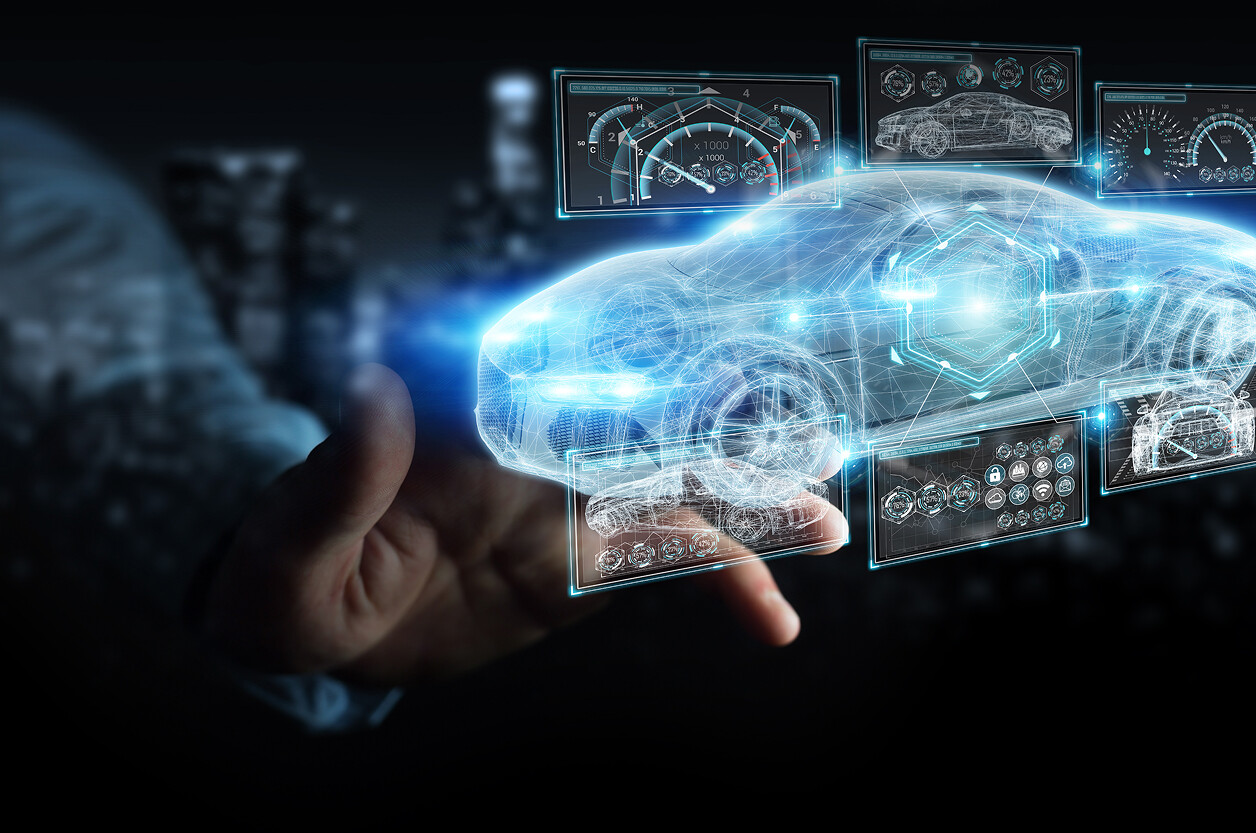
Software-defined vehicles (SDVs) are replacing distributed ECU architectures with centralized compute platforms. Instead of dozens of isolated electronic control units, modern vehicles deploy domain or zonal controllers built on high-performance SoCs that execute multiple workloads on shared hardware.
This shift introduces a hard engineering constraint. Safety-critical systems require deterministic execution, bounded latency, and compliance with ISO 26262, often at ASIL-C or ASIL-D levels. At the same time, infotainment and AI workloads introduce non-deterministic behavior, burst compute demand, and heavy memory and accelerator usage. When these workloads share the same silicon, uncontrolled interference leads to missed deadlines, jitter, and system instability.
Hypervisors are the primary mechanism used to enforce isolation and enable consolidation.
What a Hypervisor Does in an SDV Architecture
A hypervisor is a control layer that partitions hardware resources into isolated execution domains. Each domain runs its own operating system and application stack, with explicit ownership of CPU cores, memory regions, interrupts, and I/O devices.
In software-defined vehicles, hypervisors are responsible for enforcing three types of isolation simultaneously. Spatial isolation ensures that memory regions are not shared between domains unless explicitly configured. Temporal isolation guarantees that execution time is predictable and bounded. Resource isolation ensures that shared hardware such as CPUs, buses, and accelerators cannot be monopolized by a single workload.
These requirements go beyond traditional virtualization. In cloud systems, performance degradation is acceptable within limits. In automotive systems, even a few hundred microseconds of delay can propagate into milliseconds at the control loop level and lead to deadline violations.
Hypervisors therefore define the runtime architecture of the vehicle compute platform. They assign CPU cores to domains, configure memory maps through MMU and IOMMU, route interrupts with priority control, and manage access to peripherals such as network interfaces, sensors, and accelerators.
Three major workload classes coexist. Safety domains execute control logic with strict deadlines. Infotainment domains run complex operating systems with user interaction and background services. AI domains process sensor streams and execute neural inference with highly variable compute demand. The hypervisor must ensure that these domains remain isolated even under peak load conditions.
Hypervisor Internals: Scheduling and Determinism
The scheduler is the most critical component of a hypervisor in an automotive context. Unlike general-purpose systems, where schedulers optimize throughput or fairness, automotive schedulers must guarantee deterministic execution.
Two primary models are used. Static partitioning assigns dedicated CPU cores to each domain. In this model, safety workloads run on isolated cores with no preemption from other domains. This approach eliminates scheduler-induced jitter and simplifies timing analysis but reduces flexibility because unused CPU capacity cannot be shared.
Time partitioning divides CPU time into fixed slots assigned to different domains. Each virtual machine executes only during its time window. This provides temporal isolation but introduces scheduling latency if a task misses its slot. Slot configuration becomes a critical design parameter, as too large slots increase latency, while too small slots increase context-switch overhead.
Worst-case execution time is a central concept. Engineers must calculate the maximum execution time of each task under worst-case conditions, including cache misses, memory contention, and interrupt delays. Hypervisors must ensure that scheduling policies do not violate these bounds.
Interrupt handling adds another layer of complexity. Hardware interrupts must be routed through the hypervisor and delivered to the correct domain with bounded latency. In poorly configured systems, interrupt storms or priority inversion can introduce delays exceeding acceptable limits.
Inter-domain communication must also be carefully designed. Shared memory is commonly used, but synchronization mechanisms such as locks or semaphores can introduce blocking behavior. If one domain stalls, it can indirectly delay another, breaking isolation guarantees.
SDV Compute Architecture: From ECUs to Shared SoCs
Modern SDV platforms are built on heterogeneous SoCs that integrate multiple CPU clusters, GPUs, NPUs, and dedicated accelerators. This replaces distributed ECUs with centralized compute nodes.
A typical configuration includes real-time cores running AUTOSAR Classic or an RTOS for safety functions, application cores running Linux or Android for infotainment, and accelerators handling AI inference.
Two architectural models dominate. In domain-based systems, each controller manages a specific function such as ADAS or infotainment. In zonal architectures, compute is centralized and zones act as I/O concentrators, forwarding data to central processing units.
Data flows through the system in pipelines such as sensor acquisition, preprocessing, fusion, decision-making, and actuation. Each stage consumes compute resources and introduces latency. When multiple pipelines share hardware, resource contention becomes inevitable unless controlled by the hypervisor.
CPU, Memory, and Bus Contention
Logical isolation is not sufficient because hardware resources remain shared.
CPU isolation is typically achieved through core pinning, but shared caches introduce interference. Cache thrashing occurs when multiple domains compete for cache space, leading to increased memory access latency. This effect is difficult to predict and can significantly impact worst-case execution time.
Memory bandwidth is a critical bottleneck. AI workloads, particularly those processing high-resolution video streams, can consume tens of gigabytes per second. If memory arbitration is not controlled, safety-critical tasks may be delayed waiting for memory access.
DMA-capable devices further complicate the system. These devices can access memory directly and potentially saturate the bus. While IOMMU restricts memory access regions, it does not control bandwidth usage.
To address this, modern SoCs implement quality-of-service mechanisms in the interconnect. These allow prioritization of traffic from safety domains, ensuring that critical workloads receive guaranteed bandwidth even under load.
Real-Time Constraints and Latency Budget
Automotive control systems operate under strict timing constraints. Control loops typically run at frequencies from 100 Hz to 1 kHz, corresponding to cycle times between 10 ms and 1 ms.
The full latency path includes sensor acquisition, communication over buses such as CAN or Ethernet, processing within controllers, and actuation. Each stage contributes to total latency.
Engineers must calculate a latency budget that accounts for worst-case delays in each stage. Hypervisors must ensure that virtualization overhead, including context switches and interrupt handling, remains within this budget.
Jitter is equally critical. Even if average latency is within limits, variability can destabilize control loops. For example, a 2 ms jitter spike in a 5 ms control loop can lead to missed deadlines and unstable behavior.
Mixing Safety and Non-Safety Domains
Hypervisors enable mixed-criticality systems by isolating safety and non-safety domains on shared hardware.
Safety domains must meet ASIL requirements and demonstrate freedom from interference. This requires strict control over memory, CPU time, and shared resources. Non-safety domains, such as infotainment, must not be able to affect safety-critical execution even in failure scenarios.
Certified hypervisors provide mechanisms for spatial and temporal isolation, but system design must still ensure that shared resources do not introduce hidden dependencies.
Even with dedicated cores and VM boundaries, safety and non-safety workloads can still interfere through hardware resources below the scheduler, including shared caches, memory controllers, and accelerator queues. This makes temporal isolation for ASIL and QoS multimedia on shared cores a system-level problem that has to be validated under concurrent production workloads, not only through isolated VM timing tests.
GPU and AI Workload Challenges
AI workloads introduce non-deterministic behavior. Neural network execution time varies depending on input data and model complexity. GPUs and NPUs are typically shared resources with limited isolation capabilities.
This creates contention for compute and memory bandwidth. During peak inference, AI workloads may consume most available resources, delaying other tasks.
Mitigation strategies include limiting concurrency, assigning dedicated accelerators to safety domains, and implementing scheduling policies. However, full determinism is difficult to achieve due to the inherent variability of AI workloads.
Hypervisor Overhead and Trade-offs
Hypervisors introduce overhead through context switching, interrupt virtualization, and memory translation. While optimized systems minimize this overhead, it cannot be eliminated completely.
The design trade-off is between consolidation and predictability. Fully isolating safety workloads reduces risk but limits resource utilization. Sharing resources improves efficiency but increases complexity and risk of interference.
Security and System Integrity
Hypervisors are part of the trusted computing base. They enforce isolation not only for performance but also for security.
They integrate with secure boot mechanisms, Trusted Execution Environments, and hardware security modules. These components ensure that only trusted software is executed and that sensitive data remains protected.
A vulnerability in the hypervisor can compromise the entire system, making its design and validation critical.
OTA Updates and Lifecycle Management
Software-defined vehicles rely on continuous updates. Hypervisors enable safe updates by isolating domains and allowing independent updates of infotainment and AI systems without affecting safety-critical functions.
Rollback mechanisms are required to recover from failed updates, and safety domains must remain operational during the update process.
Failure Scenarios and Root Causes
Failures in shared compute systems are often caused by resource contention or misconfiguration.
A typical failure chain starts with an AI workload spike that saturates memory bandwidth. This delays CPU access for safety tasks, leading to missed deadlines and unstable system behavior.
Another scenario involves interrupt misconfiguration, where lower-priority tasks block critical interrupts, causing jitter and delayed execution.
Thermal effects also play a role. High compute load can trigger thermal throttling, reducing CPU frequency and increasing execution time beyond acceptable limits.
Real Deployment Patterns
In production systems, workloads are mapped to hardware with strict constraints. Safety domains are assigned dedicated cores, while infotainment and AI workloads share remaining resources under controlled conditions.
Memory is partitioned, and interconnect QoS ensures priority access for critical domains. Hypervisor configuration defines all resource ownership and scheduling policies.
Zonal architectures increase the importance of these mechanisms, as more workloads are consolidated onto fewer compute nodes.
Quick Overview
Hypervisors enable consolidation of multiple workloads on shared compute platforms in software-defined vehicles while maintaining isolation between safety-critical and non-critical domains.
Key Applications
Partitioning safety, infotainment, and AI workloads; enabling centralized compute architectures
Benefits
Reduced hardware complexity; improved scalability; efficient resource utilization
Challenges
Resource contention; non-deterministic AI workloads; certification requirements
Outlook
Improved hardware support for partitioning and increasing integration of AI in safety-critical systems
Related Terms
Software-defined vehicle; ISO 26262; AUTOSAR; real-time systems; zonal architecture
Our Case Studies