Secure Partitioning in Automotive Hypervisors: Isolation for Central Compute Platforms
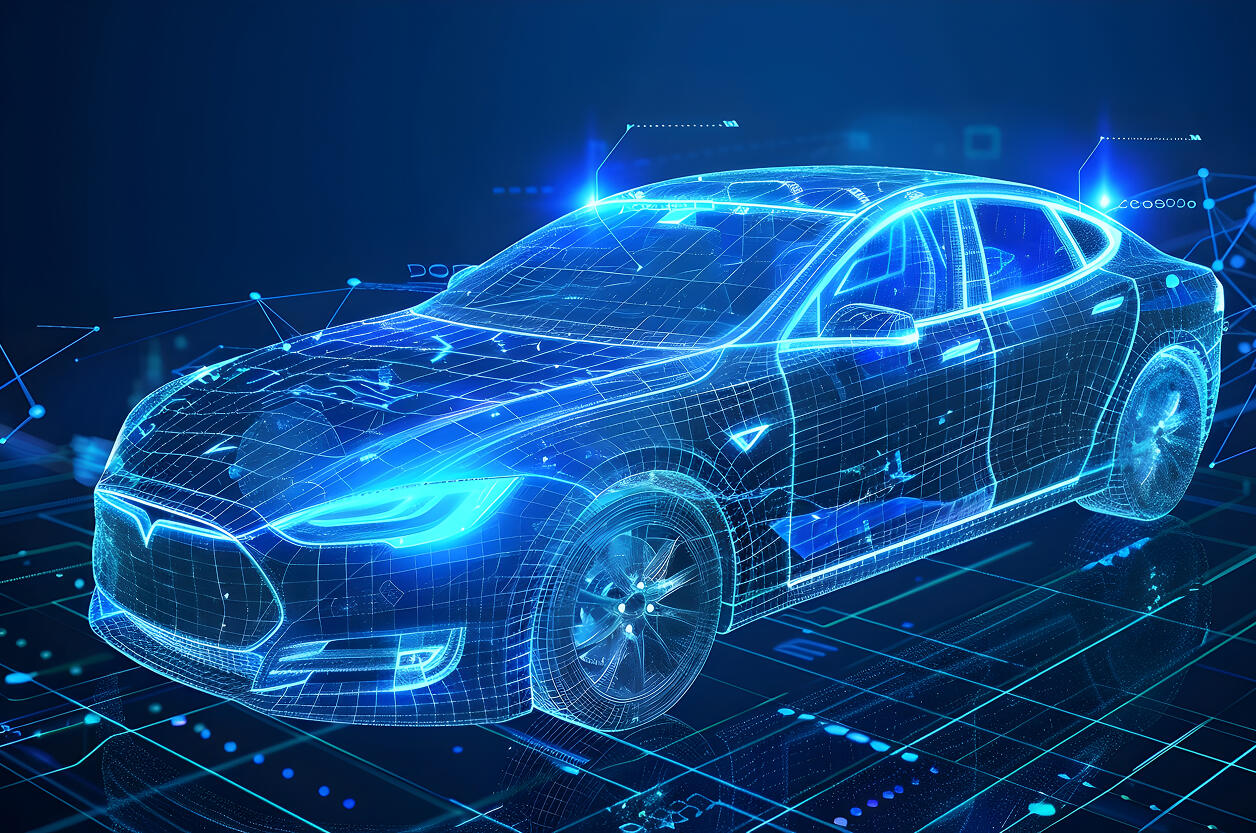
Modern vehicle architectures are rapidly moving toward centralized compute platforms. Instead of dozens of independent ECUs connected through multiple bus systems, software-defined vehicles increasingly consolidate functions into high-performance domain controllers and central compute units.
This architectural shift creates new challenges for software integration. A single computing platform may host workloads with very different safety requirements, timing constraints, and lifecycle expectations. For example, a central compute platform might run an advanced driver assistance system alongside infotainment services, connectivity stacks, and diagnostic tools.
In such environments, simply separating software processes within a single operating system is not sufficient. Automotive systems must guarantee that safety-critical workloads remain isolated from lower-criticality software. This requirement is addressed through secure partitioning implemented by automotive hypervisors.
Secure partitioning allows multiple operating systems or software domains to run on the same hardware platform while maintaining strong isolation boundaries. These boundaries ensure that faults, timing interference, or security issues in one domain cannot propagate to others. As vehicles adopt centralized compute architectures, this capability becomes a fundamental building block of software-defined vehicle platforms.
Why centralized vehicle compute requires strong isolation
Traditional vehicle architectures relied on physical separation to isolate critical functions. Safety-relevant systems such as braking control or steering assistance were typically implemented in dedicated ECUs with their own processors and communication buses.
This approach simplified safety certification because each ECU operated as an independent system with well-defined responsibilities. However, it also resulted in complex wiring harnesses, duplicated hardware resources, and limited flexibility for software updates.
Centralized vehicle compute platforms change this model. Instead of distributing functions across dozens of microcontrollers, many workloads are consolidated onto fewer, more powerful processors.
For example, a central compute platform may host:
- perception pipelines for ADAS systems
- infotainment software and multimedia services
- vehicle connectivity stacks
- diagnostics and telemetry functions
- middleware for vehicle communication
Running these workloads on a shared hardware platform improves efficiency and reduces hardware complexity. However, it also introduces the risk that faults or timing interference in one software domain could affect others.
Hypervisor-based partitioning addresses this problem by creating isolated execution environments on the same hardware platform.
Automotive hypervisors as the foundation for partitioning
A hypervisor is a virtualization layer that sits between hardware and operating systems. It manages CPU scheduling, memory access, and device allocation for multiple guest environments.
In automotive systems, hypervisors allow different operating systems to run simultaneously on a single processor. For example:
- a real-time operating system for safety-critical control loops
- Linux or Android for infotainment applications
- specialized middleware environments for vehicle connectivity
The hypervisor ensures that each environment operates within defined boundaries. This isolation prevents one guest system from accessing memory or hardware resources belonging to another.
Unlike general-purpose virtualization used in data centers, automotive hypervisors must operate under strict real-time and safety constraints. They must guarantee predictable scheduling behavior and ensure that critical workloads receive sufficient computing resources.
Because of these requirements, automotive hypervisors are often implemented as lightweight virtualization layers designed specifically for embedded platforms.
Secure partitioning and safety isolation
Secure partitioning is the mechanism that enforces separation between software domains in a virtualized automotive system.
Partitioning operates across several layers of the system architecture:
Memory isolation.
Each software domain receives a dedicated memory region. The hypervisor prevents unauthorized access across memory boundaries, ensuring that faults in one partition cannot corrupt data in another.
CPU scheduling isolation.
The hypervisor controls how processor time is allocated among partitions. Critical workloads can receive guaranteed execution windows so that their timing requirements are met.
Device access control.
Hardware devices such as network interfaces, storage controllers, or display engines can be assigned to specific partitions or accessed through controlled virtualization layers.
Fault containment.
Errors occurring within one partition are contained within that domain and cannot propagate to other workloads.
These mechanisms collectively allow safety-critical and non-critical software to coexist on the same compute platform without compromising system integrity.
Supporting mixed ASIL levels on shared hardware
Automotive functional safety standards such as ISO 26262 define Automotive Safety Integrity Levels (ASIL) that represent different degrees of safety criticality.
Workloads within a vehicle platform may operate at different ASIL levels. For example:
- braking or steering control may require ASIL-D
- advanced driver assistance perception algorithms may operate at ASIL-B or ASIL-C
- infotainment software may operate at QM (Quality Management) level
Running these workloads on the same hardware platform requires strict separation to ensure that lower-criticality software cannot affect higher-criticality systems.
Secure partitioning allows hypervisors to enforce this separation. Safety-critical partitions can be isolated with dedicated resources and stricter scheduling guarantees, while non-critical workloads operate in separate partitions with limited privileges.
On high-performance application processors, however, partition boundaries do not eliminate every source of timing interference. Safety-critical and QM workloads can still contend for shared caches, memory bandwidth, and accelerator resources below the VM abstraction. This makes mixed-criticality scheduling on high-performance SoCs an additional part of the isolation argument when different ASIL levels are consolidated on the same hardware.
This architecture allows automotive platforms to combine different ASIL levels on shared hardware while maintaining compliance with functional safety requirements.

Hypervisors in central compute and domain controller platforms
Hypervisors are particularly important in centralized compute architectures where many vehicle functions converge on a single platform.
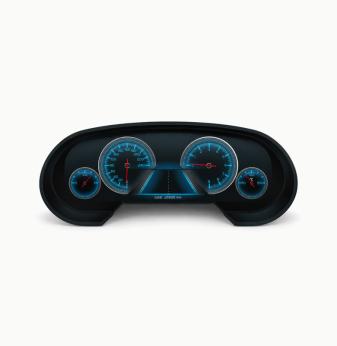
Cockpit domain controllers are one of the most common examples. These systems often combine multiple workloads such as instrument clusters, infotainment systems, navigation services, and connectivity stacks.
Virtualization allows these workloads to run in separate software environments while sharing hardware resources such as GPUs, network interfaces, and storage systems.
Central compute platforms used for ADAS or automated driving systems present even more complex scenarios. These platforms may combine real-time perception pipelines with high-level decision algorithms, vehicle connectivity services, and diagnostic tools.
In these environments, hypervisors help enforce deterministic resource allocation and prevent interference between software domains.
Managing mixed-critical workloads in SDV architectures
Software-defined vehicles require continuous software evolution throughout the lifecycle of a vehicle platform. Over-the-air updates, feature expansion, and platform reuse across vehicle models all increase the complexity of software integration.
As a result, modern vehicle platforms must support workloads with different lifecycle expectations. Safety-critical control systems may remain stable for many years, while infotainment software evolves more rapidly through updates and new features.
Secure partitioning provides a framework for managing these differences. By isolating software domains within separate partitions, engineers can update non-critical components without affecting safety-critical systems.
This separation simplifies validation and reduces the risk that software updates will introduce unintended interactions between system components.
Hardware support for automotive virtualization
Modern automotive processors increasingly include hardware features designed to support virtualization.
These features typically include:
- hardware memory protection mechanisms
- virtualization extensions for CPU scheduling
- secure boot and trusted execution environments
- device virtualization support
These capabilities allow hypervisors to enforce isolation boundaries more efficiently and with lower runtime overhead.
As centralized vehicle compute platforms grow more powerful, hardware-assisted virtualization becomes essential for maintaining predictable system behavior while supporting multiple software environments.
Where secure partitioning connects to Promwad expertise
Promwad’s public materials describe experience in several areas related to virtualization and centralized vehicle architectures.
These include:
- embedded software development for automotive platforms
- hypervisor-based resource partitioning in embedded systems
- AUTOSAR Adaptive environments for high-performance ECUs
- centralized and zonal SDV architectures
- integration of heterogeneous software environments on shared compute platforms
These areas are closely related to the engineering challenges addressed by secure partitioning and automotive hypervisors. As vehicle architectures consolidate compute resources, platform integration increasingly depends on reliable isolation between software domains and predictable resource management.
Why secure partitioning is becoming essential for SDV platforms
The transition toward centralized vehicle architectures fundamentally changes how automotive software systems are built.
Instead of many isolated ECUs, modern vehicles rely on shared compute platforms that host multiple software domains. These platforms must simultaneously support safety-critical workloads, high-bandwidth data processing, and continuously evolving user-facing applications.
Secure partitioning through automotive hypervisors enables this coexistence by providing strong isolation boundaries between software domains. Memory protection, controlled device access, and deterministic scheduling allow mixed-critical workloads to operate safely on the same hardware platform.
As software-defined vehicles continue to evolve, secure virtualization will likely become a core architectural element of vehicle computing platforms. It allows automotive systems to balance safety, flexibility, and long-term software maintainability while reducing hardware complexity and enabling more scalable vehicle architectures.
AI Overview
Secure partitioning in automotive hypervisors enables centralized vehicle compute platforms to run mixed-critical workloads safely. By isolating software domains and enforcing strict resource boundaries, hypervisors support the architectural requirements of software-defined vehicles.
Key Applications: centralized compute platforms, cockpit domain controllers, ADAS processing systems, mixed-OS vehicle platforms, SDV architectures.
Benefits: strong workload isolation, support for mixed ASIL levels, efficient hardware utilization, safer software updates, scalable vehicle platforms.
Challenges: real-time scheduling constraints, safety certification complexity, device virtualization overhead, integration with heterogeneous operating systems.
Outlook: as vehicle architectures move toward centralized compute and zonal designs, secure partitioning through automotive hypervisors will become a core element of SDV platform engineering.
Related Terms: automotive hypervisor, software-defined vehicle, mixed-critical workloads, centralized ECU, zonal architecture, AUTOSAR Adaptive, virtualization platforms.
Our Case Studies