Customer
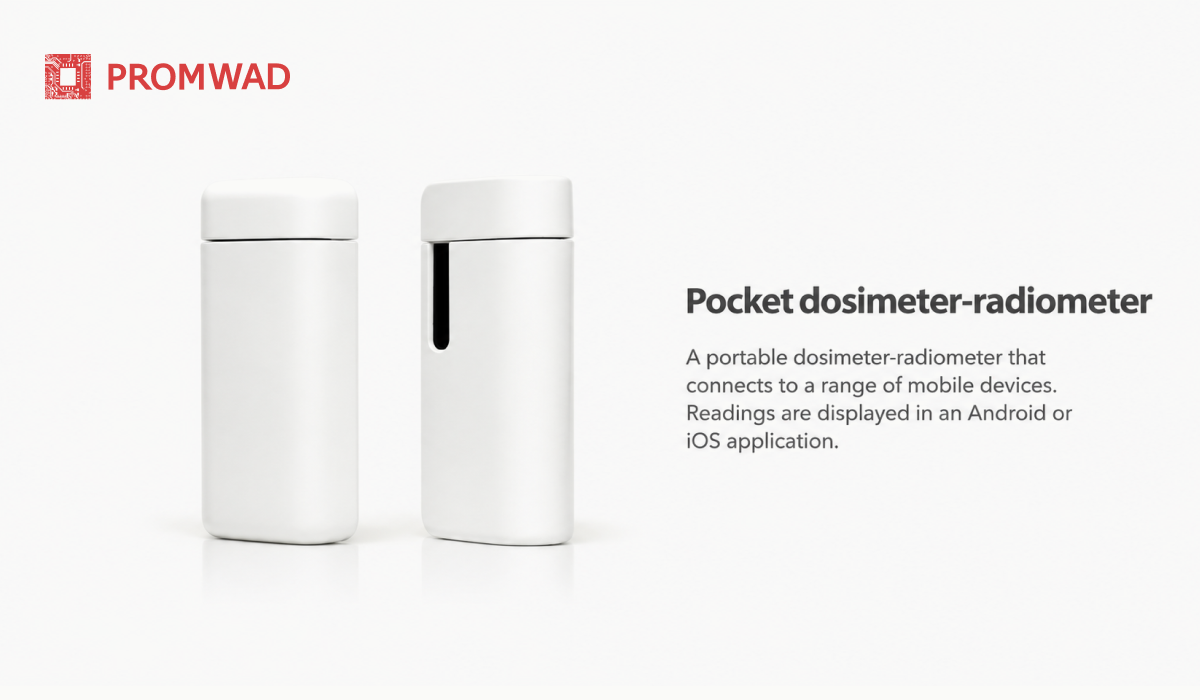
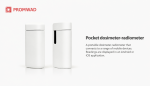
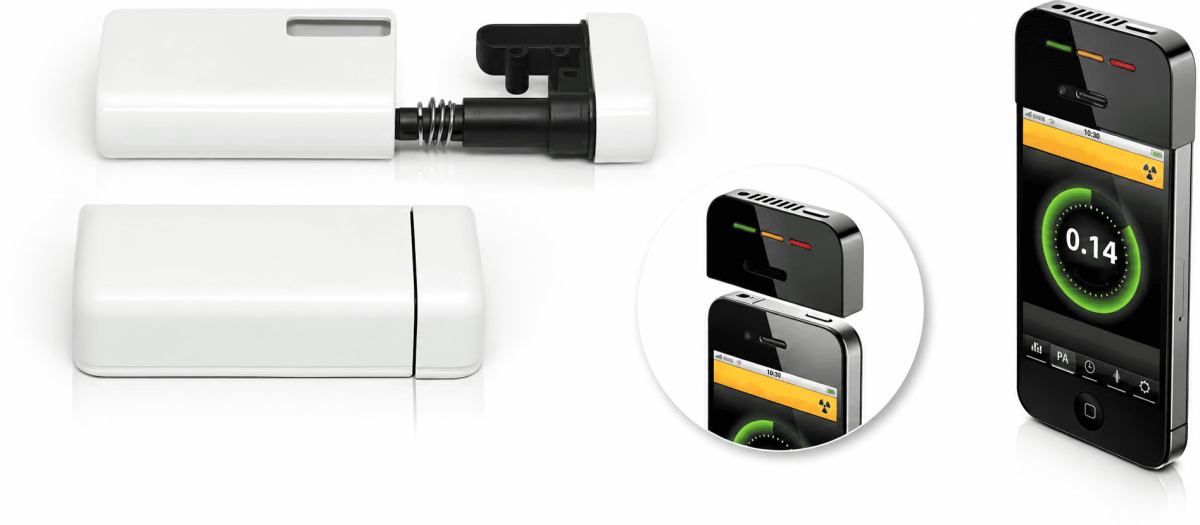
The client is a technology company that develops consumer radiation measurement devices. Its dosimeter-radiometer clips onto a mobile device, uses the phone or tablet as a power source, and displays calculated measurements through a companion application.
Objective
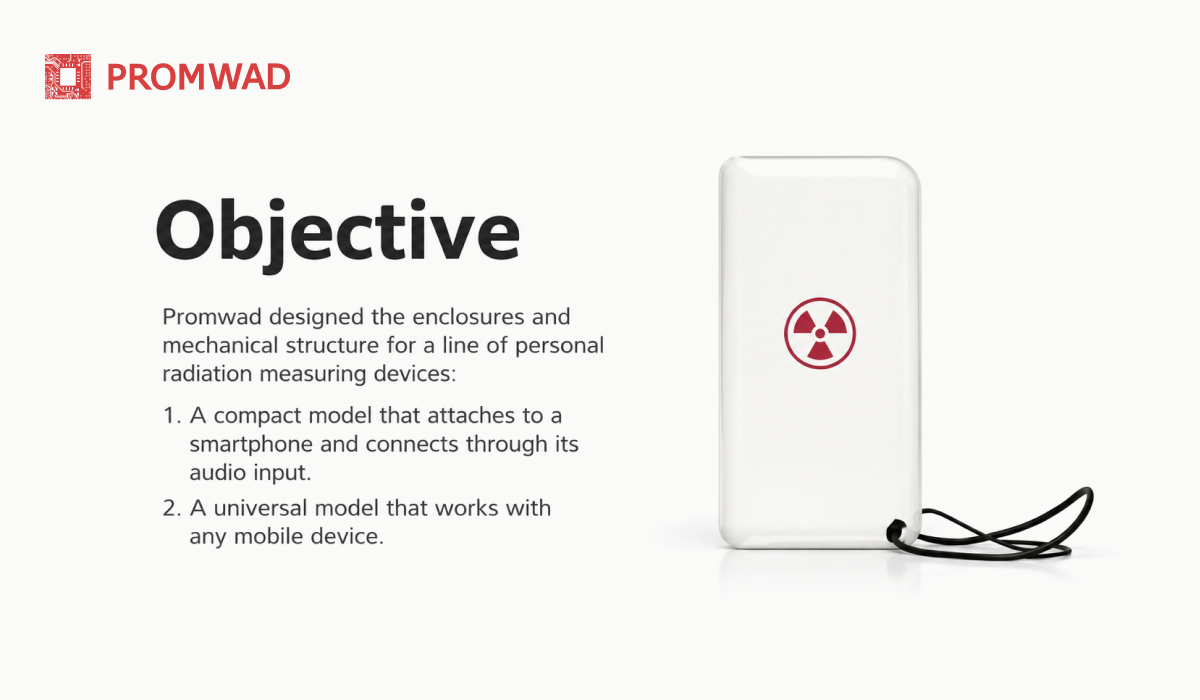
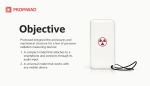
- Design an enclosure for the smartphone-specific model, which connects to an iPhone through the standard audio input.
- Keep the enclosure as compact as possible and make sure its shape does not interfere with ordinary use of the phone.
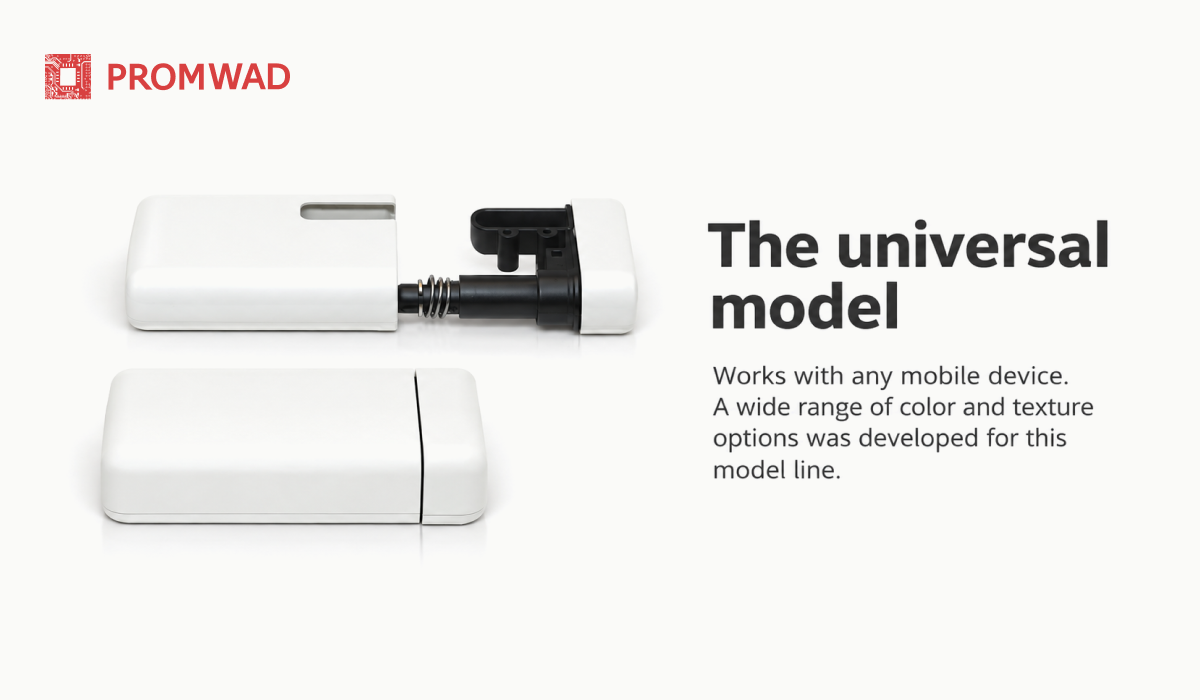
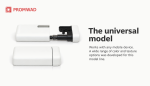
- Design an enclosure for the universal model, which connects to any mobile phone, tablet, or laptop through a standard audio input. The universal model detects the device class automatically and switches to the correct mode.
Solution
The enclosure dimensions for both models were driven by the size of the board and its components. After an analysis of competing products and early prototypes, our industrial designers prepared the first sketches and agreed the direction with the client.
The universal model was the harder design problem. The dosimeter had to stay convenient with any class of mobile device, which ruled out a fixed connector position. We chose a hinged cover fitted with the 3.5 mm audio jack. When the cover is closed, the connector sits inside the enclosure and is protected during transport.
Working at this scale was the second constraint. The prototype is 57 x 9 x 11 mm, about 5.6 cubic cm, and the design target was the smallest possible footprint for a multi-purpose dosimeter. Reaching it required extensive 3D modeling of the enclosure and repeated prototype testing.
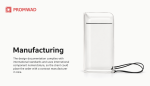
Based on the mathematical model of the enclosure, Promwad engineers set up prototype manufacturing and debugging for both versions. The prototypes were produced using laser stereolithography (SLA) and then checked for assembly fit and ease of handling.
Color was a commercial decision, not a cosmetic one. The client planned to sell the universal model in several national markets, where consumer preferences differ. Our designers worked through dozens of options, both single-color and combined. Black was selected for the smartphone-specific model, since it pairs with the phone it attaches to.
Promwad also supported the client during the manufacturing of trial samples of the universal model.
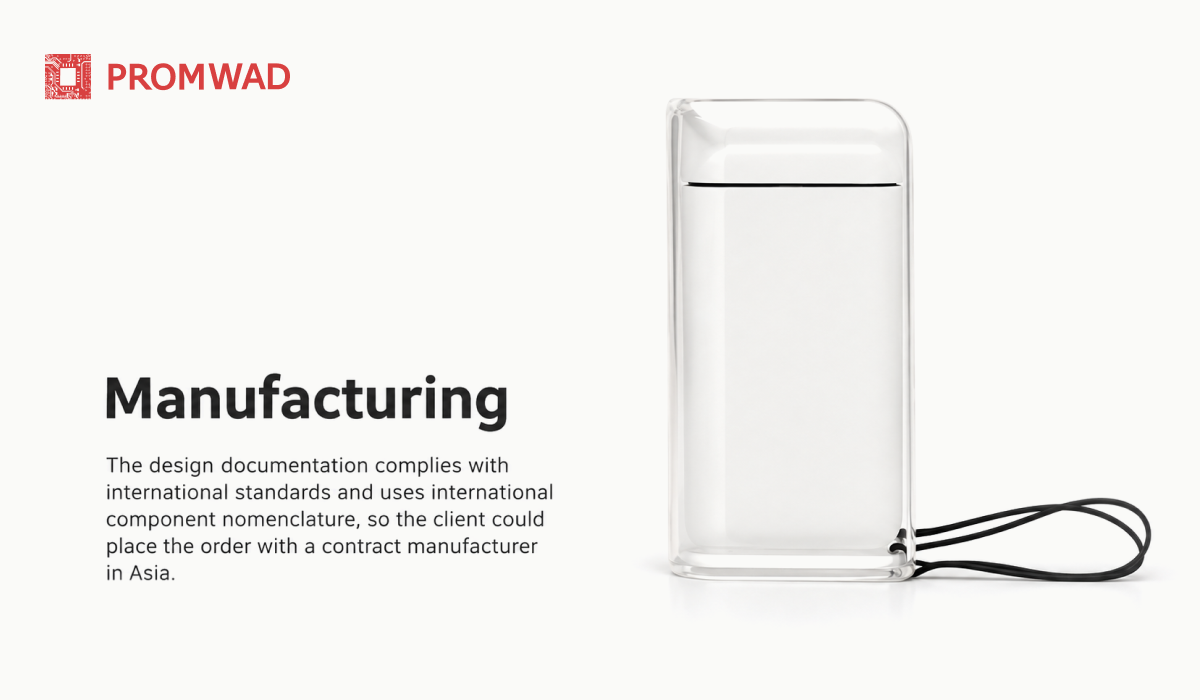
The two teams prepared a complete package of design documentation in compliance with international standards. The documentation uses international component nomenclature and references a number of industrial parks in Taiwan, China, Malaysia, and South Korea, so the client could place the order with a contract manufacturer in any of these countries.
Further development of the enclosure construction
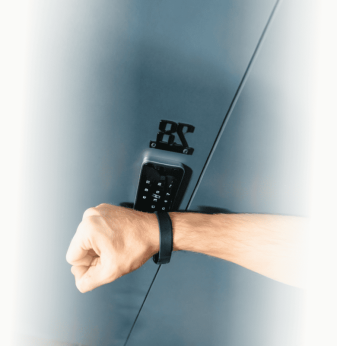
At the client's request, we later modified the enclosure construction and developed a new rotating mechanism as a separate project.
Advantages
- An ergonomic and compact enclosure that leaves the host mobile device usable in the normal way
- A low part count, which reduces the cost of manufacturing molds
- An assembly process designed to keep unit production cost down
- Design documentation ready for handover to a contract manufacturer